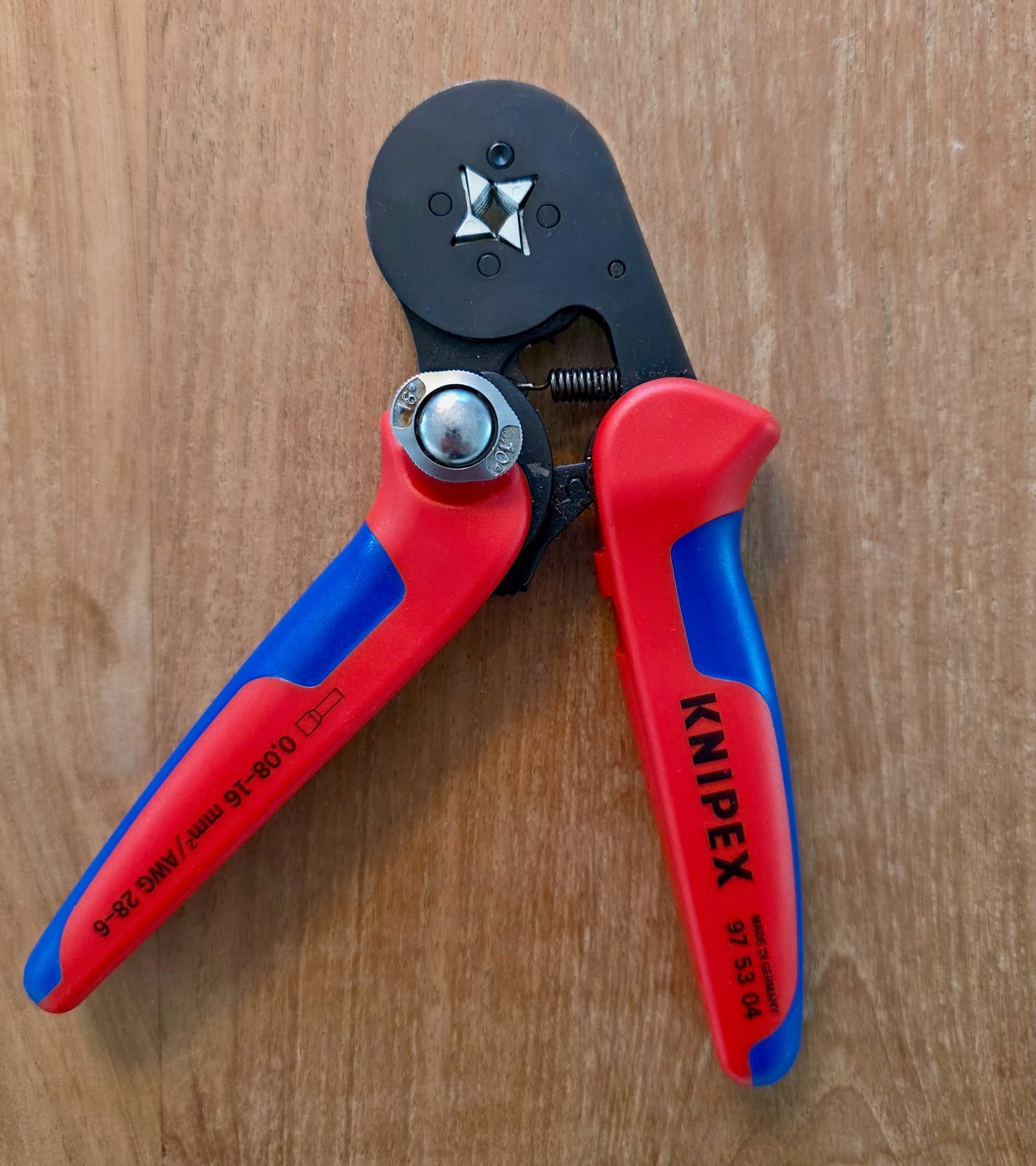
Crimping pliers 97 53 04
Every type of Knipex pliers can be recognised by the first two digits of its reference, stamped on the tool.
Published 24 March 2026
In brief
When you open an electrician’s tool bag in 2026, there is a strong chance of finding at least one pair of pliers stamped with the red and blue Knipex logo. For the concrete choice between pliers and screwdrivers, the Knipex, Wiha or Wera comparison gets to the field verdict faster.
The German brand, born in a blacksmith’s cellar in 1882, became the world’s leading manufacturer of professional pliers.
Its history is that of a family obsession passed down over four generations: making the best possible pliers, never offshoring, never diversifying beyond its core business.
This article retraces the entire trajectory, from the first power hammer bought in Cronenberg to recent innovations such as the TwinGrip and the move to green steel.
A journey that also sheds light on the philosophy of a tool that every electrical professional handles every day.
140 years
Of uninterrupted existence
59 000
Pliers produced per day
4 generations
Of the Putsch family at the helm
100 %
Made in Wuppertal
To understand Knipex, you first have to understand where the company comes from. Cronenberg is a hilltop district of Wuppertal, in the Bergisches Land region of North Rhine-Westphalia.
This hilly territory, rich in steep waterways, was home for centuries to a dense metalworking industry, powered by the hydraulic force of the streams flowing down towards the Wupper.
As early as the 16th century, Cronenberg had dozens of forges and grinding mills (the famous Schleifkotten) driven by water wheels.
At the height of this industry, there were 16 hydraulic hammers and 31 grinding workshops along the streams around the Krähenberg, as well as nearly 300 factories and more than 700 blacksmiths in the area.
The forging tradition there is documented since at least 1050, the date of the first written mention of “Cronberga” in a charter of Werden Abbey.
To this day, Cronenberg remains home to world-renowned tool manufacturers: Knipex for pliers, Wera for screwdrivers, Stahlwille for torque wrenches, Picard for hammers.
This exceptional concentration of metalworking expertise is no accident: it is rooted in centuries of craft transmission, progressive specialization and stimulating competition between neighbors.
It was in this industrial soil that Carl Gustav Putsch decided, in 1882, to set up his own forge.
The story begins modestly. Carl Gustav Putsch set up in the cellar of his house in Cronenberg with one journeyman and two apprentices.
Their initial production focused on carpenter’s pincers and farrier’s pincers, essential tools in a Germany in the midst of industrialization where the horse remained the primary means of transport.
The work was entirely manual. The steel was heated in the forge, then hammered by hand to give it the desired shape. Finishing was done on the grinding wheel.
The days were long, production limited, but the quality of the work attracted a local clientele.
Conseil
The name “Putsch” was extremely common in the Cronenberg region. It was precisely this ordinariness that would later lead the family to look for a distinctive brand name, giving rise to the name “Knipex”.
In 1900, Carl Gustav Putsch took a decisive step: he acquired his first power hammer (Fallhammer).
This machine, which forged parts by the fall of a heavy mass, multiplied productivity compared with manual work. But it also generated considerable vibrations.
Company legend has it that the whole house shook when the hammer was running, to the point that a separate workshop had to be built on the neighboring plot to save the dishes and the peace of the household.
In 1914, the workforce reached seven employees. The First World War slowed activity without interrupting it entirely.
In 1922, Carl Gustav Putsch died, and it was his son Carl Putsch who took over the management of the company. It was the beginning of the second generation.
Under the leadership of Carl Putsch (the son), the company moves from the artisanal stage to that of a small factory. In 1927, 27 employees produce around 7 000 pliers per week, a considerable volume for its time.
It is Carl Putsch who, in 1942, registers the “Knipex” trademark.
The choice of name is no accident: with the Putsch surname being ubiquitous in the region (like Dupont in France), a distinctive trade name was needed to stand out from the dozens of other tool manufacturers in the Bergisches Land.
“Knipex” combines a punchy Germanic sound with an “x” ending that evokes technical skill and precision.
| Period | Leader | Generation | Approximate headcount |
|---|---|---|---|
| Period 1882-1922 | Leader Carl Gustav Putsch | Generation Founder (1st) | Approximate headcount 1 to 7 employees |
| Period 1922-1954 | Leader Carl Putsch | Generation 2nd generation | Approximate headcount 7 to 27 employees |
| Period 1954-1996 | Leader Karl Putsch (and Ilse) | Generation 3rd generation | Approximate headcount 27 to 800 employees |
| Period 1996-today | Leader Ralf Putsch | Generation 4th generation | Approximate headcount 800 to 1 800+ employees |
The four generations of the Putsch family at the helm of Knipex
In 1954, Karl Putsch, the founder’s grandson, takes the reins of the company. He is a passionate engineer, and his arrival marks a major technological turning point.
Where his predecessors had built a good regional forge, Karl will transform Knipex into a European leader.
His strategy rests on two pillars: thoroughly modernizing the manufacturing processes (progressive automation, systematic quality control) and constantly expanding the range of pliers.
Until then focused on classic pincers and pliers, production opens up to new types of gripping, cutting and crimping tools.
His wife Ilse, who joined the company in 1951, plays a decisive role in management and commercial development. Together, they lead Knipex to the rank of European market leader in pliers.
Knipex’s history is punctuated by innovations that redefined what pliers could do. Each of these inventions solved a concrete problem encountered by professionals in the field.
In 1973, Knipex launches the Alligator, a water pump pliers of an entirely new kind.
Its self-locking jaw mechanism can grip both round parts (pipes) and angular parts (nuts) without the user needing to maintain constant pressure on the handles.
This is a considerable ergonomic advance for plumbers and installers who work for hours on end on fittings.
The Cobra, launched in 1984, is probably Knipex’s most iconic product.
This water pump plier introduces a push-button adjustment system that allows fine and quick setting of the jaw opening.
You simply press the button and slide the jaw to find the desired position among 25 adjustment detents.
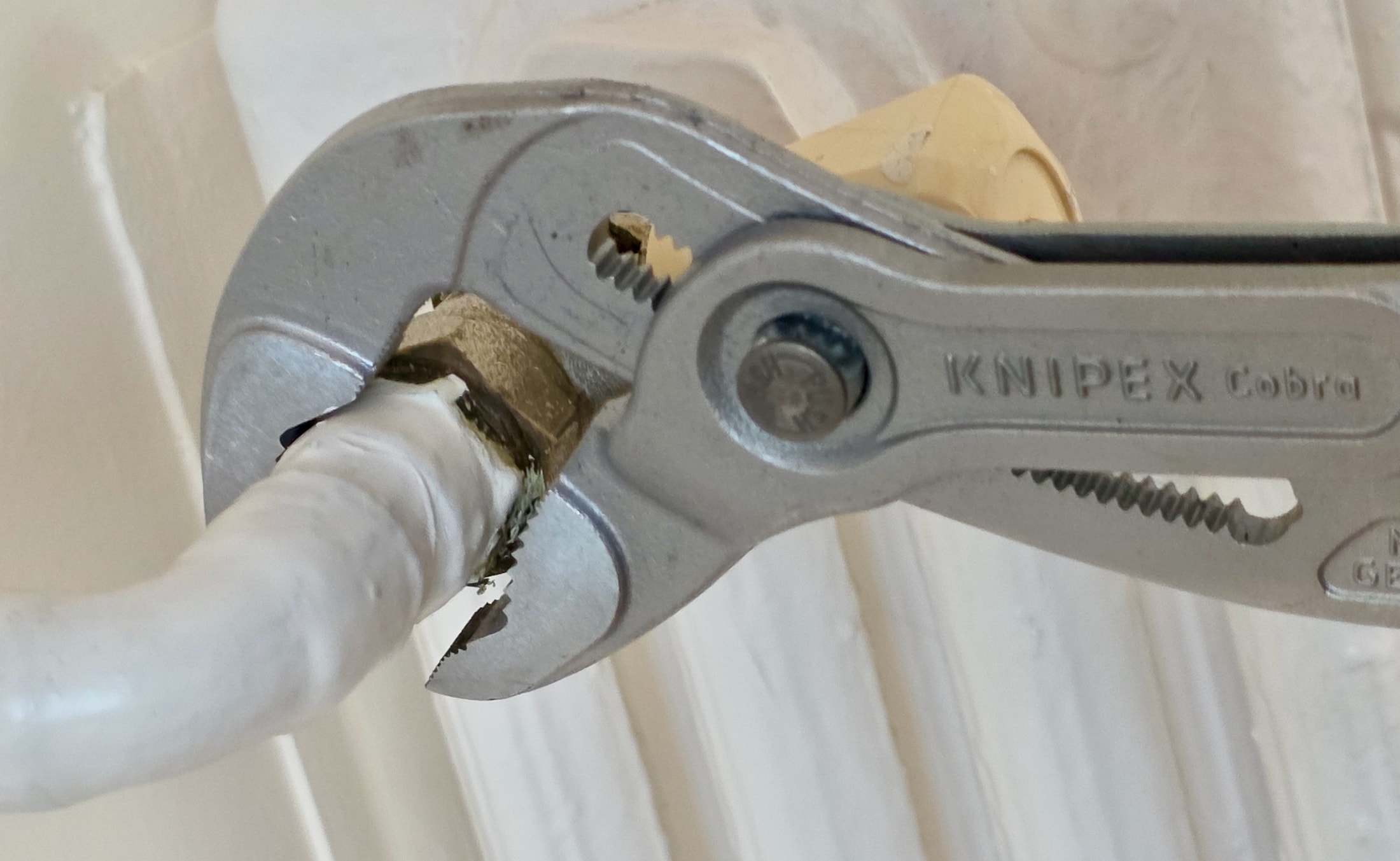
The jaws have teeth specially induction-hardened to about 61 HRC (Rockwell hardness), which gives them an exceptional grip on smooth surfaces such as chrome pipes.
The self-locking system prevents any accidental slipping.
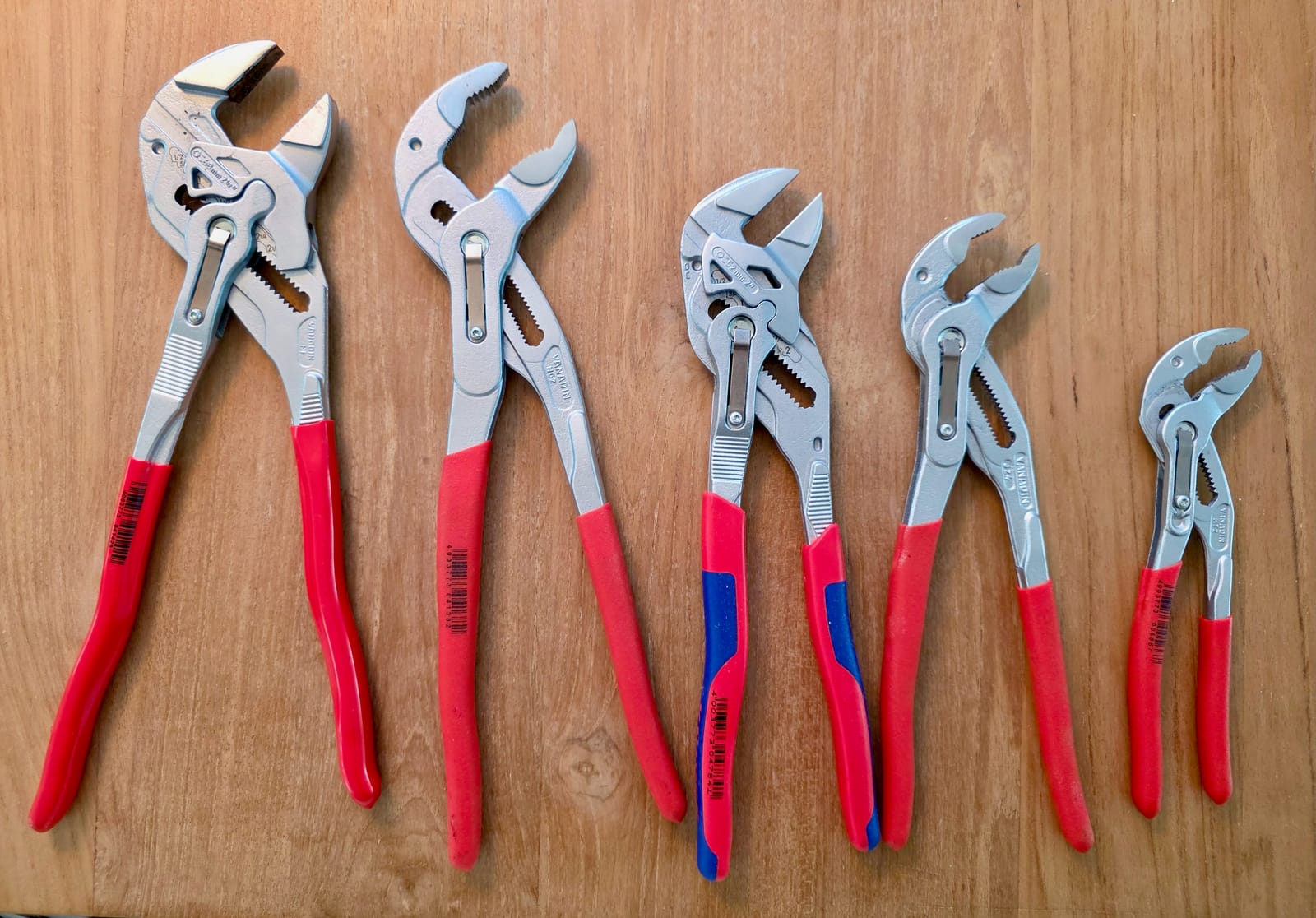
Since 1984, the Cobra family has kept growing.
It is available today in many sizes, from the 100 mm Cobra XS (small enough to fit in a trouser pocket) up to the 560 mm models for heavy work.
The Cobra remains Knipex’s flagship product and a tool most electricians carry in their tool bag.
The XS is only one end of the family: Knipex offers the same jaw across an entire range of lengths.
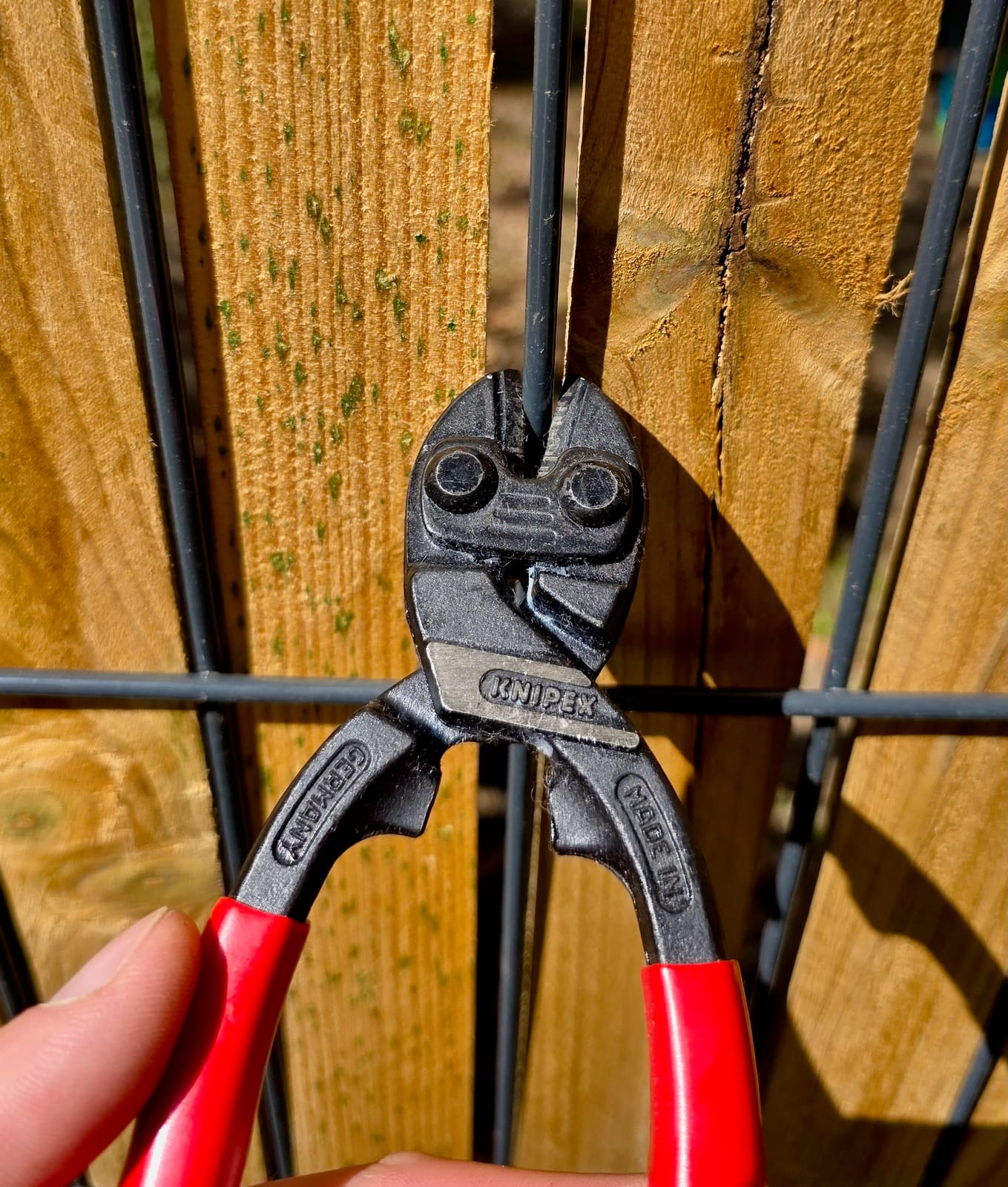
In 1988, Knipex launches the Cobolt, a compact bolt cutter whose sophisticated force-transmission system multiplies the user’s manual force by up to 20 times.
All in a compact format, very far removed from bulky traditional bolt cutters.
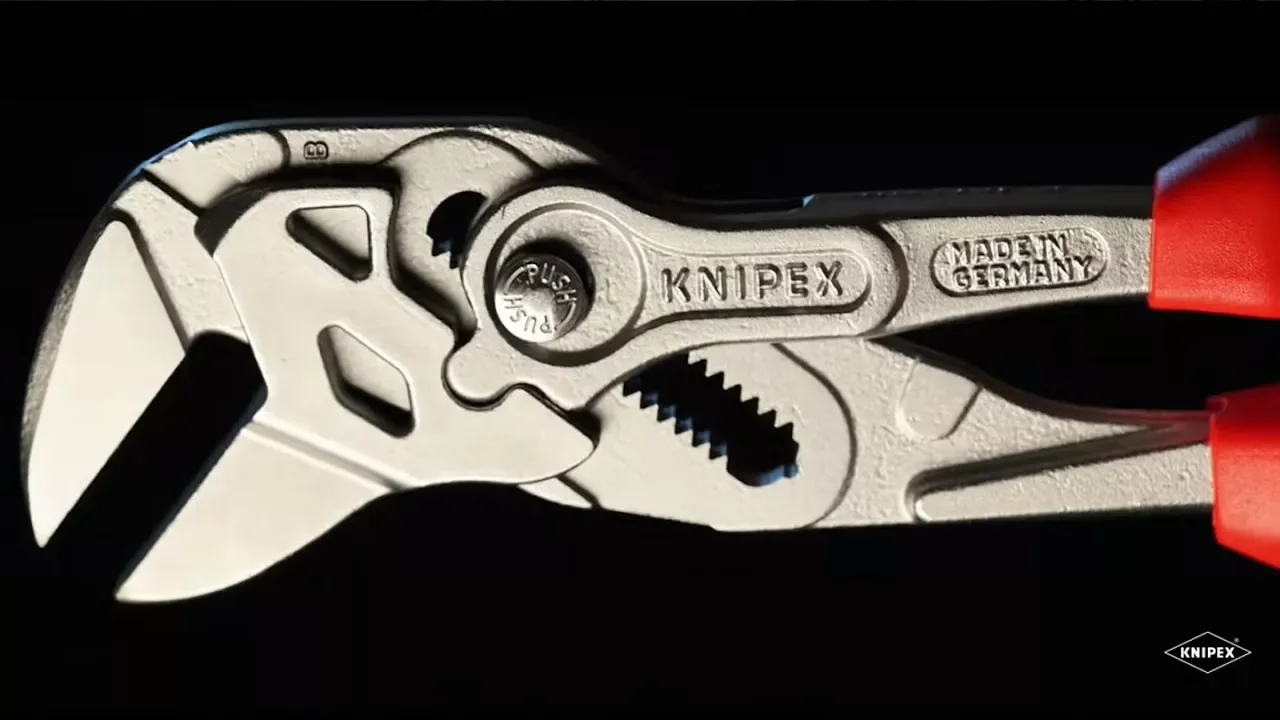
In 1994, Knipex invents an entirely new tool: the pliers wrench (Zangenschlüssel).
Neither a wrench nor pliers in the classic sense, this tool combines smooth parallel jaws (which do not mark surfaces) with a ratchet mechanism.
It can replace a complete set of open-end wrenches in many situations, tightening or loosening nuts and fittings without damaging their surface.
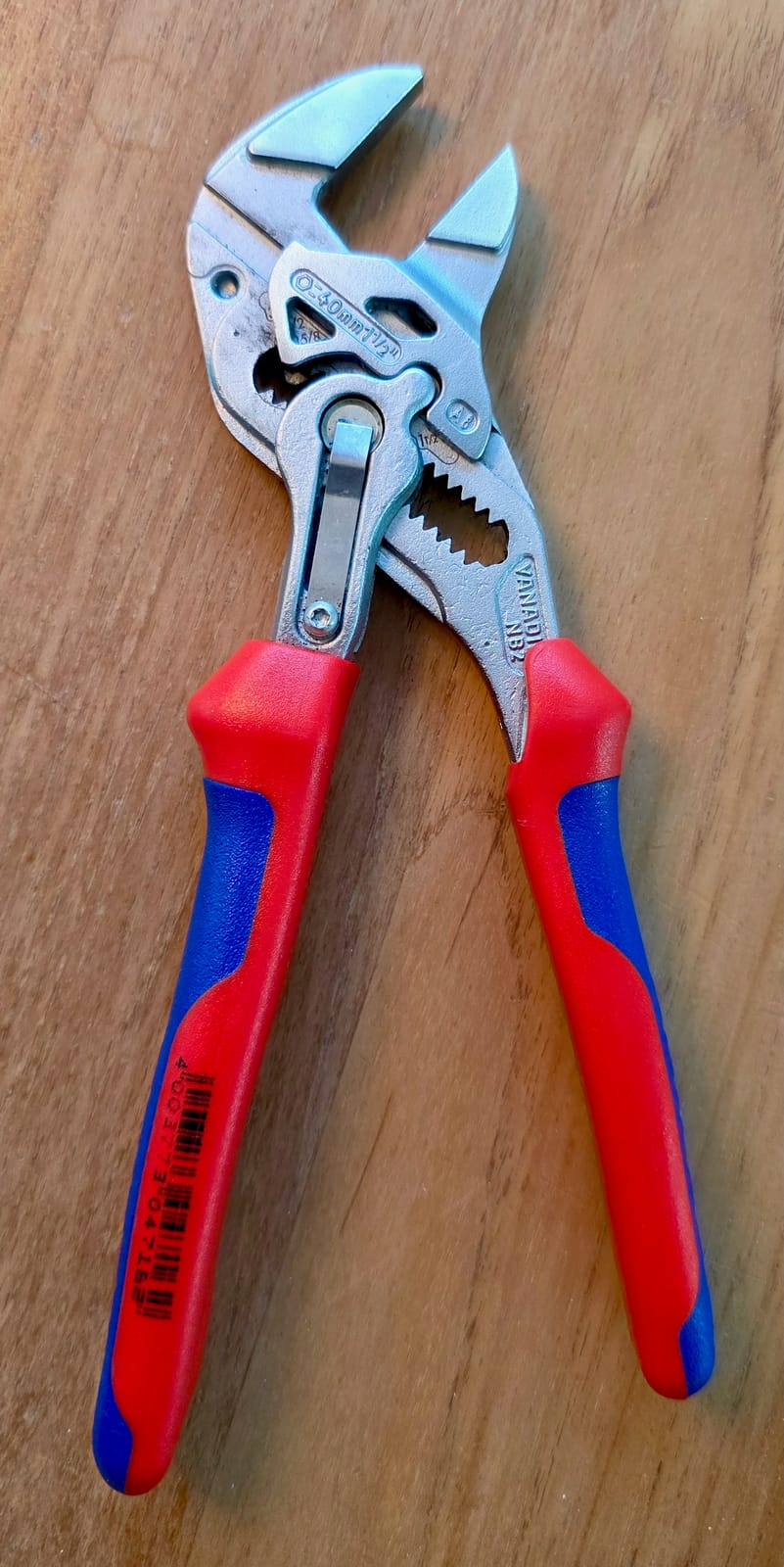
The pliers wrench has established itself among electricians, plumbers and mechanics.
Its ability to grip firmly without marking chrome or painted surfaces makes it a particularly popular tool for work on electrical panels and plumbing fittings.
| Innovation | Year | Main contribution |
|---|---|---|
| Innovation Alligator | Year 1973 | Main contribution Self-locking jaws for round and angular parts |
| Innovation Cobra | Year 1984 | Main contribution Push-button adjustment, 25 positions, self-locking |
| Innovation Cobolt | Year 1988 | Main contribution Compact bolt cutter, force multiplication x20 |
| Innovation Pliers wrench | Year 1994 | Main contribution Smooth parallel jaws, replaces a set of open-end wrenches |
| Innovation ErgoStrip | Year 2016 | Main contribution Universal 3-in-1 stripping tool |
| Innovation TwinGrip | Year 2021 | Main contribution Front and side grip, damaged screws |
| Innovation Cobra XS | Year 2020 | Main contribution Functional water pump pliers only 100 mm long |
| Innovation KNIPEXtend | Year 2024 | Main contribution Modular interface on the handles for accessories |
Timeline of major Knipex innovations
In 1996, Ralf Putsch, great-grandson of the founder and fourth generation of the family, takes over as head of the company.
He had joined Knipex as early as 1987, which gave him time to learn the trade under the guidance of his predecessor.
His strategic direction is clear: to internationalise the company on a massive scale without ever offshoring production. Under his leadership, the share of revenue generated internationally rises from modest levels to more than 60% of the total.
The acquisition of Rennsteig-Werkzeuge in 1991 deserves a special mention. This Thuringian company, specialising in cutting, stripping and crimping tools, has considerably expanded the Knipex catalogue.
Rennsteig has become the leading European supplier in its product range, which also includes striking tools.
ORBIS and WILL, the two other acquisitions, manufacture pliers under their customers’ brands (white label), which allows the group to also cover this market segment without diluting the Knipex brand.
In 2007, Knipex celebrates its 125th anniversary. The results are spectacular: sales have doubled in ten years, 800 employees produce 45,000 pliers per day, distributed in more than 100 countries.
Knipex has officially become the world’s leading pliers manufacturer.
In 2010, the company received the Wuppertal business award for “Company of the Year”, honouring innovation, growth and local commitment.
In 2019, Knipex won the prestigious “German Sustainability Award” in the medium-sized companies category, an award that recognises companies combining economic success, social responsibility and environmental protection.
In 2022, for the 140th anniversary, the figures rose again: more than 1 600 employees in Wuppertal, including more than 75 apprentices, and a daily production of 59 000 pliers.
The current range comprises around 100 types of pliers, available in more than 900 versions differing in length, shape and finish. This catalogue depth is unique in the hand tool industry.
For electricians, the most relevant range is that of VDE insulated tools, cutting pliers, wire strippers and crimping tools, a family I cover in detail with the Klauke K32 TWIST-it and K507 WF manual crimping pliers.
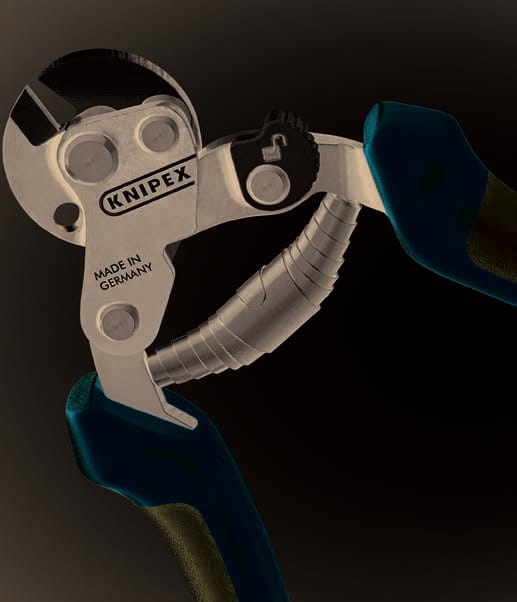
Crimping pliers 97 53 04
Every type of Knipex pliers can be recognised by the first two digits of its reference, stamped on the tool.
But Knipex also covers plumbing (Cobra, Alligator, pipe wrenches), automotive (circlip pliers, locking pliers), electronics (precision pliers) and specialised fields such as aerospace, photovoltaics and fibre optics.
Every Knipex plier carries a reference number whose first two digits indicate the type. For example: 87 designates the Cobra, 86 the pliers wrenches, 82 the TwinGrip. This system makes it easy to find your way around a very large catalog.
For any professional electrician, insulated tools are a fundamental piece of safety equipment.
Knipex produces a wide range of VDE-certified tools, tested for live working up to 1 000 V alternating current and 1 500 V direct current.
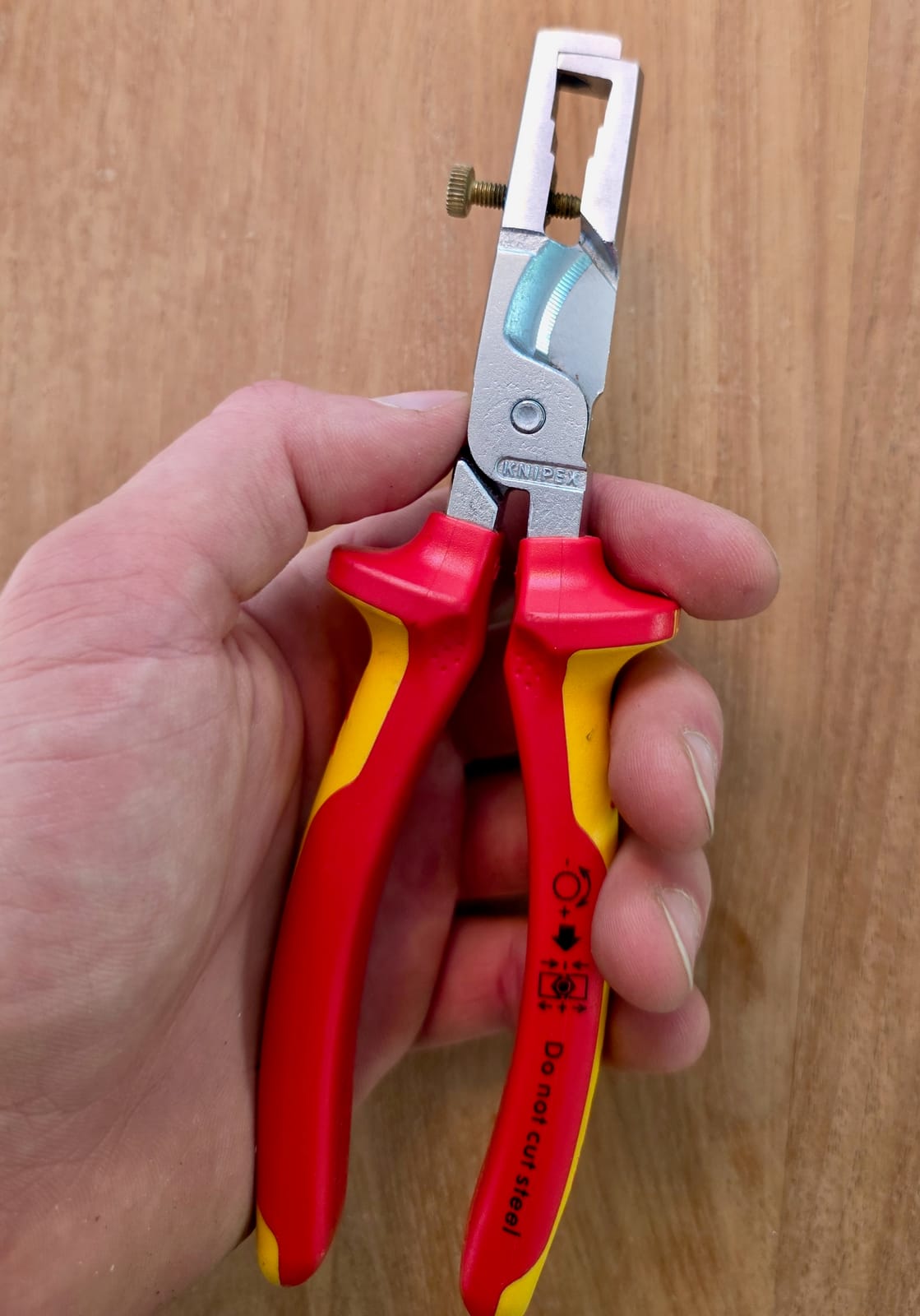
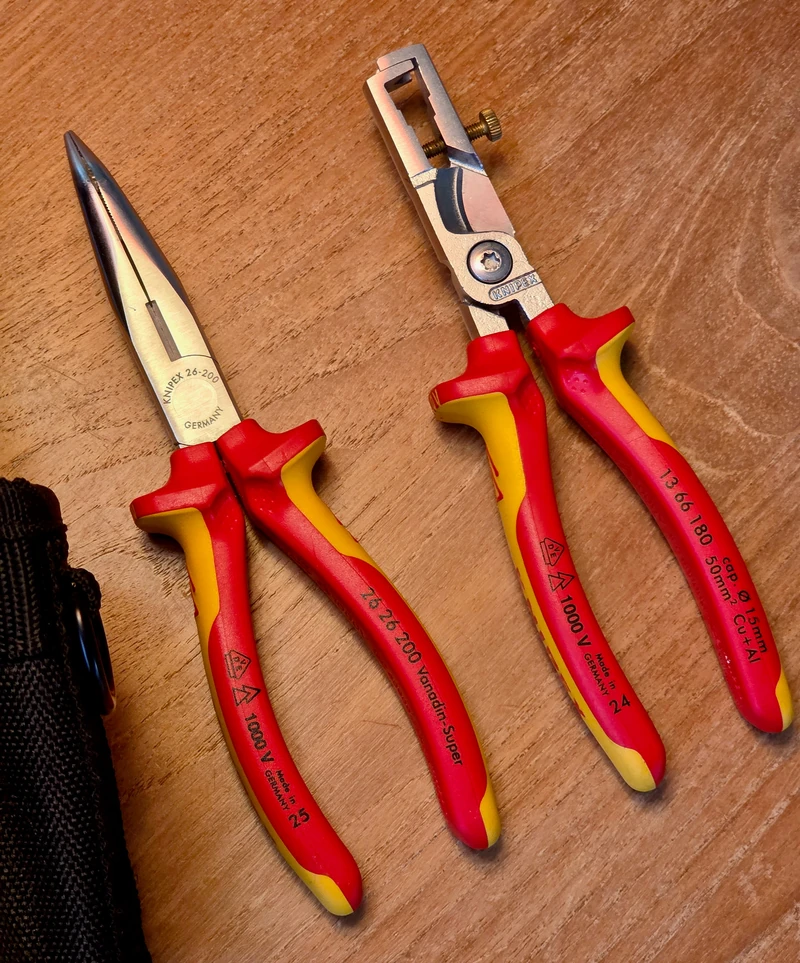
VDE wire stripping pliers 13 66 180: the yellow-red handles signal the 1000 V certification, the only reliable marker on a live site.
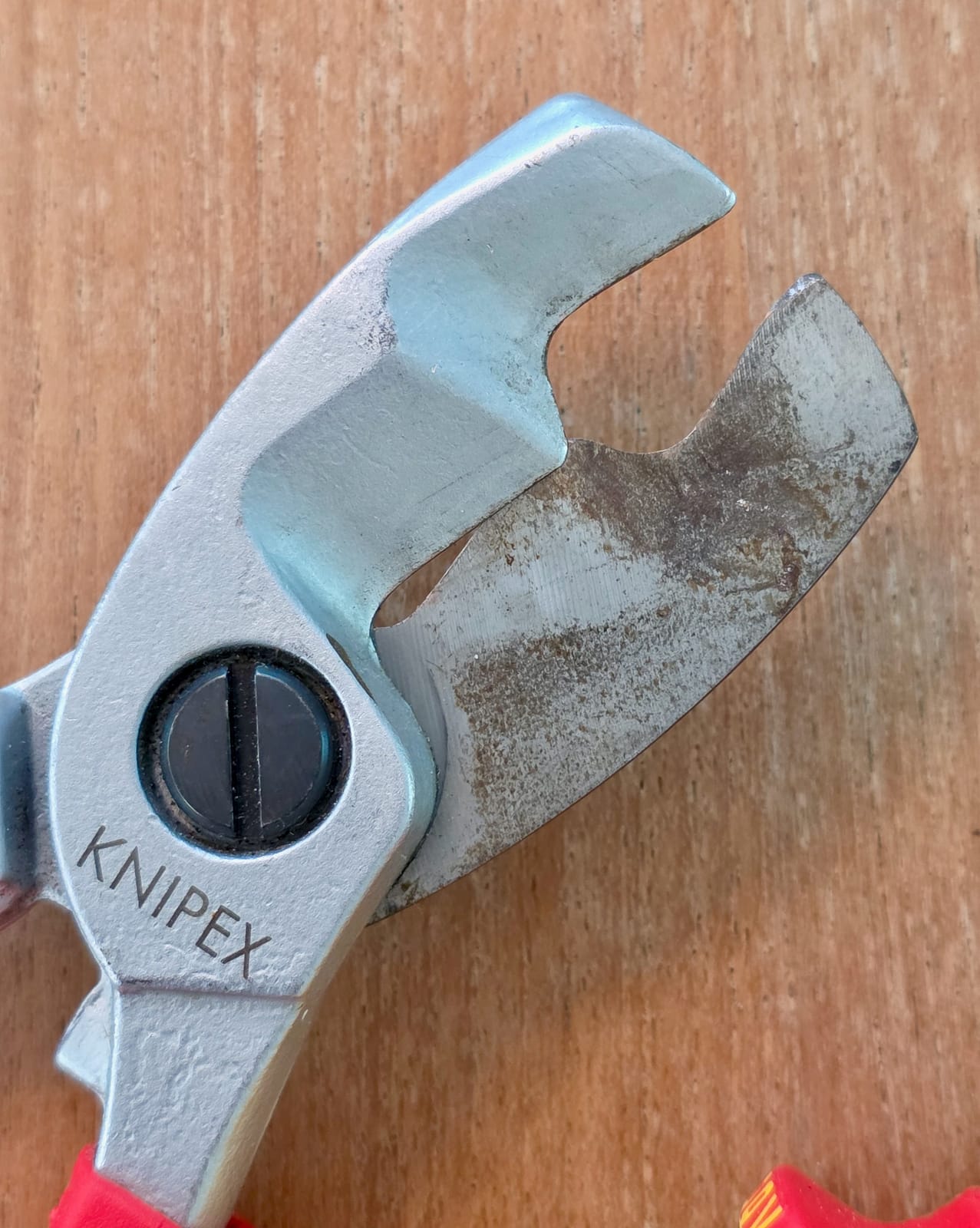
VDE cable cutter 95 16 200, jaw marked by use: the signs of wear are visible on the cutting part.
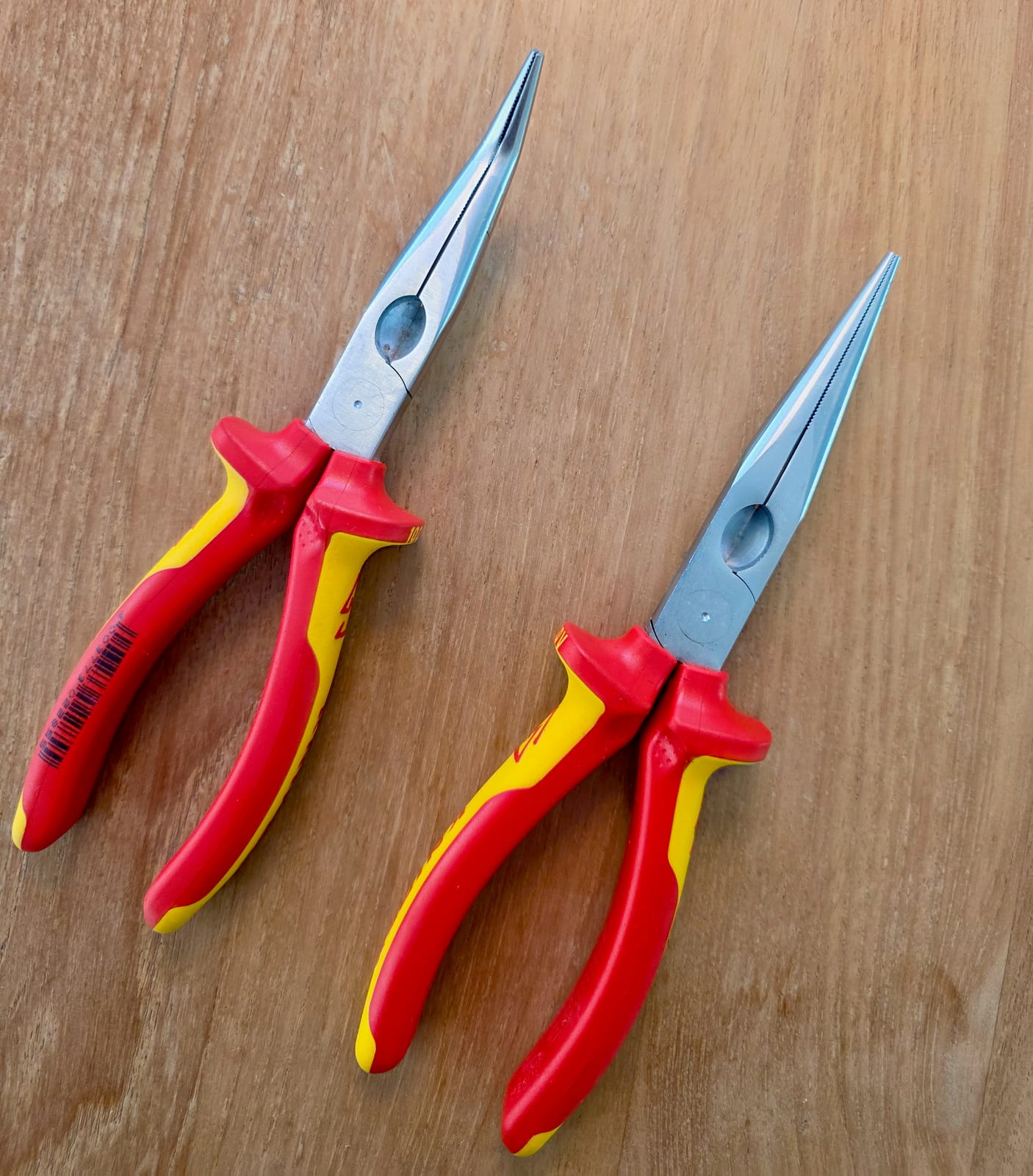
Two VDE 200 mm long nose pliers, one with a built-in cutting edge: the foundation of insulated tooling for panel work.
VDE (Verband der Elektrotechnik, Elektronik und Informationstechnik) is the German electrotechnical association, founded in 1893.
Its certification marks guarantee that a product complies with the safety and quality standards required for working on live electrical installations.
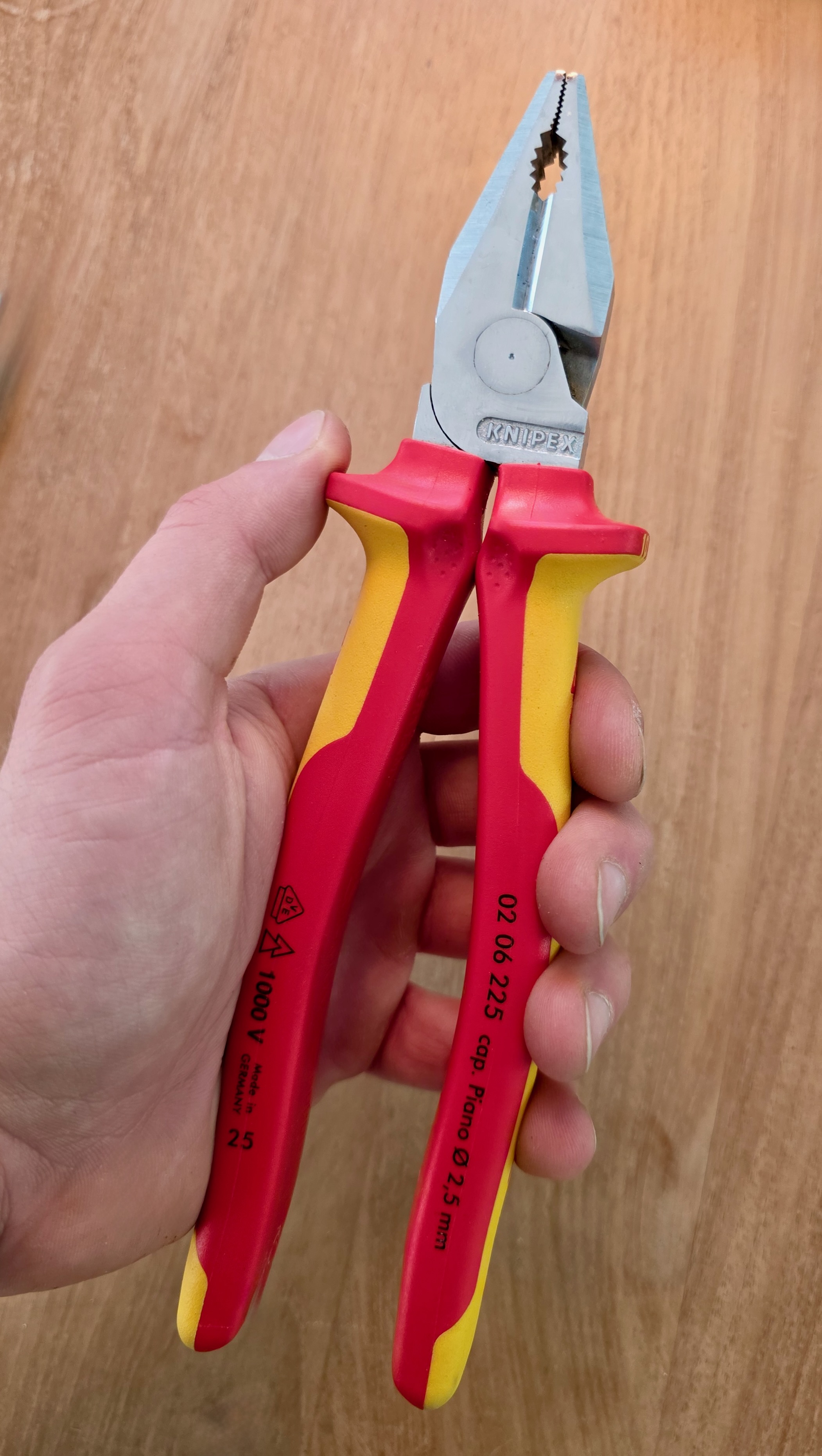
VDE combination pliers 02 06 225
The yellow and red handle is not enough: only the 1000 V symbol certifies the insulation for live working.
The reference standard for insulated tools is DIN EN IEC 60900.
Every insulated Knipex tool undergoes a 10 000 V dielectric breakdown test in alternating current before leaving the factory.
This individual test, rather than sampling, guarantees that every pair of pliers delivered actually withstands the rated voltage.
The insulation is also tested under extreme temperature conditions (70 °C and -25 °C), as well as under mechanical stress (tensile and impact).
In addition to internal checks, external institutes such as VDE verify that the tools comply with the certification criteria.
Attention
Knipex’s two-tone red and blue handles (or the new gray Comfort handles) are not VDE insulated. Only tools with yellow and red handles, marked with the 1000 V symbol, are certified for live work. This distinction is fundamental for safety on an electrical installation site.
Knipex offers two insulation variants: dip-coating insulation (the plier is dipped several times in liquid plastic, creating a one-piece sheath) and the yellow-red multi-component sheath, ergonomic and suited to every hand shape.
Both offer the same level of protection.
To appreciate the scale of production and the level of industrial expertise, this official Knipex video retraces the company’s journey and shows behind the scenes of manufacturing in Wuppertal.
One point radically sets Knipex apart from most of its competitors: all of the production remains in Wuppertal, at the historic Cronenberg site.
The company claims a vertical integration rate close to 100%, which means that every manufacturing step, from design to delivery of the finished tool, is handled in-house.
The jaws of the gripping pliers undergo an additional induction hardening treatment that brings their hardness to around 61 HRC, which explains their ability to bite into stainless steel or chrome-plated surfaces.
Knipex uses special steels, mainly chrome-vanadium steel, whose composition is optimized for each type of tool. Steel represents the leading raw material item and is subject to rigorous incoming inspection.
For cutting tools (cutting pliers, cable cutters), the company uses highly alloyed tool steel, treated to achieve high hardness levels while retaining enough toughness to prevent chipping of the cutting edges.
These tools directly support the actions described in installing an electrical socket: cut cleanly, strip without nicking, tighten without damaging.
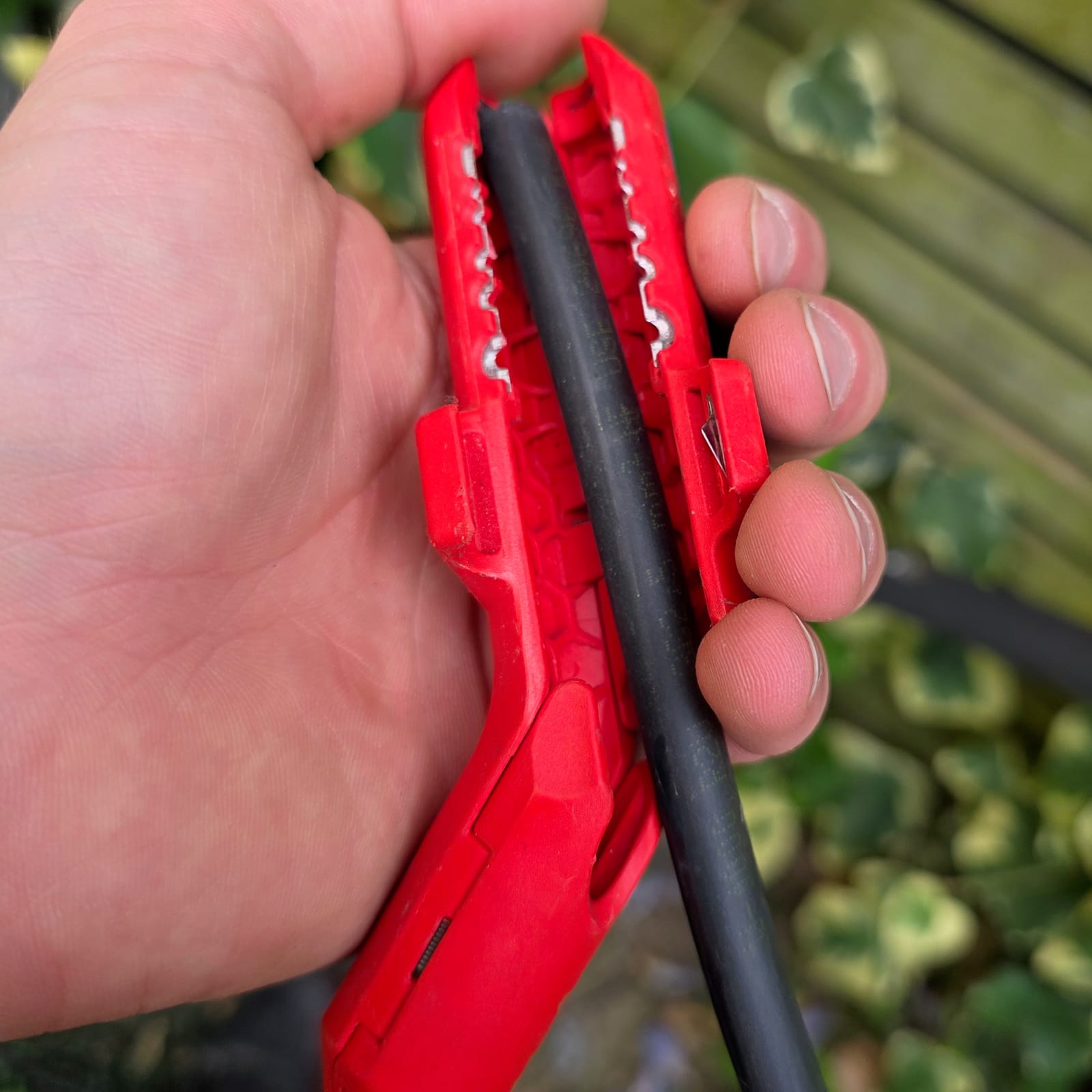
In 2016, Knipex launched the ErgoStrip, a universal stripping tool that combines three cable-handling functions in a single tool.
It is the brand’s first significant foray into the specific world of electrical installation, beyond conventional pliers.
The ErgoStrip enables fast and efficient work on round cables, flat cables and data cables.
Launched in 2021, the TwinGrip proves that the history of the pliers is far from over. This tool combines a front grip and a side grip thanks to a five-position sliding joint adjustable with a push button.
Its front jaws allow gripping and loosening damaged or rusted screws, a daily problem on electrical renovation job sites.
Since its initial launch in 200 mm, the range expanded in 2024 with 150 mm and 250 mm versions, offering greater flexibility depending on the situation.
In 2024, Knipex introduced new Comfort handles with three components, gradually replacing the classic two-tone red and blue handles.
The major new feature is the KNIPEXtend interface built into the end of the handles, which allows accessories to be attached: ColorCode clips to visually identify your pliers, or TetheredTool clips to secure the tool with an anti-drop lanyard (essential for working at height).
Knipex even published the 3D data for the interface so that users can create their own accessories through 3D printing. An unusually open approach for a manufacturer of this size.
At its Wuppertal site, Knipex houses a two-story museum covering 800 m², dedicated to the history of tools in the Bergisches Land.
There you can find nearly 80 historic machines of large size (power hammers, grinders, period workbenches), as well as old tools, everyday objects and reconstructed workshops that illustrate the working and living conditions in this industrial region.
This museum, free for visitors, reflects the company’s attachment to its roots and to passing on the regional industrial heritage.
Over the past few years, Knipex has taken a significant environmental turn.
The company has reduced its greenhouse gas emissions by nearly 40 % compared with 2020 and aims for a 50 % reduction by 2030, with a target of climate neutrality by 2045.
The most striking measure is the switch to green steel (Green Steel), a low-emission recycled steel. Knipex began this transition and completed it in 2025.
Recycled green steel reduces emissions by more than 80 % compared with primary steel produced from iron ore, while retaining the mechanical properties that professionals depend on.
The company now publishes the product carbon footprint (PCF) of every forged plier directly on the product pages of its website.
Two indicators are displayed: the proportion of recycled steel used and the CO₂ emissions associated with production.
Knipex has installed photovoltaic panels on the roofs of its production halls since 2011 and recovers waste heat from its annealing workshops to supply the heating system.
The company has followed an energy management system compliant with the ISO 50001 standard since 2014.
On the social front, Knipex takes part in the SEKEM project to regreen the Libyan desert (more than 49 000 trees planted) and supports the start-up Plastic Fischer, which intercepts plastics in the tributaries of the Ganges (more than 70 tonnes collected on behalf of Knipex).
Conseil
Knipex favours local suppliers: 48 % of its suppliers are based in North Rhine-Westphalia, and the goal is to keep at least 85 % of the procurement budget in Europe.
Knipex-Werk C. Gustav Putsch KG is structured as a Kommanditgesellschaft (limited partnership), a legal form common among German family businesses.
The company remains entirely owned by the Putsch family, with no outside shareholders.
This capital independence is presented as a strategic advantage: it allows decisions geared toward long-term quality and innovation rather than quarterly results.
This philosophy explains, among other things, keeping all production in Wuppertal even though offshoring could have generated short-term savings.
The Knipex group employs a total of more than 2 000 people across four German production companies (Knipex in Wuppertal, Rennsteig in Thuringia, ORBIS in the Münsterland, WILL in Hesse) and several international sales subsidiaries.
More recently, SIB-Tooling joined the group to strengthen machining expertise.
| Entity | Location | Specialty |
|---|---|---|
| Entity Knipex (parent company) | Location Wuppertal-Cronenberg | Specialty Professional pliers (Knipex brand) |
| Entity Rennsteig-Werkzeuge | Location Thuringia | Specialty Cutting, stripping, crimping and striking tools |
| Entity ORBIS | Location Ahaus (Münsterland) | Specialty White-label pliers manufacturing |
| Entity WILL | Location Neustadt (Hesse) | Specialty White-label pliers manufacturing |
| Entity SIB-Tooling | Location Germany | Specialty Precision machining |
Composition of the Knipex group in 2026
As an electrician in the Paris region, I use several Knipex pliers every day.
The Cobra 250 mm is probably the tool I reach for most often: tightening cable glands, holding fittings, unscrewing stubborn parts.
The 180 mm pliers wrench comes with me on every electrical panel job for tightening terminal blocks and connectors without marking the surfaces.
Retour de chantier
I’ve had the chance to test cheaper alternatives on some jobs. The comfort difference becomes apparent after a few hours: hand fatigue is noticeably more pronounced, and less precise adjustments slow the work down. On a full day of panel wiring, the quality of the tooling has a direct impact on productivity and the precision of the work.
For repairs, the Knipex 160 mm VDE diagonal cutter is my main cutting tool on copper cables up to 4 mm².
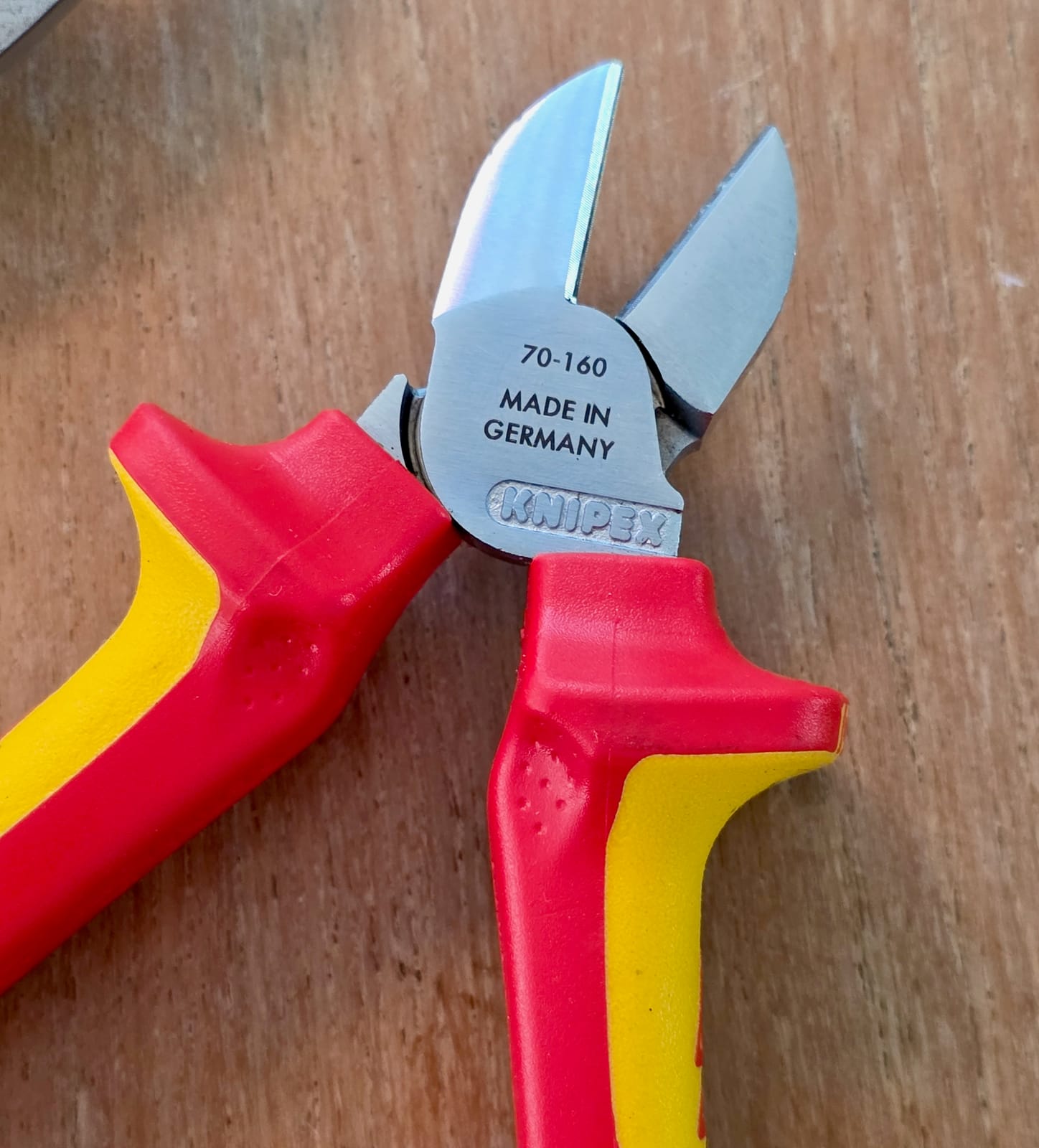
VDE diagonal cutter 160 mm
This is the main cutting tool for repair jobs: it cuts through copper up to 4 mm².
And for work on old installations with corroded screws and nuts, the TwinGrip has become an almost indispensable tool.
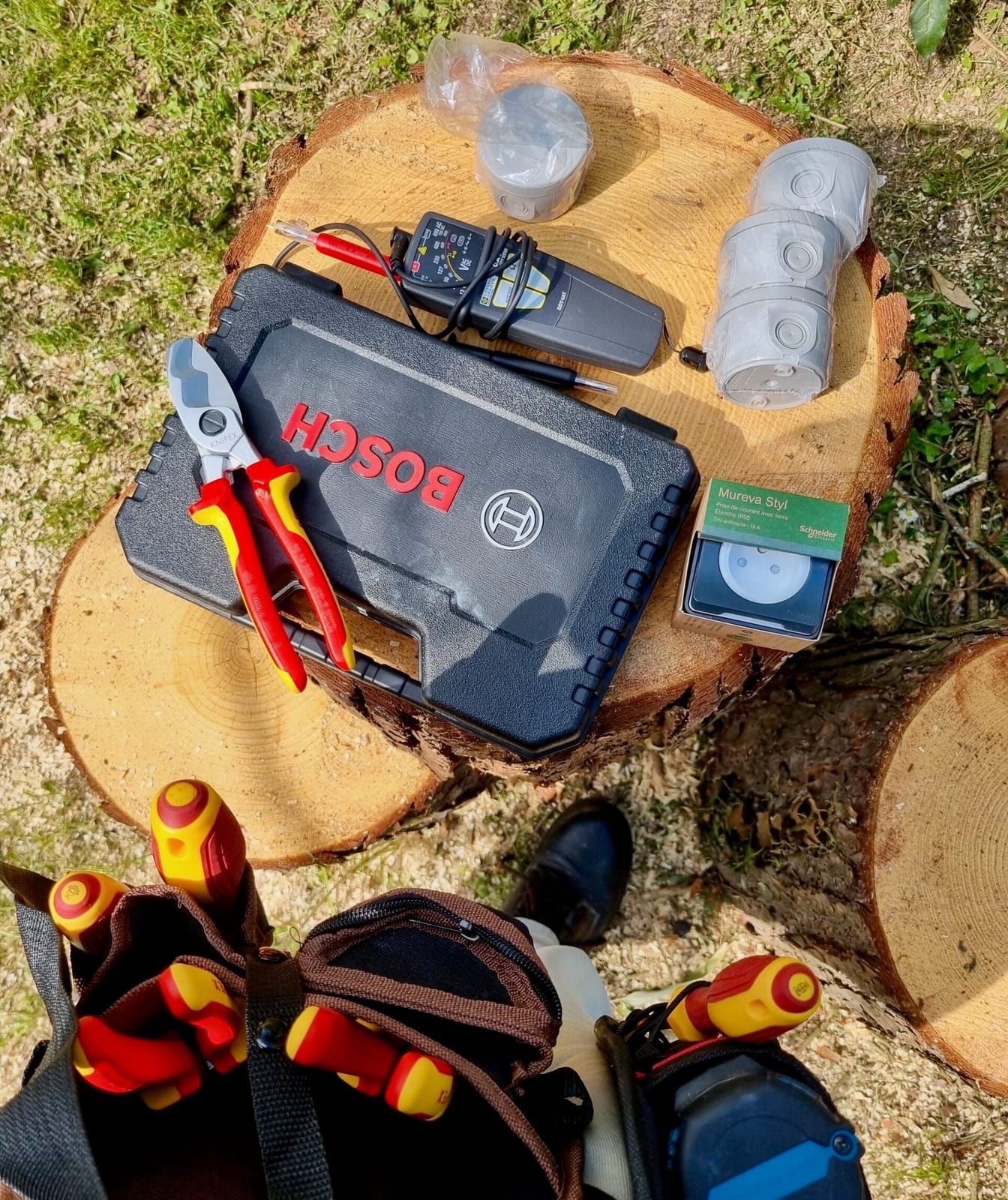
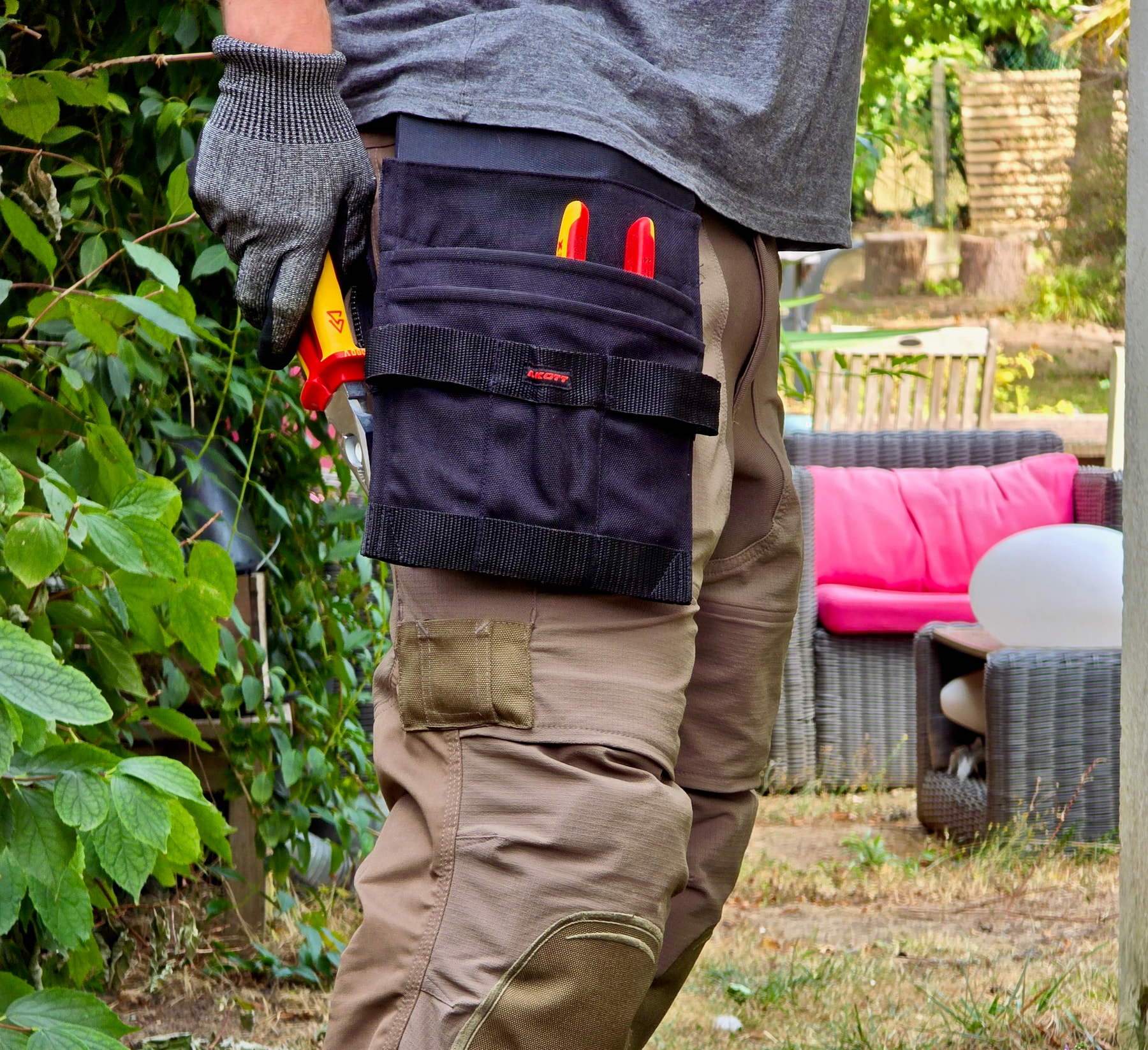
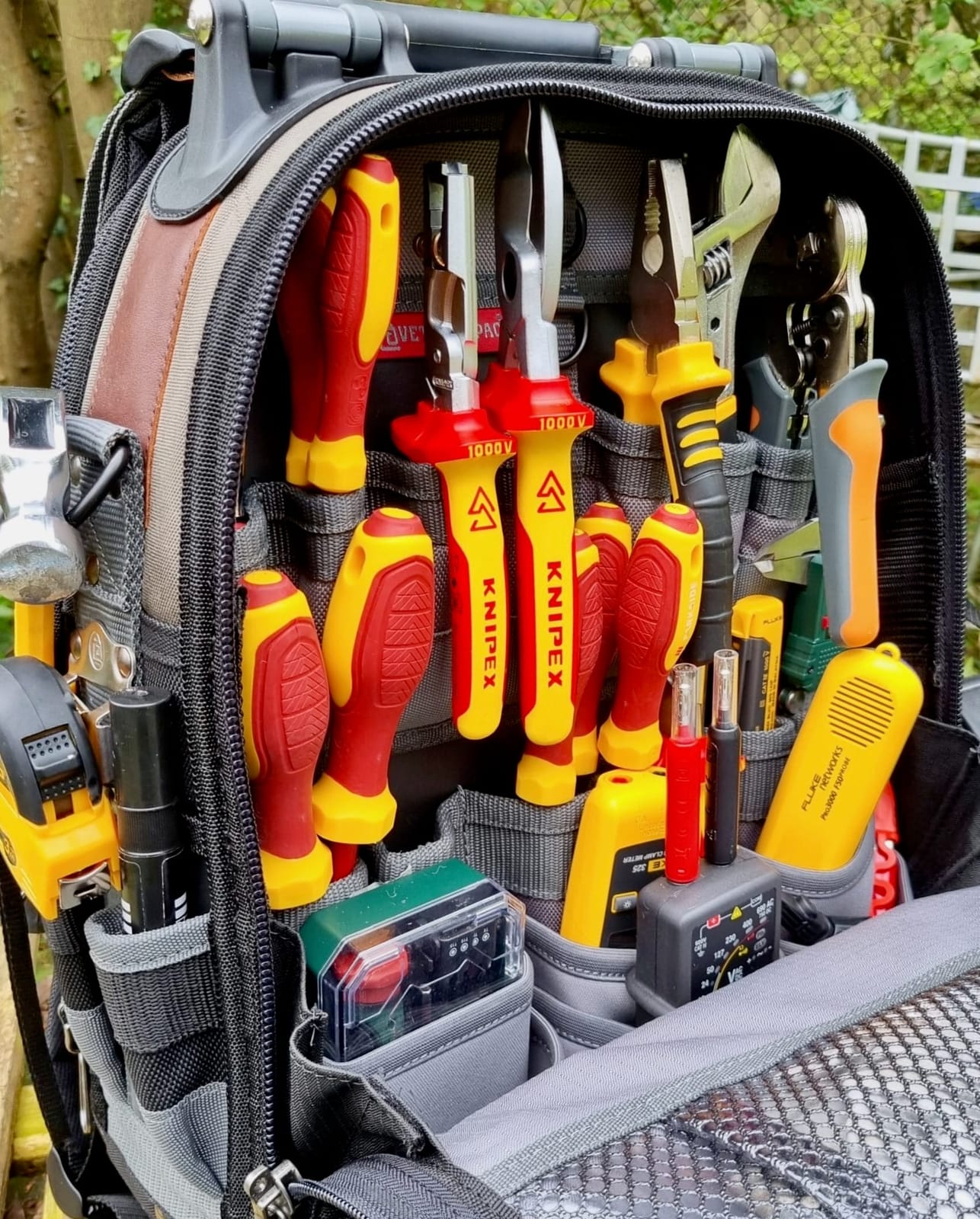
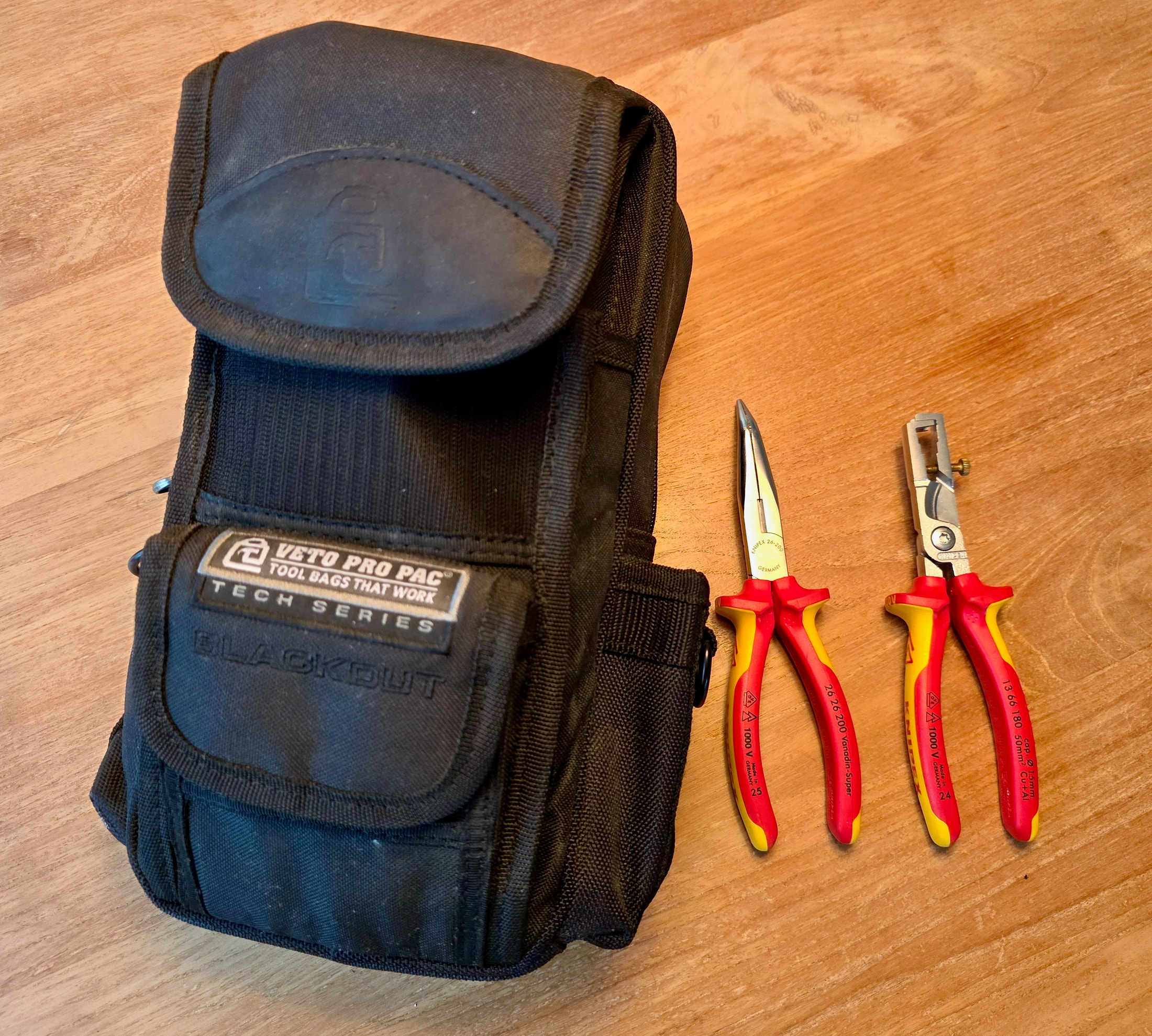
Here are these pliers stored in a tool bag.
The question often comes up: why pay more for Knipex pliers when alternatives exist? The debate deserves to be laid out honestly.
Channellock, founded in 1886, is the historic American competitor.
Its slip-joint (“tongue and groove”) pliers are sturdy and cheaper, but their adjustment system is markedly less precise than that of the Cobra.
The finish and the hardness of the jaws also lag behind. For occasional domestic use, Channellock does the job.
For a professional who uses their pliers 8 hours a day, the difference in comfort and durability justifies the price difference.
NWS, another German manufacturer based in Solingen, offers pliers of comparable quality at slightly lower prices. The choice between the two brands often comes down to personal preference.
NWS is particularly appreciated for its cutting pliers.
The Knipex vs Wiha comparison is a topic I covered in detail. Wiha excels in screwdrivers and insulated tools, but does not make multigrip pliers. The two brands are complementary rather than competing for an electrician.
What fundamentally sets Knipex apart is specialization. The company has made nothing but pliers for 140 years.
This total concentration on a single type of tool, combined with a level of vertical integration close to 100 % and continuous investment in research and development, produces a level of quality and innovation hard for generalist manufacturers to match.
The story of Knipex illustrates an industrial model that runs counter to many current trends. Where other companies diversified, Knipex stayed focused on pliers.
Where others offshored production, Knipex still manufactures in Wuppertal. Where others opened up their capital, the Putsch family remains in charge after four generations.
This model has a cost: Knipex pliers are among the most expensive on the market. But for professionals who use them daily, they represent an investment rather than an expense.
A tool that lasts for years, that doesn’t slip, that doesn’t tire the hand and that respects work surfaces is a tool that saves time and energy with every use.
For electrician tradespeople like me, it is also a form of respect for the trade: working with the best tools available means taking the quality of your work and your clients’ safety seriously.
In the field of electricity, where every poorly tightened connection can have serious consequences, the quality of your tools is not a luxury. To complete your bag on the measurement side, compare Fluke and Chauvin Arnoux next.
“Four generations, one single trade. The Knipex plier is perhaps the most underestimated tool in my bag — and yet the one I use the most.” — Theo, electrician
3 questions
InteractiveQuiz: the Knipex story in key figures
3 questions to check the essential points
Choose an answer
All Knipex pliers are manufactured in Wuppertal-Cronenberg, Germany, at the historic site founded in 1882. The company has never offshored its production.
Ralf Putsch, great-grandson of founder Carl Gustav Putsch, has led the company since 1996. He represents the fourth generation of the family heading Knipex.
No. Only tools with yellow and red handles, marked with the 1000 V symbol, are VDE certified for live work. Red and blue handles (or the new gray Comfort handles) do not protect against electric shock.
The Cobra (1984) has a push-button adjustment with 25 locking positions and a self-locking mechanism. The Alligator (1973) has self-gripping jaws with a classic sliding joint. The Cobra is more versatile, the Alligator is easier to use.
In 2022 (the latest figures published for the 140th anniversary), Knipex produced around 59,000 pliers per day in Wuppertal.
100% German manufacturing, a vertical integration rate close to 100%, special steels, advanced heat treatments (61 HRC on the jaws), quality control at every step, continuous research and development. Each pair of pliers is the result of a demanding industrial process, not a simple assembly.
It is a modular interface built into the new Comfort handles, allowing accessories to be attached: color clips to identify tools, or anti-drop safety clips. The 3D data for the interface is available to create your own accessories.
No, Knipex is exclusively specialized in pliers and gripping, cutting and crimping tools. For screwdrivers, the complementary brands are Wera and Wiha.
Green steel (Green Steel) is a steel produced from recycled materials using a low-emission process. Knipex completed the transition to this steel in 2025, reducing raw-material emissions by more than 80% compared with conventional primary steel.
Théo Desrousseaux
Electrician and editor
I work in the field and edit this magazine. Every guide is reviewed for its target country before publication.
Sources and references
Practical electrical installation guides, diagnostic methods and tool recommendations compared against the technical wiring standards of this national edition.
KNIPEX 86 03 180 pliers wrench: 35 mm capacity, 13 positions, variants, smooth jaws, verified uses and maintenance for electricians.
Read the guide Guide Knipex Cobra vs Facom: water pump pliers compared Cobra 87 01 250 vs Facom 181A.25G: 25 positions against 12, jaws, opening, ISO 8976 standard and insulation compared reference by reference. Read the guide
  Guide KNIPEX 87 51 180 pliers: review and electrician uses KNIPEX Cobra ES 87 51 180 water pump pliers: technical specs, hands-on handling, push-button adjustment, 180 mm format and usage framework. Read the guide
  Guide Knipex, Wiha or Wera: comparison for electricians Knipex, Wiha or Wera: compare VDE pliers and screwdrivers by equivalent references, ergonomics, certification and field use for electricians. Read the guide