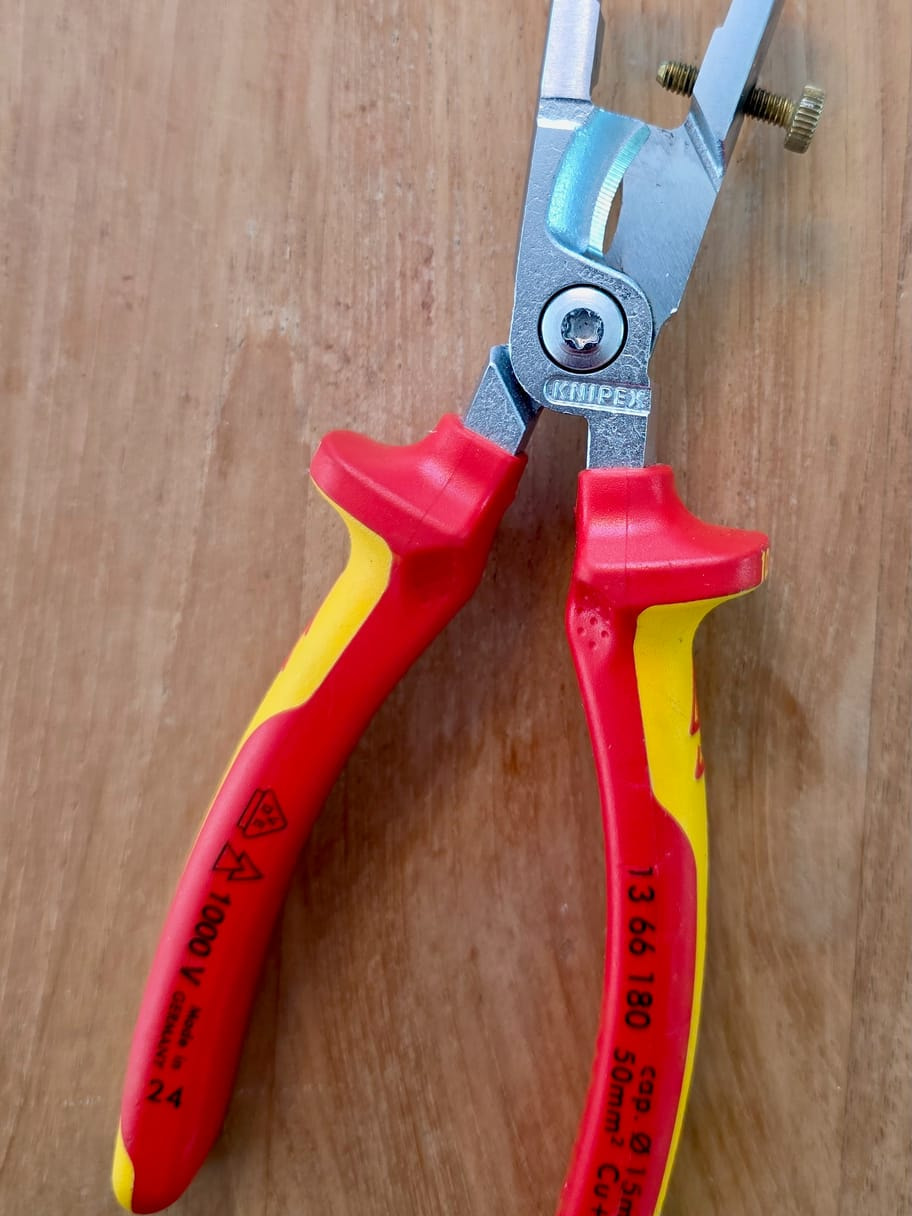
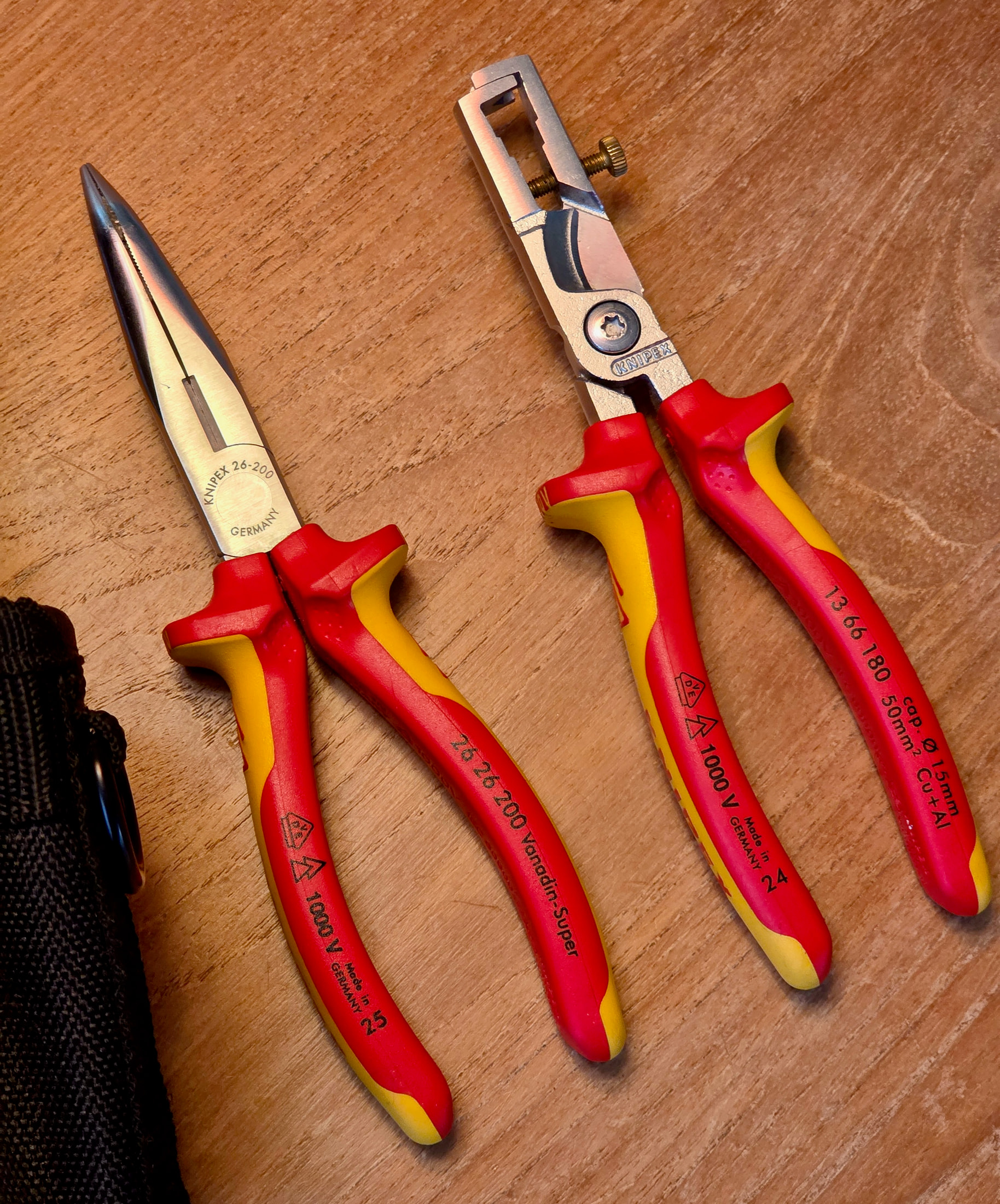
Classic wire stripper
The difference from an ordinary pair of pliers is clear at a glance on these two controls
Published 22 January 2026
In brief
A screwdriver too thick for a deep terminal block, a screw stripped in an emergency: this field comparison pits the Knipex pliers against the Wiha screwdriving tools to identify when to use one, the other, or both.
For switchboard equipment, also see my comparison Legrand vs Schneider.
33%
diameter reduction with Wiha SlimTechnology
10 000V
individual VDE test on every Wiha blade
60 HRC
hardness of the Knipex steel after oil hardening
After unpacking dozens of toolboxes in the Paris region, one thing is clear: the duel between Knipex and Wiha is unavoidable for any serious electrician.
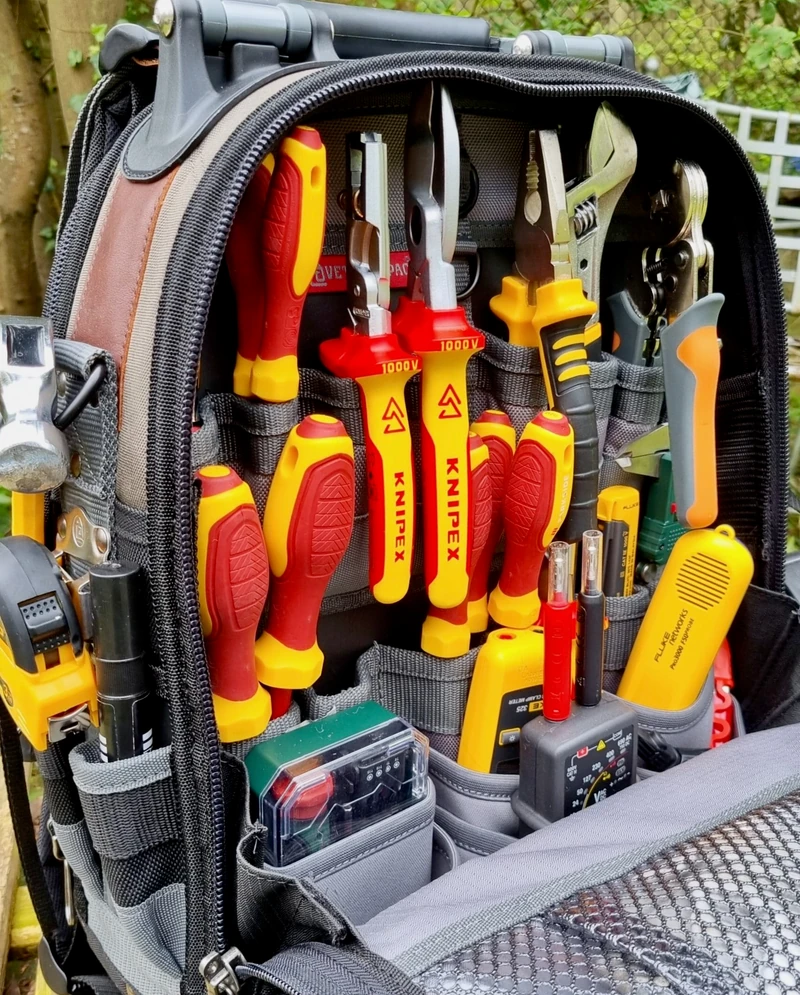
I sort my pliers by action, never by brand: cut, grip, strip. I want to pull out the right one right away, without thinking about the model printed on the handle.
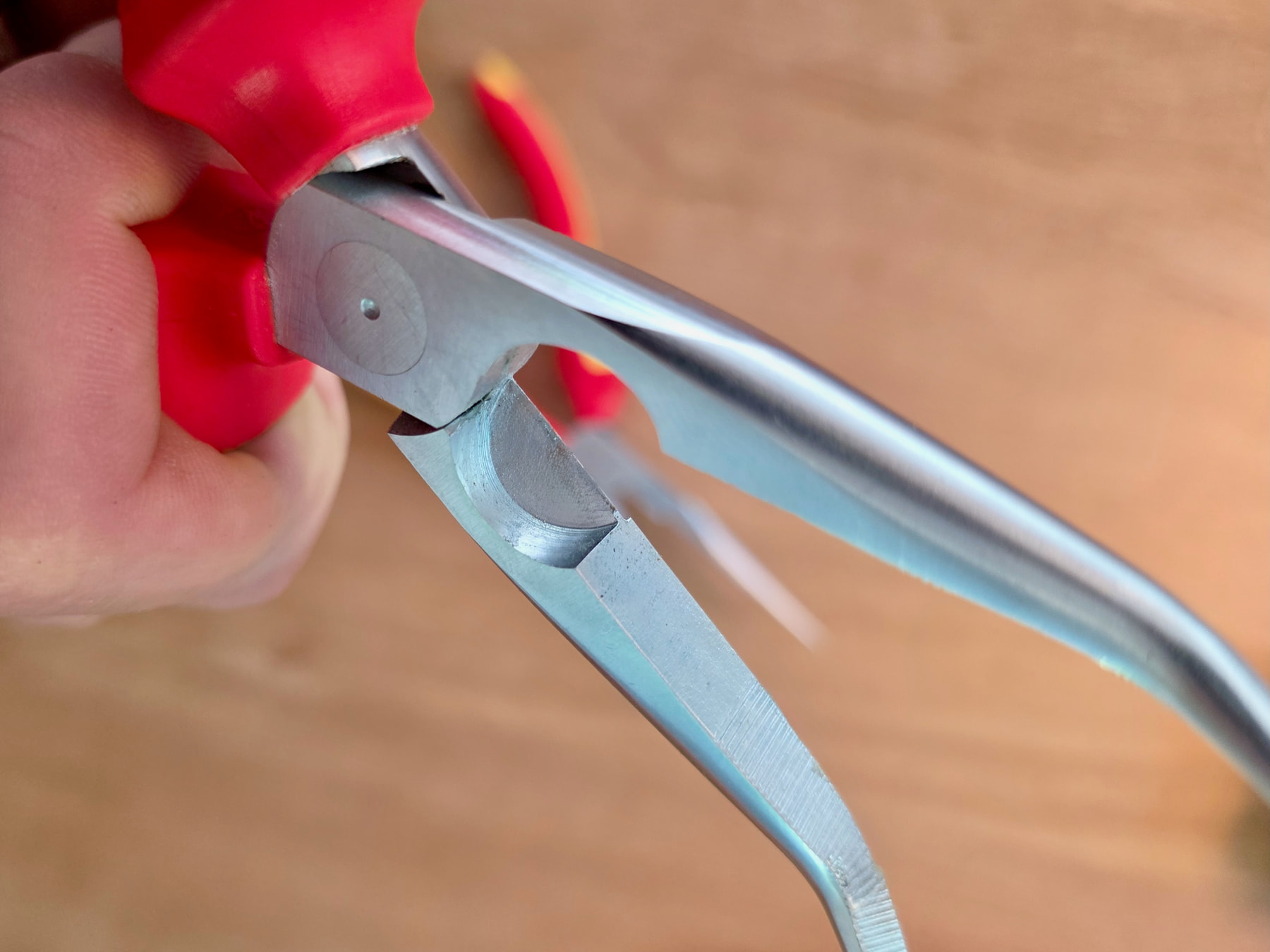
My criterion between combination and long-nose pliers is the angle of attack. On a clear surface, the combination pliers give full leverage. At the back of a flush-mounted box, where I can’t see the jaws, I take the long-nose: it grabs the screw at an angle when the combination pliers slip.
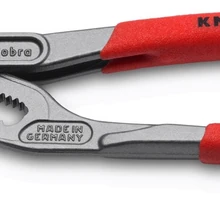
The Cobra keeps its role on nuts and stubborn fasteners, and the TwinGrips on seized screws: their self-locking mechanism spares me from struggling with a conventional jaw.
For cutting, the side cutter remains my first reflex. But I never force the movement: as soon as I have to resume the cut, I consider that it is no longer the right tool.
I limit the number of open pliers on the job site: the minimum in hand, the rest closed in the tool bag. The less I put them down, the fewer I forget, and the less the insulation suffers.
I check the 1000V marking on the handles when putting them away, not in a rush. A tool whose inscription fades comes out of the kit, even if it still cuts correctly.
My last criterion is access length. A short plier manoeuvres in a narrow box, a long plier reaches the bottom without me having to stretch over the edge of the enclosure.
Chrome-vanadium steel forges Knipex’s reputation. The jaws undergo oil hardening that guarantees extreme hardness against hard steel wires.
The geometry of the cutting edges ensures optimal leverage for cutting without excessive effort on the job site.
For hard wires, the range evolved in 2026: Knipex presented in spring redesigned versions of the high-leverage side cutters 74 200 and 74 250, the 74 250 being available since August.
The manufacturer announces a cut 20 % easier than the previous model — a modern alternative to the 26 26 200 that I recommended until now.
My rule comes down to one sentence: as long as my hand is enough, I stay with the side cutter; as soon as I have to put my weight on the handle, I switch to the 95 16 200 cable cutter.
Forcing a cutter does not only damage the cutting edge. The wrist takes the strain, the cut goes off at an angle, and I lose at stripping the time I wanted to save on the cut.
On long runs, I watch the play at the joint and the sharpness of the cutting edges. A cutting edge that marks the copper instead of slicing through it warns me: the next movement will demand more effort.
A cutter is judged on the last cut of the day, not the first. It is at the end of a run that the play and the loss of bite are felt in the hand.
For hard wires, I follow how the range evolves: the 74 200 and 74 250 side cutters make cutting easier than previous models. The 26 26 200 stays in my bag, it has proven itself.
I change tools before I feel the pain, not after. It is the same reasoning as with screwdriving: a hand that forces ends up fumbling its movement, and a bad movement is paid for in rework.
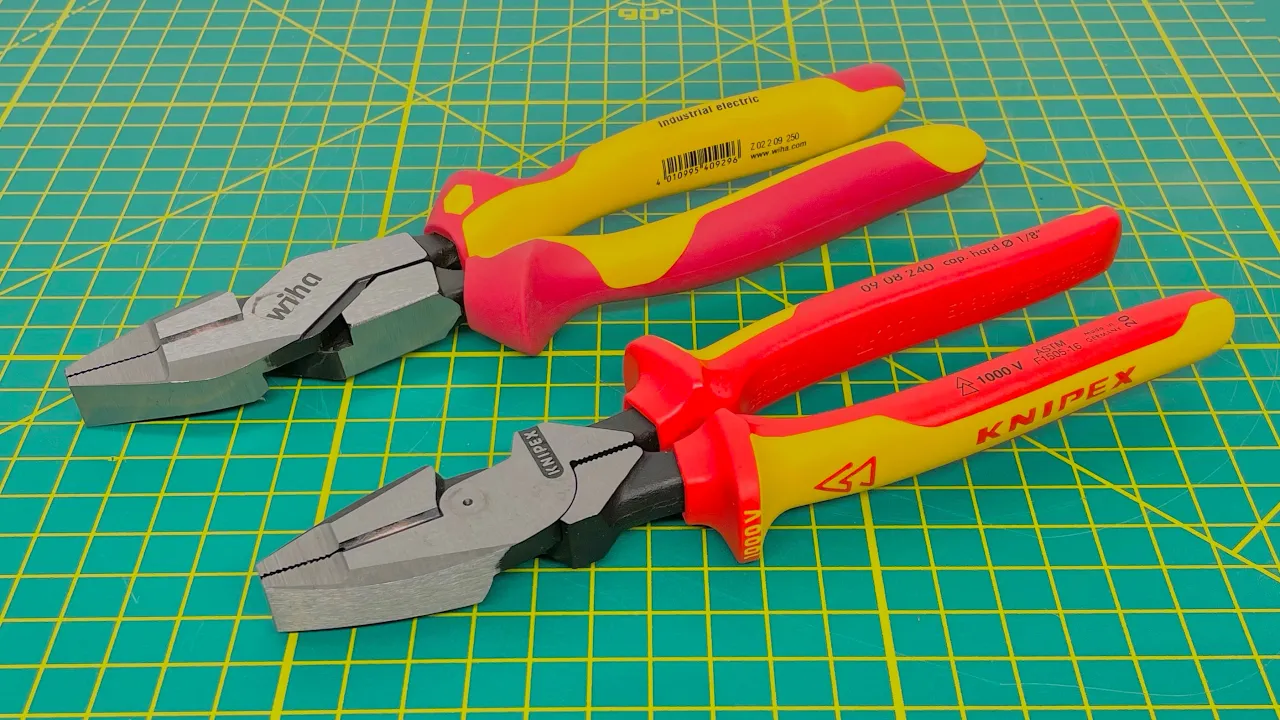
In a direct comparison, Knipex often outperforms the competition. The tips show no notable deformation after intensive use. Longevity remains the strong point, with edges staying sharp for years.
The ErgoStrip transforms stripping inside a flush-mounted box. This hybrid model offers a major time saving in renovation thanks to an intuitive grip.
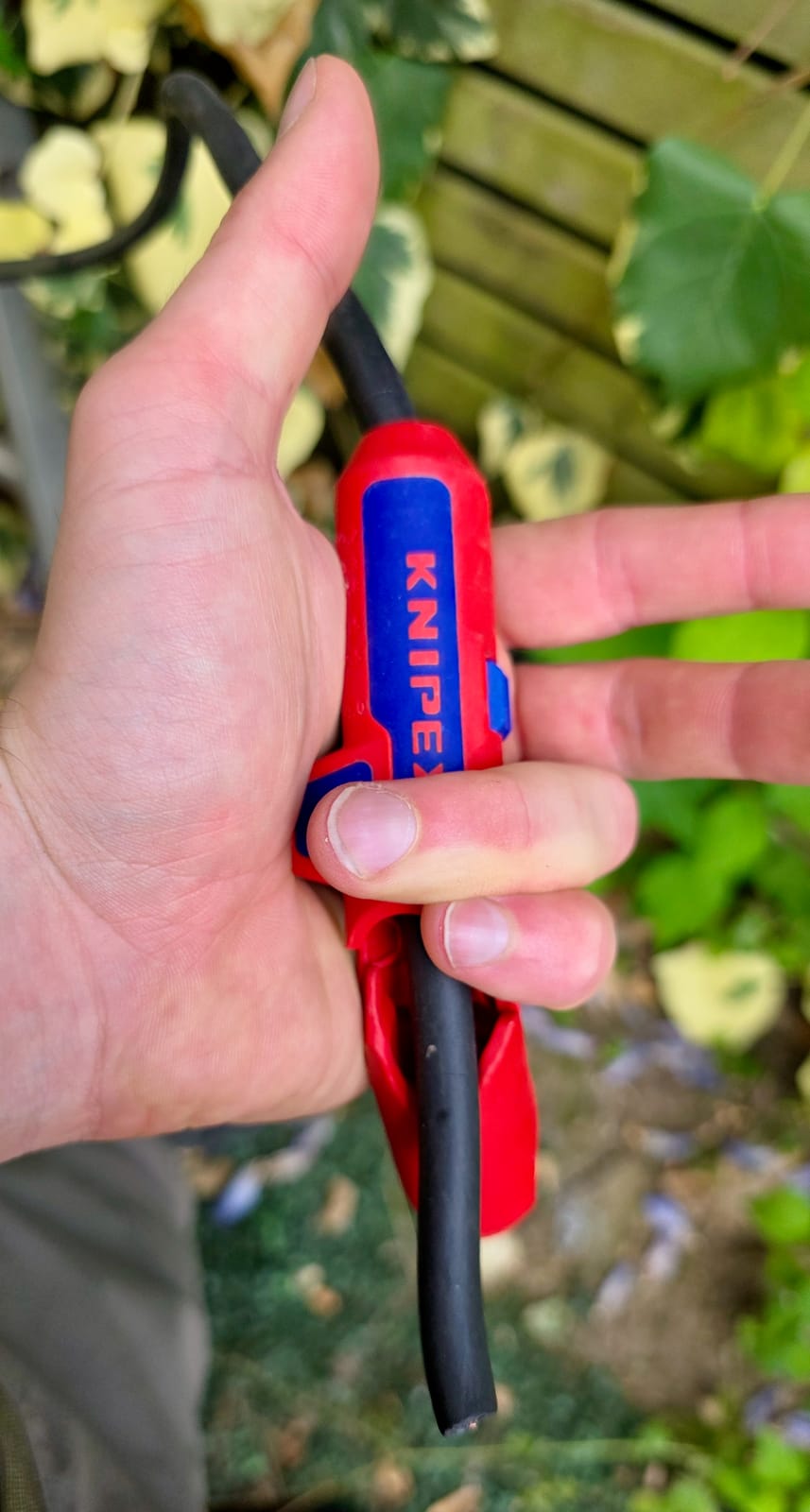
The ErgoStrip gripping an R2V cable: guided stripping with no prior adjustment, even at the back of a flush-mounted box.
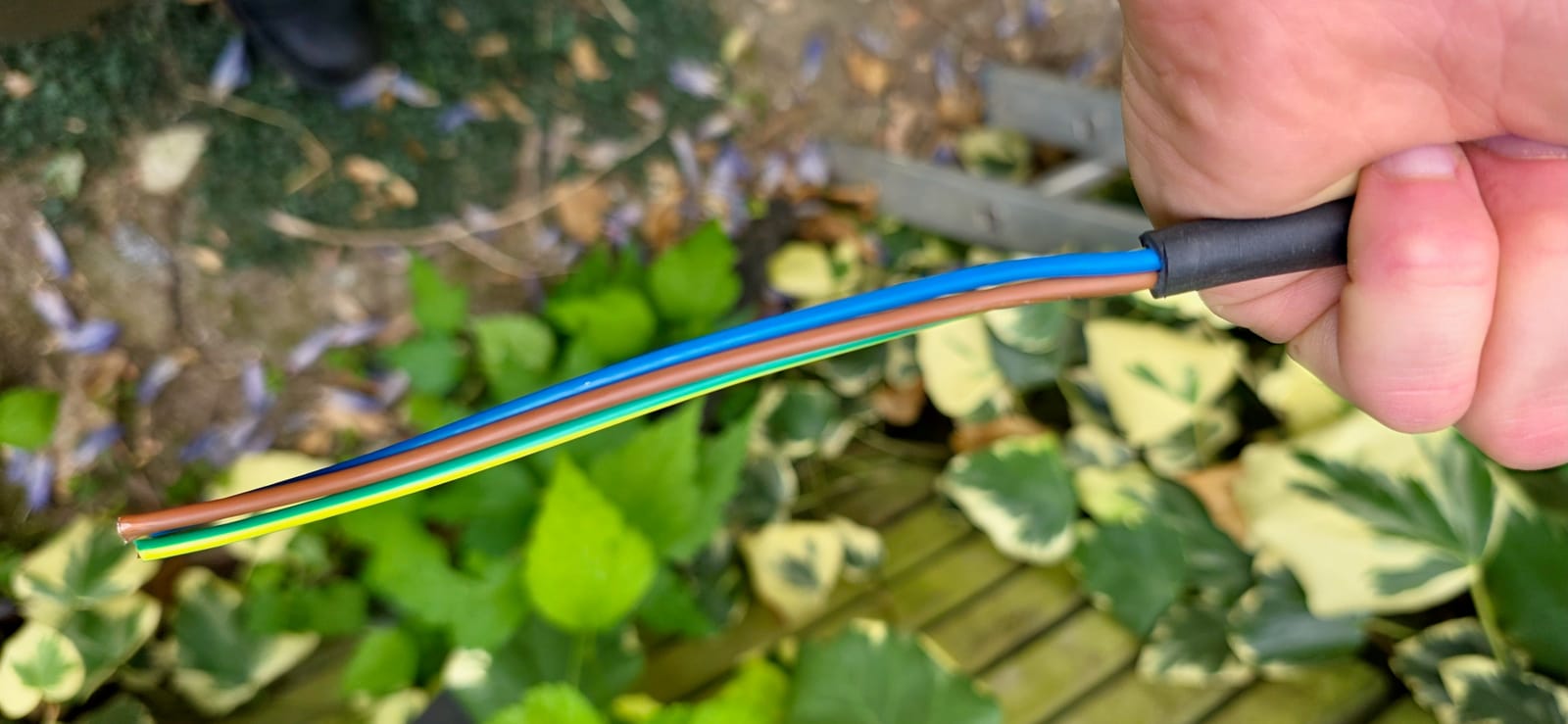
The result: sheath and conductors cleanly stripped, with no nicking into the copper.
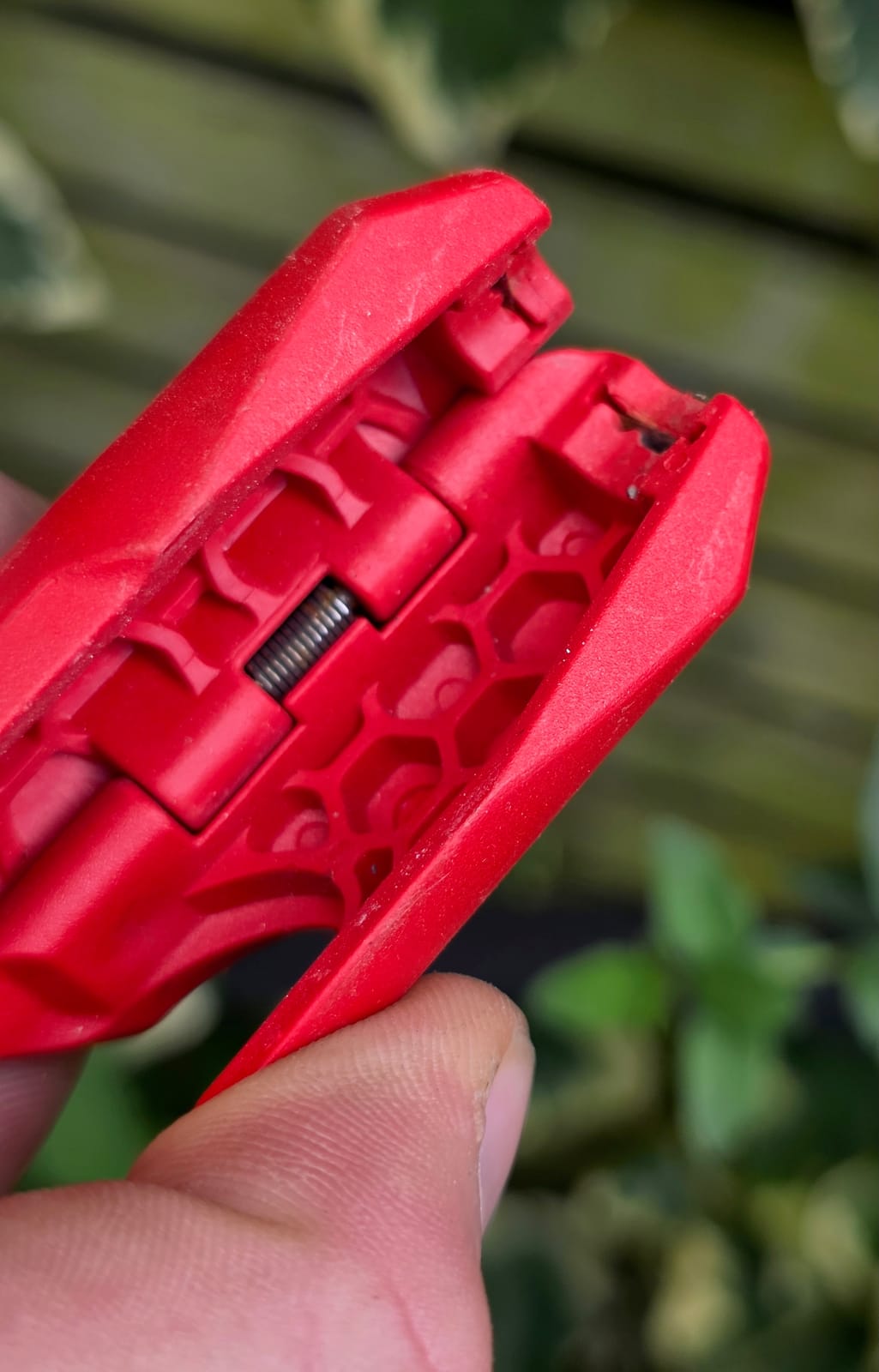
The section dedicated to coax: the same tool also handles data cables, useful for TV/network renovation.
The TwinGrips save your repair jobs with their self-locking mechanism that grips the most seized-up screws.
The productivity gain from a well-used ErgoStrip more than covers its purchase price from the very first week on site.
For large sheaths, new for 2026 is the STX60 stripper (16 45 220), available since June: it handles sheaths from 30 to 60 mm with a circular or longitudinal cut. If you’re looking for an up-to-date wire stripper this year, it complements the ErgoStrip on large-section cables.
Stripping is the least forgiving move. I lay the cable down before working, I never strip while it’s hanging: the hand holding the conductor must guide it, not compensate for its weight.
On the 13 66 180, I set the knurled nut before feeding in the cable, never after. A setting fumbled in the middle of a box ends up biting into the copper or leaving a ring of sheath.
On the ErgoStrip, I let the tool guide the depth and I turn in one continuous movement. I keep my eyes on the conductor, not on my wrist: that’s where I see the start of the cut coming.
I strip the conductor I use as a reference first, then align the others on it. That way I keep consistent lengths, without going back to the setting for each wire.
When the sheath resists, I stop and re-engage the tool instead of pulling at an angle. A pull at an angle bites into the sheath of the neighboring conductors, and the repair costs more than starting the move over.
After every strip, I check with my fingertips: no blade marks on the copper, no ring left behind. A nick that goes unnoticed gets fixed later, at the moment when I don’t feel like taking things apart again.
I clean the jaw after dusty or sticky cables. A chip stuck between the blades changes the cutting depth without anything signaling it.
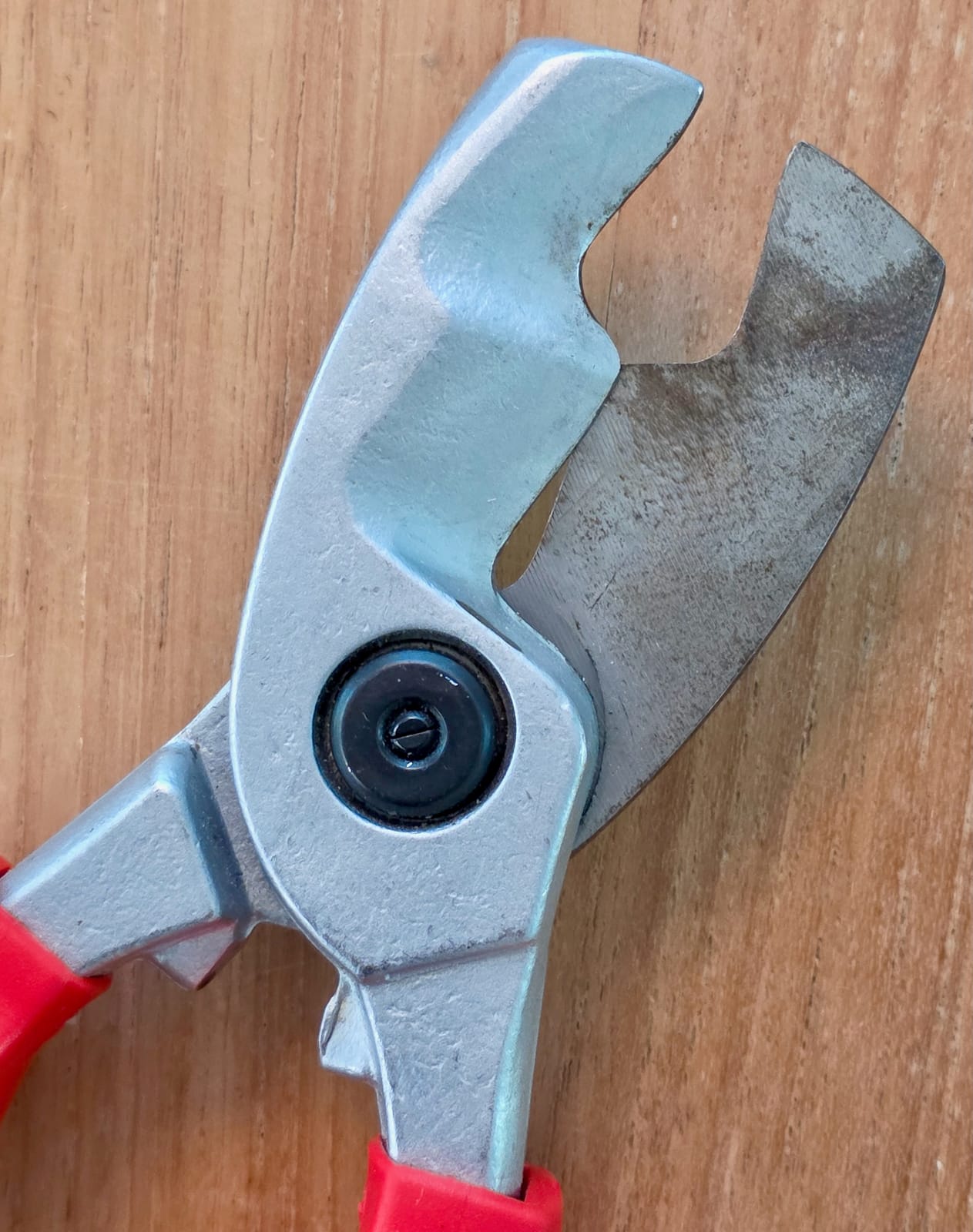
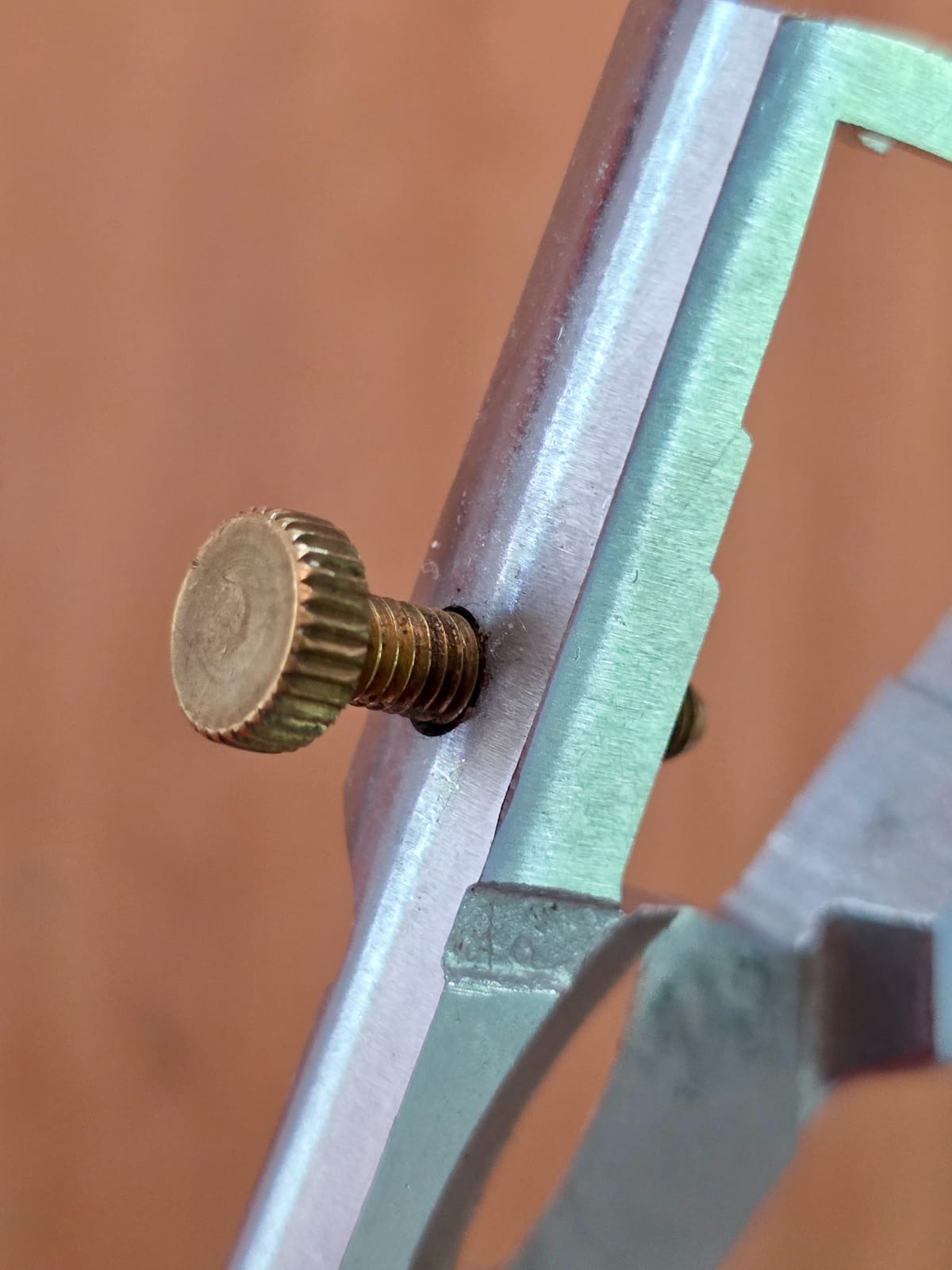
The classic wire stripper, for its part, is recognized by two reference points: the jaw where the cable engages and the knurled nut that sets the stripping depth.
Classic wire stripper
The difference from an ordinary pair of pliers is clear at a glance on these two controls
ErgoStrip time-saving example (typical values):
| Parameter | Typical value | Impact |
|---|---|---|
| Parameter Boxes processed / day | Typical value 30 | Impact Calculation basis |
| Parameter Time saved / box | Typical value 30 sec | Impact That is 15 min/day |
If Knipex rules over pliers, Wiha prevails for the insulated screwdriver in my bags — and the pocket format counts as much as the insulation when this screwdriver has to fit in the work trouser pocket.
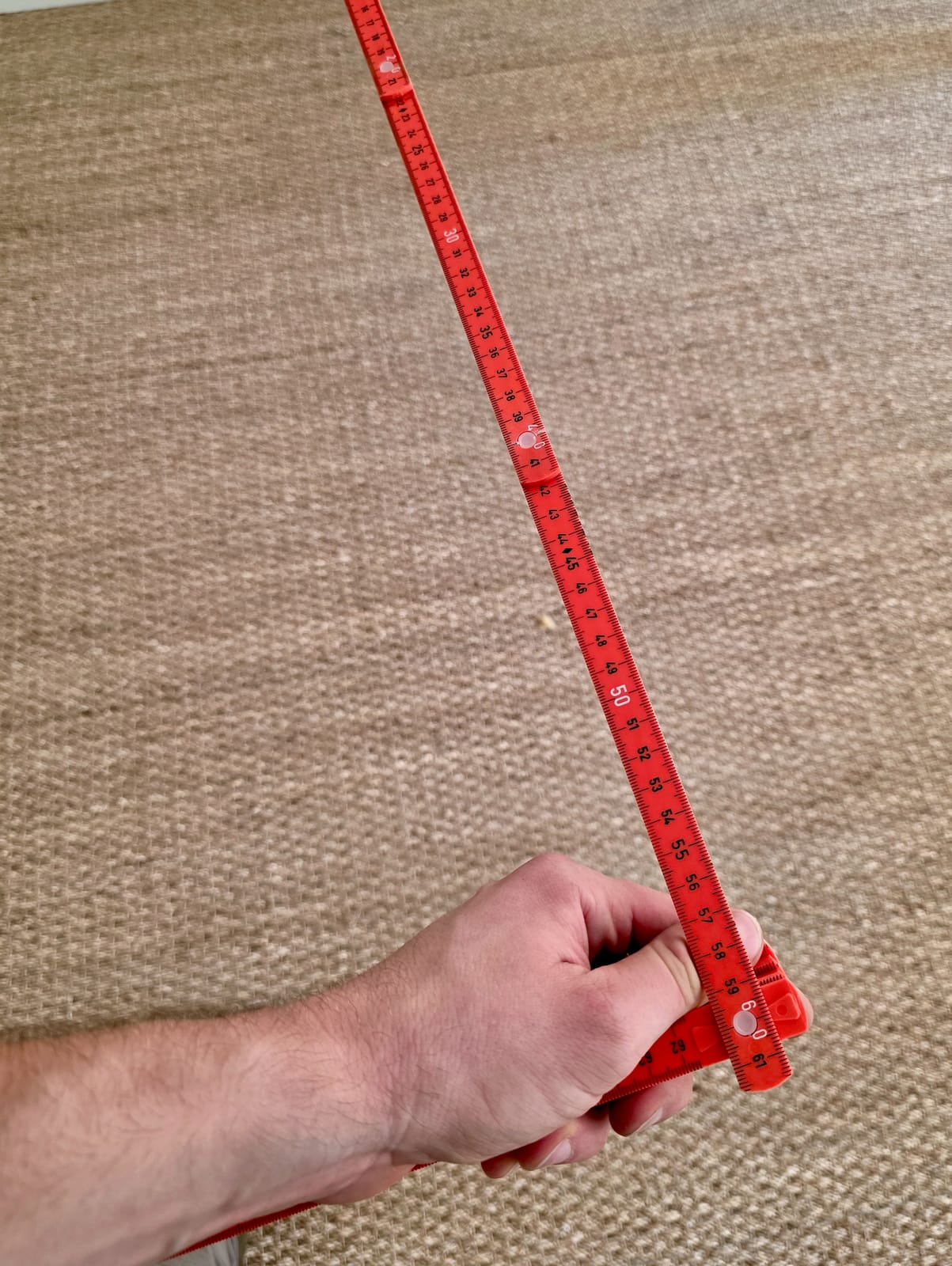
Beyond the screwdriver, another Wiha VDE 1000V from my bag: the LongLife rigid rule, rigid enough to stay unfolded without bending.
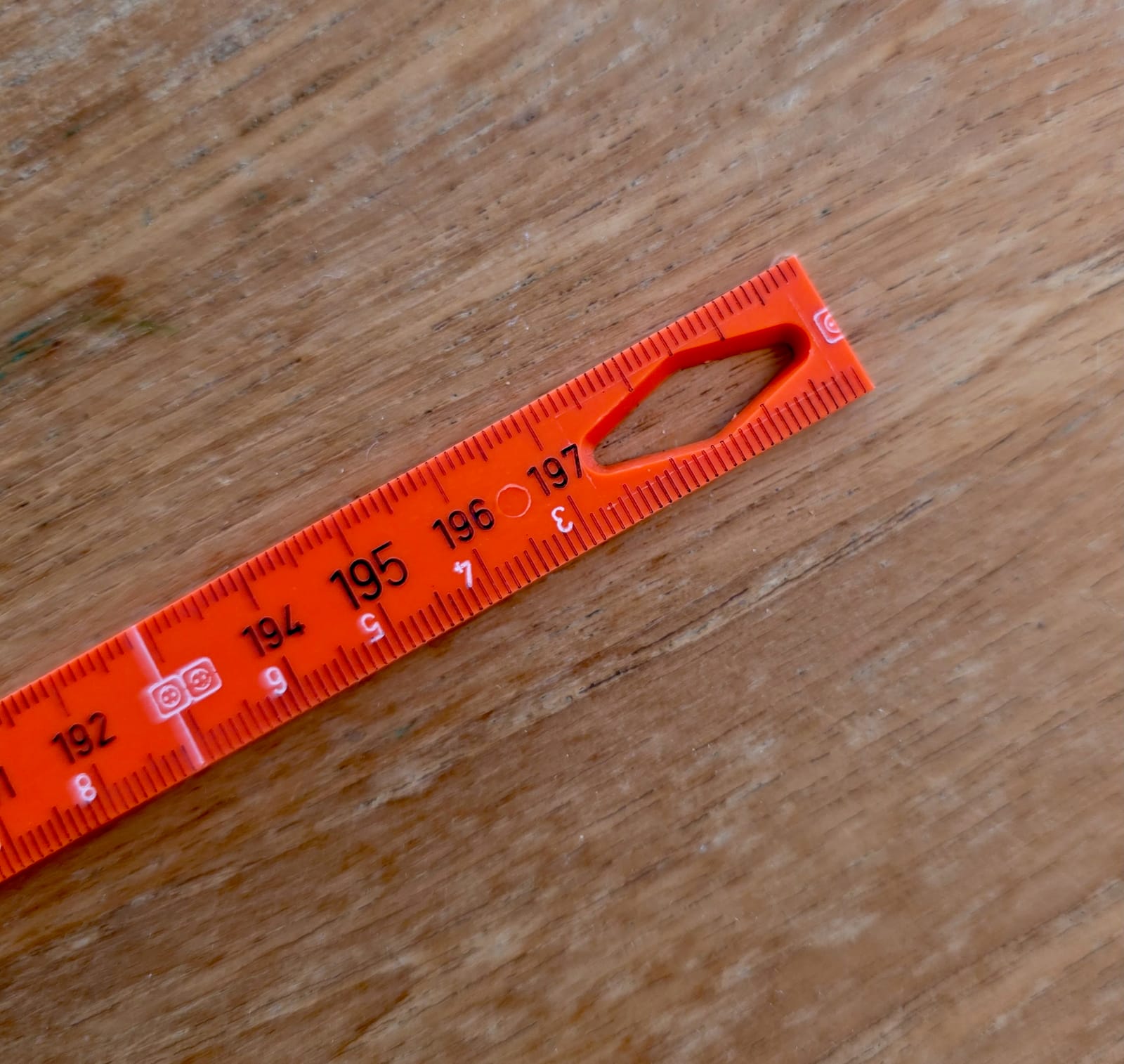
The detail that makes the difference for an electrician: the built-in wire-pulling hole, handy for guiding a wire into a conduit.
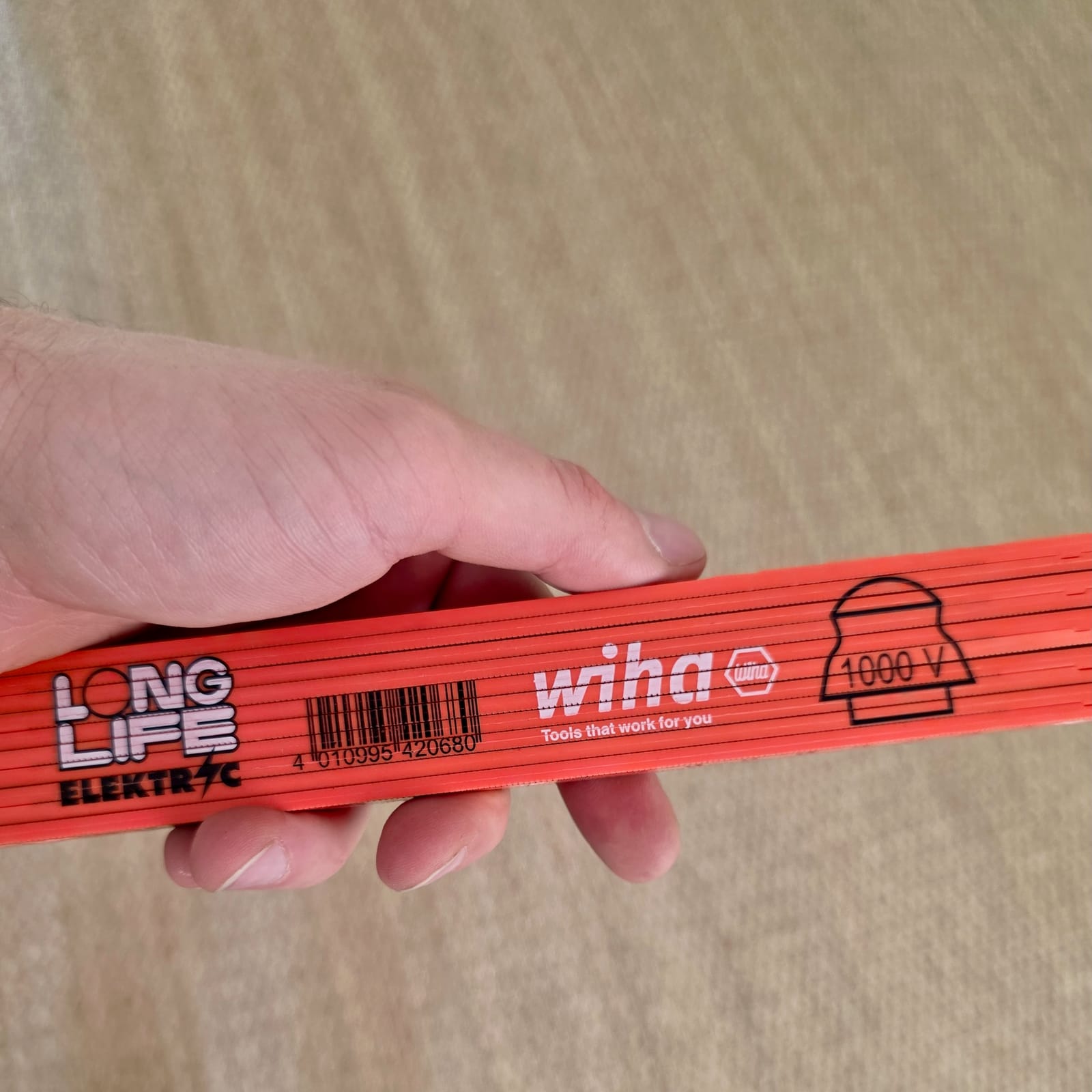
Folded, it fits in the trouser pocket — pocket format for everyday use on site.
Wiha’s Slim technology integrates the protective insulation directly into the steel blade. This process makes the insulation about 33 % thinner at the tip. This gives access to the deepest terminal blocks.
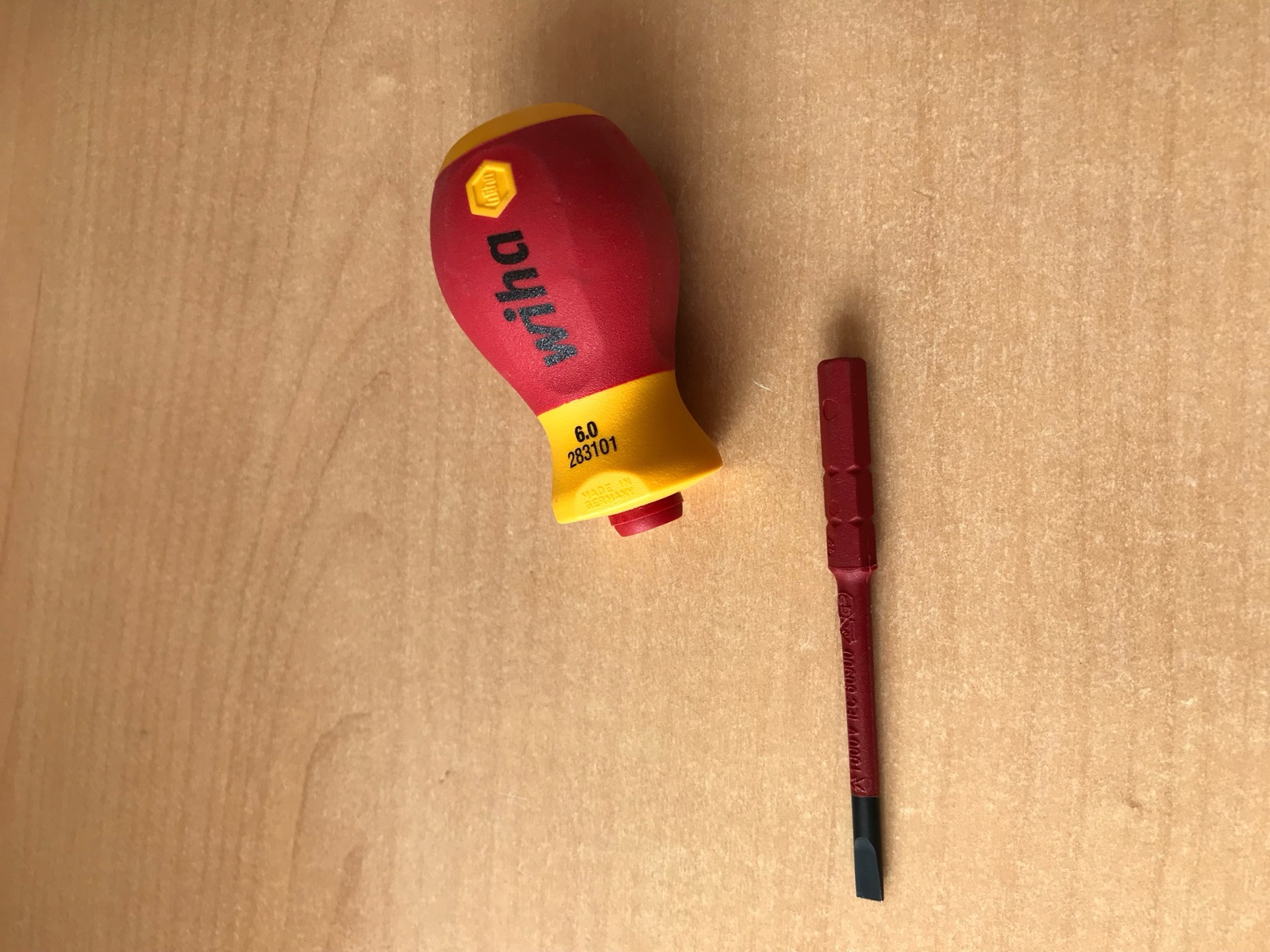
Wiha SlimBit thin blade
The thin interchangeable blade, with integrated insulation, is the key to reaching the deepest terminal blocks.
Wikimedia Commons — Wiha Werkzeuge GmbHSafety remains the absolute priority with rigorous VDE certification. Each blade undergoes an individual test at 10 000 volts AC. That is the basic guarantee for working live.
Info
Insulation integrated into the blade to reduce the diameter by 33 %, guaranteed access to deep terminal blocks, tested at 10 000 volts (VDE) — effective protection up to 1 000V AC in use.
For your job sites in the Paris region, the choice of modular equipment and the Hager or Schneider ranges directly influence access to the screws.
Wiha’s slimness then becomes a major asset.
Before pulling out a screwdriver, I look at the screw head, not the tool brand. Pozidriv, Phillips, Torx or slotted: I choose the shape, then the length, then the thinness of the blade.
The SlimBit fine blade comes out when the screw is deep inside a well: a deep terminal block, a cramped housing, a screw I sense more than I see. As soon as there is room around the head, a wider blade transmits the torque without slipping.
I place my palm flat on the handle for high-torque tightening, and I build up pressure gradually. If the tip slips once, I stop and reposition: insisting rounds out the recess and damages the blade.
Before screwing into a terminal block I do not know, I do a turn by hand to feel the thread. A screw that binds by hand does not come free any better with a screwdriver, it gets damaged.
At the back of an enclosure, I check the marking on the handle before reaching in. The clear marking saves me from pulling out several screwdrivers for a single tightening job.
On runs of tightening, the SoftFinish grip matters as much as the tip. The hard and soft zones are distributed to fit the hand, work validated by ergonomic physicians and focused on preventing MSDs.
The LongLife rigid ruler rounds out the kit for a few tasks: holding it unfolded long enough to mark a reference point, and guiding a wire into a conduit with the wire-pulling hole. I do not use it to force anything: it is a reference, not a lever.
The SoftFinish concept uses an intelligent distribution of hard and soft zones. This design transmits maximum tightening torque without any feeling of pain. The hand fits the shape of the handle perfectly.
Preventing musculoskeletal disorders is at the heart of this tooling. The design is validated by ergonomic physicians and certified by the AGR label. This is vital for repetitive tightening work on electrical panels.
3 questions
InteractiveQuiz: Knipex pliers and Wiha screwdrivers for electricians
3 questions to verify the key points
Choose an answer
Here is what the high-end range delivers under intensive use.
Corrosion is a scourge. On the wet building sites of the Paris region, steel suffers. Wiha’s surface treatment nevertheless protects the tools durably.
On the mechanical side, it’s solid. After a thousand cycles, the Knipex pliers show no play. Its smoothness remains the same as on the first day of work.
| Criterion | Knipex (Pliers) | Wiha (Screwdriving) | Pro verdict |
|---|---|---|---|
| Criterion Wear resistance | Knipex (Pliers) Excellent | Wiha (Screwdriving) Very good | Pro verdict Knipex |
| Criterion Ergonomics | Knipex (Pliers) Very good | Wiha (Screwdriving) Excellent | Pro verdict Wiha |
| Criterion Precision | Knipex (Pliers) Maximum | Wiha (Screwdriving) High | Pro verdict Knipex |
| Criterion VDE insulation | Knipex (Pliers) Certified | Wiha (Screwdriving) Certified | Pro verdict Tie |
| Criterion Overall score | Knipex (Pliers) 4,8/5 | Wiha (Screwdriving) 4,7/5 | Pro verdict Complementary |
The return on investment calculation is simple. In La Celle-Saint-Cloud, you gain speed. Less fatigue also avoids costly mistakes.
Cheap tools always break at the worst possible moment. The replacement cost and the time lost are then enormous. Better to invest only once.
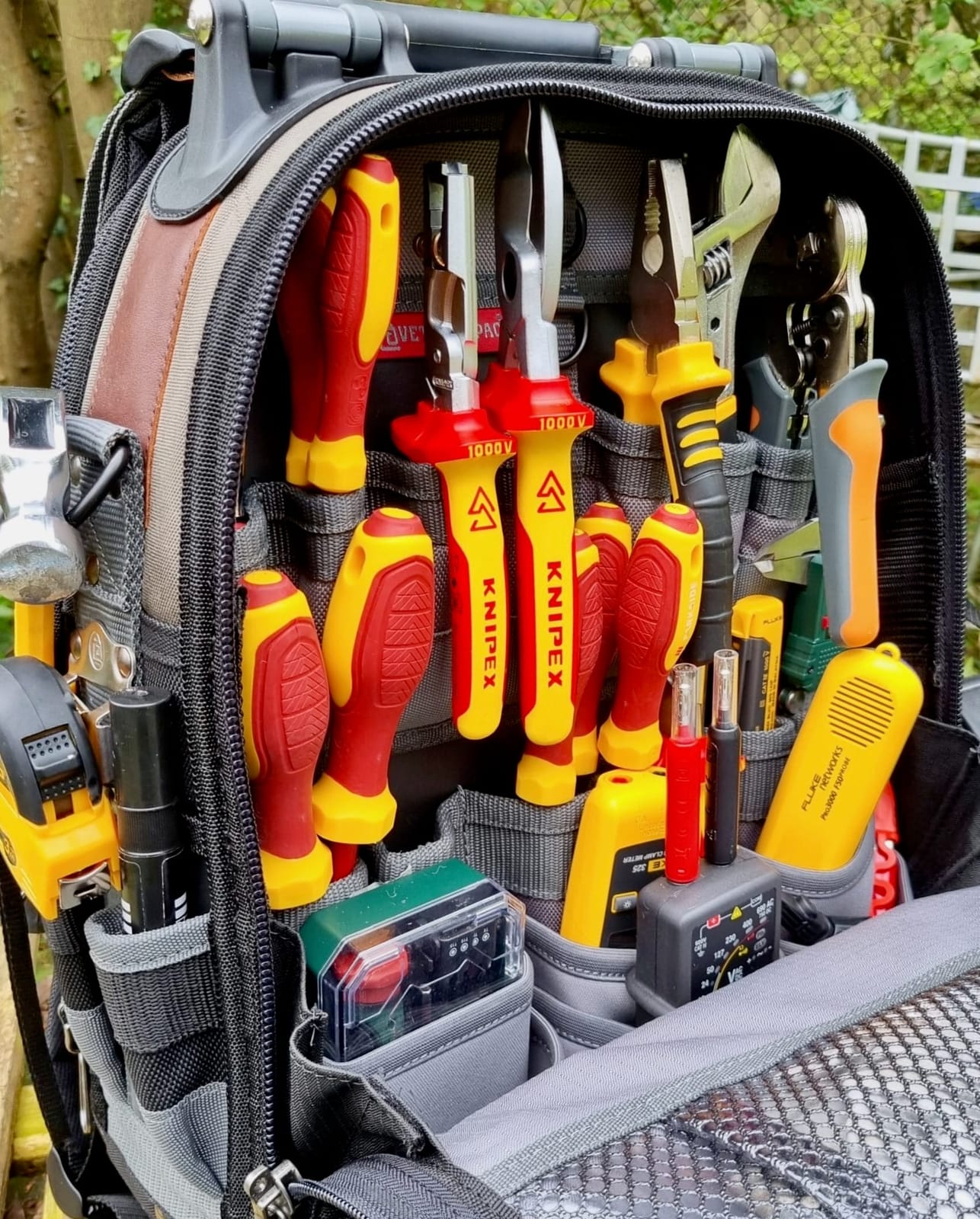
1000V insulated handles
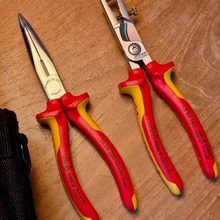
On the yellow handles of the pliers, the 1000V marking is the sign of the certified insulation that justifies the investment.
For measuring instruments, see my best multimeter 2026 guide and the Knipex story. If your kit is mainly for troubleshooting, also add a reliable VAT and reread electric shock: what to do before any intervention you’re unsure about.
| Critère | Knipex | Wiha |
|---|---|---|
| Resistance | 5/5 | 4/5 |
| Ergonomics | 4/5 | 5/5 |
| Precision | 5/5 | 4/5 |
| Insulation | 4/5 | 4/5 |
The question is no longer choosing a single brand, but knowing how to make them coexist intelligently.
Mixing is the key. Get your pliers from Knipex, your screwdrivers from Wiha. Don’t skimp on cutting tools — a good cable cutter is the heart of your daily work.
My C.K Tools screwdriver and pliers test shows a third way: a single manufacturer that covers both ends, with a complete installation plier and slim blades that reach the bottom of terminal blocks.
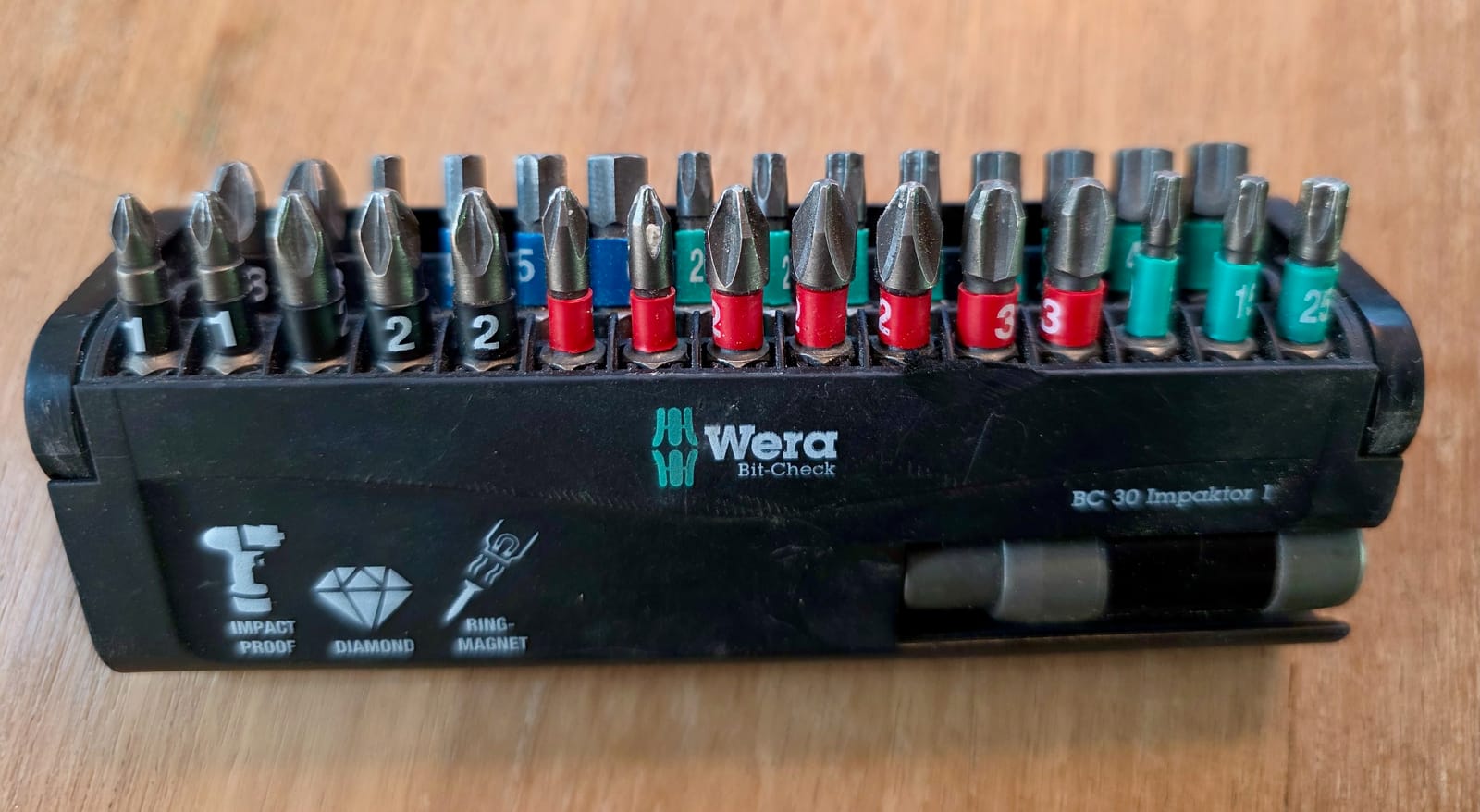
Wera Bit-Check 30 set
The Wera bits that complete the trio: precise driving alongside the Knipex pliers and the insulated Wiha screwdrivers.
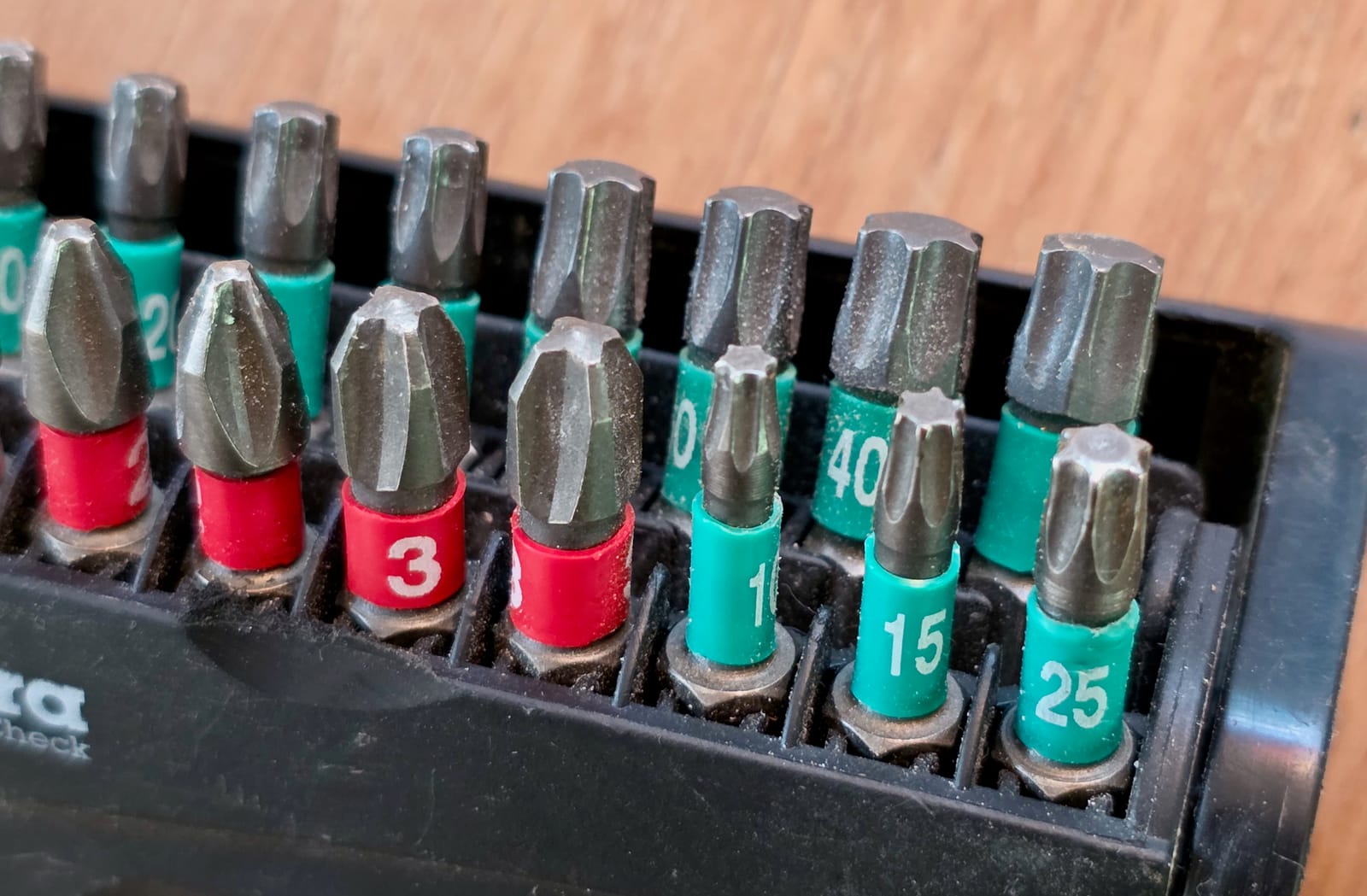
PH and Torx drives
The two most common drive types in the set.
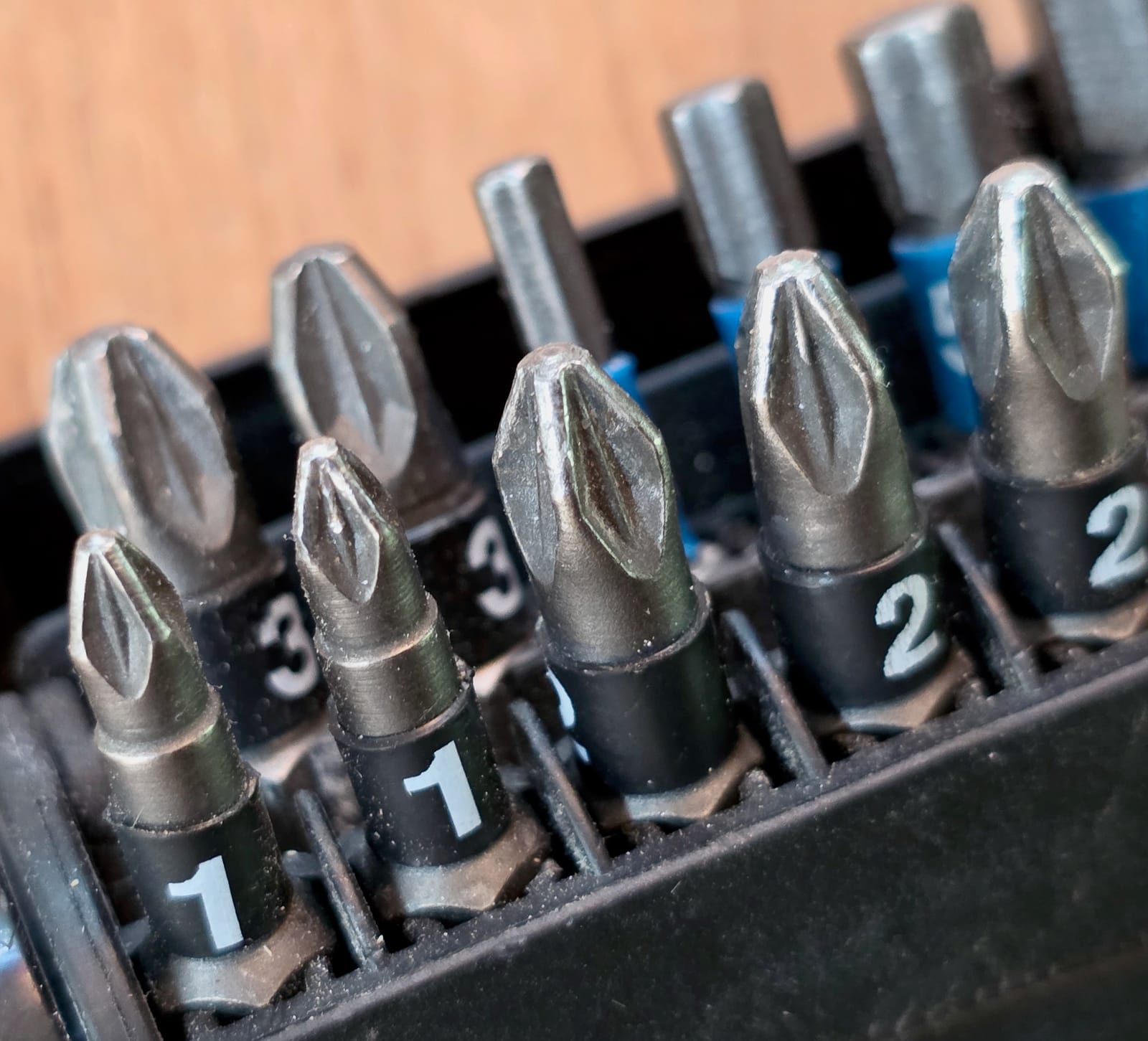
Pozidriv drives
The Pozidriv variant of the set’s cross-head bits.
Complete your kit with the history of Fluke, pioneer of measuring instruments for electricians.
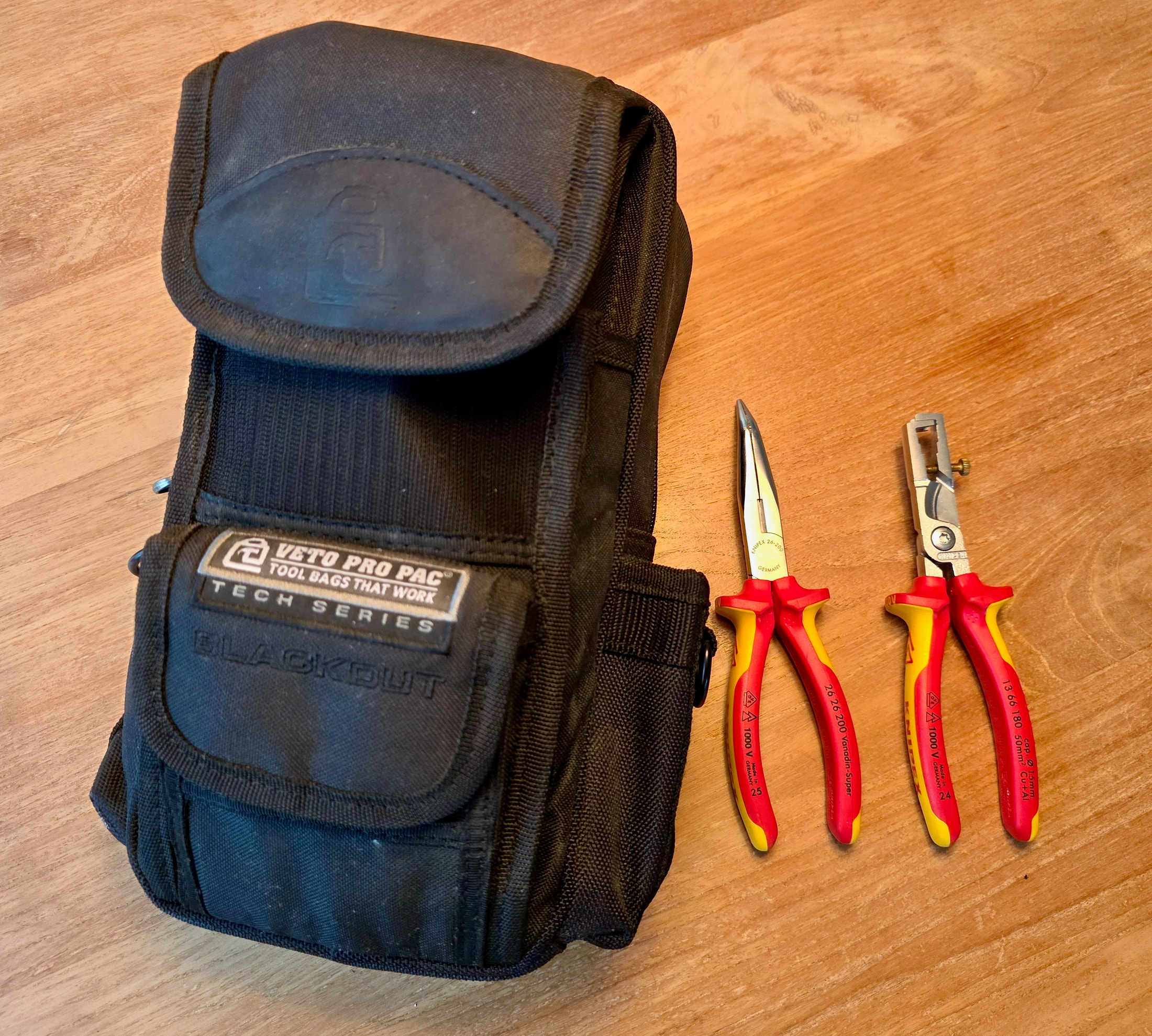
Here is the same organization in a belt pouch on site.
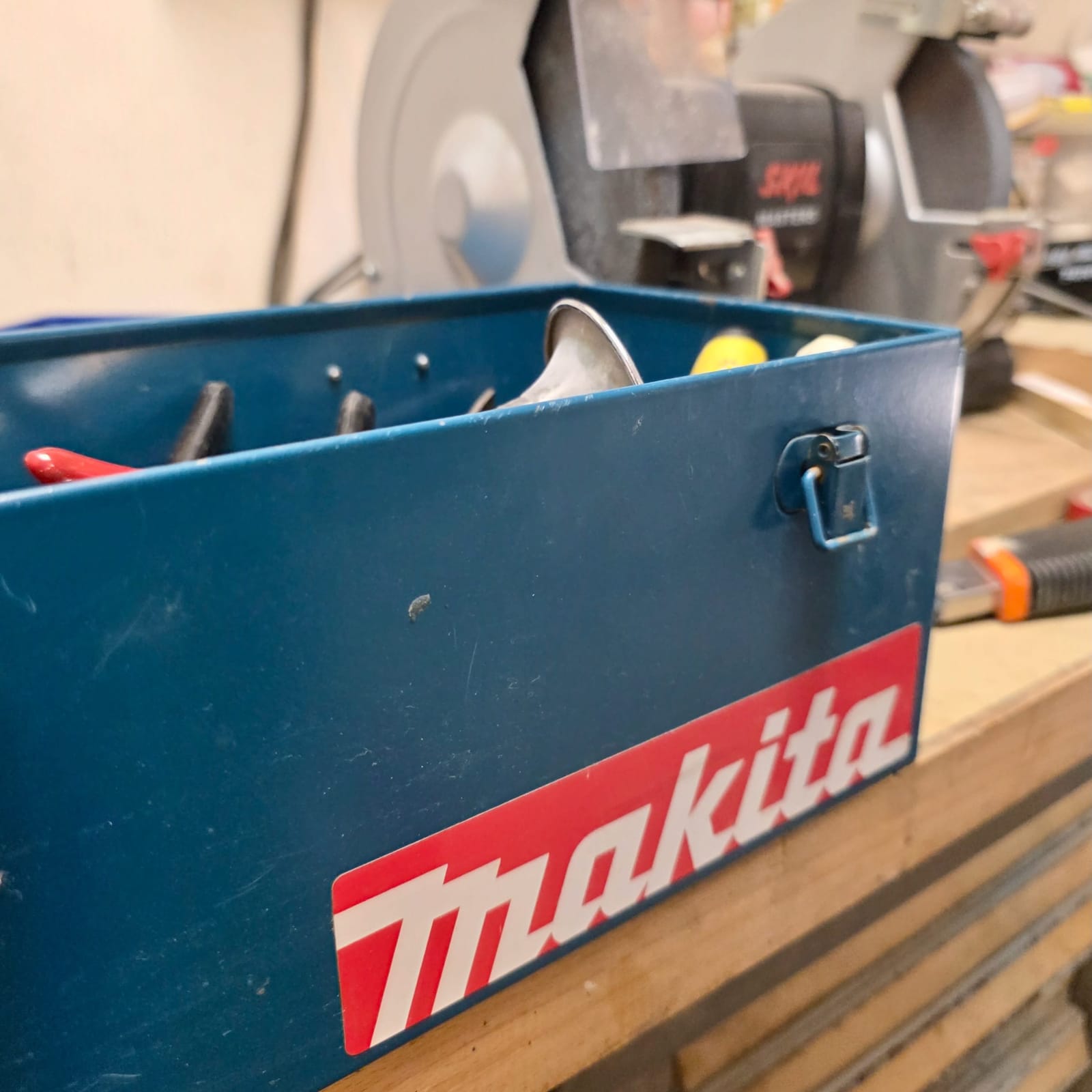
The durability of good professional tools proves itself over decades — this Makita box from the 1990s rediscovered during a service call is one example.
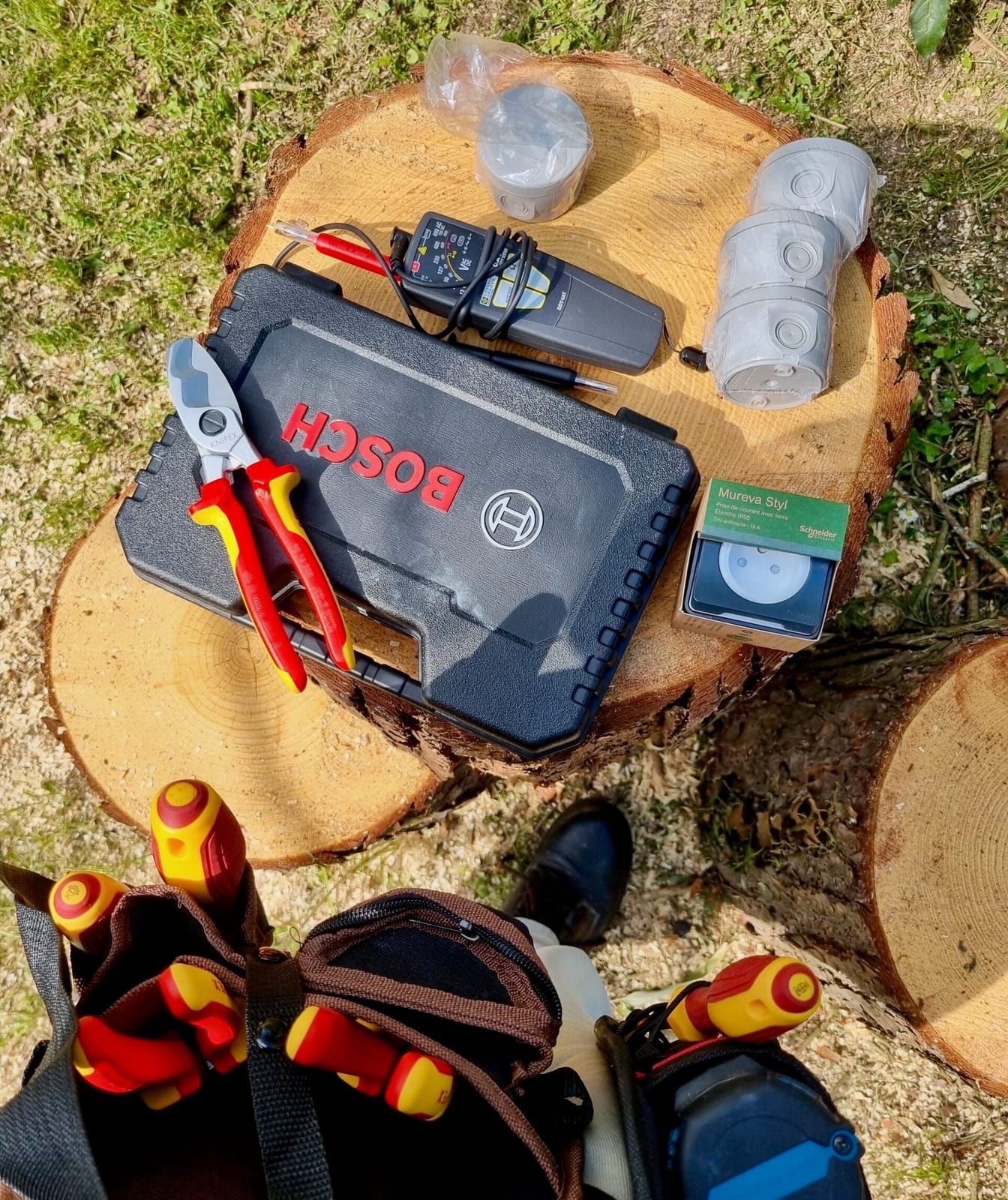
Inspect the insulation before every live intervention. A nick can be fatal. Immediately replace any tool whose sheath is damaged. Your life depends on it.
The same logic applies to the panel’s protective devices: a good VDE screwdriver does not compensate for a missing or badly chosen residual current device.
Attention
Always inspect the insulation before any intervention. Immediately replace a tool if its sheath is damaged — the risk of death is real with live contact.
Clean off plaster or dust residue after the job. A little oil on the joints prolongs the suppleness of Knipex pliers.
The evening check takes me a few minutes, and it saves me plenty of surprises the next day. Handles, joints, cutting edges: I review every tool before closing the bag.
I look especially at the places I do not see while working: the back of the jaw, the thumb rest area, the junction between the handle and the steel. That is where marks appear first.
When a tool cuts less well, I start by cleaning it and examining the cutting edge in the light. I don’t make up for a lack of bite with more force: that’s the best way to damage the conductor and the tool at the same time.
A tool that comes in dirty keeps moisture against the steel. I dry it, I brush it, then I oil it: dust has no business in a joint.
Conseil
Clean off plaster residue and dust after every job. Regular oiling of the joints keeps your Knipex pliers working smoothly for years.
A well-maintained tool is a reflection of an electrician’s professionalism in the eyes of their client.
On job sites, I always see the same mistakes, and I’ve made every one of them at least once. Here they are, with how I avoid them today.
Doing everything with the same pliers. Cutting, stripping, then tightening with the same jaw: the tool wears where I don’t expect it, and the cut loses its sharpness without warning.
Forcing instead of changing tools. On a stuck screw or a cable that’s too big, persisting costs more than the few steps it takes to pick up the right tool.
Trusting the color of the handle. Yellow doesn’t say it all: I read the marking, I don’t assume it. A tool whose inscription I can no longer read leaves the bag.
Storing pliers loose. Jaws against jaws, the insulation gets marked and the joint collects dust. I store the pliers closed, each in its own slot.
Skipping the inspection because the tool is new. A tool fresh out of the box goes through the same check as the others: insulation, marking, joint.
Picking up a dropped tool without looking at it. After a drop, I check the handle and the joint before putting it away. An impact sometimes marks the insulation without it showing at first glance.
Lending an insulated screwdriver. A tool I lend rarely comes back with its marking intact, and nobody inspects it the way I do. I lend an ordinary pair of pliers, never a tool I keep for live work.
Cleaning only at the end of the week. Plaster and dust harden on the insulation and in the joints. I clean at the end of every job, while the dirt still comes off.
Forgetting to oil. A drop of oil on the joints keeps the pliers moving smoothly. Pliers that open in jerks make you miss your grip and tire your hand.
Every situation has its first move. Here is how I start, and what I change when the site gets complicated.
Renovation work in plaster. The ErgoStrip handles stripping in a flush-mounted box, but dust clings. I clean the jaw from one box to the next, otherwise the setting drifts.
Emergency call-out. The Cobra comes out first when the screw is seized and time is short. The screwdriver waits until I have a clean screw head in front of me.
Wet jobsite. I keep a close eye on corrosion and oil more often. The Wiha surface treatment protects the tools, but it doesn’t replace the evening check.
Modular panel. Fine blade for deep terminal blocks, needle-nose pliers to grab a wire at the back, side cutters to adjust. I don’t strip with cable cutters, and I don’t cut with the stripper.
Large cross-sections. STX60 for the sheaths, cable cutter for the conductors. The side cutters stay on small wires, never as a backup on a cable they can’t cut through.
At a private customer’s home. I bring out a reduced kit: needle-nose pliers, side cutters, fine screwdrivers, a tester. Fewer tools on the oilcloth, fewer things forgotten when leaving.
Basement and utility room. Humidity and dust mean cleaning before stowing, otherwise the joints clog up and the smooth action is gone within a few weeks.
End of the day. I check the handles, I close the pliers, I pack up and I oil. That evening check beats the nasty surprise the next morning.
What I refuse. Forcing cutters on a cable that is too big, stripping by eye without setting the depth, and bringing out a tool whose markings I can no longer read.
Their pliers are forged from a special chrome-vanadium steel and go through a multi-stage oil hardening, reaching a hardness of 60 HRC. Models like the ErgoStrip or the TwinGrips transform your daily work with fast stripping and a unique front grip for stuck screws.
Wiha's SlimTechnology reduces the diameter by 33 % by integrating the insulation directly into the blade, allowing access to deep terminal blocks without any hindrance. Each screwdriver is individually tested at 10 000 V AC to guarantee flawless protection up to 1 000 V AC.
Ergonomics at Wiha is validated by doctors and therapists from the AGR. The SoftFinish handle concept uses hard and soft zones distributed intelligently to match the shape of the hand. This allows maximum torque to be transmitted while protecting your joints during repetitive tightening in an electrical panel.
Absolutely. The durability of these tools ensures a fast return on investment. Cheap tools often break at the worst possible moment, leading to replacement costs and lost time. With Knipex and Wiha, you invest once for years of performance with no play and no deformation.
Inspect the VDE insulation before every live intervention: the slightest nick can be fatal. If a sheath is damaged, replace the tool immediately. Always clean off dust after use and apply a drop of oil on the joints of Knipex pliers to keep them smooth.
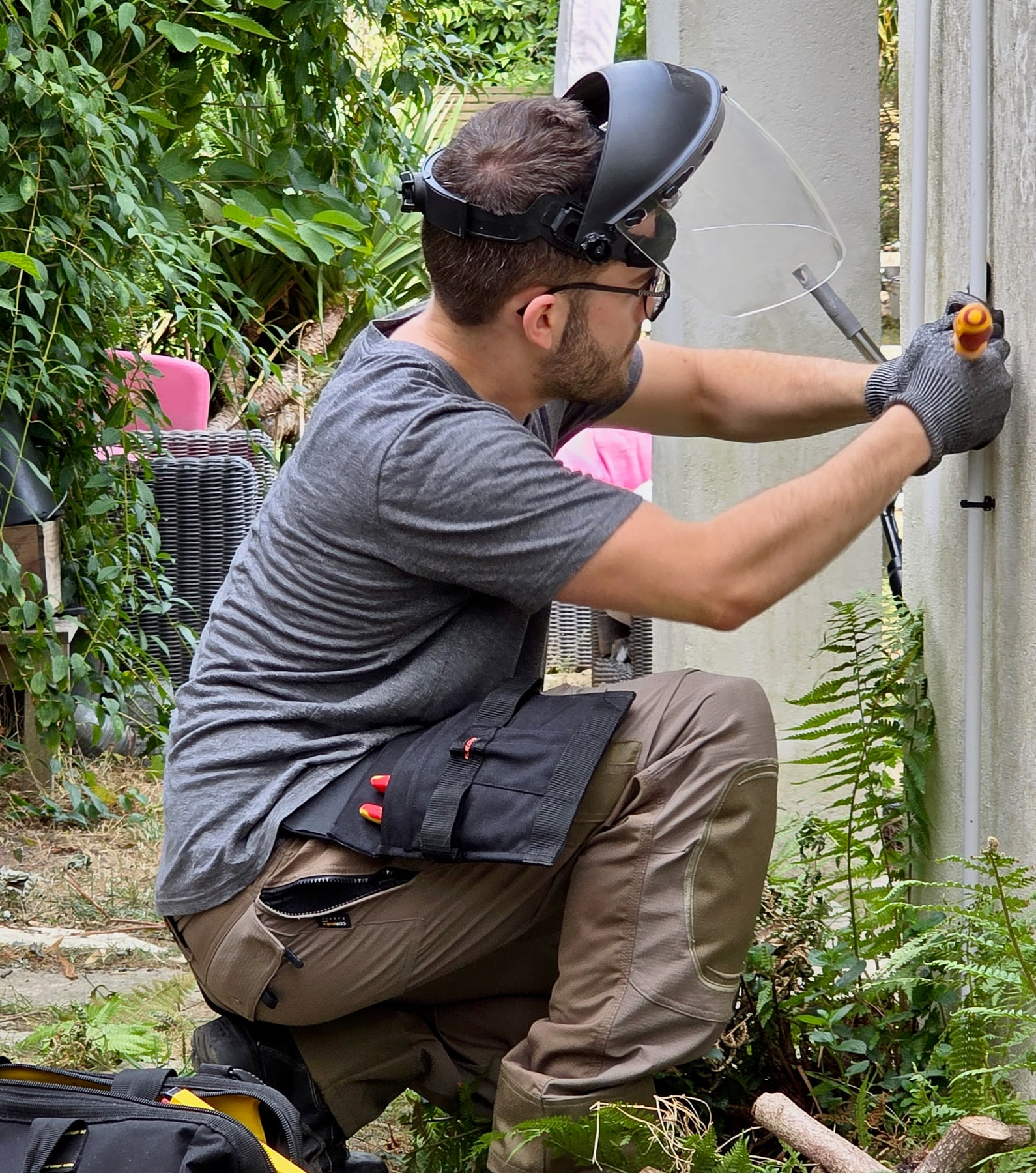
Théo Desrousseaux
Electrician and editor
I work in the field and edit this magazine. Every guide is reviewed for its target country before publication.
Sources and references
Practical electrical installation guides, diagnostic methods and tool recommendations compared against the technical wiring standards of this national edition.
KNIPEX 86 03 180 pliers wrench: 35 mm capacity, 13 positions, variants, smooth jaws, verified uses and maintenance for electricians.
Read the guide Guide Knipex Cobra vs Facom: water pump pliers compared Cobra 87 01 250 vs Facom 181A.25G: 25 positions against 12, jaws, opening, ISO 8976 standard and insulation compared reference by reference. Read the guide
  Guide KNIPEX 87 51 180 pliers: review and electrician uses KNIPEX Cobra ES 87 51 180 water pump pliers: technical specs, hands-on handling, push-button adjustment, 180 mm format and usage framework. Read the guide
  Guide Knipex: the story of the brand Founded in 1882 in Germany, Knipex makes the pliers chosen by professional electricians: history, innovations and a lasting commitment. Read the guide