Impaktor Diamond box
Recognize the Wera bit box to situate the range of bits launched in the 1990s.
Published 22 July 2026
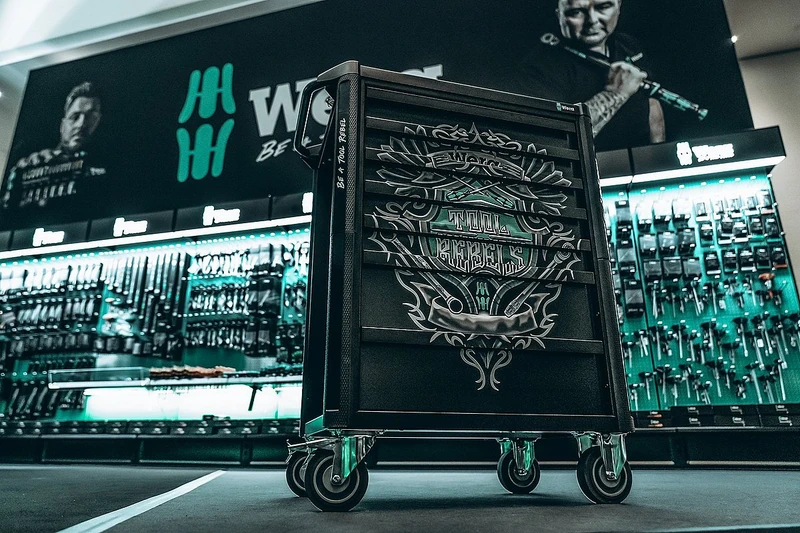 Photo : weratools.com
 In brief
Wera is one of those tool brands whose name is known, but whose real history remains unclear.
I’ll start with the direct answer: Wera Werkzeuge GmbH is a German brand founded in 1936 in Wuppertal by Hermann Werner as a tool trading company, which became a screwdriver manufacturer after 1945, and whose brand name dates from 1951.
The official website wera.de confirms the identity, the ranges and the philosophy of the brand. The precise timeline comes from the German Wikipedia article dedicated to Wera, referenced and dated September 2025. This article contains no prices and no market ranking.
1936
founding in Wuppertal by Hermann Werner, tool trading company
1951
adoption of the Wera name, contraction of Werner and Amtenbrink
1968
development of the Kraftform handle, still present in the logo
1995
transfer of production to Bystřice, in Czechia
2016
sale of the group to Bitburger Holding
The story begins in 1936. Hermann Werner, a merchant, founds Hermann Werner GmbH in Wuppertal as a tool trading company. At that time, Wuppertal is already a major industrial hub of the Bergisches Land region, but the company is then a trading business, not yet a manufacturing workshop.
The original company name deserves a mention: Hermann Werner GmbH and Co. KG. It makes it possible to find the company in the commercial registers without confusing it with the current entity, Wera Werkzeuge GmbH, which carries the brand name adopted in 1951.
The abbreviation GmbH stands for the German limited liability company. This detail changes little in the history of tools, but it saves me confusion when I look for period documents, and it explains why sources sometimes speak of Hermann Werner GmbH, sometimes of Wera Werkzeuge.
The Second World War destroys the company. After 1945, management passes to Heinz Amtenbrink, son-in-law of the Werner family. It is under his leadership that the manufacture of screwdrivers becomes the core business. The shift from trading to production therefore happens in two stages, separated by the war.
The shift from trading to production happens in two stages, separated by the war.
The brand name Wera is adopted in 1951. It is a contraction: Werner plus Amtenbrink. The name therefore tells the dual family origin of the company, the founder and his son-in-law.
This etymology changes what I can say about the brand: Wera refers neither to a city, nor to a technical acronym, nor to an invention, but to two families.
This reading is useful when I come across brand stories that sum everything up in a formula. I prefer to check what each name covers, as I do for the history of Bahco, where the workshop, the distributor and the brand do not get confused.
At Wera, the brand name appears fifteen years after the foundation: a company creation date and a brand adoption date are two different markers.
In 1963, Wera starts manufacturing bits, these screwdriver tips that fit a drill driver or a bit holder. It is a decisive step: the company no longer makes only manual screwdrivers, it enters the world of powered screwdriving.
Bits remain today a major family in the catalogue, with the Impaktor and Rapidaptor ranges documented on the official website.
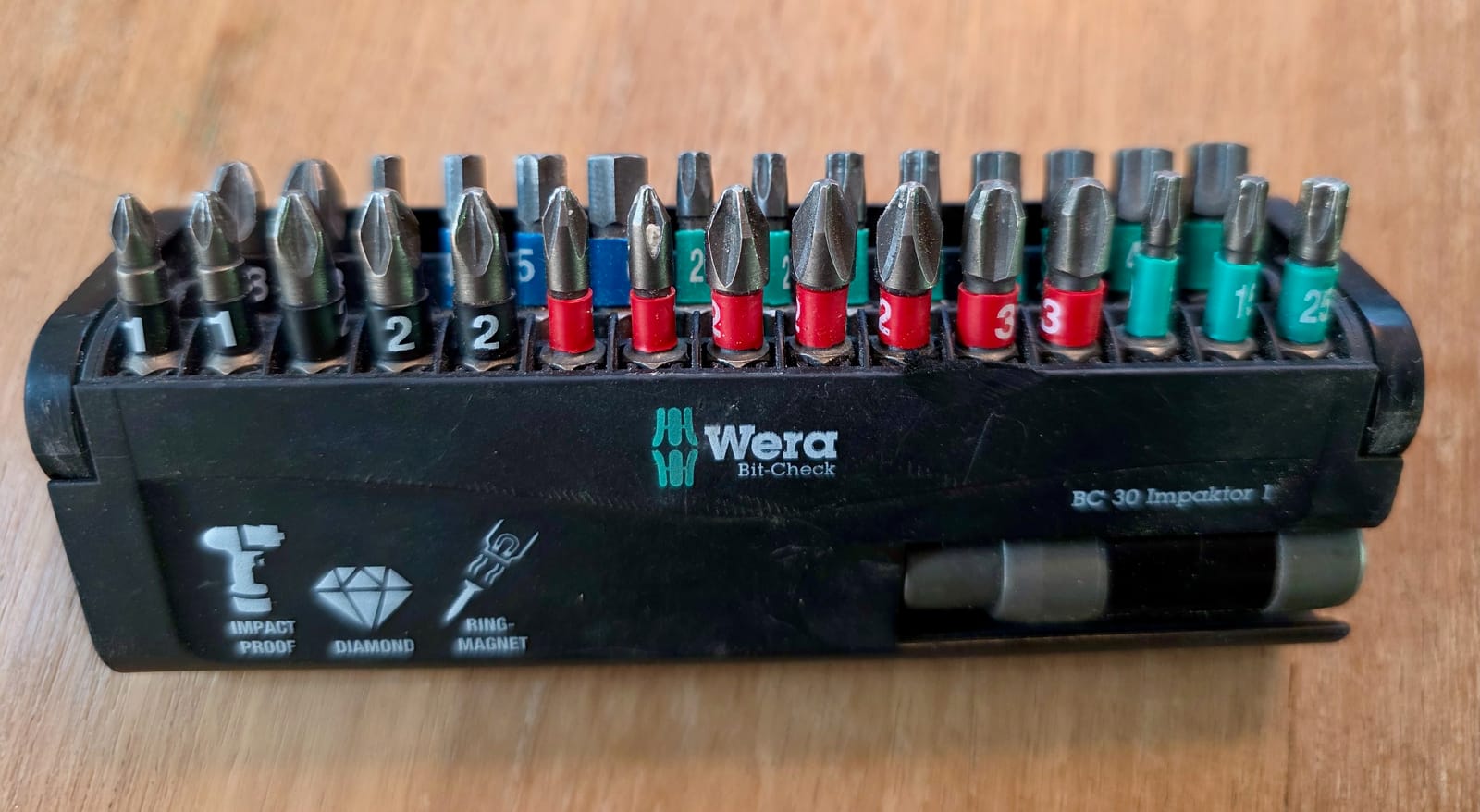
The photo above shows a bit box from the Impaktor Diamond range, open on its rows of bits. It illustrates the link between two eras: the bits launched in 1963 and the Bit-Check storage system, a family still present in the catalogue.
In 1968, Wera develops the Kraftform handle in cooperation with a Fraunhofer institute, according to the German Wikipedia article, which relies on a 2011 press article.
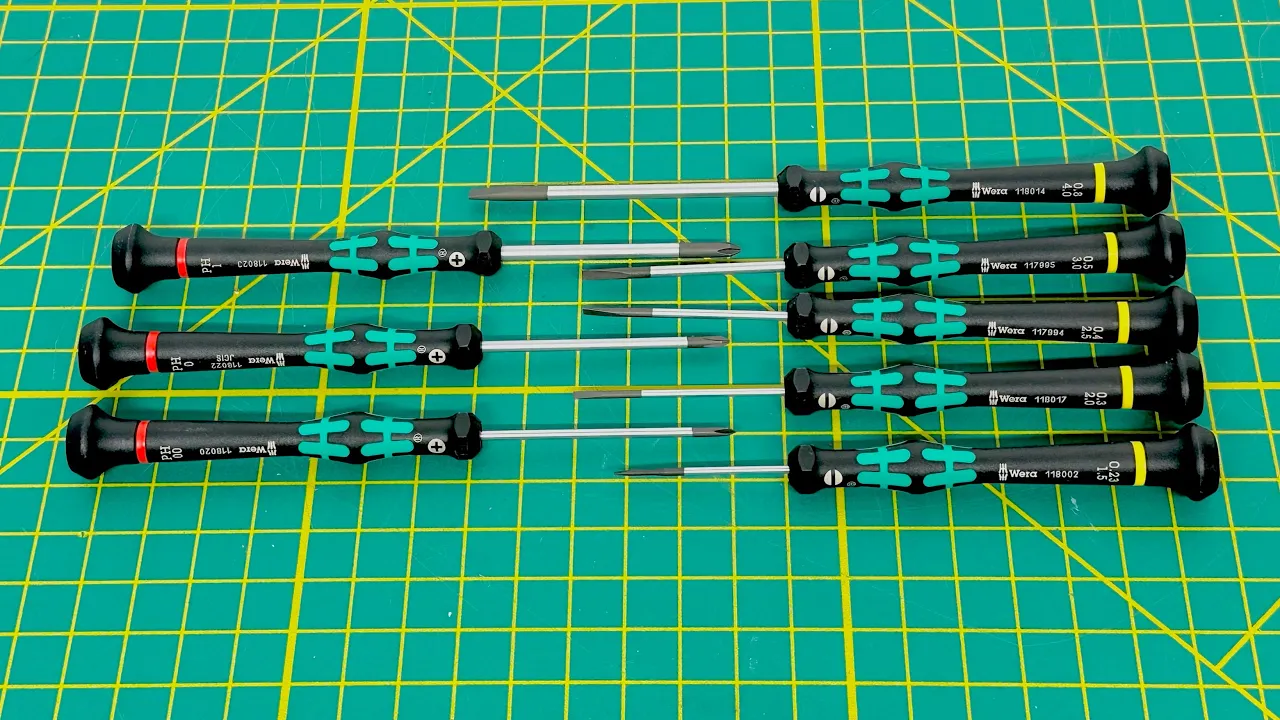
What is established is that the Kraftform handle is registered as a trademark and still present in the current logo of Wera.
It forms the root of the design identity of the brand, and it is the point retained by most screwdriver comparisons, such as the Kraftform vs Softfinish comparison.
The Kraftform handle was the subject of an initial trademark filing in Germany, and its name still appears proudly in the Wera logo more than half a century after its launch in 1968, stemming from ergonomic studies on the imprint of the hand at work.
The 1990s saw several documented developments. Wera launched the diamond-tipped bits, a family that still exists under the name Impaktor Diamond. The company acquired Drehmax W. Holland, and opened a sales subsidiary in the United Kingdom in 1993.
Impaktor Diamond box
Recognize the Wera bit box to situate the range of bits launched in the 1990s.
These milestones show a brand that is widening its ground: the diamond tip answers a technical need for grip in the screw recess, the acquisitions strengthen the bit range, and the British site anchors the brand’s European reach.
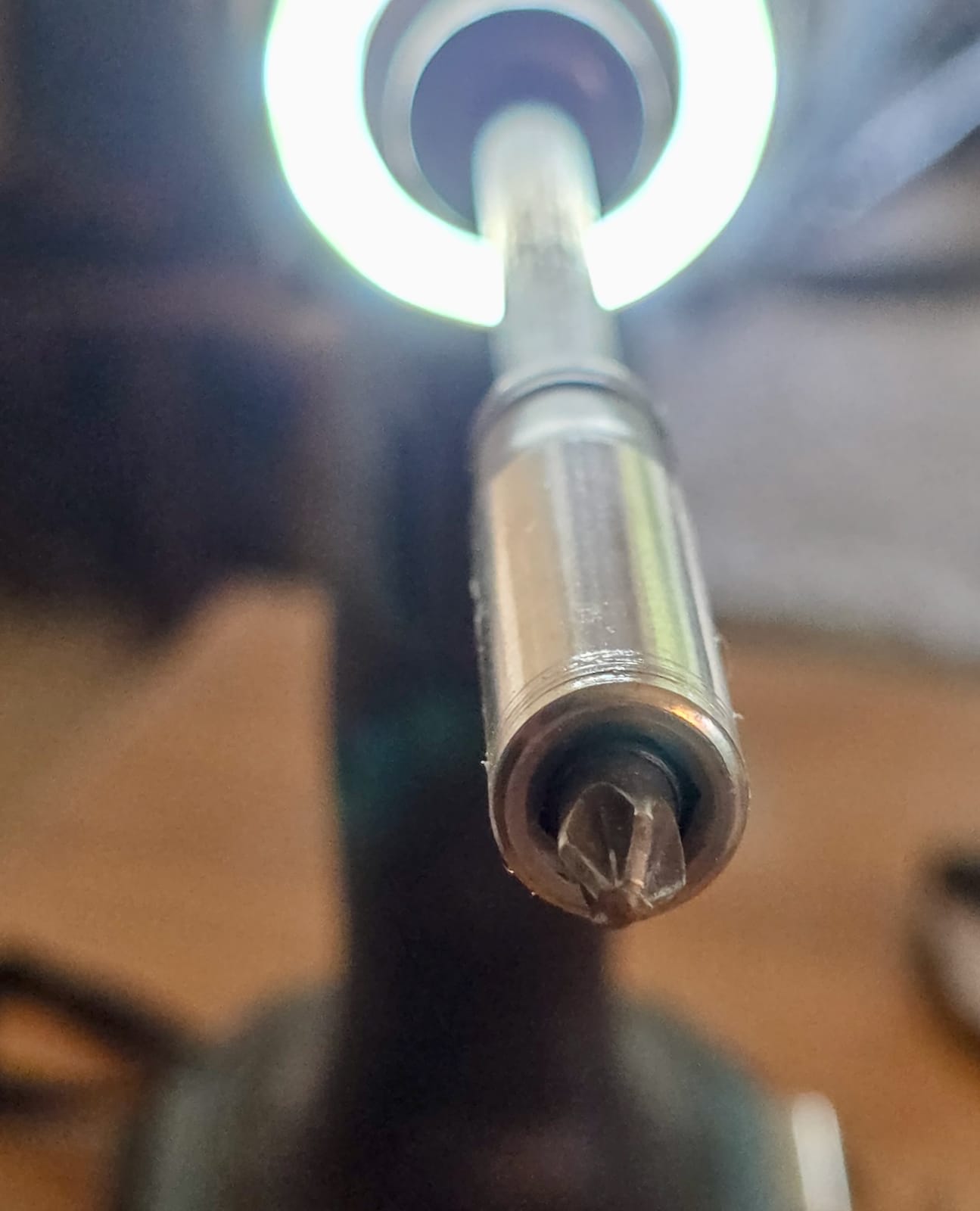
In 1995, Wera moved its production to Bystřice, in Moravia, in the Czech Republic. A second site opened in 2018 in Třebíč. Production is therefore split today between these two Czech sites, while the headquarters remain in Wuppertal-Cronenberg.
Info
The paradox is worth knowing: Wera is a German brand, but production has been mostly Czech since 1995. I cannot say, reference by reference, where each product is assembled.
This split is a point of attention for readers who buy on the reputation of “made in Germany”. The brand is German, the history is German, the design and the headquarters remain in Wuppertal; the manufacturing, however, changed country in 1995.
This is exactly the kind of nuance I check before buying a branded tool.
The full name of the first production town is Bystřice nad Pernštejnem, in Moravia; Wikipedia writes it out in full, which makes map searches or logistics checks easier. The second site, opened in 2018, is in Třebíč, still in the Czech Republic.
Two factories for one and the same group: this is the model I describe when people ask me where Wera tools are made. I always make clear that I cannot attribute a specific reference to one site or the other, nor guarantee that no manufacturing step remains in Germany.
In 2016, the group was sold to Bitburger Holding, the family-owned brewing group from Trier. The documented reason is the owner’s age. The angle still surprises, but it is verified: a German tool manufacturer is owned by a holding company that came out of beer.
The same year, Wera built a 20 000 m² logistics centre in Wuppertal. At the time, the company had more than 750 employees, more than 400 of them in Czechia. In 2023, the workforce was around 1 500 people, for revenue of 200 M€ in 2022, according to the references cited by Wikipedia.
Management has been in the hands of Martin Strauch and Michael Abel since 2015. Structurally, in 2023 Wera has sales subsidiaries in the United Kingdom, North America, Japan, Spain, France and Finland.
This pattern, an independent brand originally taken over by a larger group, matches what I tell in my article on tooling groups and who owns what.
For the traceability of the figures: the workforce of around 1 500 people in 2023 is referenced by Wikipedia to the weekly Wirtschaftswoche, in its “Helden des Mittelstands 2023” ranking, and the revenue of 200 M€ in 2022 comes from the Die Deutsche Wirtschaft ranking.
These two publications are cited as secondary references, on the same footing as the Handelsblatt articles from 1993 and 1997 used for the 1990s. When a figure matters for a purchasing decision, I go back to the original publication before repeating it.
| Marker | Historical evolution | Workshop impact |
|---|---|---|
| Marker 1936 | Historical evolution Founding of Hermann Werner GmbH as a tool trading company in Wuppertal. | Workshop impact That the company already manufactured its own tools, nor that it bore the Wera name. |
| Marker 1951 | Historical evolution Adoption of the Wera brand name, a contraction of Werner and Amtenbrink. | Workshop impact That the brand was registered in every country from that date. |
| Marker 1968 | Historical evolution Development of the Kraftform handle, a registered trademark and present in the current logo. | Workshop impact The ergonomics of the multi-component handle becomes Wera’s visual signature. |
| Marker 1995 | Historical evolution Transfer of production to Bystřice, in Czechia. | Workshop impact That every current reference is assembled in Czechia, nor that none is assembled in Germany. |
| Marker 2016 | Historical evolution Sale of the group to Bitburger Holding, logistics center of 20 000 m² in Wuppertal. | Workshop impact That the current management or the design location follows mechanically from it. |
Wera timeline: what is established and what I forbid myself to infer from it
The official site organizes the catalog into families: screwdrivers, torque tools (Click Torque, Safe Torque), ratchets (Zyklop, Koloss), wrenches (Joker), bit holders and bits (Impaktor, Rapidaptor), L-keys, storage (Wera 2go, Bit-Safe, Tool-Check, Bit-Check), tool cases and foam inserts.
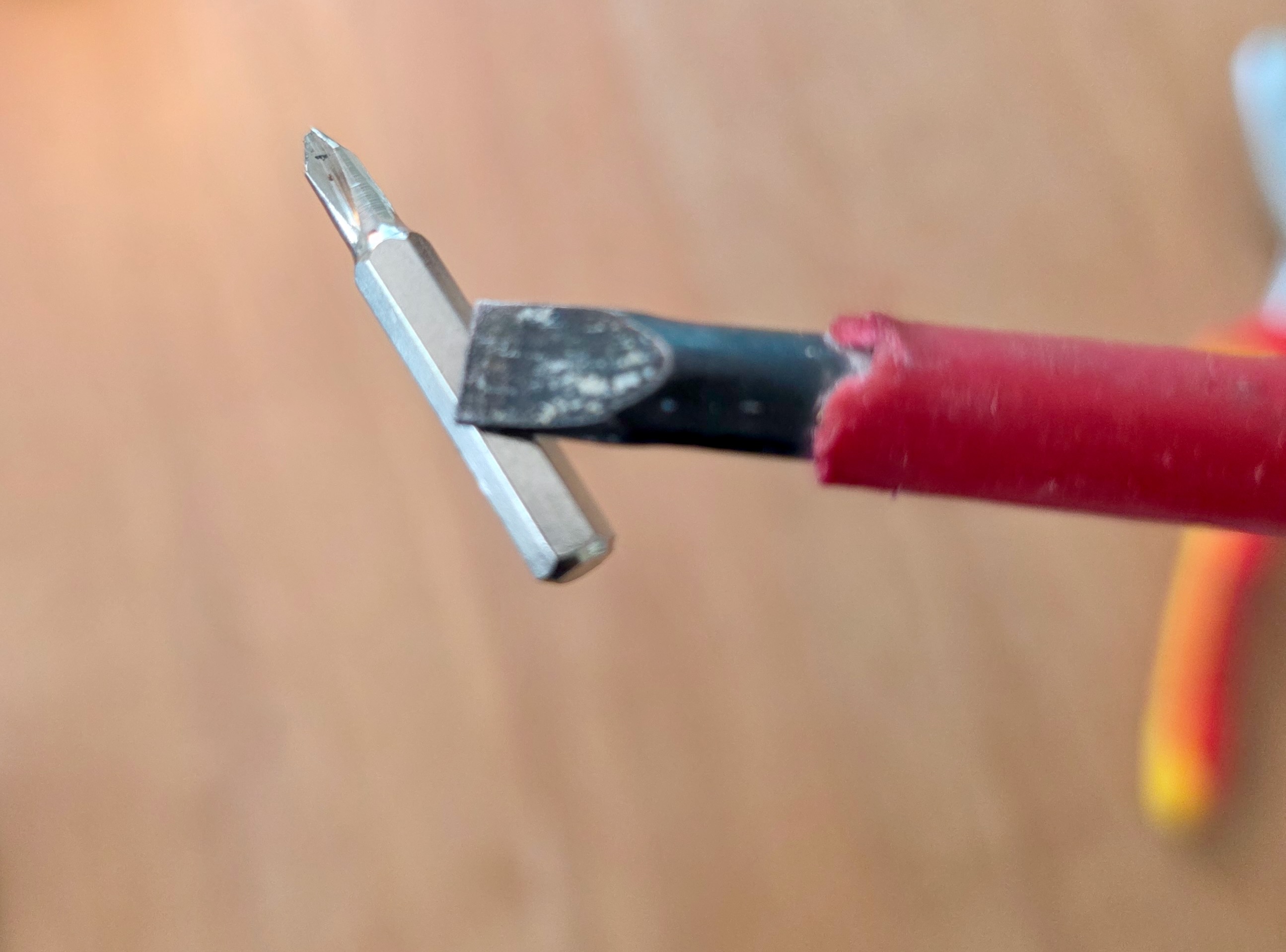
Magnetic bit
The bit stays stuck to the shaft through magnetism: an example of the catalogue’s bits and bit tips family.
I take two things from this list. First, the brand covers far more than the manual screwdriver of its early days. Then, the range names are brands in their own right: Zyklop for the ratchets, Joker for the wrenches, Impaktor for the bits, which makes the catalogue hard to read when I am looking for a specific reference.
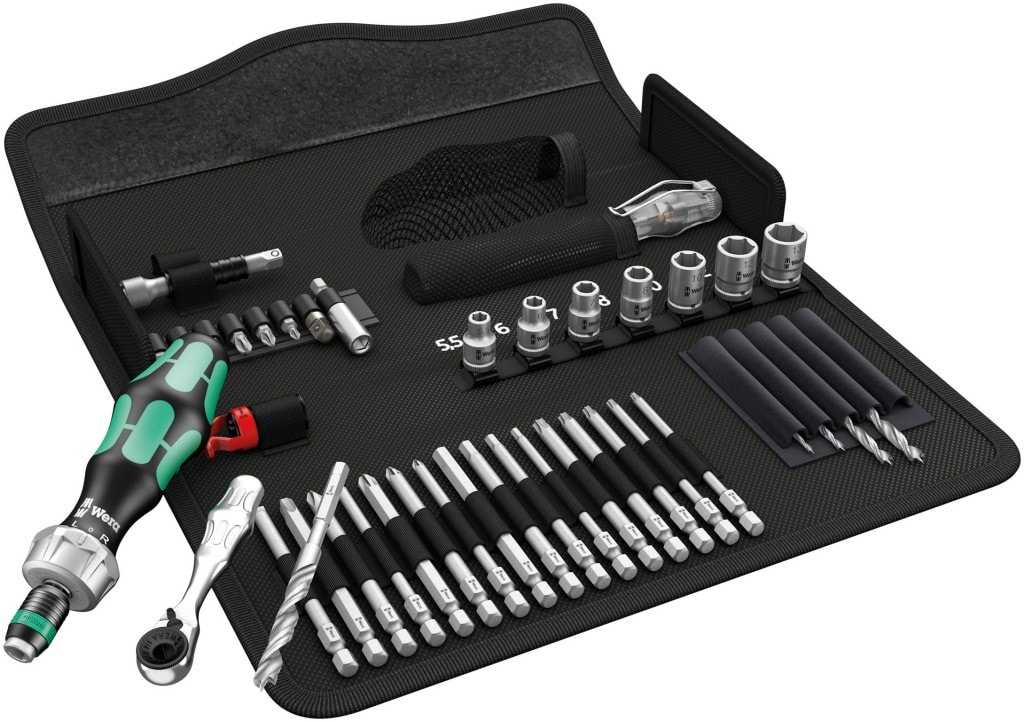
These families are documented, with no exact references or prices here. For a concrete choice, I start from the manufacturer’s product page and check compatibility with the intended use.
For my job, the most useful part of the catalogue is the “Electrical / VDE” app documented on the official site.
Wera groups there the VDE insulated screwdrivers from the 100 and 1000 series, the Kraftform Plus series, the T 400 VDE heads, the VDE insulated stainless steel screwdrivers, the Zyklop VDE insulated ratchets and sockets, the Joker VDE insulated wrenches and a VDE insulated torque screwdriver.
No standard is cited in this section: the official pages do not mention any standard reference. If insulating compliance is a purchase criterion, the product data sheet and its marking are to be checked before concluding, as in the comparison of 1000 V VDE kits.
For an electrician building a kit, Wera naturally compares with Wiha, another brand specialising in screwdrivers. I refer to the Wera or Wiha comparison for the range differences, and to the history of Wiha to place the other house.
The choice between the two rests on the exact part numbers, not on the brand name alone.
For a first kit, I look at the screwdriver and bit ranges before spending, and my guide to equipping a beginner electrician gives the budget priority order.
Two part numbers from the same family sometimes look alike in a catalogue photo. To decide, I start from the screw to be handled: shape of the recess, access, condition of the head. The brand does not decide for me, the screw is what counts.
When the head is in good shape and well cleared out, a standard bit does the job. When the recess is worn or the head has suffered, I switch to the diamond-coated tip from the Impaktor Diamond range, designed for grip in the screw recess.
The gesture matters as much as the reference. A bit mounted on a power driver is part of the mechanised driving that Wera took on in 1963; the screwdriver with the Kraftform handle, launched in 1968, I reserve for small heads and fine tightening.
In my tool bag, two sets live side by side: insulated VDE screwdrivers on one side, standard screwdrivers on the other. I never mix them, even when space is tight.
The choice does not come down to the name of the range, but to what the job calls for. If insulation is needed, I bring out the VDE set; otherwise, a standard screwdriver does the job.
My order is always the same. I identify the recess first, cross-head or Torx, then I choose the matching bit, and only then do I start the driver.
The bit must engage fully in the head. If it stops short, I look at the recess instead of forcing it: a head that is only partly gripped wears out fast, and the tip with it.
Then the driver stays in line with the screw. Pressure is applied along that line, and that is what prevents the bit from slipping at the last moment.
For tightening work I want to control, I finish by hand with a screwdriver, or I switch to a torque tool from the Click Torque and Safe Torque families when the equipment gives a value to respect.
I refill my rows at the end of the day, so I don’t arrive at the next job site with a half-empty case. What’s missing becomes apparent when I tidy up, not when I need it.
Wera’s design history is documented by the Wikipedia article: iF Design Award in 1997, 2009, 2012 and 2013 in the product discipline, then in 2015 for packaging, with a gold award.
On the Red Dot side, Wera received the “best of the best” label in 2014 for the Joker Double wrench, then a Red Dot in 2015, and an award in communication design in 2014.
Add to that the German Design Award 2015, the German Brand Award 2015 to 2017, the Top 100 Innovator 2007 label and a first place as “specialist trade partner” in 2016 and 2021.
These awards are mostly about design and packaging: I don’t turn them into proof of technical performance in the field.
Brand culture is one of the most surprising angles. In 2019, Wera flew a hot-air balloon shaped like a screwdriver at the Montgolfiade, the Kieler Woche and the Balloncup in Kitzbühel.
The same year, the brand formed partnerships with music festivals, including Summer Breeze and Wacken Open Air, two events on the German metal scene.
On the distribution side, the subsidiary Wera Tool Rebels GmbH runs the brand’s consumer online shop, sold under the name “Tool Rebels”. This offbeat identity, between hot-air balloon and festivals, sets Wera apart from more understated brands: it’s a positioning element I keep in mind, not a technical argument.
This contrast is striking when I compare the brand stories from the same sector. The Cembre story follows an industrial logic, with no spectacular communication; Wera, for its part, embraces a mainstream identity.
The hot air balloon and the festivals are not gadgets: they are brand awareness tools that get people talking about it outside the worksites. I don’t mistake this visibility for a guarantee of technical quality: it speaks to positioning, not performance.
Storage is an integral part of the catalog: Wera 2go, Bit-Safe, Tool-Check and Bit-Check for storage, plus the cases and foam inserts. The logic is simple: the bits live in their storage, ready to head out to the worksite.
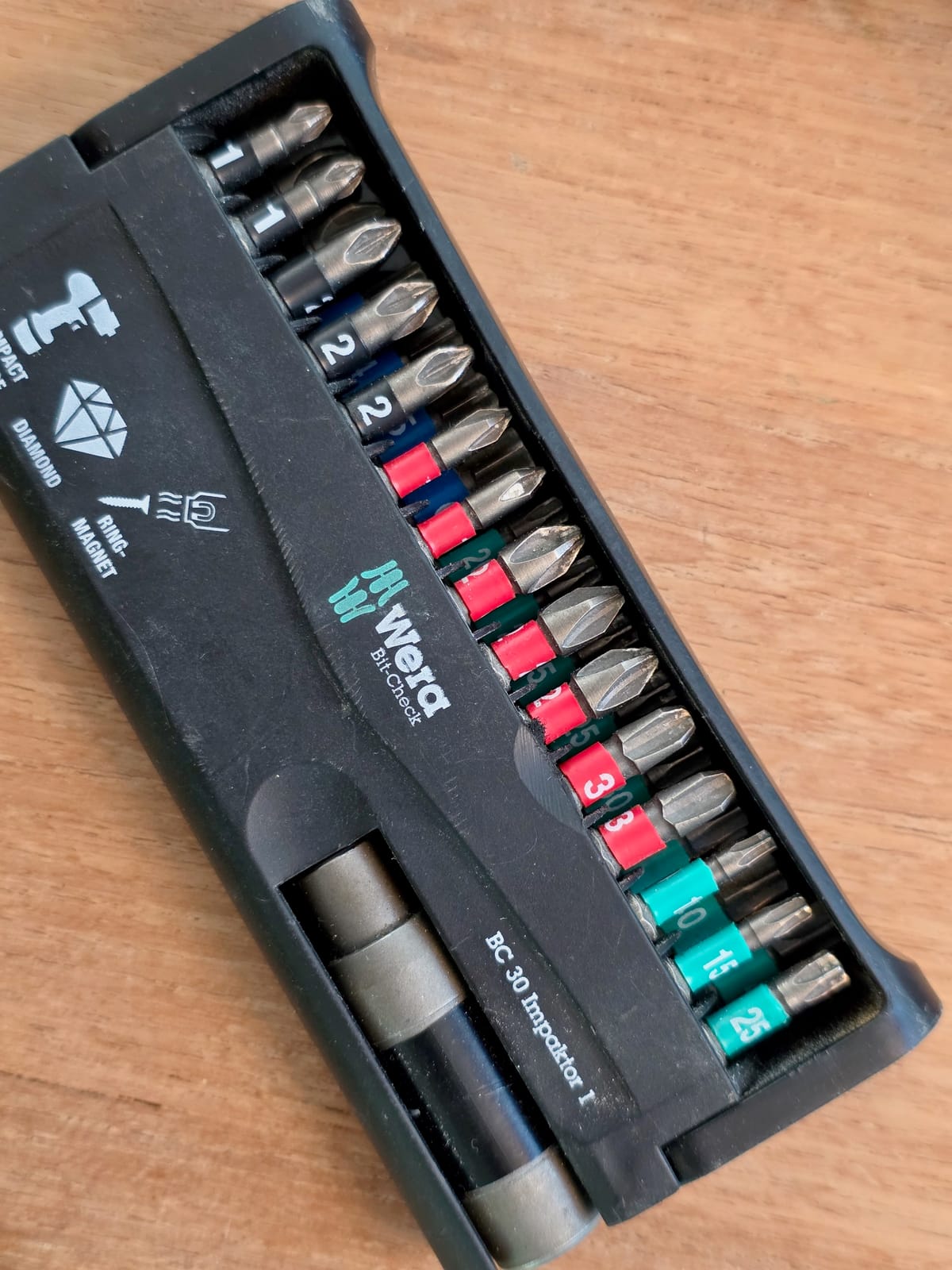
The Bit-Check BC 30 box, closed, a compact storage format.
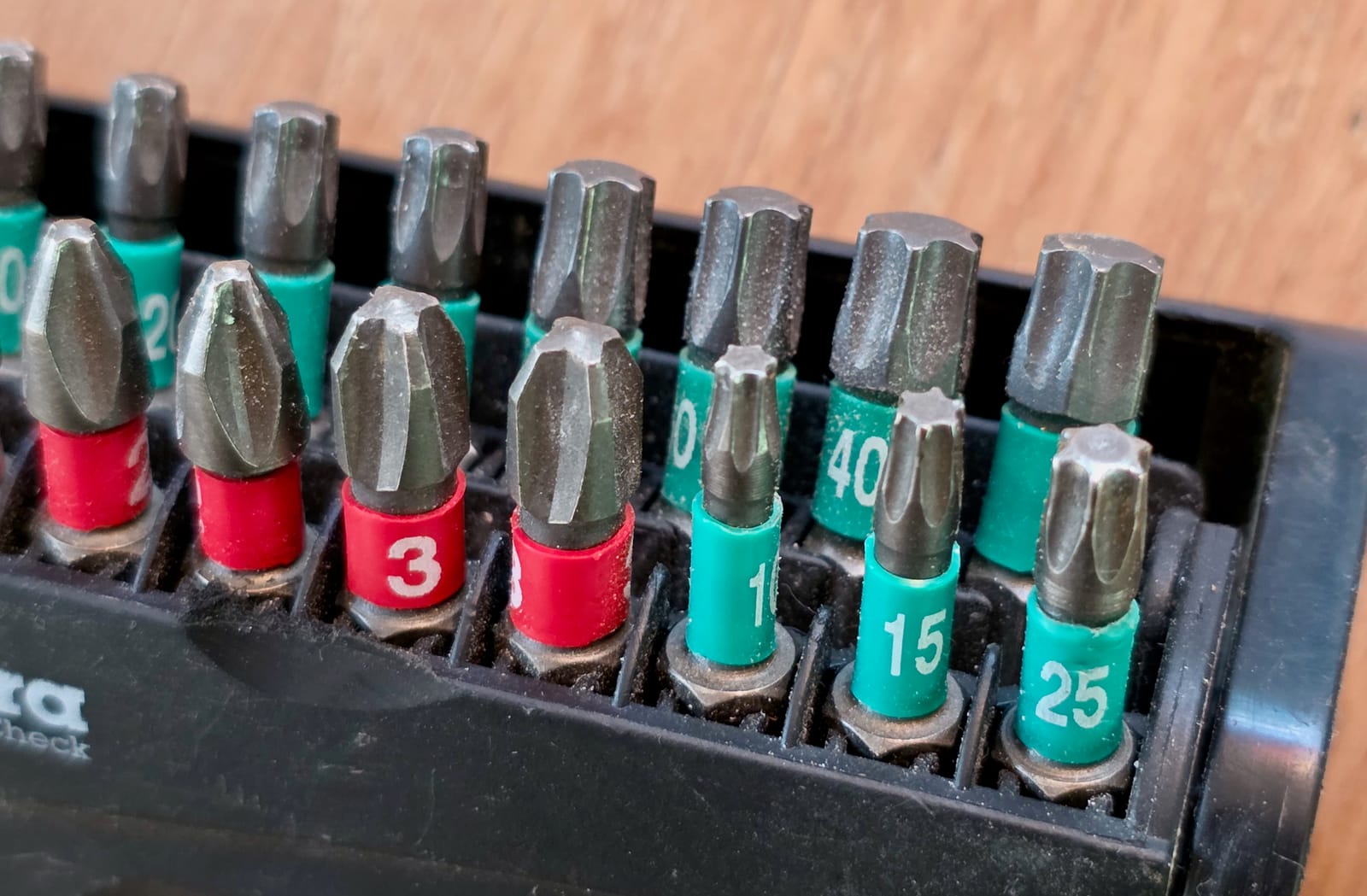
Close-up of the cross-head PH and Torx bits from the same case.
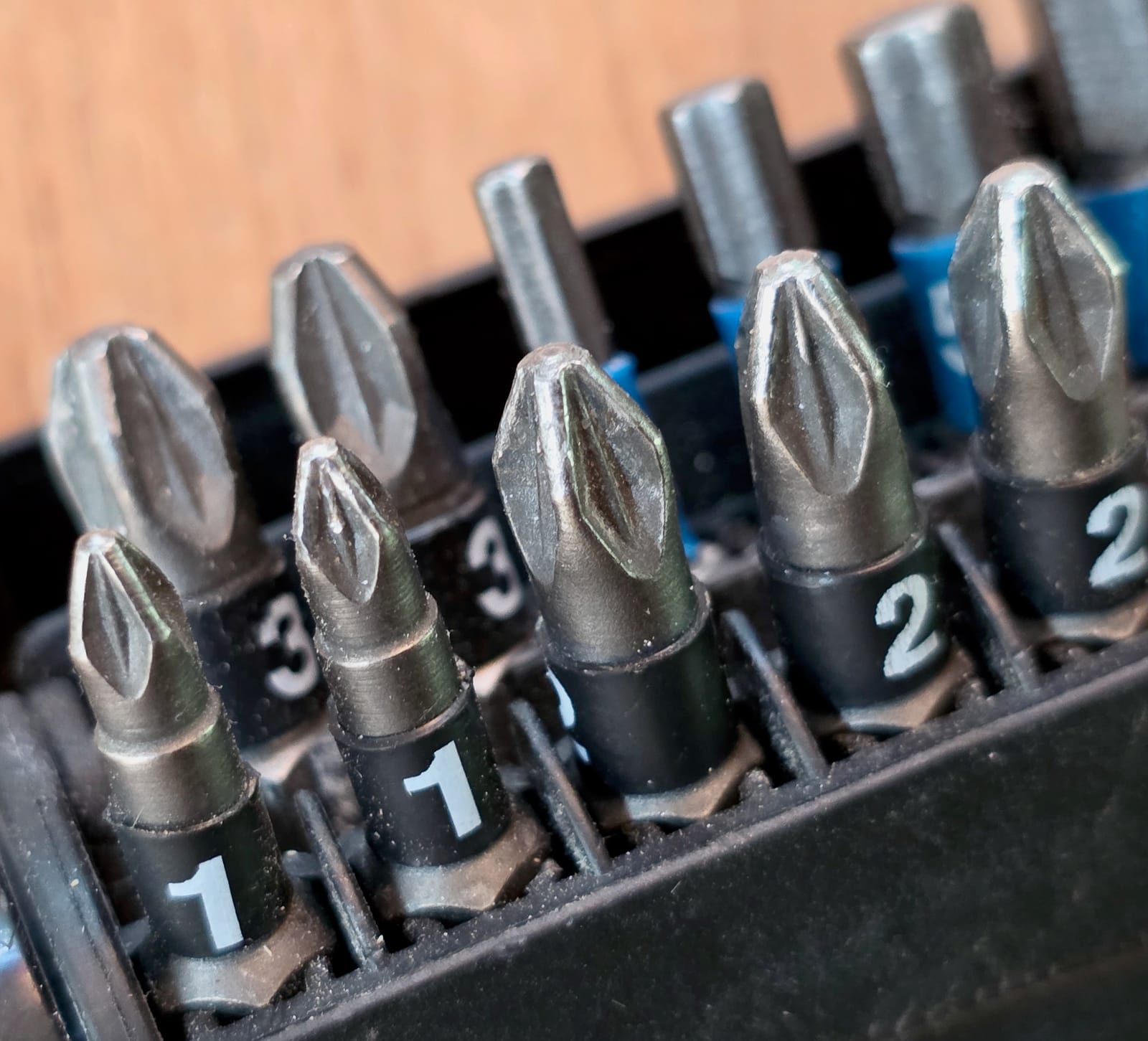
The row of Pozidriv PZ bits completes the case.
These three photos show the same case from three angles: closed, then the rows of PH and Torx bits, then the Pozidriv row. They illustrate the idea of a complete range built around screwdriving, without telling me anything about the performance of each bit.
Looking after screwdriving tools comes down to very little. I wipe the handles and the bits after the job, I let them dry, then I put them back in their case instead of letting them roll around at the bottom of a pocket.
Storage is not a detail: that is the role of the Bit-Check, Tool-Check, Bit-Safe and Wera 2go families. A bit that lives loose gets damaged on contact with the other tools and is harder to find when I need it.
A tired bit is recognisable by its rounded tip and its blunt edges. When I find one in that state, I replace it: persisting with a worn bit damages the screw head.
On insulated VDE screwdrivers, my check focuses on the insulation: cuts, splits, swelling. As soon as a suspicious mark appears, the tool comes out of the box, even if the blade is still good.
The magnetiser and the demagnetiser complete this maintenance. I magnetise a tip when I want it to hold the screw long enough to get it started, and I demagnetise when I prefer the screw to release on its own.
The first limit is mechanical. A screwdriver is neither a lever, nor a chisel, nor a punch: when a movement requires force or striking, I pick up the tool intended for it.
The second concerns insulation. I never modify the insulation of a VDE screwdriver: I don’t drill it, I don’t cut it, I don’t heat it.
The third relates to the domain of each family. A bit does not replace a socket, a ratchet does not replace a wrench, and a torque tool is reserved for torque checking.
Finally, a well-known range name does not exempt me from checking the exact reference on receipt. I open the case, I compare the contents with the product sheet, and I keep the invoice for the warranty.
The name Wera is well known enough to attract plagiarists. The Wikipedia article documents repeated closures of booths displaying copies at trade shows. The brand therefore actively fights counterfeiting, which serves as a reminder that branded tools get copied, from screwdrivers to pliers.
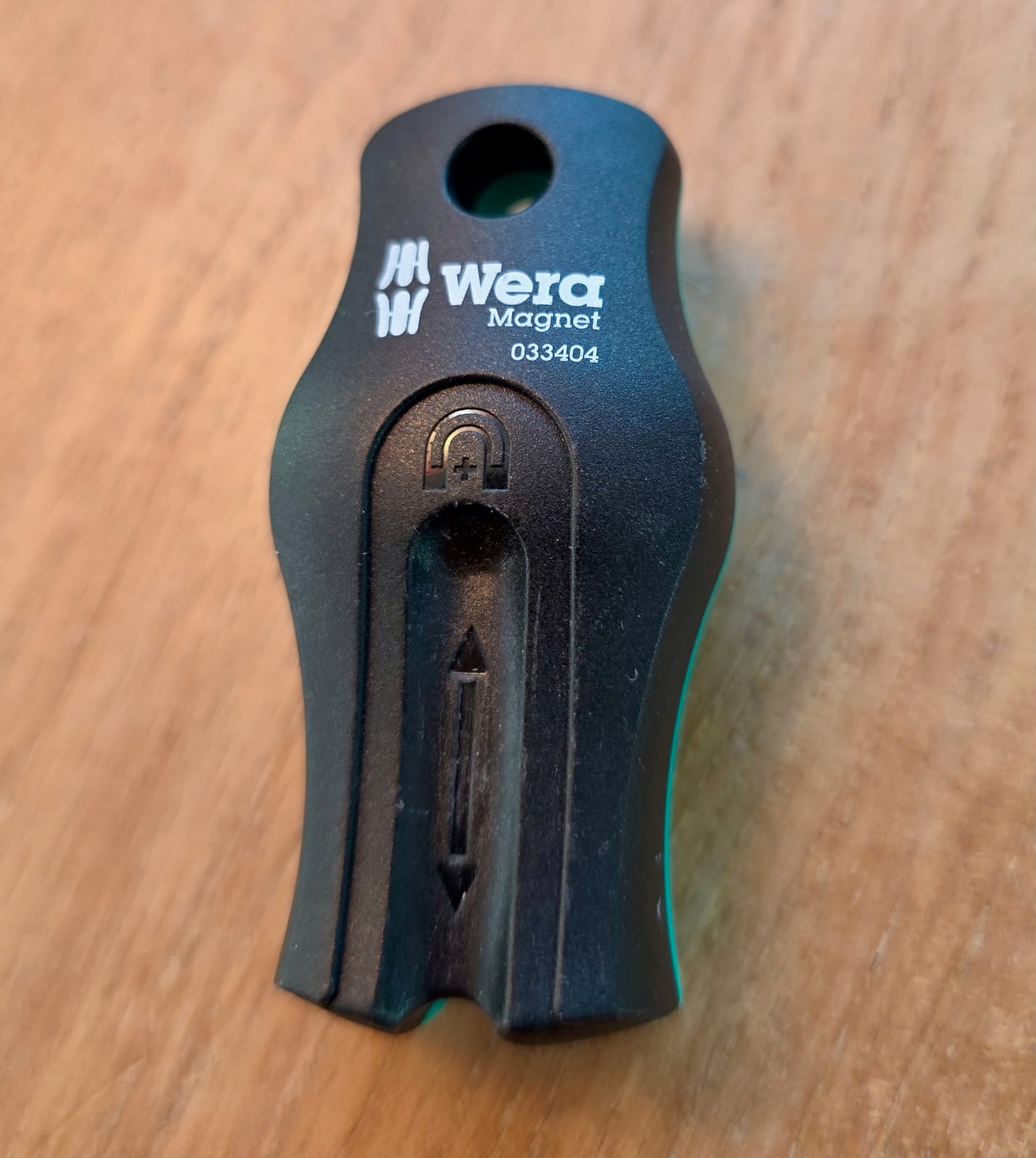
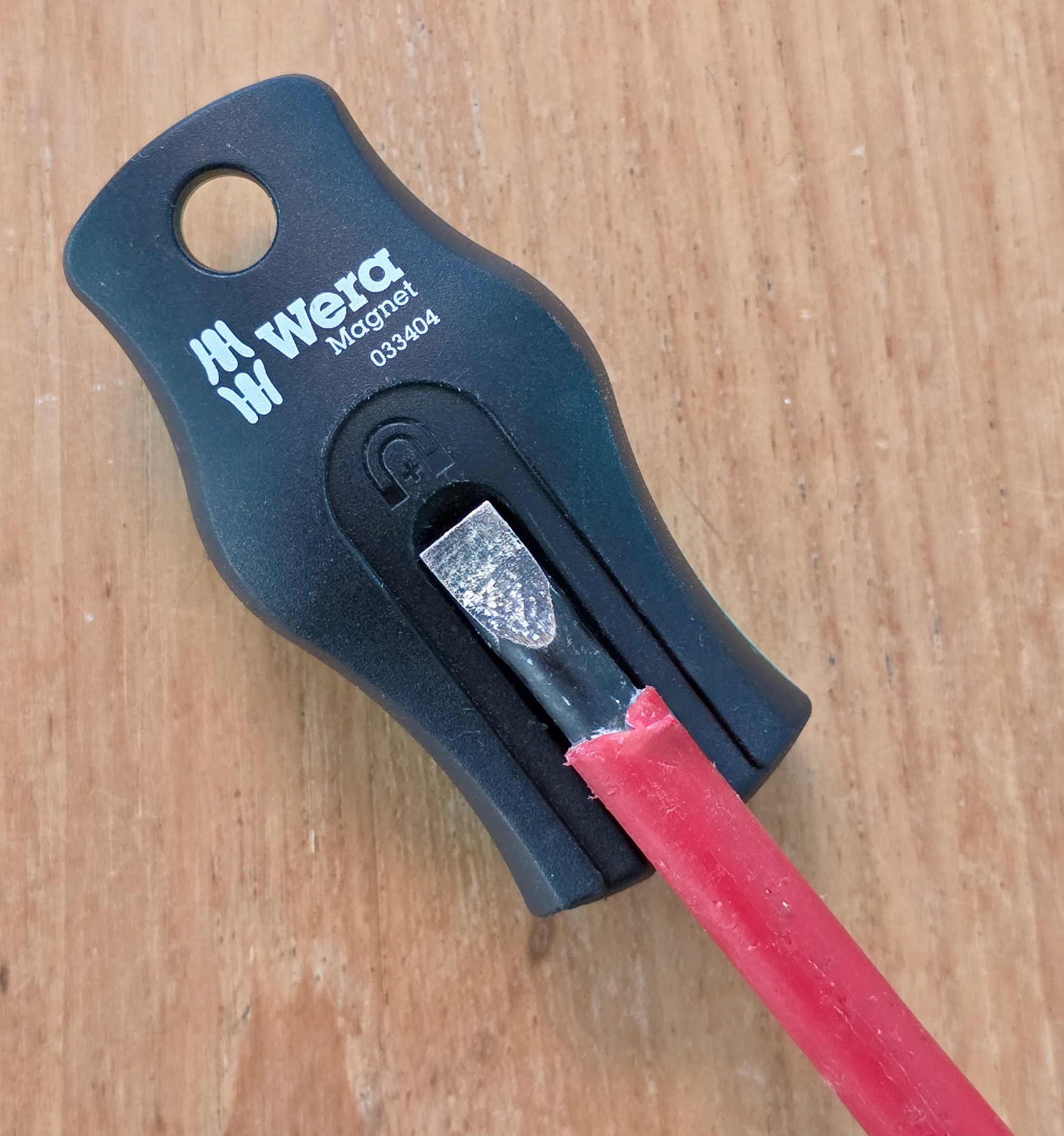
Wera magnetizer
The Wera logo on the accessory: a marking to check to recognize an authentic product.
If I see Wera at very low prices on an online marketplace, I stay cautious. My article on how to recognize counterfeit tools details the signs to check, and the principle holds for all tool brands.
The industrial history of Wera Werkzeuge spans nearly 90 years. While the commercial documentation today focuses on the current tool range (Kraftform Kompakt, Zyklop and Joker ranges, plus VDE insulated screwdrivers), the milestones of its development reflect a constant specialization in professional precision screwdriving.
| Source | What it establishes | What it does not provide |
|---|---|---|
| Source Industrial chronology | What it establishes Founded in 1936, Kraftform development in 1968, international expansion | What it does not provide Continuous specialization in screwdriving |
| Source wera.de — Company page | What it establishes Brand identity and company philosophy | What it does not provide No chronology dates |
| Source wera.de — Wera The Company | What it establishes Corporate presentation and product families | What it does not provide No prices or market ranking |
| Source wera.de — Tool Evolution | What it establishes Evolution of recent innovations | What it does not provide Historical dates before the 2000s |
The chronology sources cited here do not provide prices or market ranking.
Beyond historical accounts, what matters for an electrician day to day on the job site is the durability of the VDE insulation, the strength of the Lasertip tips, and the grip ergonomics during long wiring sessions.
This article gives no price or market ranking. The design awards cited come from Wikipedia. For a purchase, I check the terms of the tool brand warranty before advising.
3 questions
InteractiveWera, the story of a German brand
3 questions to check the essential reference points
Choose an answer
Wera was founded in 1936 in Wuppertal under the name Hermann Werner GmbH, a tool trading company founded by Hermann Werner. The company was destroyed during the Second World War, then the manufacturing of screwdrivers became its core business under the leadership of Heinz Amtenbrink after 1945.
The name Wera was adopted in 1951. It is the contraction of Werner and Amtenbrink, the two families behind the company: the founder and his son-in-law. The brand carries neither the name of a city nor that of an invention.
Since 1995, production has been transferred to the Czech Republic, to Bystřice, then to a second site in Třebíč opened in 2018. The headquarters remain in Wuppertal-Cronenberg: the brand is German, but I cannot guarantee that a given reference is assembled in Germany. The current ownership structure is detailed in my article on who owns what in the tool industry.
Since 2016, the group has belonged to the Bitburger Holding, the family brewing group from Trier, which bought it because of the owner's age. Wera employed around 1 500 people in 2023 for revenue of 200 M€ in 2022.
Yes. The official site documents an Electrical / VDE application with VDE insulated screwdrivers (series 100 and 1000, Kraftform Plus, T 400 VDE heads, insulated stainless steel), Zyklop VDE ratchets and sockets, Joker VDE wrenches and a VDE insulated torque screwdriver. No standard is cited, because the pages consulted mention none; the insulated kits are compared in the article on 1000 V VDE kits.
Yes for the origin: founded in 1936 in Wuppertal, headquarters in Wuppertal-Cronenberg, German management since 2015. Manufacturing, however, has been Czech since 1995. So 'made in Germany' does not apply to all production, and I point this out before any purchase.
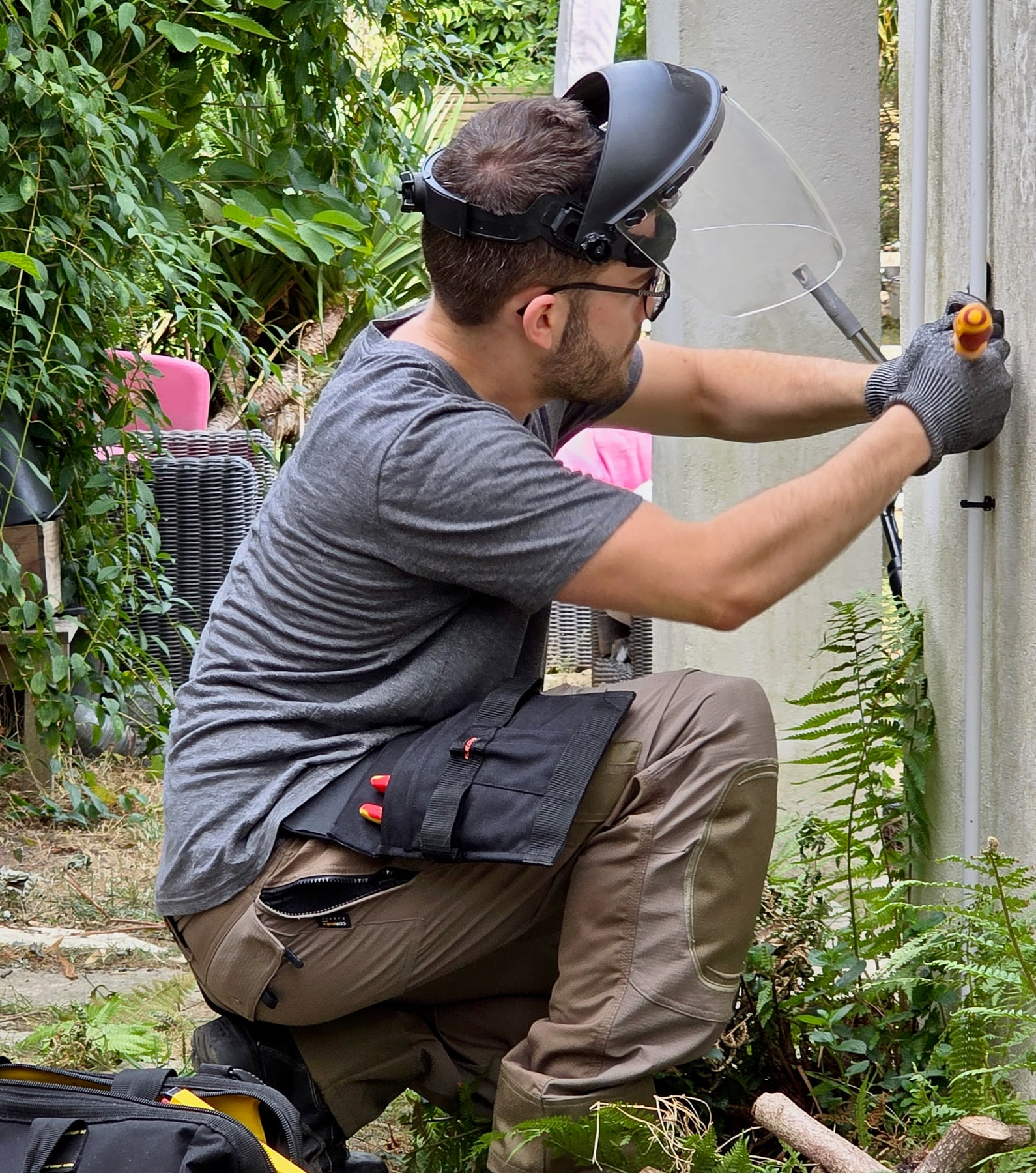
Théo Desrousseaux
Electrician and editor
I work in the field and edit this magazine. Every guide is reviewed for its target country before publication.
Practical electrical installation guides, diagnostic methods and tool recommendations compared against the technical wiring standards of this national edition.
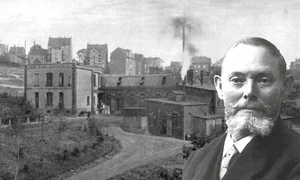
Founded in 1879 in Remscheid, Klauke moved from watchmaker's pliers to lugs and crimpers. Its history, range and place in electrical engineering.
Read the guide Guide Knipex: the story of the brand Founded in 1882 in Germany, Knipex makes the pliers chosen by professional electricians: history, innovations and a lasting commitment. Read the guide
  Guide Wera Kraftform or Wiha SoftFinish: which to choose? Wera Kraftform or Wiha SoftFinish: a handle launched in 1968, blades, VDE references and interchangeable systems to pick the right reference. Read the guide
  Guide C.K Tools review: VDE tools C.K Tools review: a German-origin brand now Welsh, VDE range of Dextro screwdrivers and RedLine pliers, IEC 60900 standards and published specifications. Read the guide