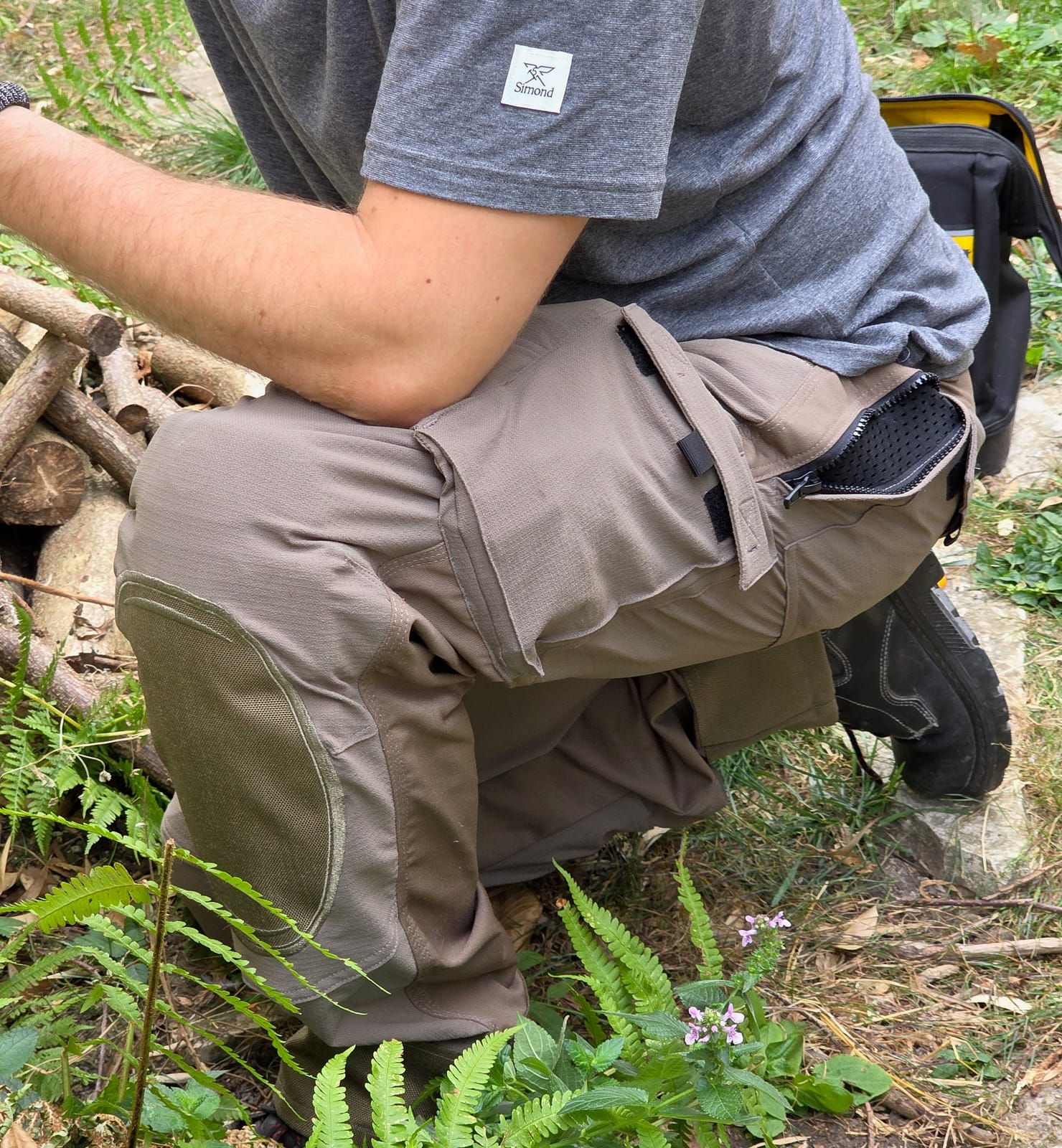
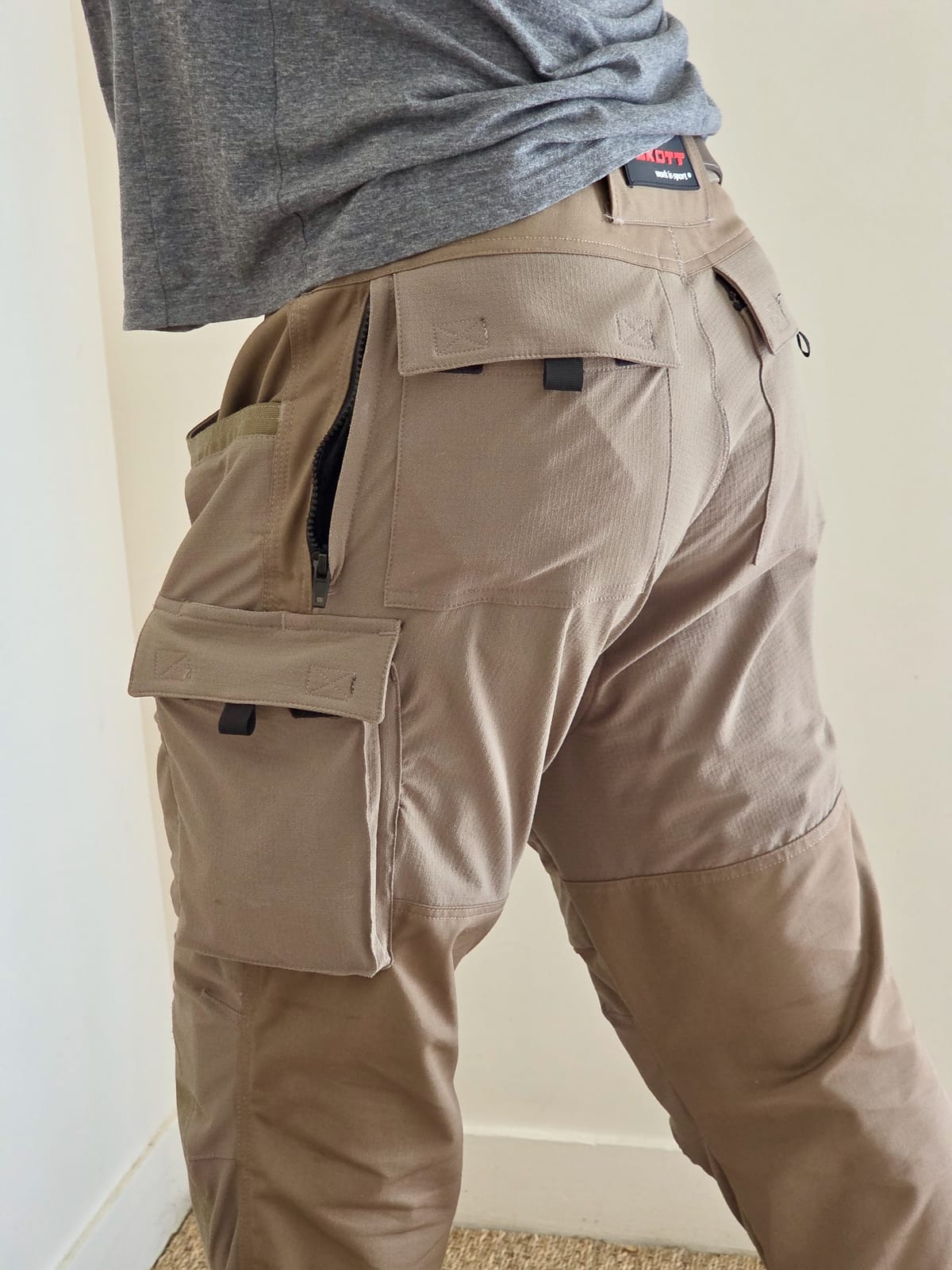
Pockets accessible while crouching
In a crouching position, the cargo pocket stays accessible without the fabric pulling or compressing — and the zipped vent on the side stays clear.
Published 1 August 2026
In brief
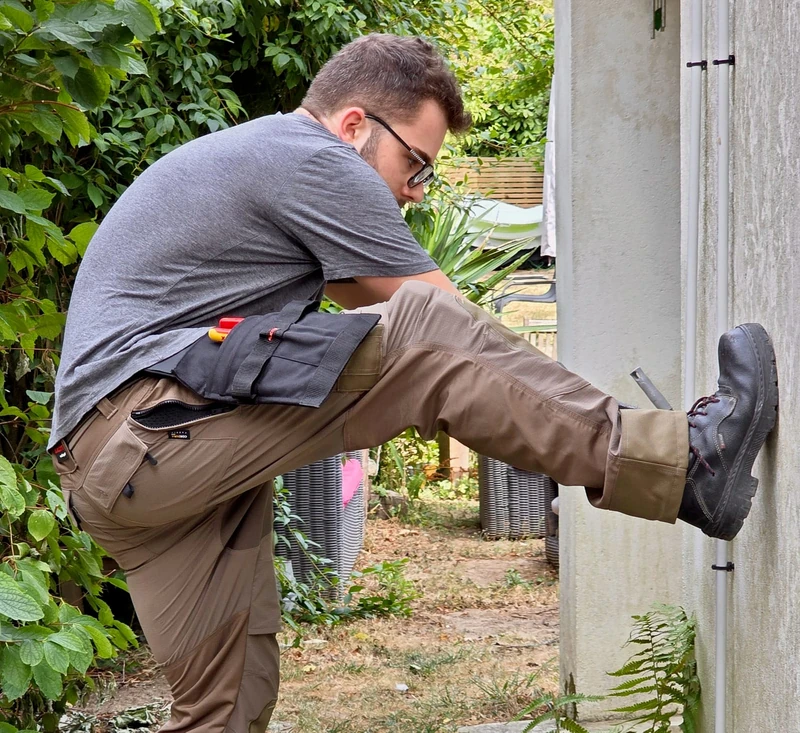
Ilkott sent me the Fresh Collection trousers and the AA61 pouch for this test.
I wore them on real jobs, at customers’ sites, over several weeks, before writing this article.
Since then, the brand has also sent me the Fresh Collection PY56M cropped trousers and the ZZ17 thermal long johns.
175,80 €
price of the Fresh Collection trousers (ref. PY55)
30 €
price of the AA61 pouch
45°
tilt of the AA61 pouch to stay in place with the knee raised
2009
birth year of the Ilkott trousers idea
The story of Ilkott begins in 2009, between two co-directors of Actimage. Christophe Genevier was renovating his house in a classic pair of work trousers whose knee pads kept slipping.
His brother David, for his part, had noticed that he was more comfortable in his underwear than in golf trousers when assembling furniture.
On the phone, the sentence has remained in the brand’s history: “it’s not the jogging bottoms that are the most comfortable, it’s the briefs! Work trousers need to be created based on an ultra-stretch brief!”
This anecdote explains the design of the Fresh Collection trousers as described by its creator: an atypical construction, built around a pair of knitted briefs, whereas most work trousers use a classic bi-stretch fabric with 20 % elasticity.
Ilkott claims a material sensitivity of 150 %, with stretch such that one metre of fabric can stretch over two. The sliding button, which replaces the classic button fastening for adjusting the trousers at the waist, is presented as patented in Switzerland.
The brand, positioned around the concept “work is sport”, was awarded a gold medal at the BAT’E-NNOV Awards 2022 in the PPE category for its Endurance trousers, after a silver medal in 2021 for a safety shoe tested on the GR20.
On manufacturing, Christophe Genevier mentions its own workshop in Tunisia, employing around 350 employees。
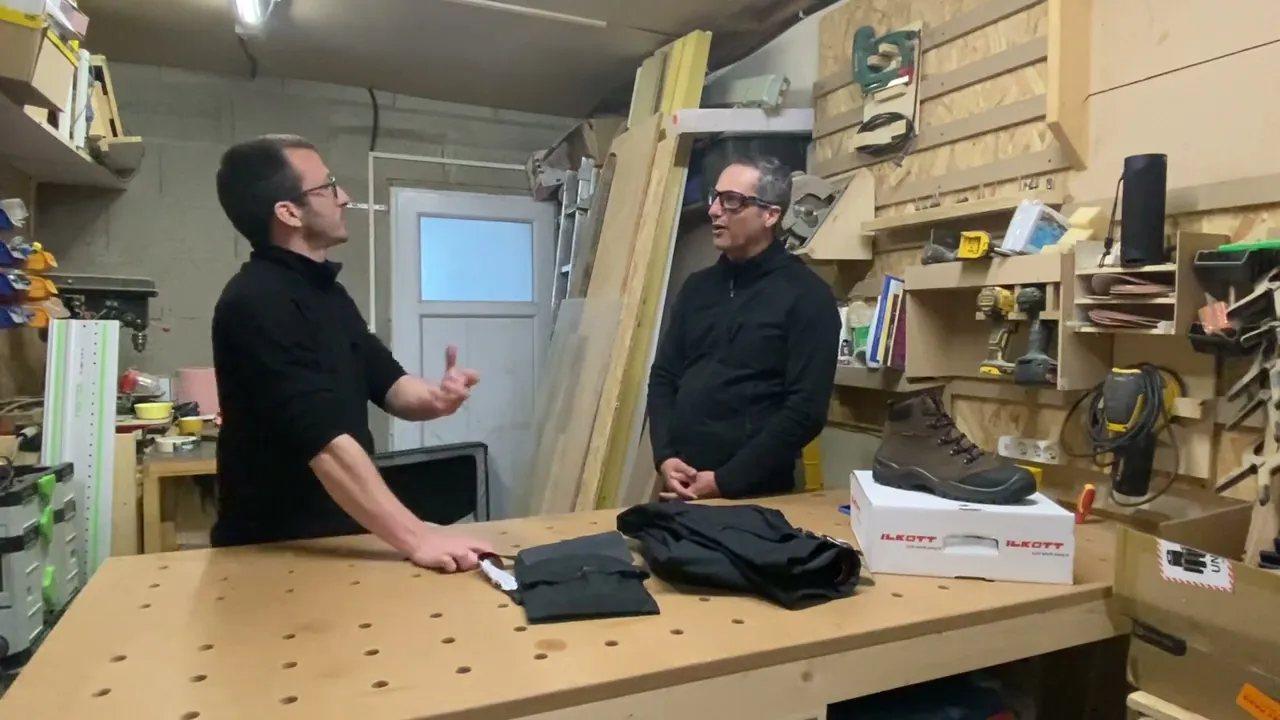
It’s the point Ilkott communicates about the most, and it’s also the one I’ve checked the most. In the field, the trousers let you squat for a long time, lift your leg against a wall or do a partial split with no feeling of restriction at the crotch or thighs.
Comfort is clearly superior to classic joggers on this specific point: less compression, more range, no perceptible discomfort in the extreme positions imposed by electrical work at height or at ground level.
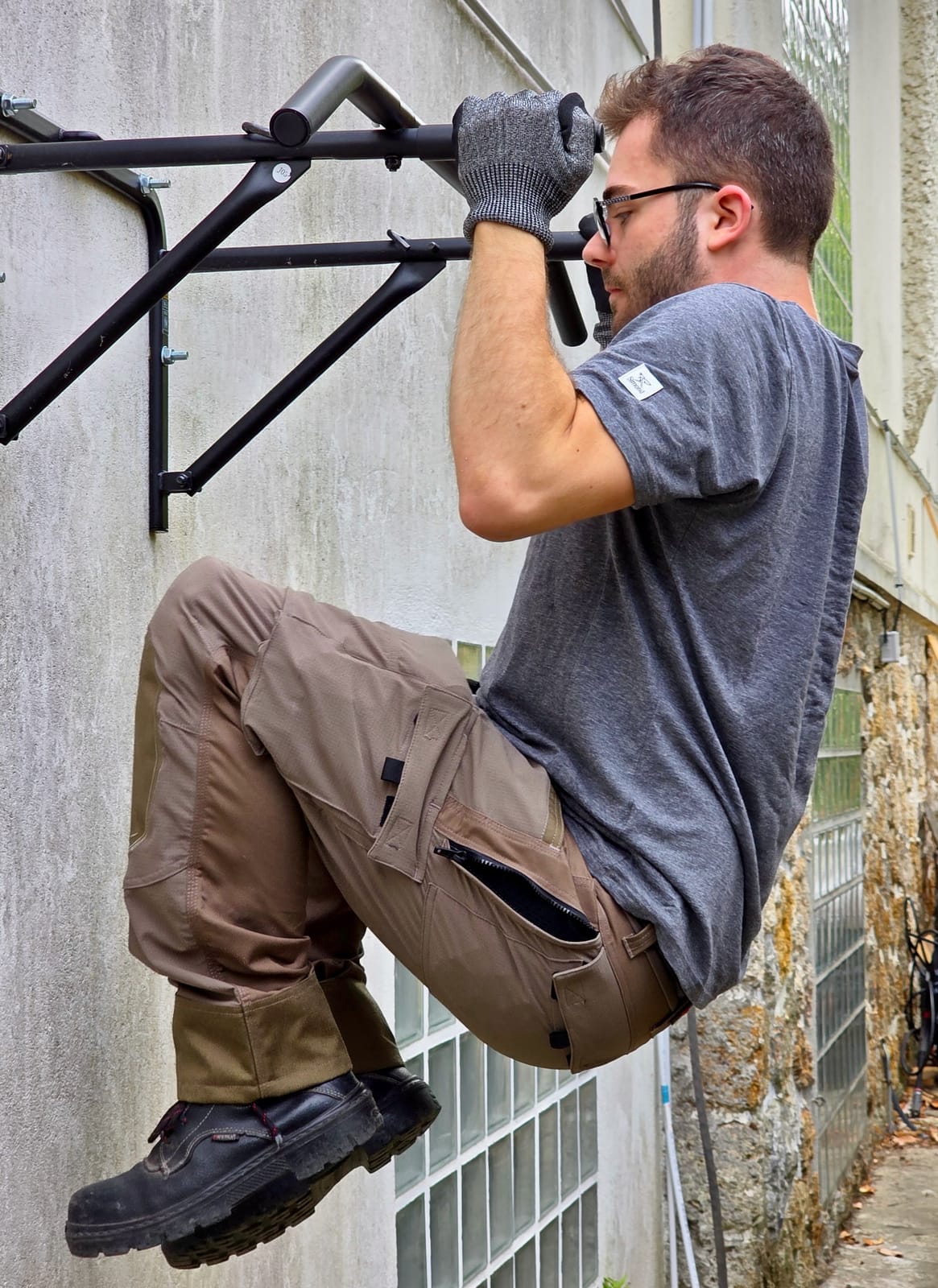
Legs tucked in a pull-up: no perceptible resistance from the fabric, even in a tight tucked position.
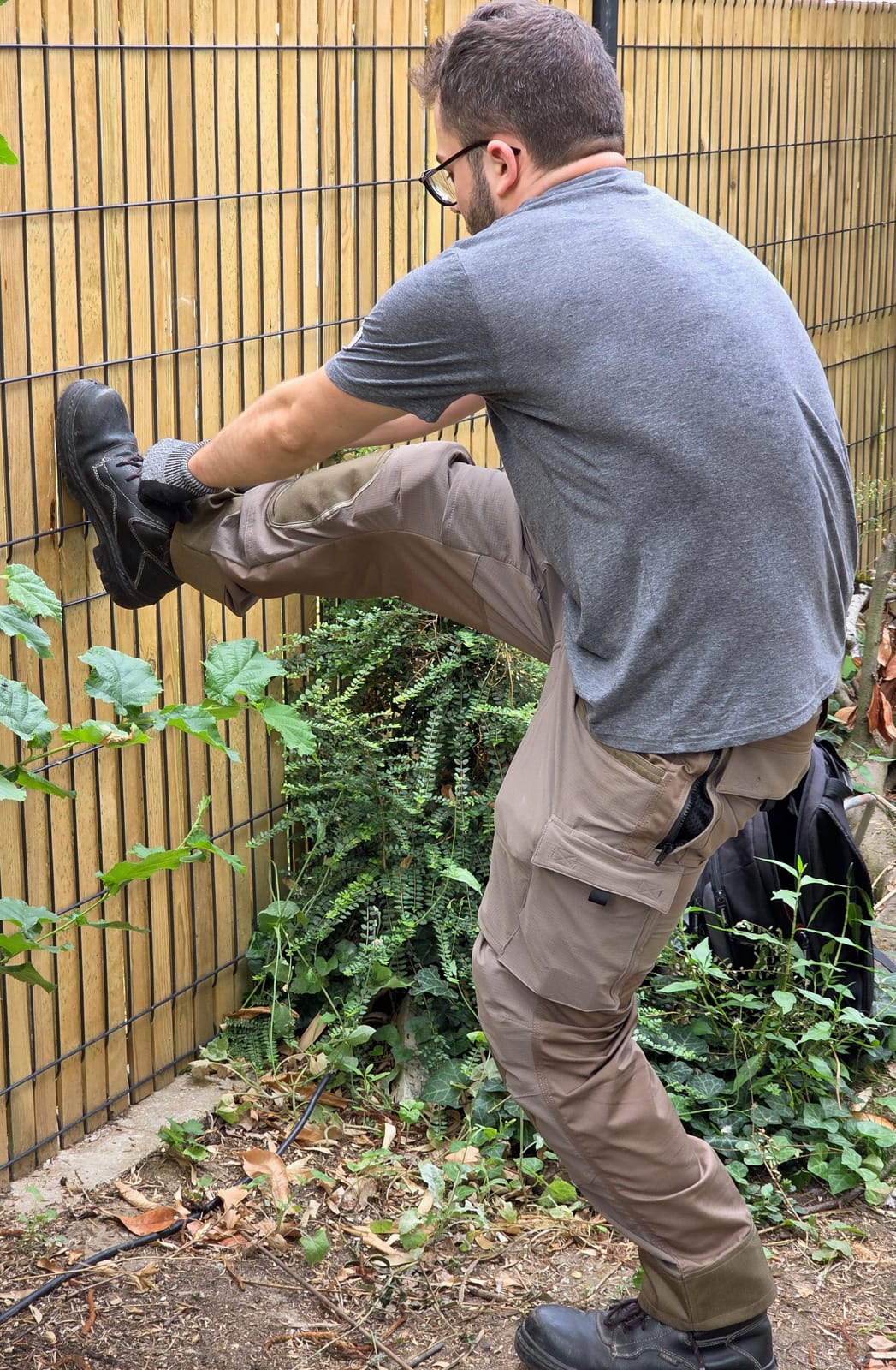
Leg raised to barrier height to tie shoelaces: the advertised flexibility also holds up outside jobs.
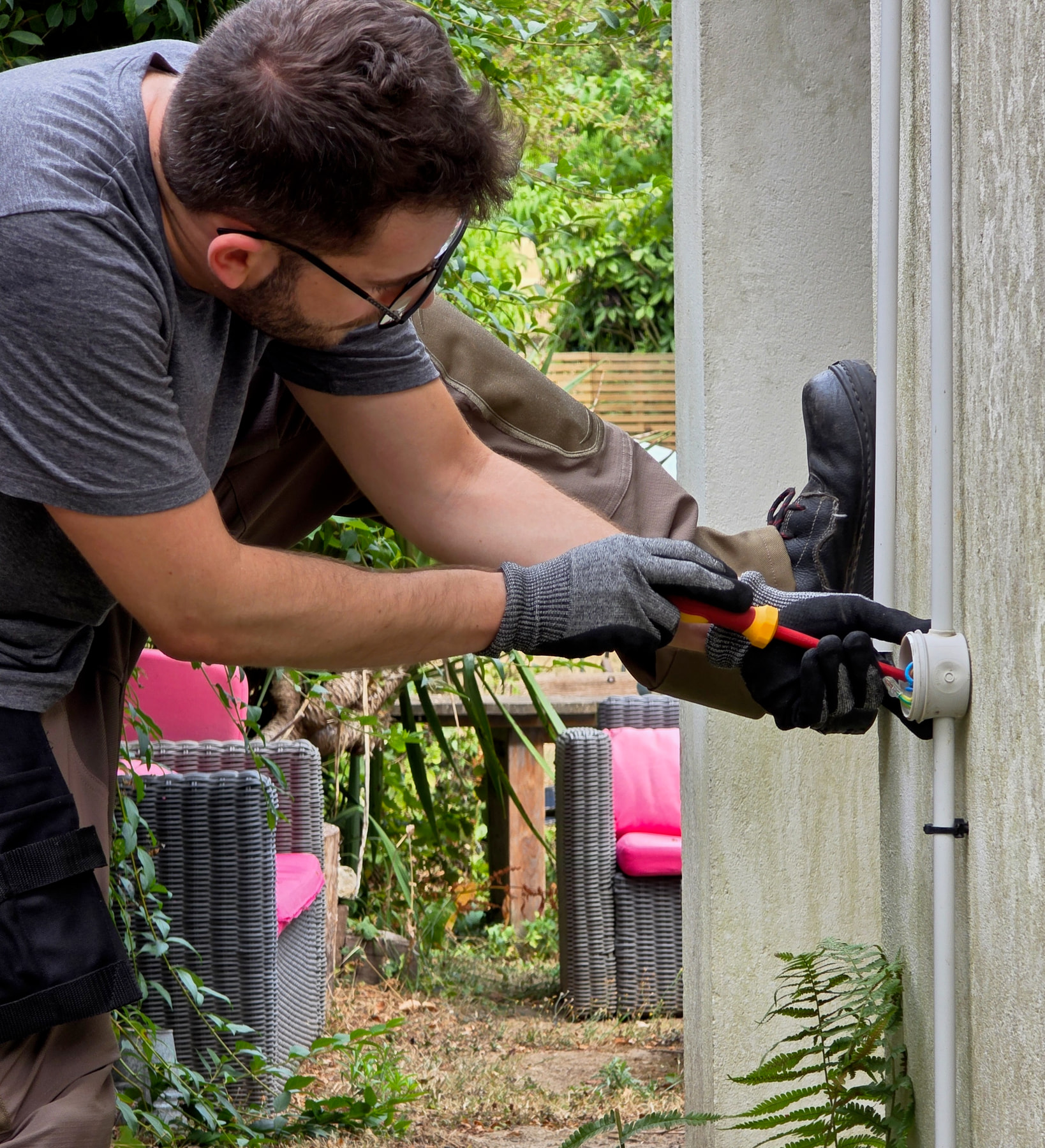
Leg raised on the job: the fabric follows the movement without hindering the working position.
After several weeks, the most revealing effect remains this one: you forget you’re wearing it. I caught myself keeping it on at home at the end of the day without thinking about it, which never happens with a classic pair of work trousers.
Ilkott advertises NILIT Breeze technology for this range to keep the body cool, with a Ripstop fabric resistant to pulling and tearing.
In practice, the trousers are very cool and their breathability is clearly superior to that of a standard construction trousers. The fabric lets air circulate continuously: I can clearly feel it ventilating while riding my scooter, which never happens with a classic pair of trousers.
What’s more, it dries quickly after sweating.
For those looking for even more freshness in intense heat, the brand also offers the Fresh Collection ergonomic cropped trousers, in other words a 3/4 trousers version cut below the knee.
The main asset of this cut is immediate: it gives the feeling of working in bermuda shorts, while keeping knee pads that really protect the knees once you’re on the ground. For a quick fix or on a construction site, working in regular shorts immediately exposes your kneecaps to gravel and hard ground.
The 3/4 trousers combine the ventilation of bermuda shorts with the real protection of an equipped pair of work trousers.
Info
For even more freshness in summer, the 3/4-length trouser version brings the real feeling of working in Bermuda shorts while keeping the knee pads that protect the knees. Find the ergonomic 3/4-length Fresh Collection trousers on the official Ilkott website.
The choice between the two cuts comes down to the day’s schedule, not a general rule. A short repair job doesn’t call for the same cut as a full day with repeated spells on the ground.
When my jobs run back-to-back between indoors and outdoors with a lot of travelling, I stick with the full-length trousers: I can already feel the ventilation when I ride my scooter.
When the day looks set to be long with work on the ground, I prefer the 3/4-length trousers: the Bermuda-shorts feeling is there, and the knee pads still protect the kneecaps on contact with gravel and hard surfaces.
My rule: if I have to put my knee on a rough surface, it’s full-length trousers or 3/4-length trousers with knee pads, never ordinary shorts. Knee protection comes before the pursuit of freshness.
Another criterion I look at: the share of the day spent crouching or on my knees. The bigger it is, the more the short cut makes sense, knee pads included.
For a real heatwave, the Fresh Collection cropped trousers add what the full-length trousers can’t give: above 30 °C, they go one step further, while the standard trousers are already known for being very breathable.
Their knee pads make it possible to work crouching without overheating: the protection stays in place, without the heat of full-length trousers.
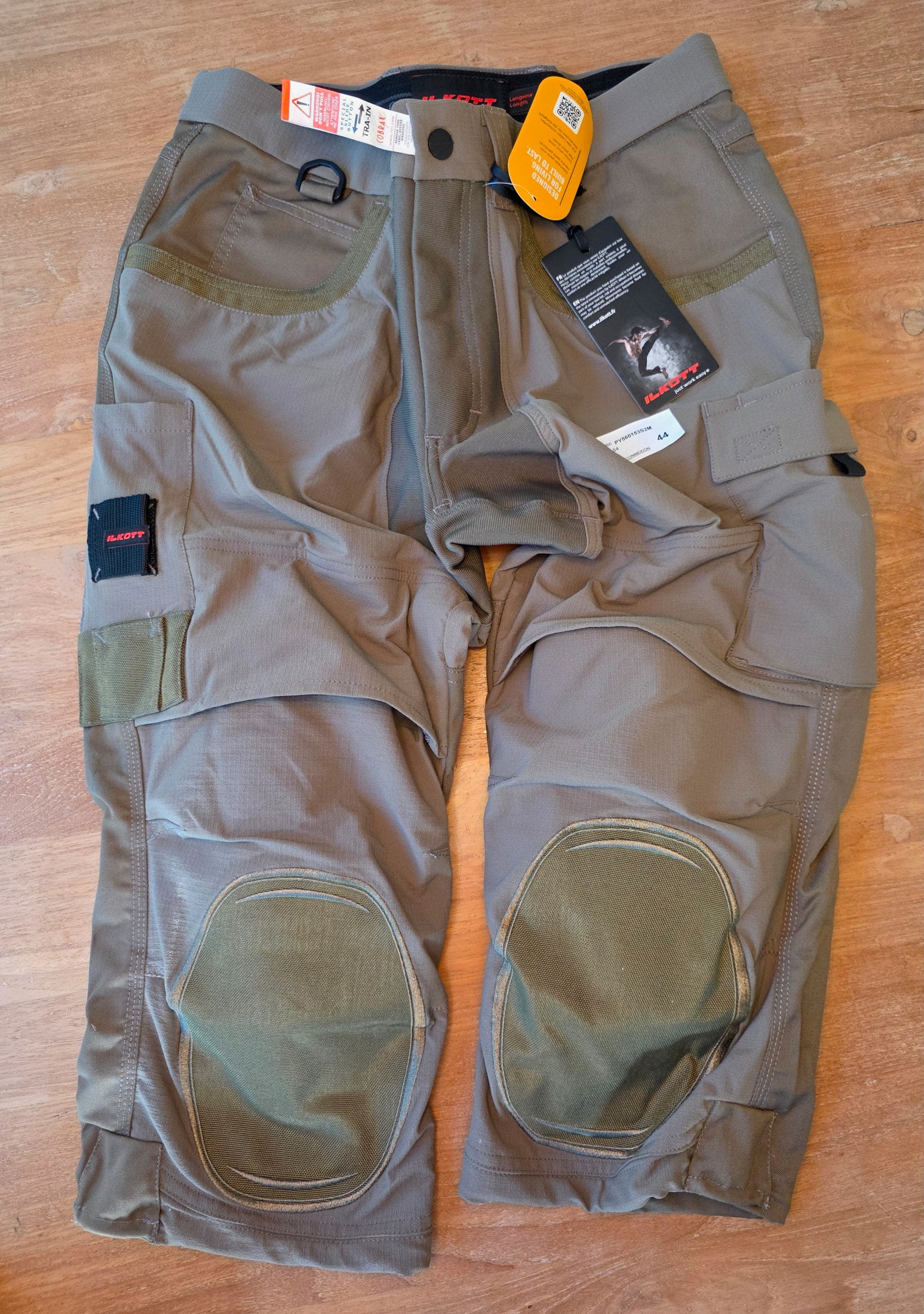
The Fresh Collection PY56M cropped trousers: a short cut below the knee and integrated knee pads.
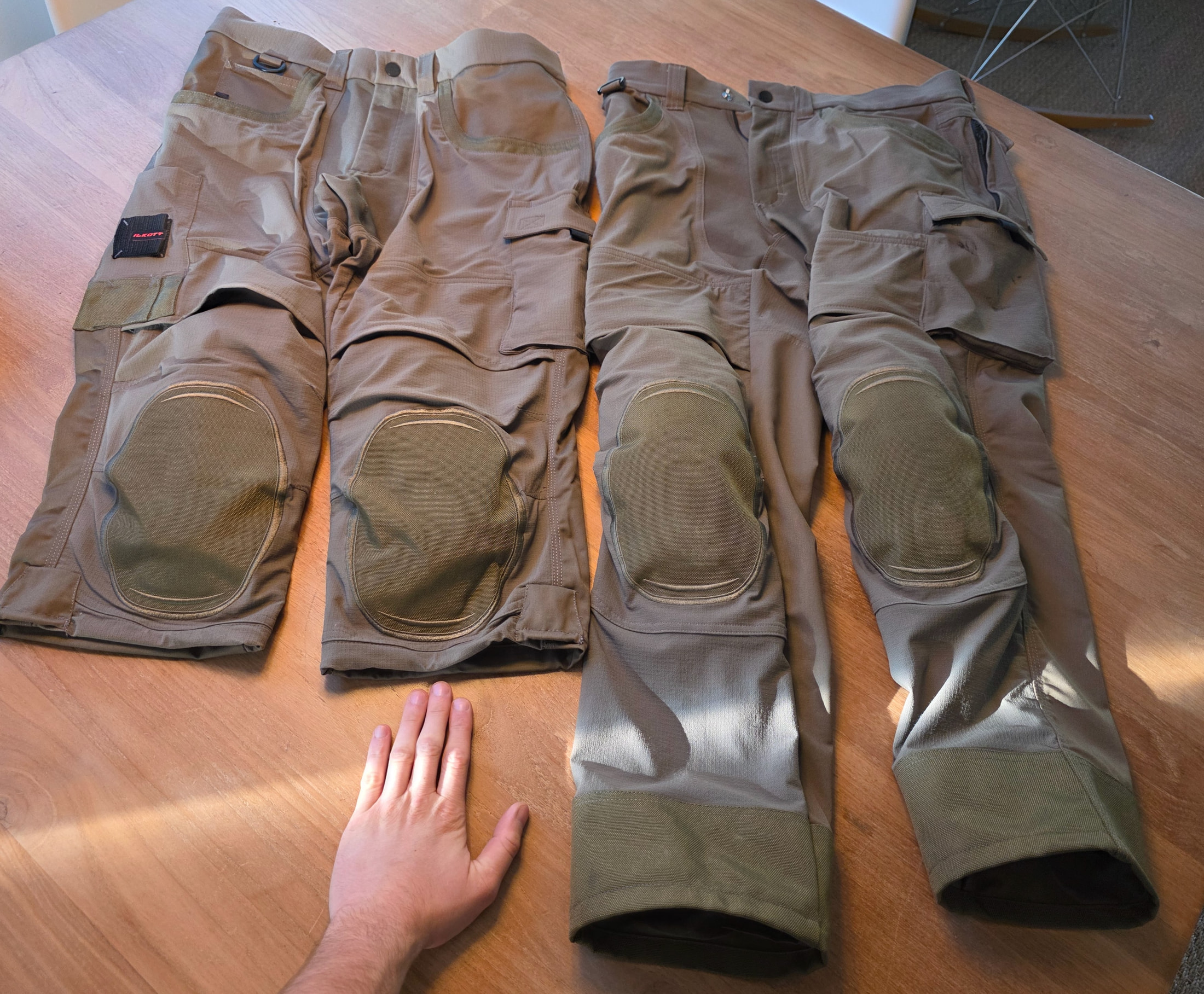
The cropped trousers and the full-length trousers side by side: same construction, different cut.
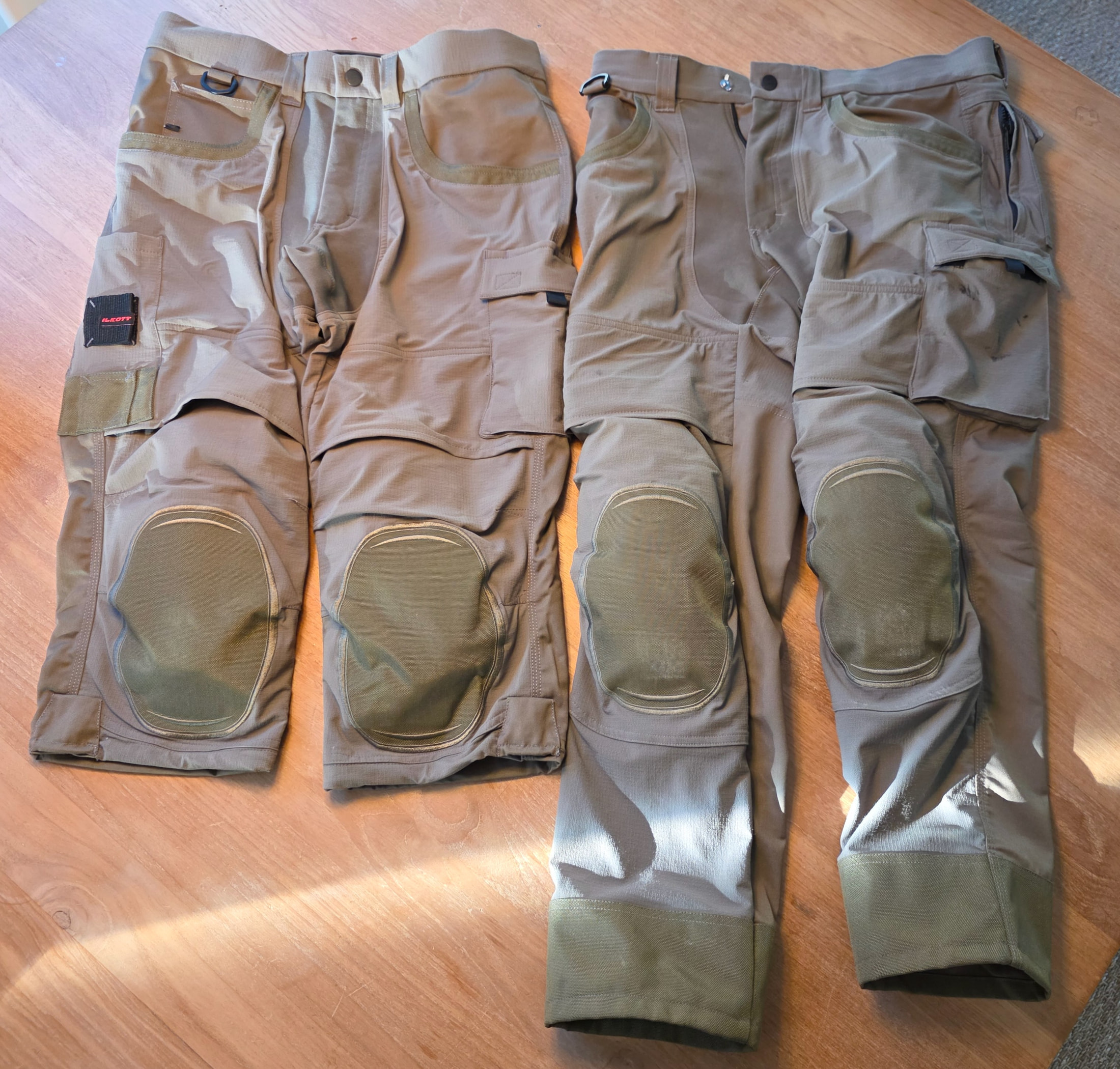
Two Ilkott work trousers lined up: identical knee pads and multiple pockets from one cut to the other.
Conversely, if my day plays out standing, at height or on the move, the full-length trousers remain my default choice.
What I don’t do: choosing the cut purely for style. On a job, the cut answers to the working day, nothing else.
I have, however, not yet tested the trousers in cold weather or in winter, so I can’t claim anything about how they behave in those conditions.
I haven’t tested the cold with the trousers alone yet. However, the brand sent me the ZZ17 thermal long johns (size M): they do the work under the work trousers when temperatures drop.
Worn at home as well as for sport, you forget you’re wearing them: they don’t itch, they’re light, very supple and very stretchy. No discomfort, even when moving.
It’s on two wheels in cold weather that they change everything: on a scooter call-out, the legs are exposed, and the long johns cut the cold that the trousers alone let through.
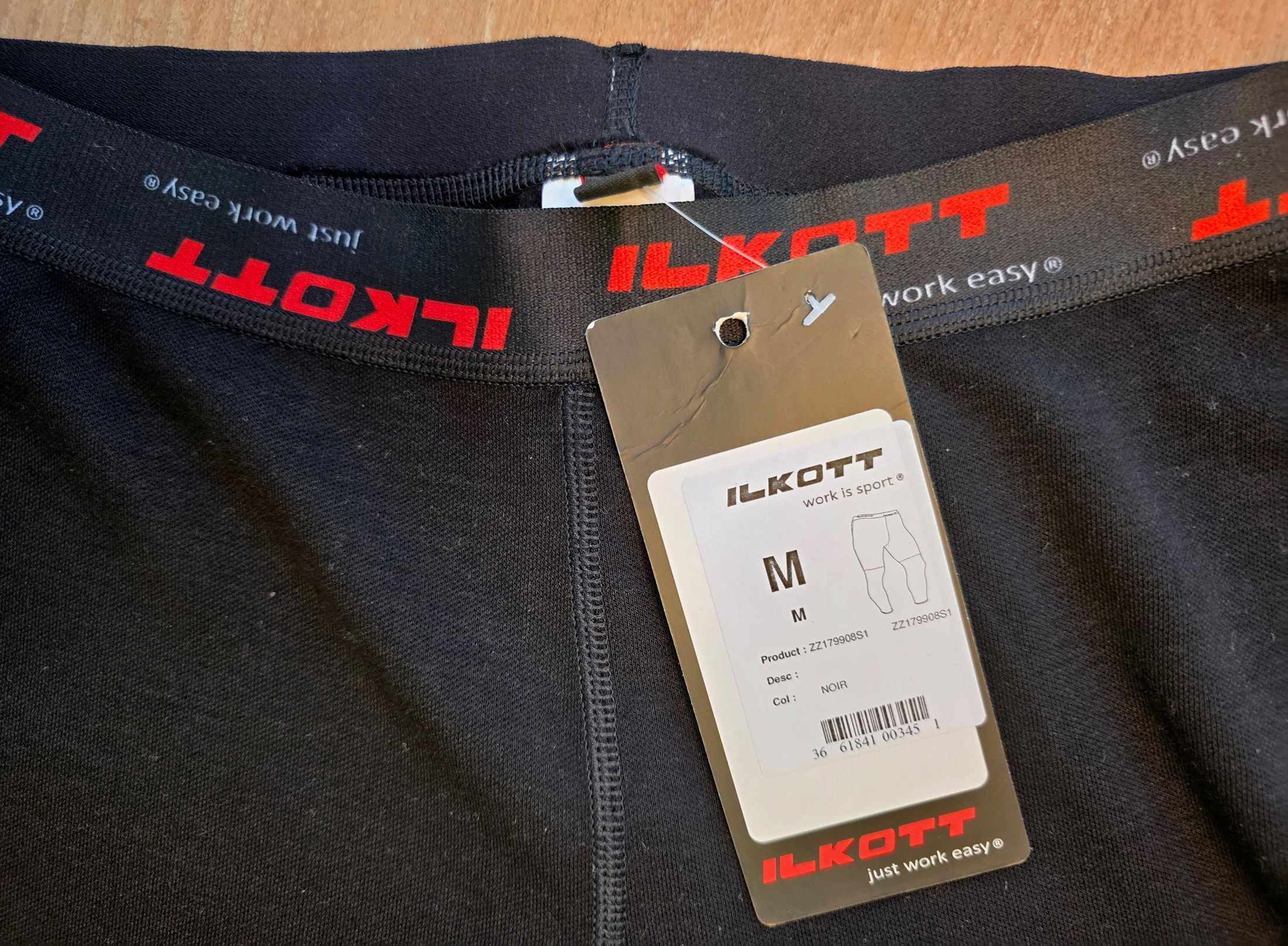
The ZZ17 long johns in size M: red elastic waistband and composition label.
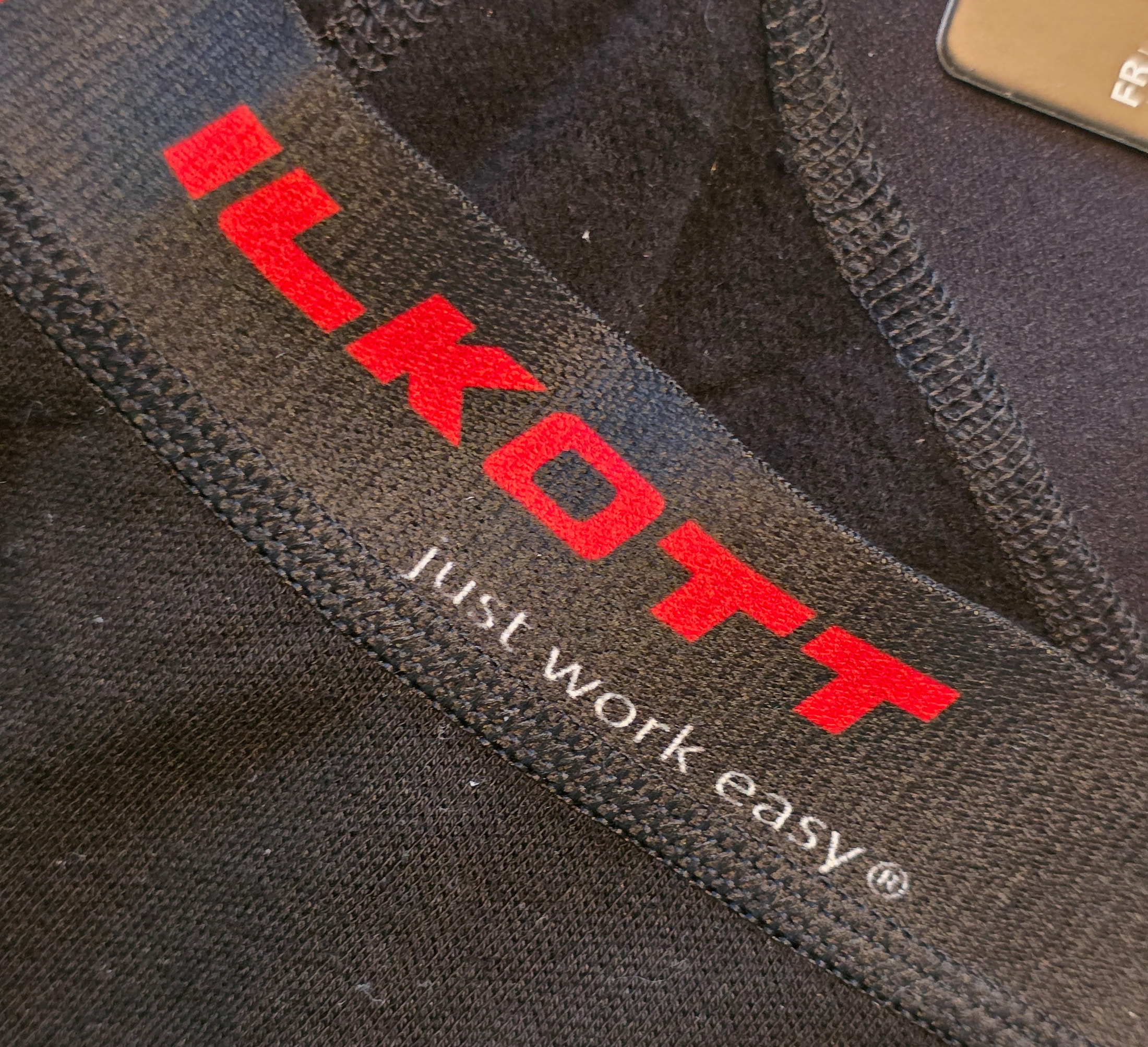
The elastic waistband carries the Ilkott signature “Just Work Easy”.
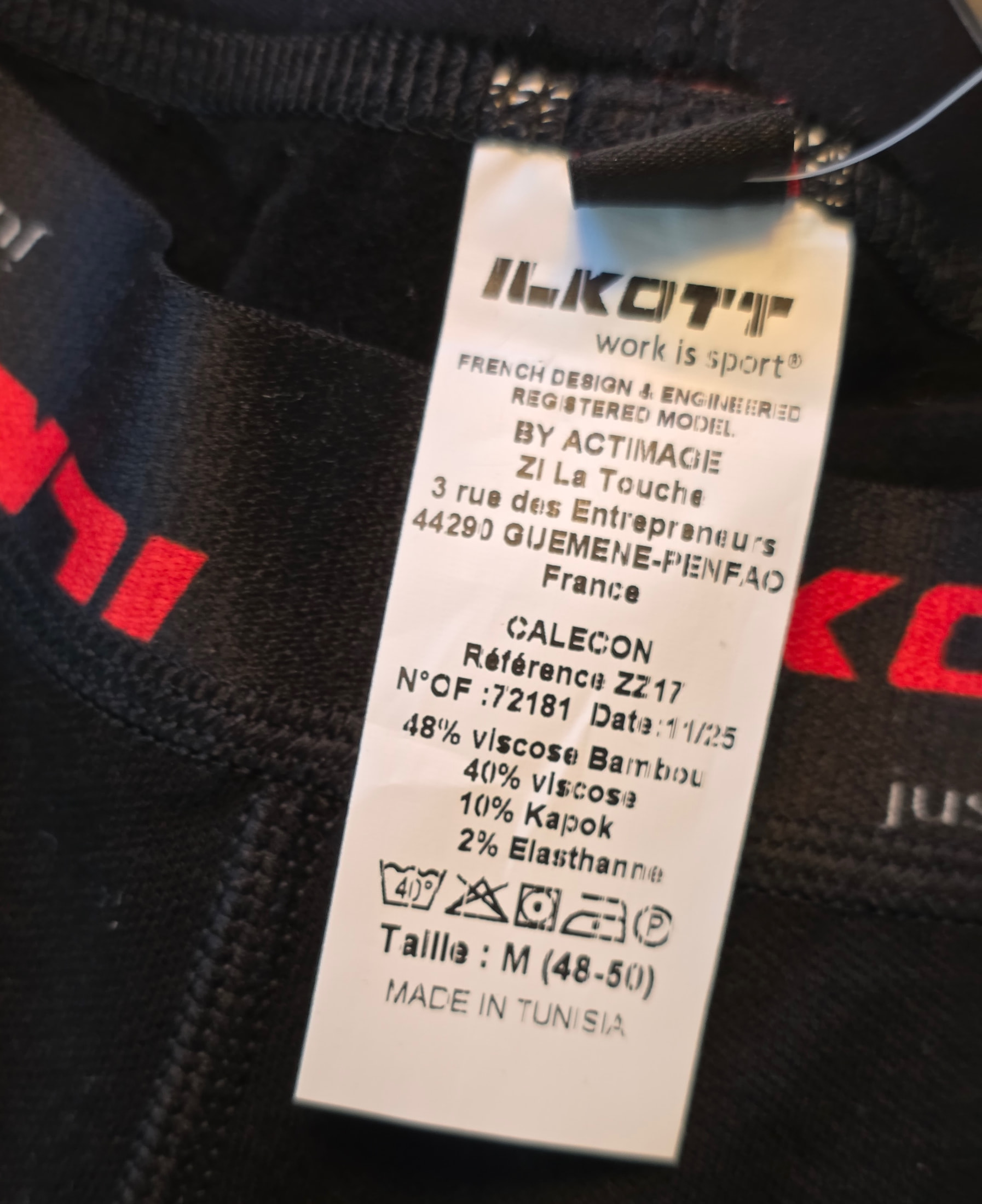
The label confirms the ZZ17 reference, size M and Tunisian manufacturing.
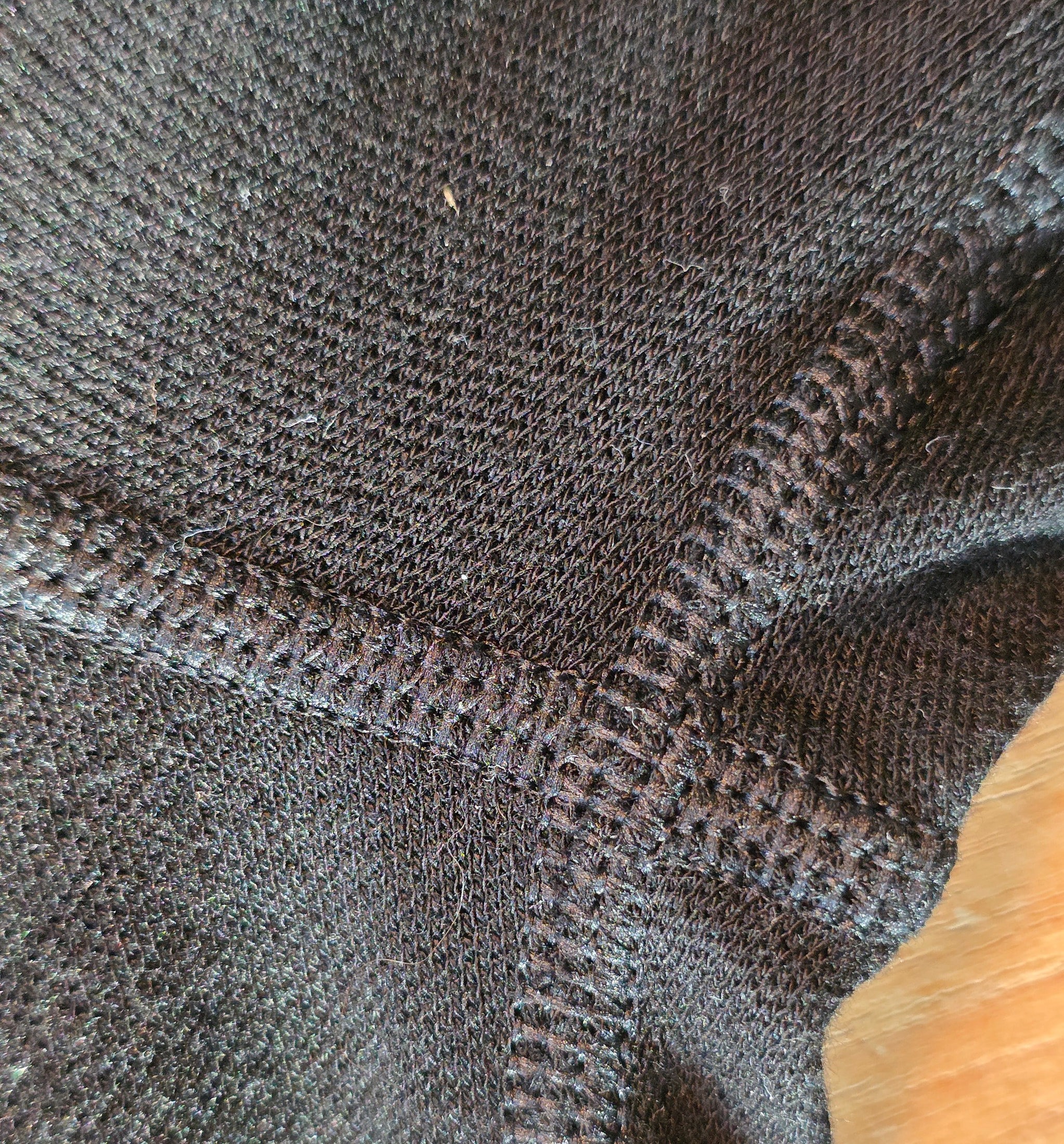
The crotch is reinforced: the seams keep the most stressed area together.
Under a pair of Ilkott work trousers, they form the winter base layer, the one you forget once it’s on.
The material can be seen up close: black technical knit, vertical overlock stitching and reinforced crotch.
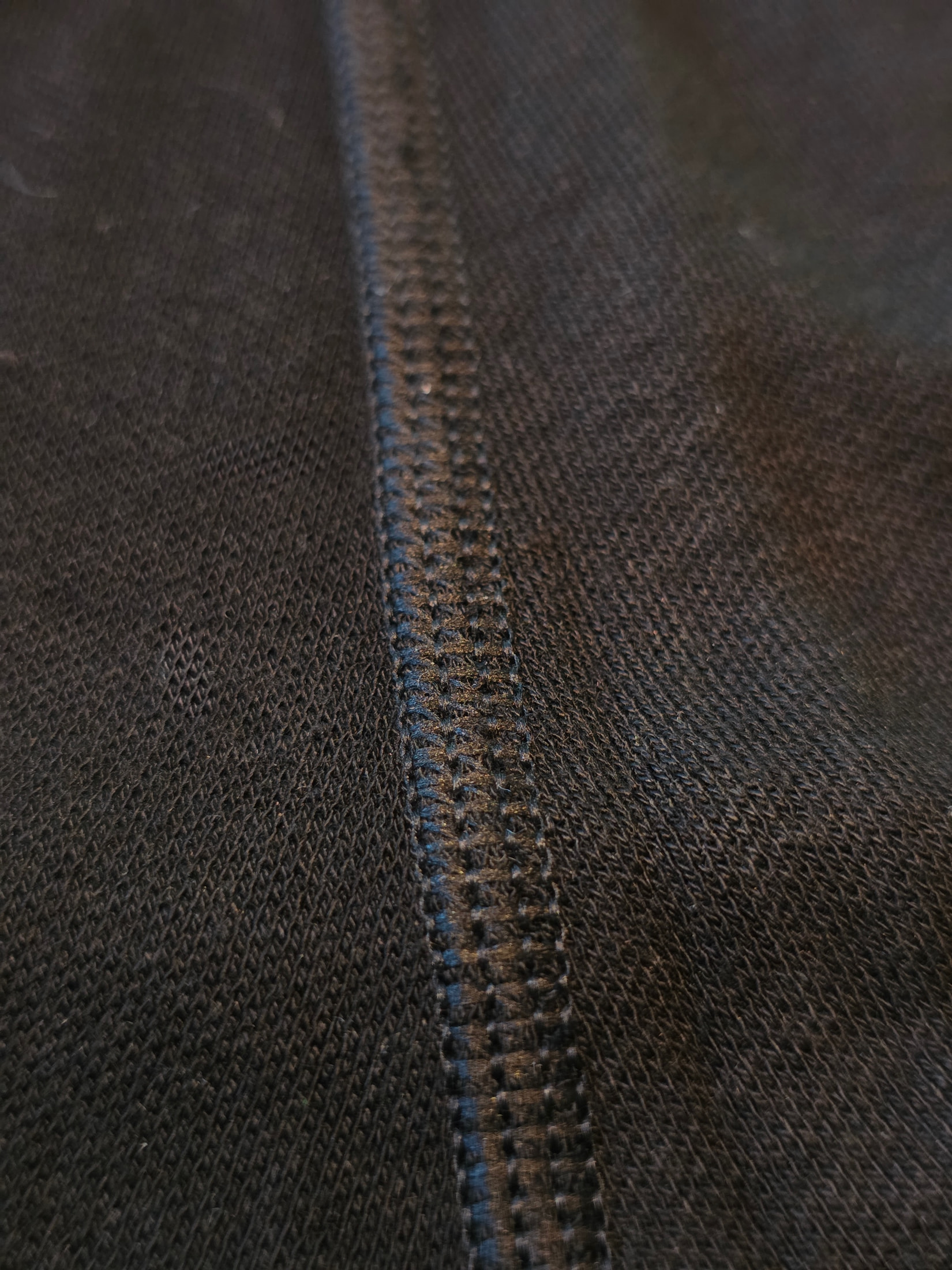
The overlock seam on the black knit of the long johns.
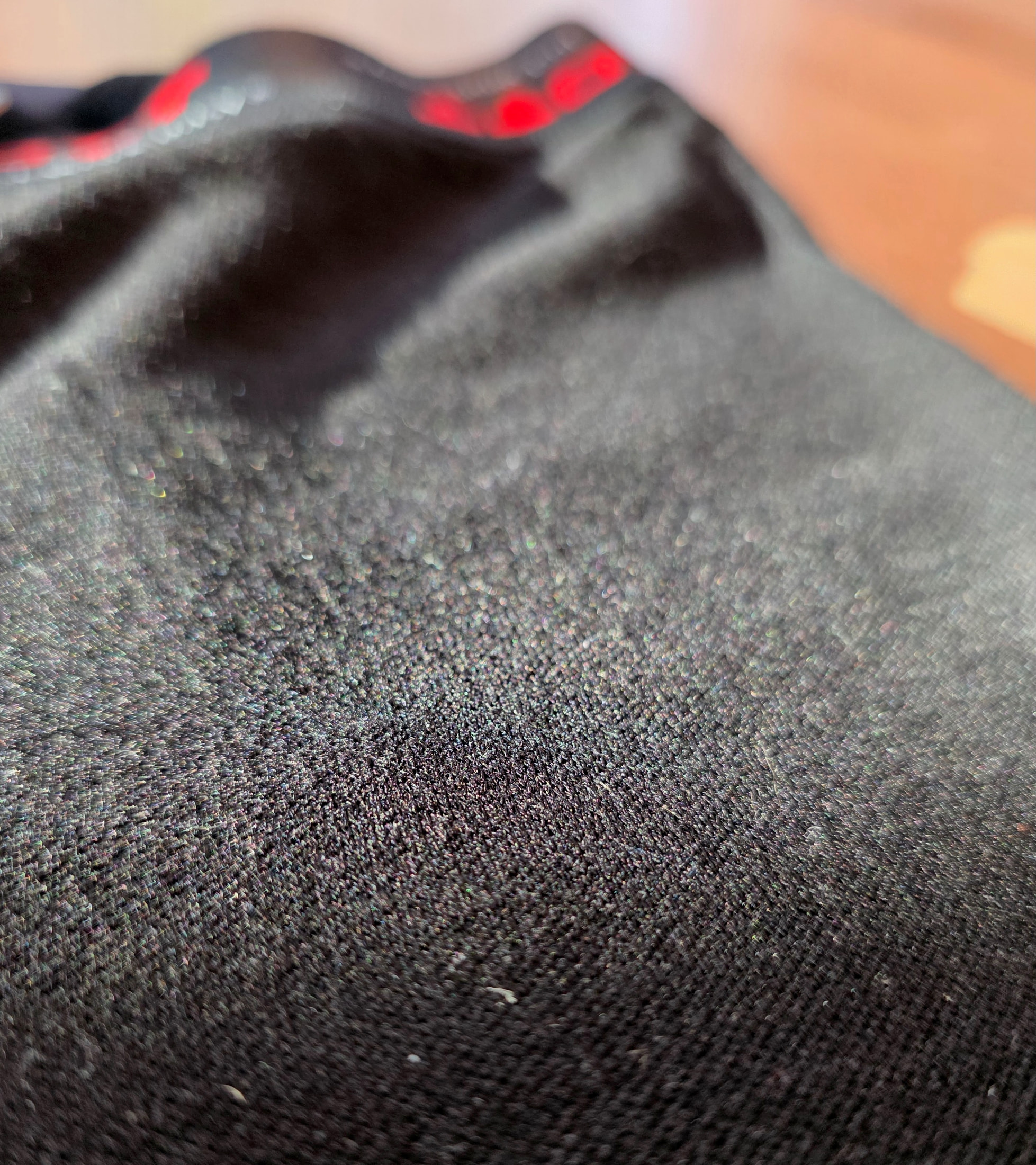
The tight technical knit of the long johns, up close.
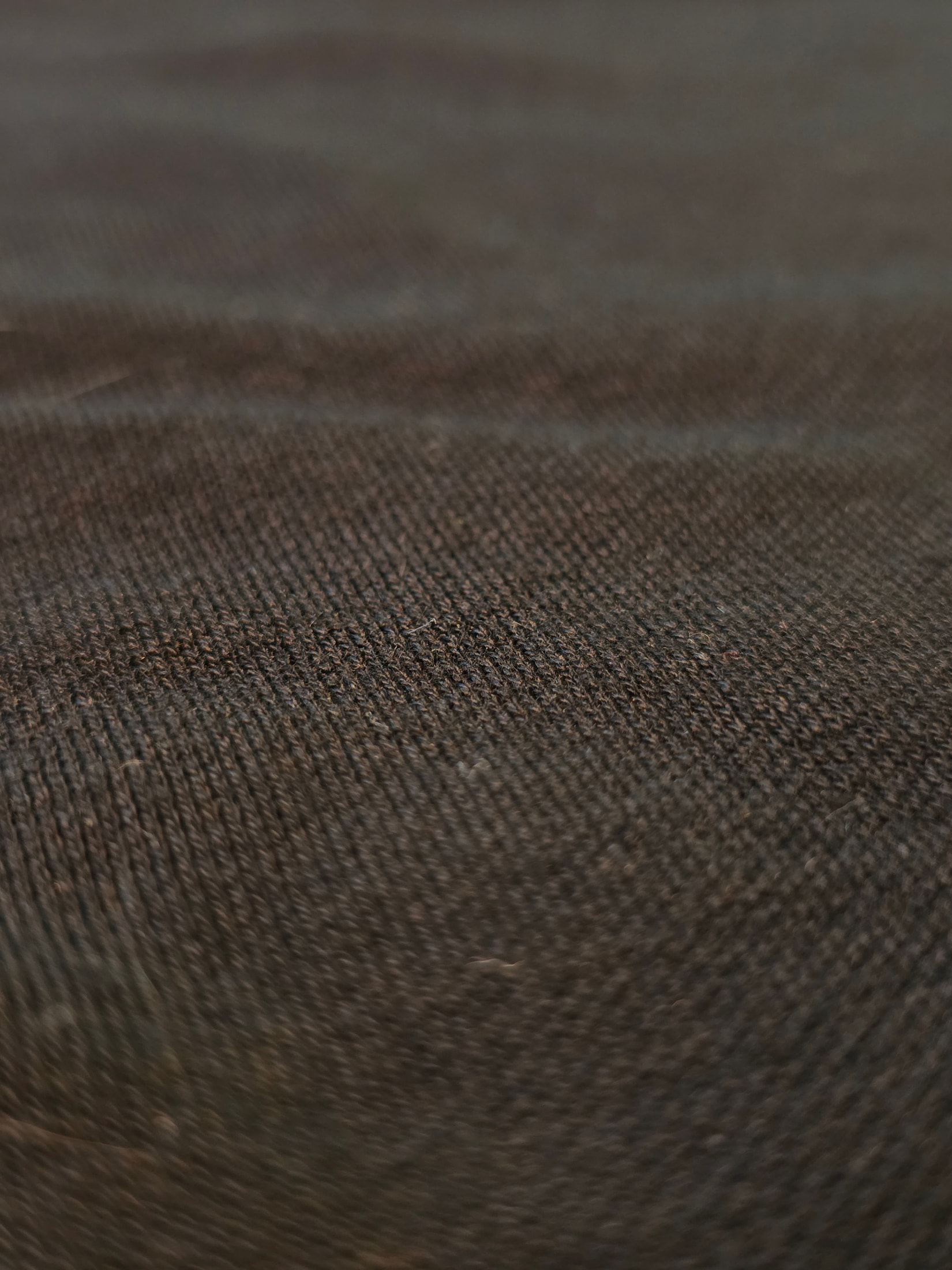
The same knit in macro, crossed by the vertical seam.
For winter, the combination comes down to two pieces: the Fresh Collection trousers for the postures, the ZZ17 long johns for the layer that cuts the cold.
The trousers include a lot of pockets, which is a real plus for storing small tools and accessories on a job.
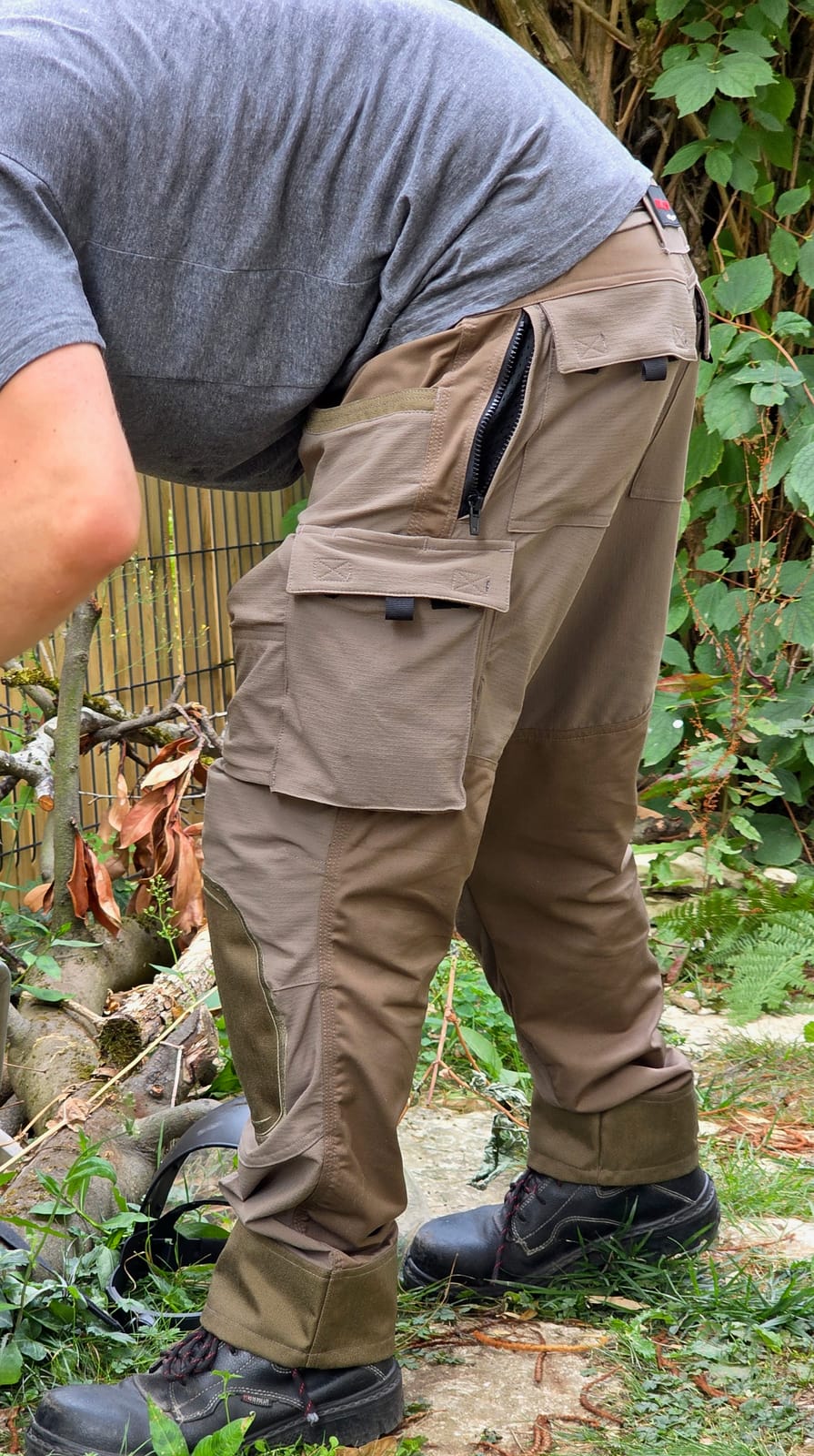
Pockets accessible while crouching
In a crouching position, the cargo pocket stays accessible without the fabric pulling or compressing — and the zipped vent on the side stays clear.
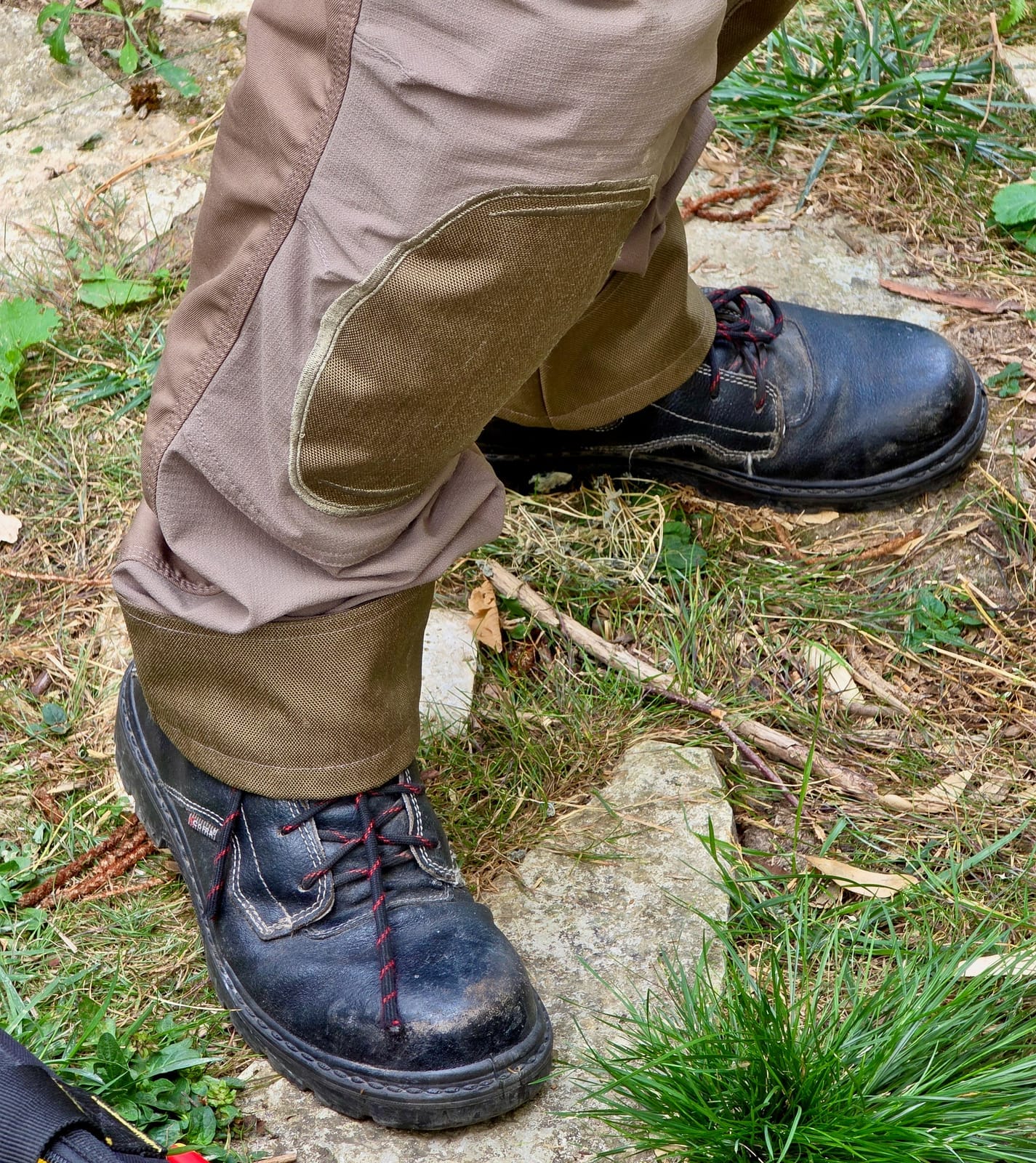
The knee pads are the point where the “around a mesh brief” construction truly comes into its own.
They are adjustable to the person’s body shape thanks to an internal velcro in the knee pad pocket, independent of the sliding button used to adjust the trousers at the waist — a pleasant system that works well in practice.
Concrete result: the knee pads stay well positioned even when moving, which is not the case with many work trousers where they end up shifted after a few minutes of activity on the ground.
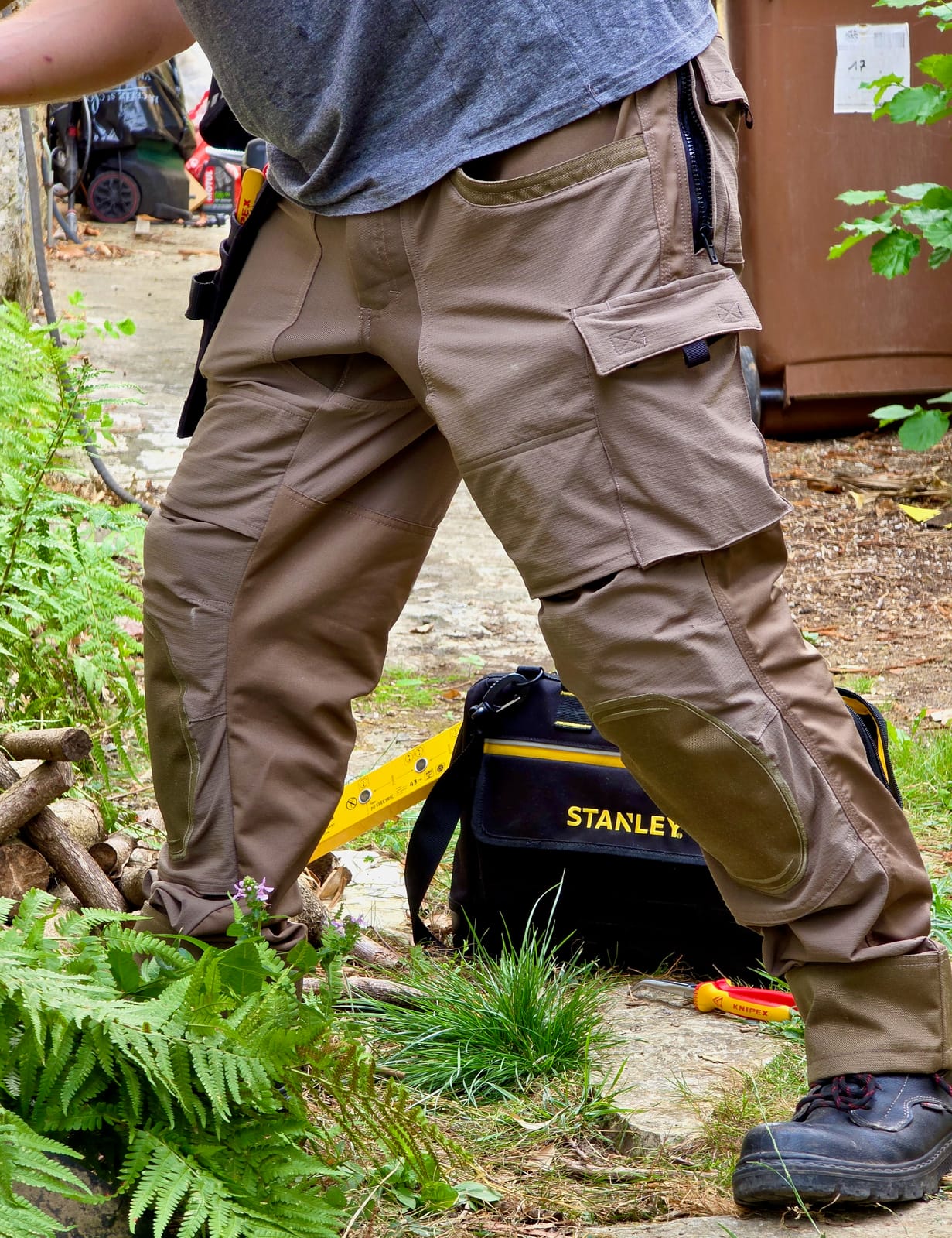
Knee pad and side storage
The knee pad stays well positioned even when moving, with the cargo pocket and the front pocket within reach during work.
This point directly improves comfort during work: you actually wear your knee pads rather than putting up with them, and you end up putting less strain on your knees directly on the ground during an electrical renovation.
Another observation after several hours of work with repeated friction: no sensation of burning or abrasion on the skin, even in prolonged use.
The AA61 pouch is worn at the waist and offers a 180° rotation to adapt to the working position. It can also tilt to 45°, which keeps it firmly in place when the knee passes above the hip, typically when crouching or with a leg raised on a job.
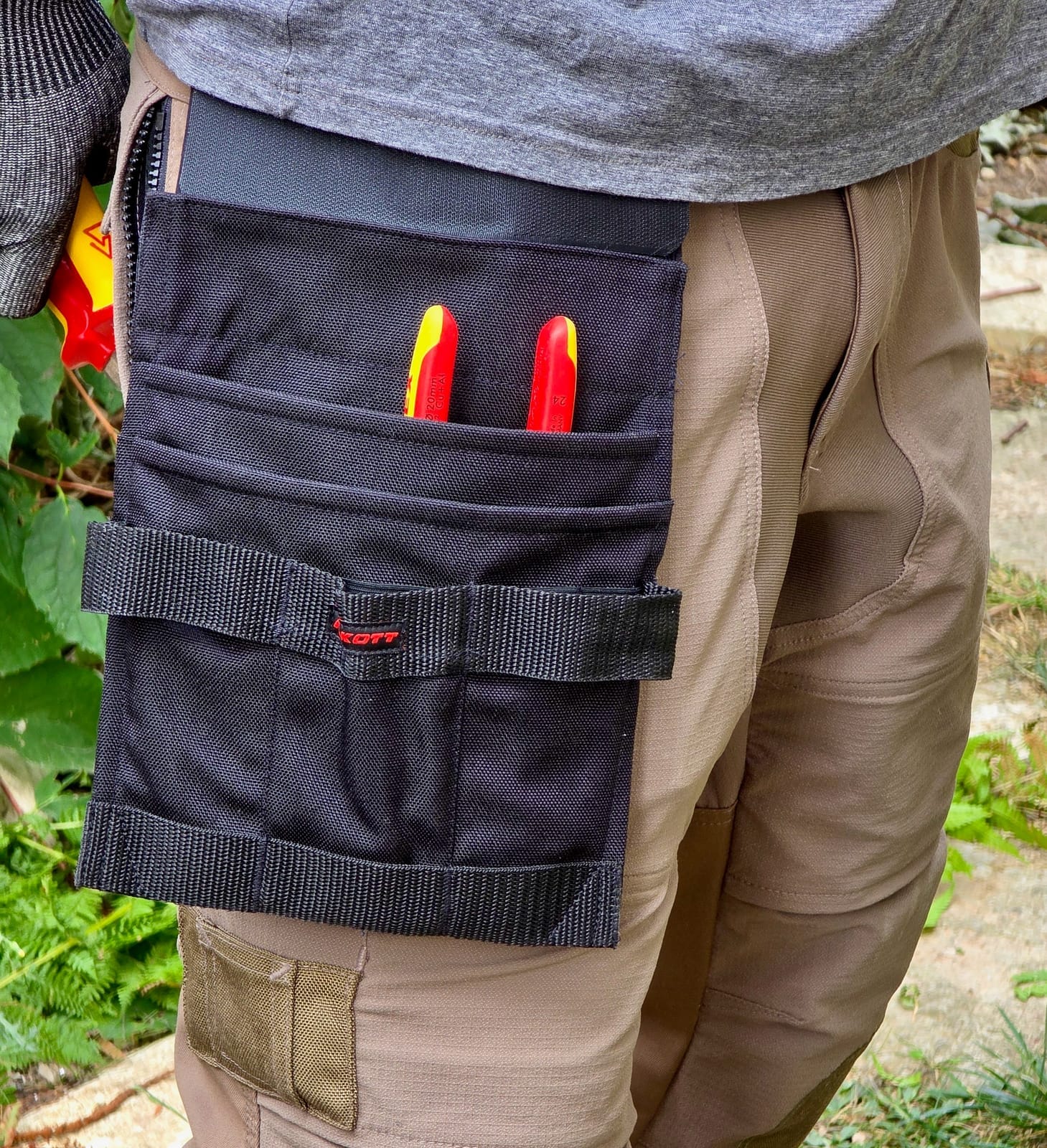
The AA61 pouch at the waist
Attached to the belt, it keeps the Knipex pliers within reach and stays stable even with a raised knee thanks to its 45° tilt.
In use, it holds tools very well, including on a scooter for travel between customer visits — something I didn’t necessarily expect from a simple tool pocket.
In practice, the pouch doesn’t move and nothing falls, even on a scooter on the highway: over several weeks of travel, I haven’t lost a single tool.
It never restricts mobility on the job, even in the most demanding positions: crouching, leg raised, twisting the torso to reach a junction box.
The only concrete regret: the lack of dedicated slots for screwdrivers, which would mean storing them loose with the rest rather than being able to identify them at a glance — on this point, my Knipex pliers remain easier to find than the small VDE screwdrivers.
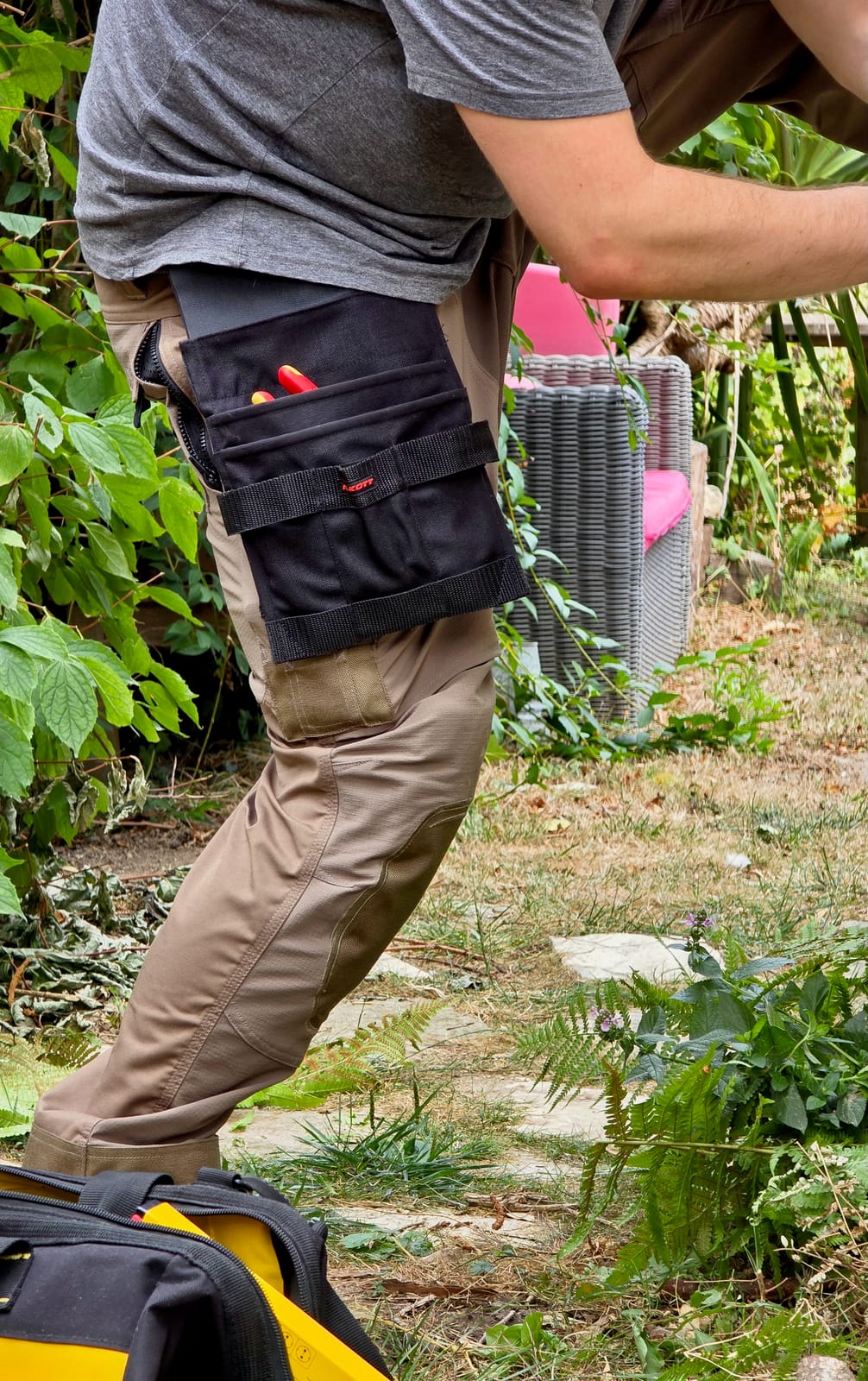
The pouch stays stable at the waist, without slipping while moving.
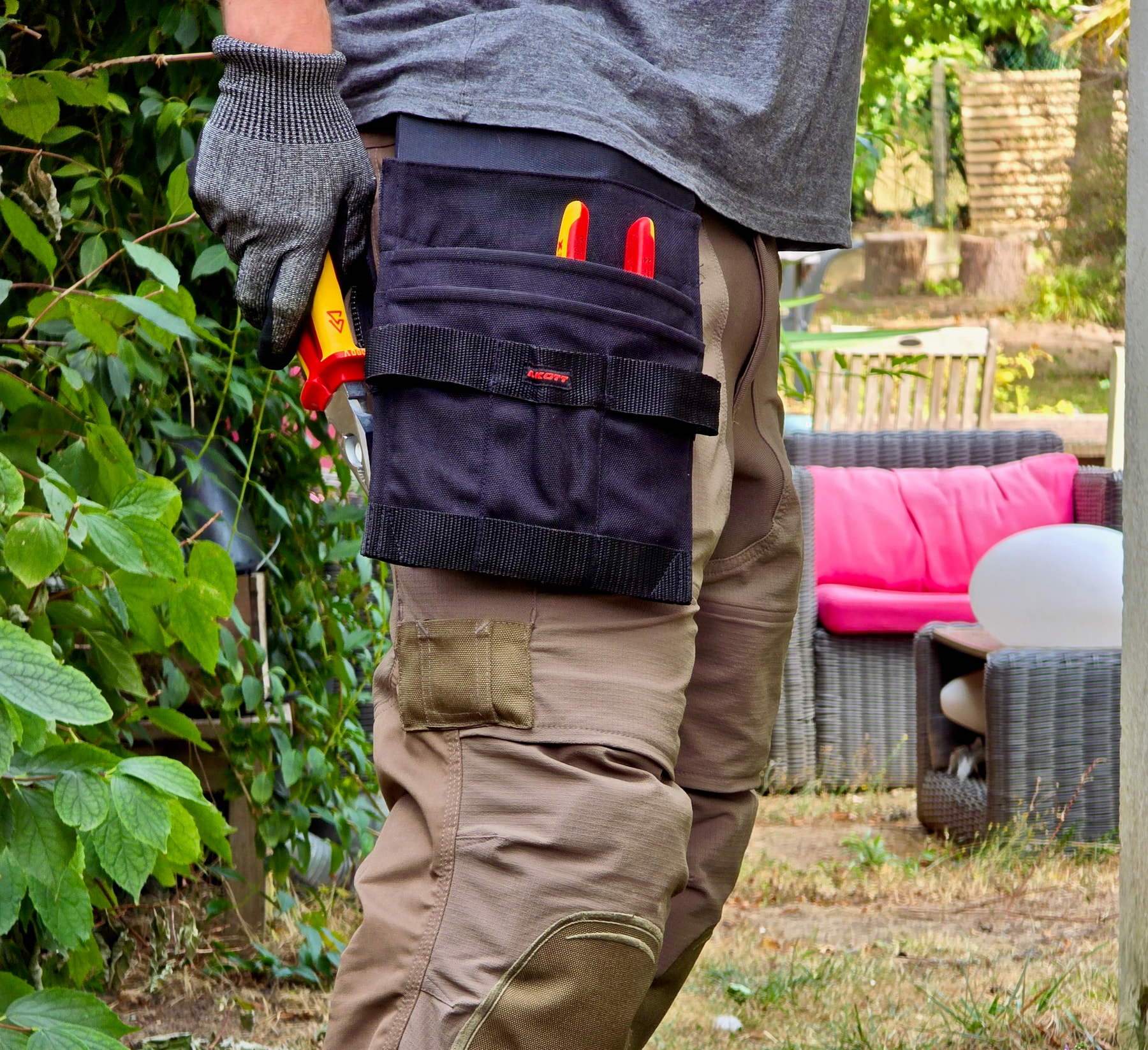
A pair of Knipex pliers remains quickly accessible, without having to rummage through the pouch.
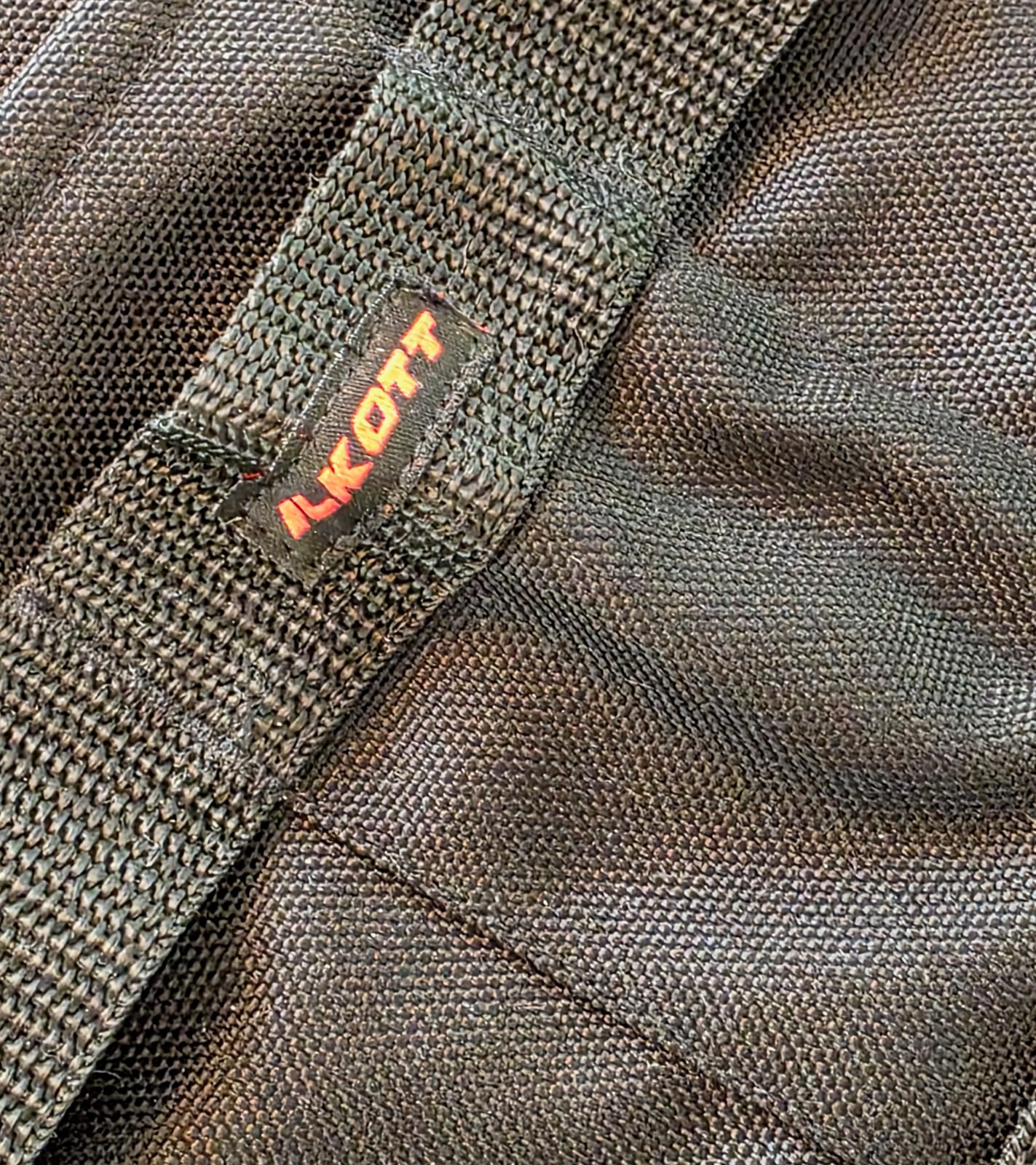
The Ilkott logo on the AA61 pouch, resting on its belt mount.
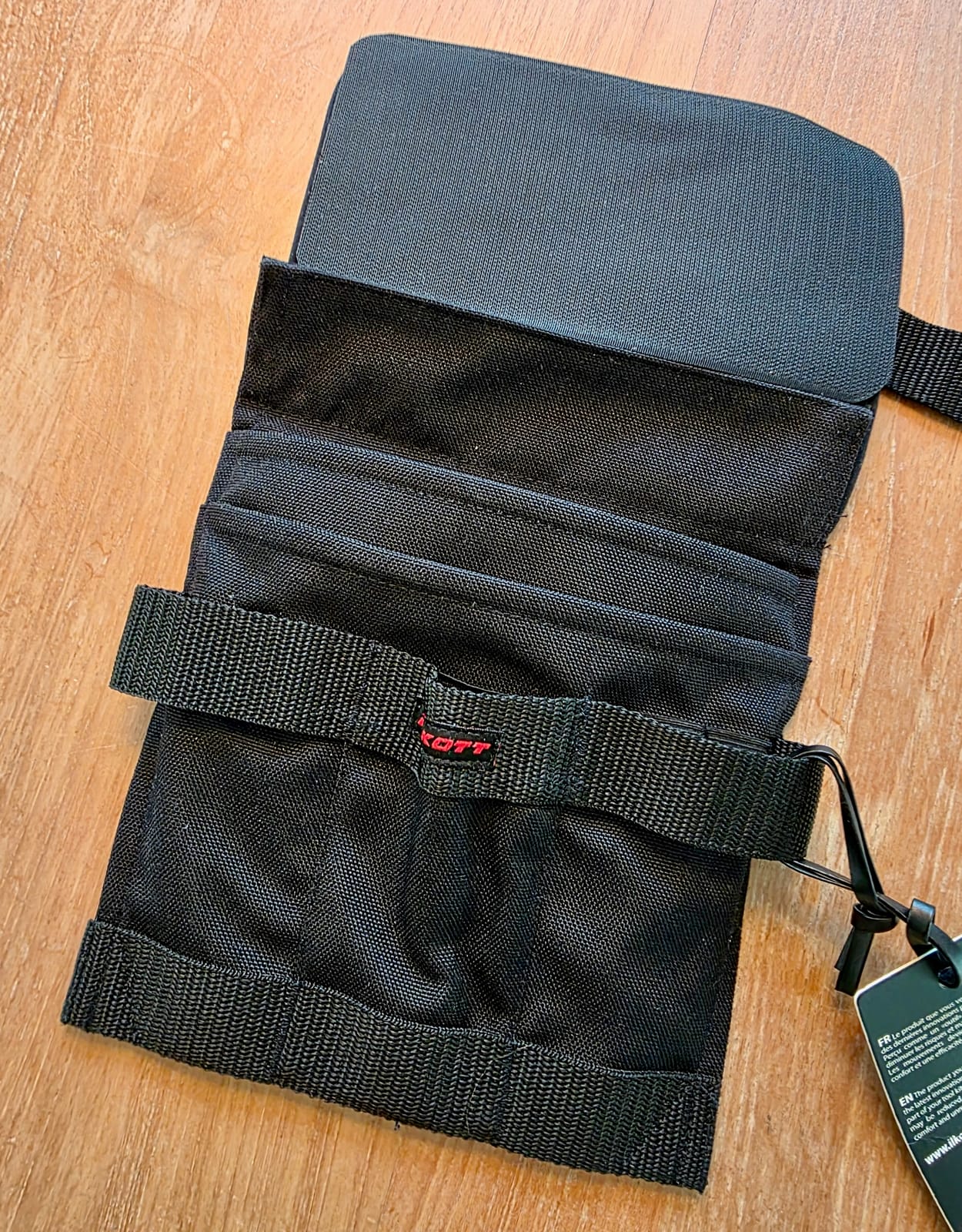
The AA61 pouch when off the job, before being worn at the waist.
The test does not stop on the ground or on the scooter: the pouch holds just as well at the top of a ladder, with the leg fully extended to reach a high point. Even in this position, nothing slips or tips forward.
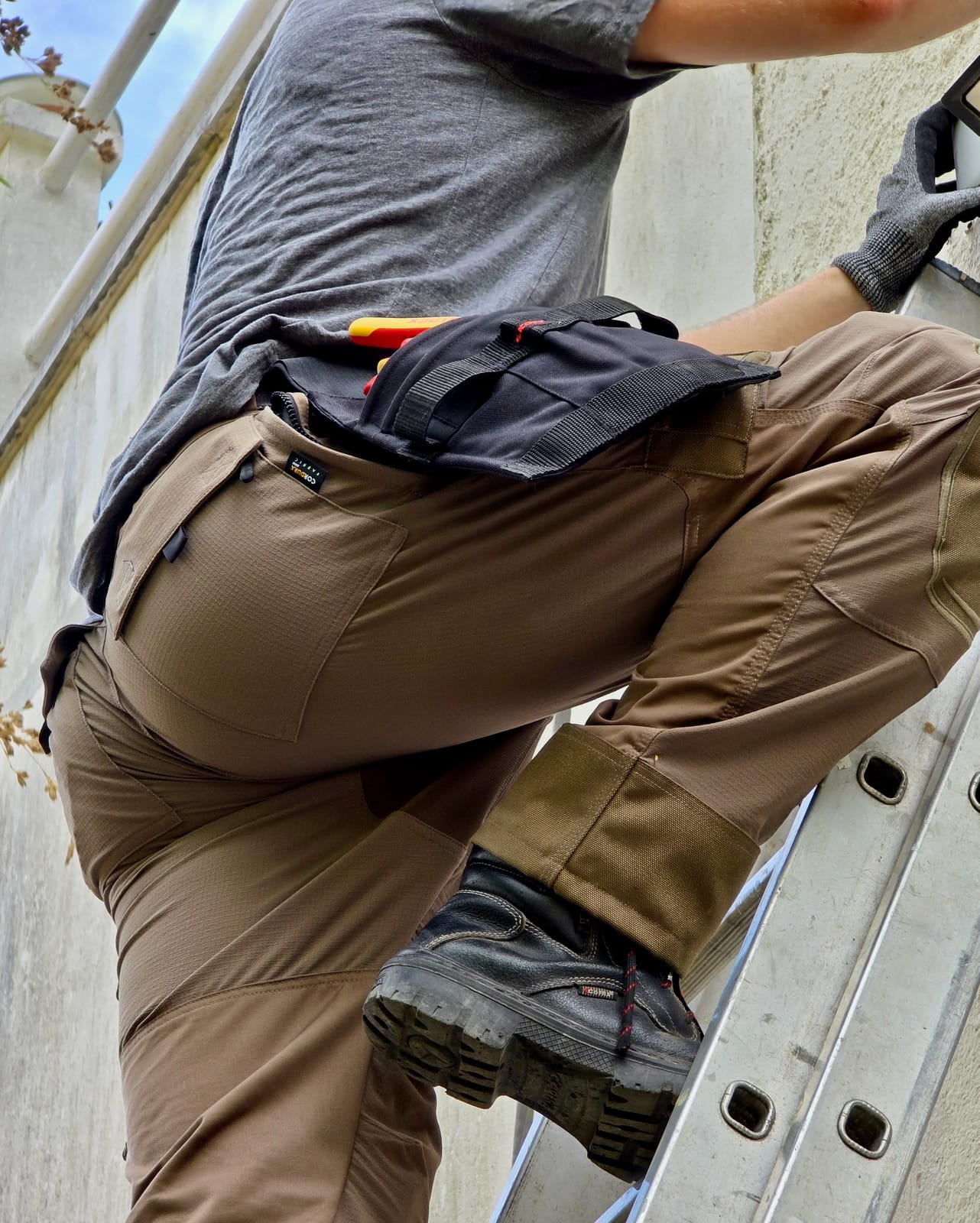
Right leg fully extended on a ladder: the pouch stays in place at the waist without tipping.
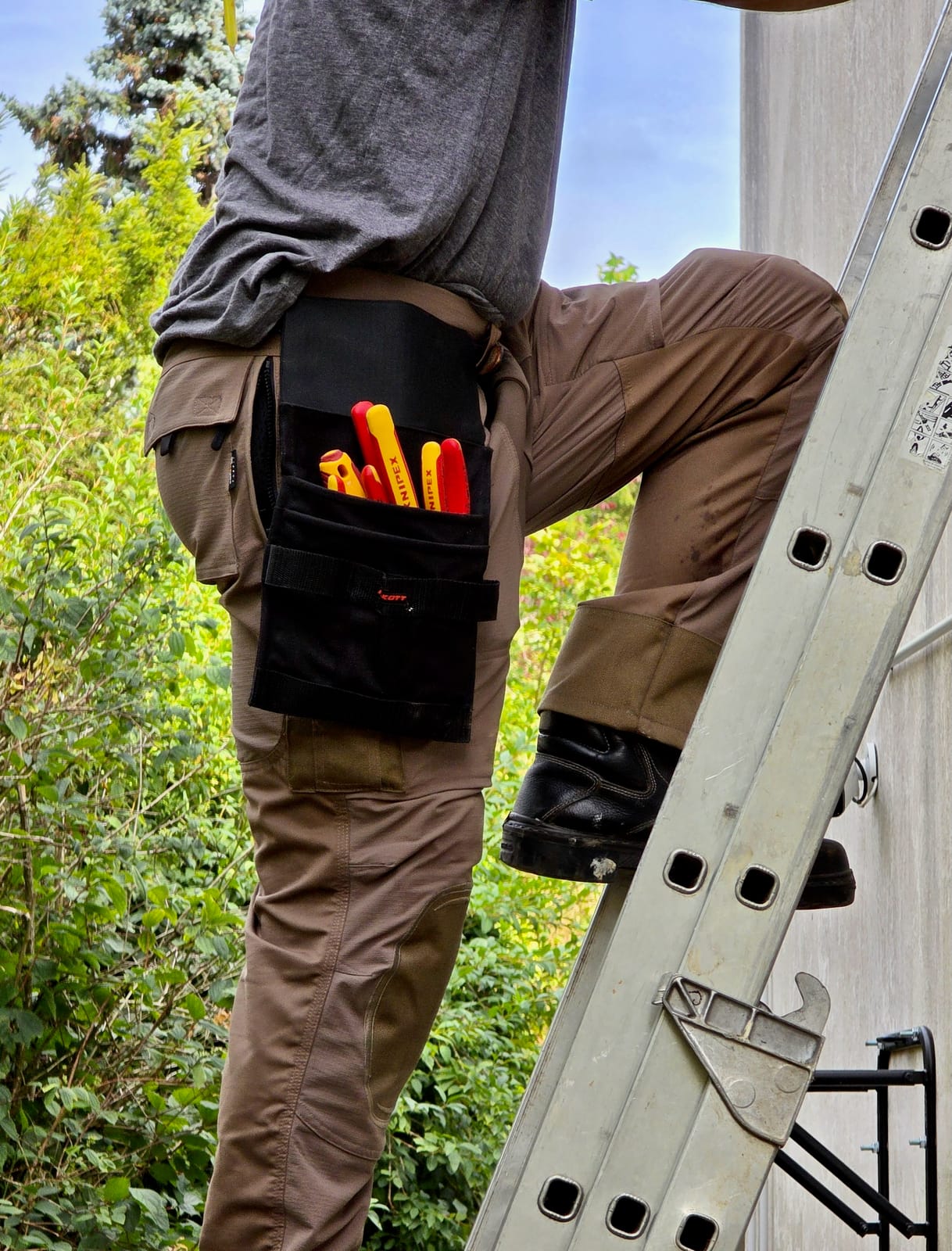
Side view on the ladder: the pouch follows the movement without disturbing balance.
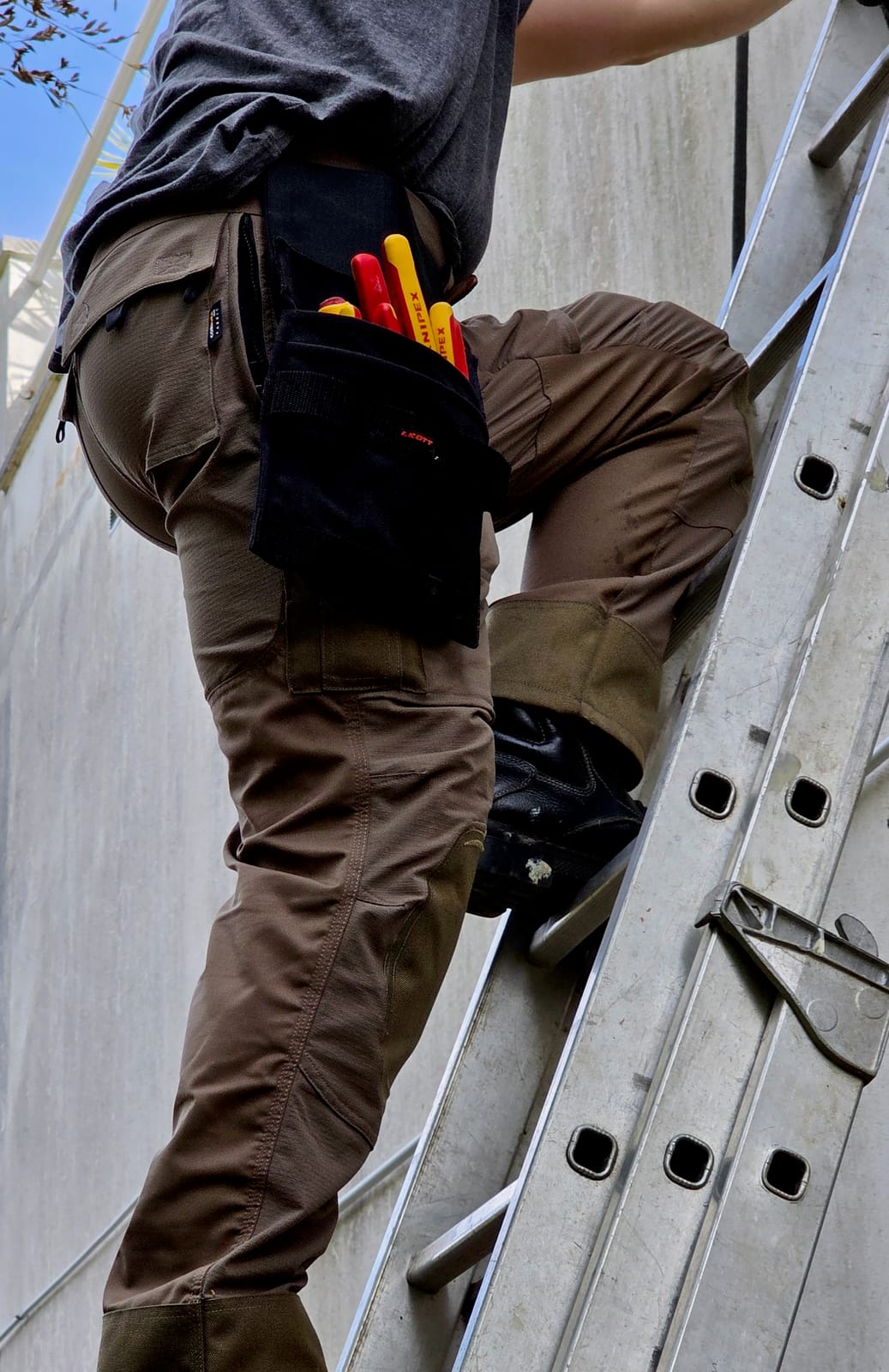
Rear view on the ladder: no tool sticks out or threatens to fall.
In the field, the trousers + tool pouch combination keeps its promise in the most uncomfortable positions of a standard electrical call-out: crouching in front of an outdoor junction box, one leg raised against a wall to pull on wires, twisting the torso to reach a badly placed connection point.
Nothing pulls, nothing gets stuck, and the tool pouch stays in place without hindering movement.
The same holds true indoors, standing in front of a light fixture to adjust with a level, or outdoors at the top of a ladder for an LED spotlight: freedom of movement and the stability of the tool pouch do not change depending on the terrain.
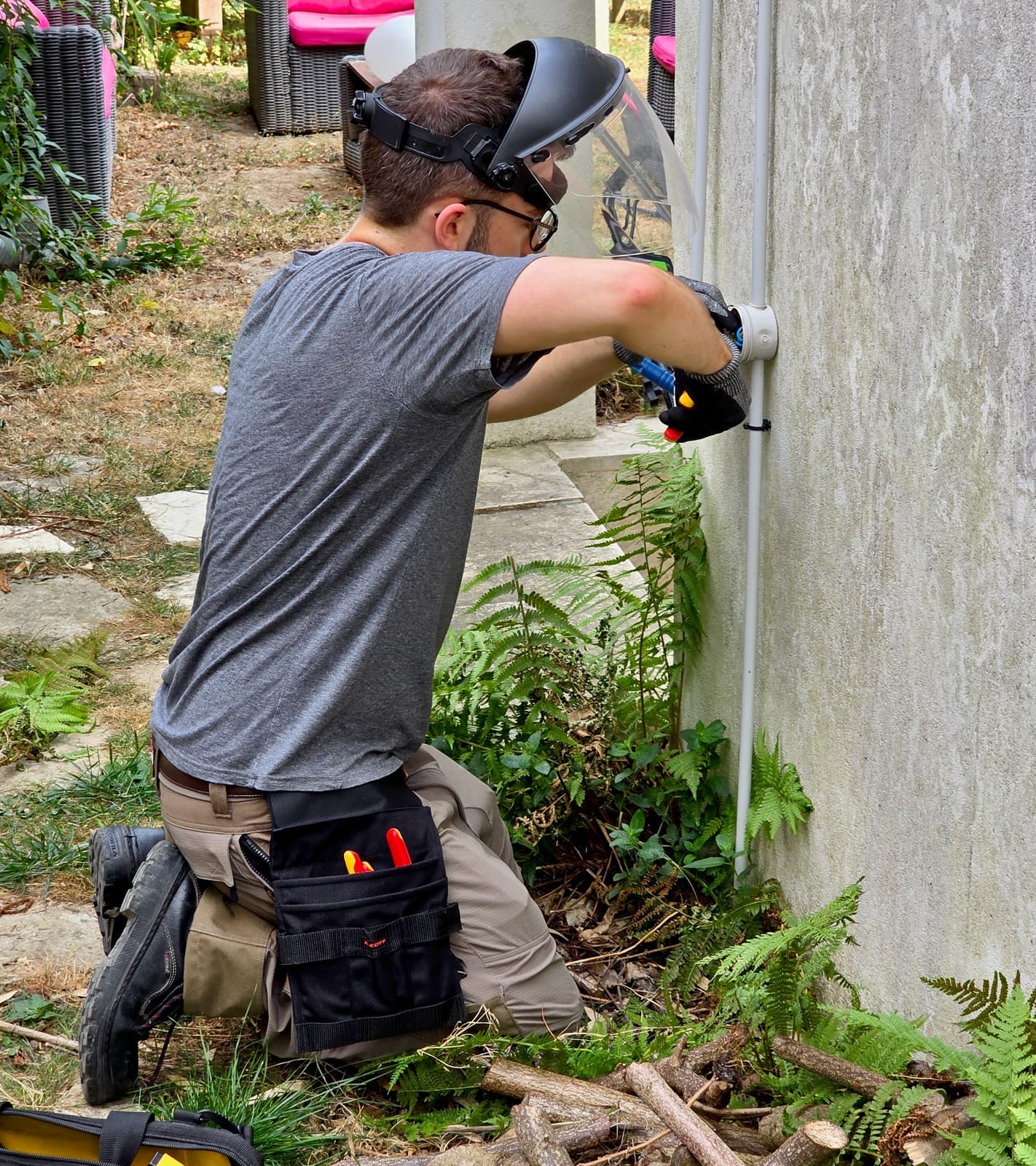
Working on an outdoor junction box, leaning position maintained without restriction.
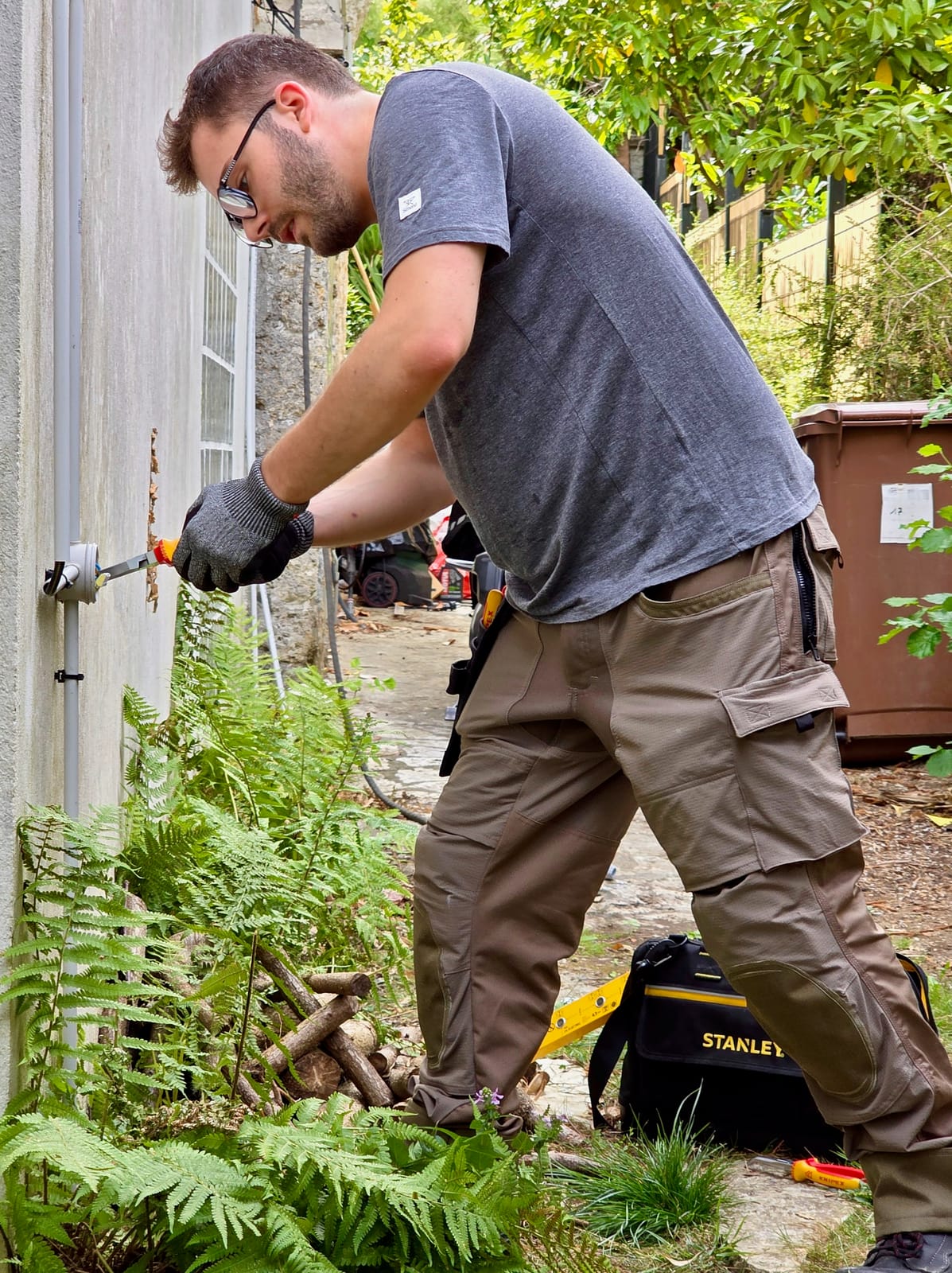
Standing in front of the junction box: the cut follows the bending of the legs and torso without pulling.
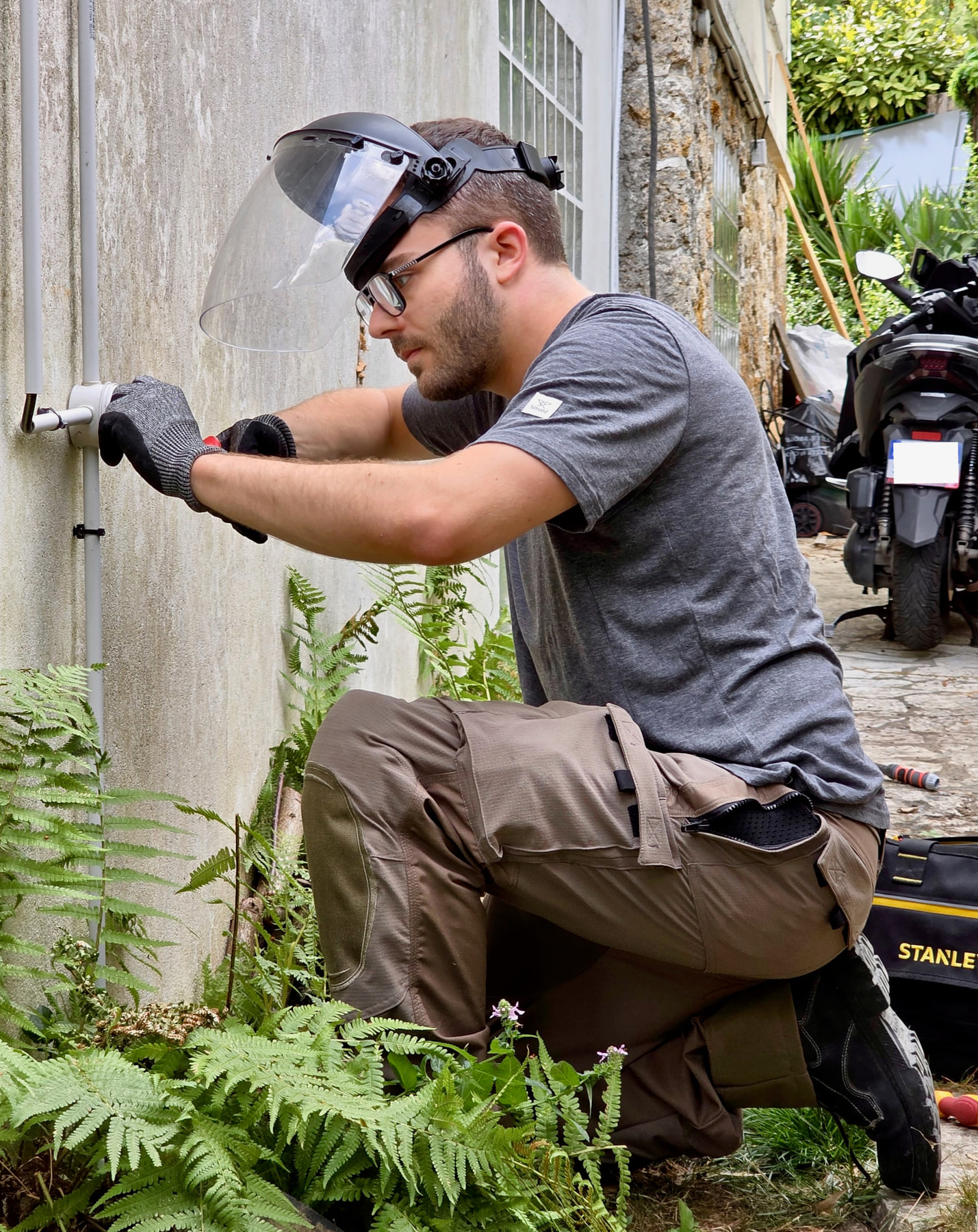
A second angle on the same job, to see how the trousers hold up in motion.
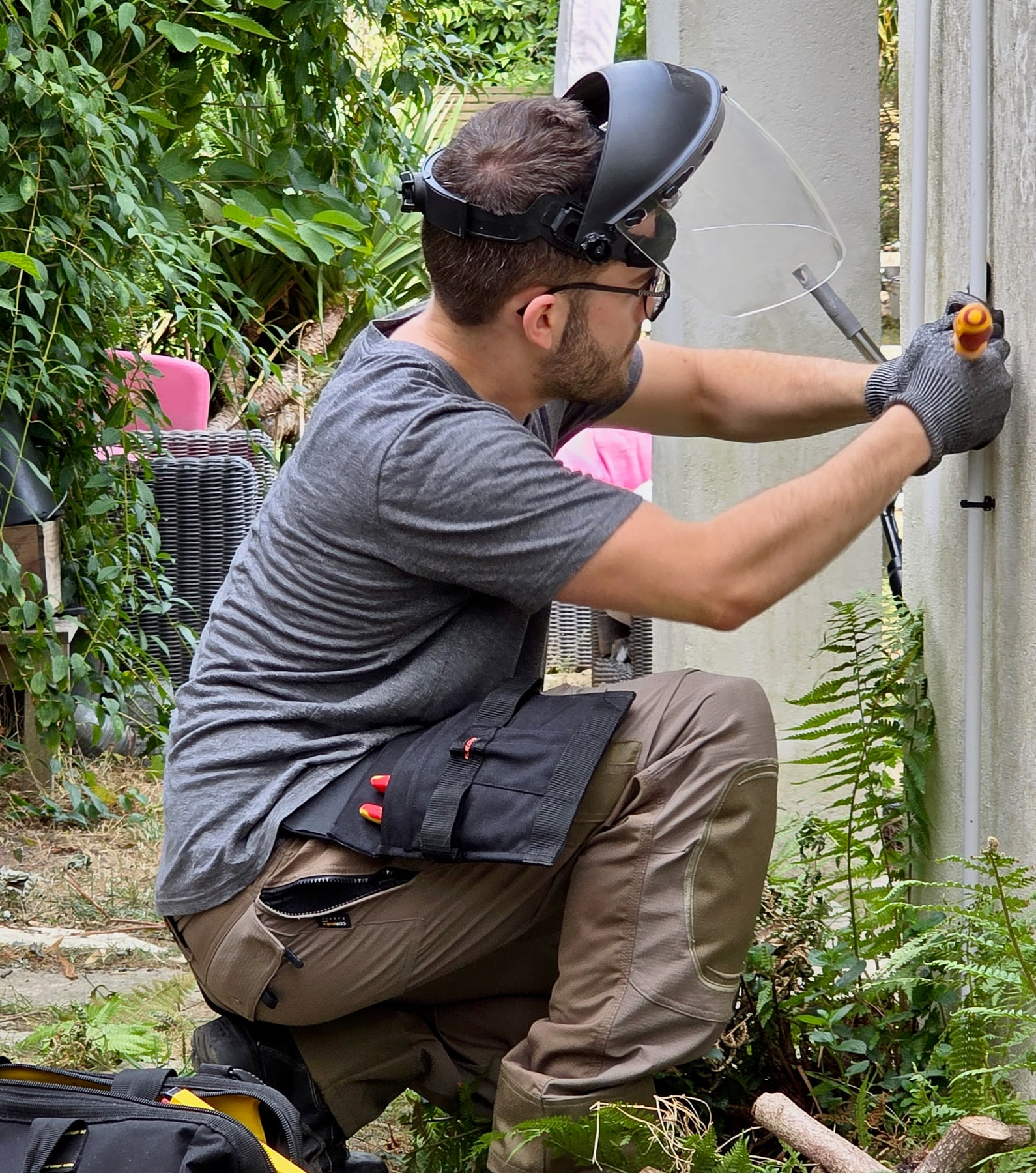
Prolonged crouching in front of a junction box: knee pads and tool pouch stay firmly in place.
Pulling on the wires of a junction box, left leg raised against the wall, with no restriction from the fabric at all.
Standing indoors, at a customer’s home: the cut stays clean even when not actively working.
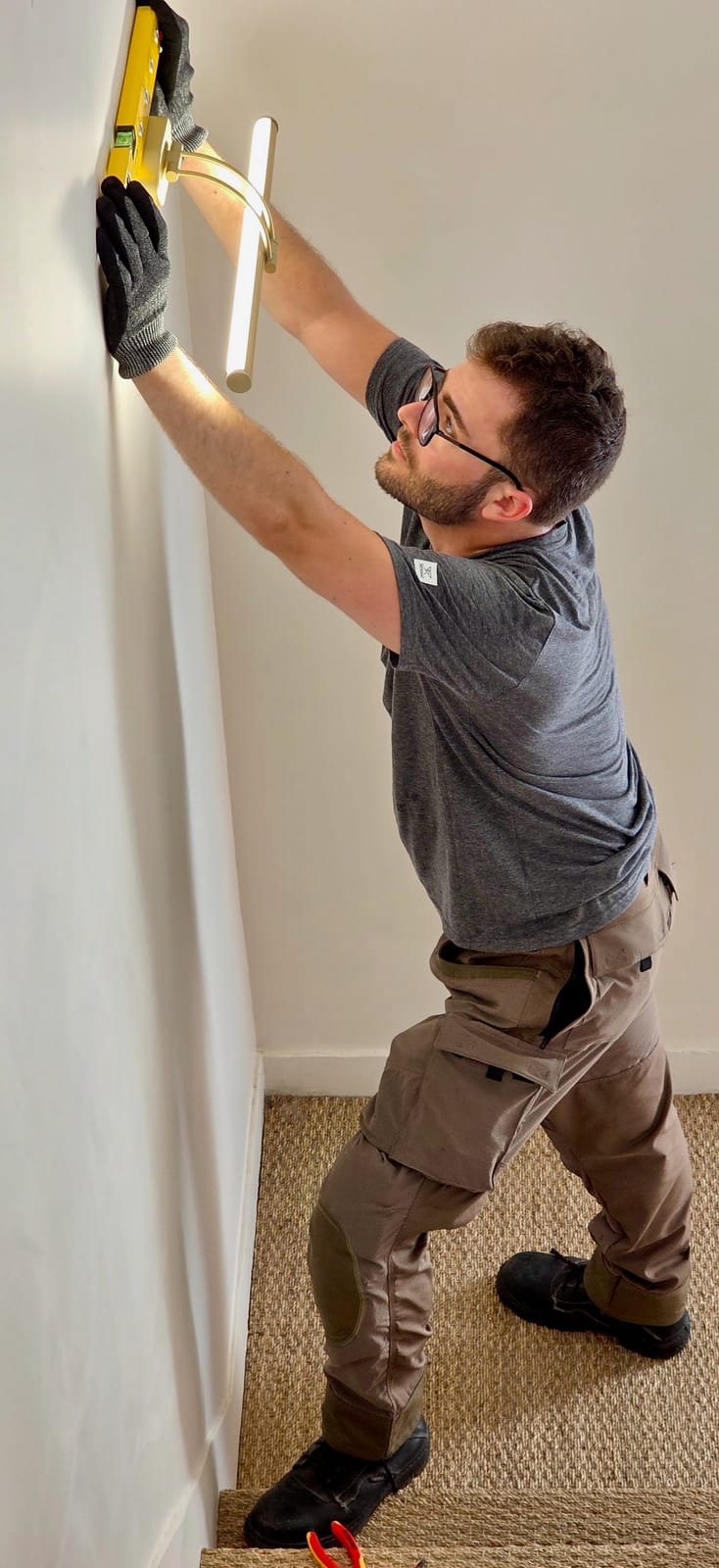
Adjusting a light fixture with a Stabila level: no restriction from the trousers in a prolonged standing position.
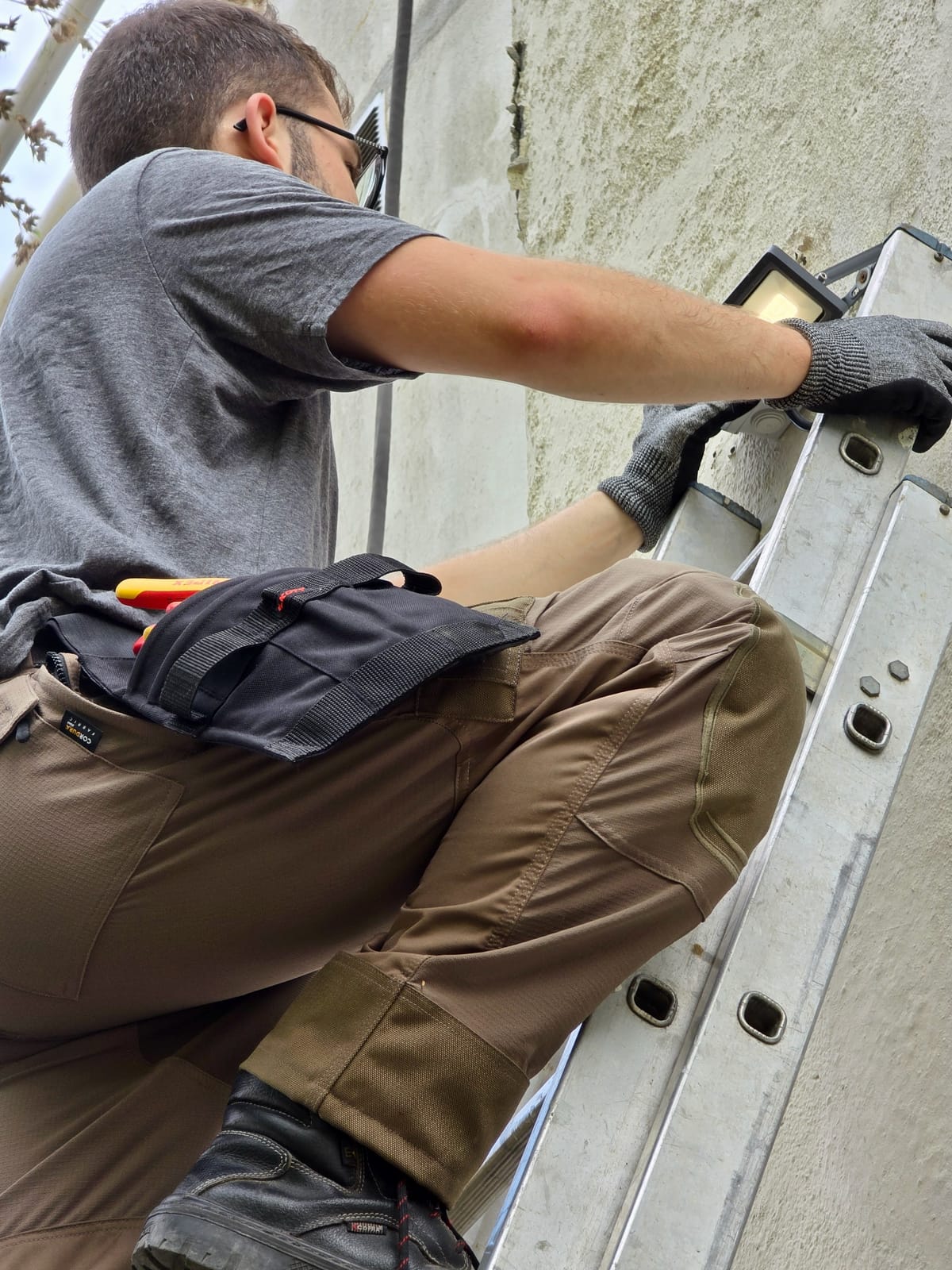
Working on an outdoor LED spotlight at the top of a ladder, right leg fully extended: trousers and tool pouch follow the movement.
| Tested point | Field observation | To check before buying |
|---|---|---|
| Tested point Flexibility | Field observation Clearly superior to jogging bottoms, no discomfort in extreme positions | To check before buying Nothing, the most reliable point of the product |
| Tested point Coolness and breathability | Field observation Very cool fabric, breathability far superior to classic trousers, wind noticeable on a scooter | To check before buying Airy fabric and quick drying |
| Tested point 3/4 trouser option | Field observation The feel of working in shorts with knee pads that protect | To check before buying Ideal for even more coolness |
| Tested point Knee pads | Field observation Comfortable, adjustable, well positioned in movement | To check before buying Adjust to your build before the first job |
| Tested point AA61 bag | Field observation Tiltable to 45°, does not move, no tool lost even on a scooter on the motorway | To check before buying No dedicated screwdriver slots |
Summary of the points verified during real on-site work on the Fresh Collection trousers and the AA61 bag.
The Fresh Collection pants live up to their main promise: a suppleness far superior to classic work pants, carried by an atypical construction around a knit slip and genuinely comfortable knee pads. These are very cool pants whose breathability clearly surpasses that of a standard site model. For even more freshness, the 3/4 version brings the feeling of working in Bermuda shorts with knee pads that protect. The AA61 bag, tiltable to 45°, rounds out the set nicely on the job and never drops a tool, even on a scooter on the highway. The reservations remain concrete but minor: no screwdriver slots on the bag and cold-weather behavior still to be documented.
Between two days on site, I start by emptying all the pockets: screwdrivers, bits, wire offcuts, everything comes out before the pants join the work laundry.
I remove the knee pads before washing and I close the velcros, so they don’t snag the knit while the pants spin.
For the rest, I stick to the label sewn inside. I have no homemade recipe to recommend: what the manufacturer states remains the reference for this type of fabric.
When the day has been dusty, I brush the pants dry before the machine. It’s a site reflex, not a mandatory step.
When drying, I check two things before folding them: that the sliding button still slides freely, and that the knee pad velcros hold at the spot where I set them.
I never put the trousers away while they are still damp: they finish drying in the air before heading back out on a job, and I only fold them once dry.
Ironing is not part of my routine. Air drying and a neat fold are enough to turn up presentable at the customer’s place.
Same routine for the tool bag: I empty it after every trip, I check that nothing has stayed stuck under the flap, and I loosen the strap before putting it away.
The three steps not to forget before every wash: empty the pockets, remove the knee pads, close the Velcro again. The rest follows the label, no surprises.
I load the tool bag in the same order every time, so I can find each tool without looking. I put the least-used items at the bottom and what I grab on a job at the top.
The Knipex pliers keep their spot within immediate reach: it’s the tool I take out the most, and I don’t want to rummage around when I’m balancing on a ladder.
The VDE screwdrivers go in a trouser pocket rather than the tool bag. That’s my answer to the lack of dedicated slots: I keep them identifiable instead of leaving them loose.
Before leaving, a quick check: strap adjusted, flap closed, nothing sticking out. That pass saves me from discovering at the top of a ladder that I’m missing a tool.
When I’m on the move, I change nothing: it was on the scooter that the way the tool bag holds made the biggest impression on me, and I haven’t lost a single tool over those weeks of trips.
What I no longer do: load it to the maximum. A few heavy tools are enough, and I spread the rest in my tool bag to keep the belt comfortable all day long.
In the evening, I redo the inventory by eye: against an empty background, what’s missing is immediately visible, and I leave the next day without checking twice.
At the end of the week, I sort things out: the tools that haven’t been used come out, to keep the load steady and light.
The most frequent mistake is not adjusting the knee pads before the first job site. The internal velcro is only worth anything if the protection falls exactly on the knee.
This adjustment is done calmly, before starting, not in the middle of a job. Once the right position is found, I never go back to it.
Second trap: tightening the belt like on classic work pants. The sliding button is made to adjust precisely, and I prefer a fit that lets the knit do its work.
Third trap: believing that very supple pants allow any position. Flexibility removes the discomfort of the fabric, not the fatigue of the joints: I keep my breaks and my position changes.
Fourth trap: judging the pants on a quick try-on. It’s crouched, with a leg raised, after a full morning, that the verdict really takes shape.
I also resist the temptation to load the pockets to the point of walking crooked. Pockets take small tools, not the tool box: I distribute and lighten the load.
Last reflex to fix: expecting the pouch to carry the whole job site. It’s used for quick access, not for transporting heavy gear, which stays in the tool bag.
And if something feels tight, I look at the adjustment first before questioning the cut.
On a garment worn at this pace, I first monitor the spots that work the hardest: the internal velcro of the knee pads, the sliding button and the zipped vent.
The rest gets checked when folding, without spending time on it: pocket seams, how the straps grip, the condition of the bag flap.
My benchmark for the knee pads: as long as the protection stays in place without me adjusting it, the system is doing its job. If I have to readjust the velcro several times in the same day, I take a closer look at the fit.
On the seams, I mainly check the friction areas: lower leg, cargo pocket, belt line. That’s where wear starts, and that’s where I want to see it coming.
I also check that I get the same freedom of movement when squatting after each wash: it’s my fastest check, and it doesn’t lie.
For the bag, my check comes down to one question: does the strap still hold the tilted position without me correcting it? Everyday movement reveals wear better than a detailed inspection.
I don’t do any special maintenance beyond that: no specific product, no ritual. Regular habits matter more than the amount of care.
What matters to me: not having to think about the garment on the job. As long as that’s the case, the pants do their job and I keep wearing them without a second thought.
Knee pads that stay in place are a real asset on the ground. Even so, I don’t put my knee just anywhere on the pretext that the protection is there.
Before I kneel down, I look at the surface: gravel, protruding screws, a damp patch. The reinforcement protects on contact, but choosing the spot is still my job.
Same logic up high: on a ladder, the pouch does not tip over and my leg extends freely, but I check my footing before every climb.
Flexibility changes my comfort, not the rules of the job site. I keep my bearings: stable footing and moves I have mastered.
I don’t push a safety limit because I feel comfortable. Just because nothing pulls doesn’t mean the risk is gone.
On long hot days, the coolness of the fabric helps, but it replaces neither water nor breaks. I keep drinking regularly and stopping when my concentration drops.
My order of operations doesn’t change: first I secure the area and prepare the job, then I enjoy the comfort of the knee pads and the freedom of movement.
A garment that follows movement is extra comfort, never a shortcut on preparing the job site.
The Fresh Collection trousers and the AA61 pouch are two products I keep wearing after the test, which remains the best indicator.
The flexibility of the trousers really changes the way you work in the demanding positions of an electrical job, and the knee pads keep a promise few trousers honour over time.
The trousers prove very cool on site, with breathability that goes far beyond a standard work model: I can feel the air passing through the fabric on my scooter. For those looking for even more ventilation in summer, the 3/4 version gives the feeling of working in Bermuda shorts with knee pads that protect.
The bag, despite the absence of screwdriver slots, remains practical for everyday use: it tilts at 45° to stay in place when the knee is raised and doesn’t lose any tool along the way. It’s a direct complement to my Stanley tool bag for quick access on the job.
The identified reservations — the absence of screwdriver slots on the bag — don’t call the whole into question, but are worth knowing before buying.
3 questions
InteractiveQuiz: Fresh Collection trousers and Ilkott’s AA61 bag
3 questions to check the essential points
Choose an answer
In use, yes: the difference is mainly felt in extreme positions (prolonged squatting, raised leg, torso twisting) where classic trousers pull or compress. The adjustable knee pads and the construction around a mesh liner justify the price gap for anyone who spends their days on the ground or at height.
Yes, the trousers are very cool in use. Their breathability clearly exceeds that of classic site trousers: the wind passes through the fabric, noticeable even on a scooter, and they dry quickly after sweating. For even more freshness, the 3/4 trouser version gives the feeling of working in bermudas with knee pads that protect.
No, the bag does not reduce mobility even in demanding positions such as squatting or with a raised leg: it can tilt to 45° to stay in place when the knee passes above the pelvis. It does not move and does not drop any tool, even on a scooter on the highway. Its only concrete shortcoming is the absence of dedicated slots for screwdrivers.
Yes: the flexibility and the knee pads are mainly useful in positions on the ground or squatting, a need shared with plumbers, heating engineers or installers. Nothing in the construction of the trousers is specific to electricity.
Disclosure Ilkott : Fresh Collection pants and AA61 bag.
Théo Desrousseaux
Electrician and editor
I work in the field and edit this magazine. Every guide is reviewed for its target country before publication.
Sources and references
Practical electrical installation guides, diagnostic methods and tool recommendations compared against the technical wiring standards of this national edition.
Wiha or Wera: VDE 1000 V screwdrivers and pliers, storage systems and a method for a tool set suited to real electrical work in the home.
Read the guide Guide KNIPEX DPT50 pipe cutter (90 23 02) : review KNIPEX DPT50 pipe cutter (90 23 02) : diameters 32, 40 and 50 mm, price, blade durability and relevance for the work of an electrician. Read the guide
  Guide Klauke K32 TWIST-it and K507 WF: electrician review Field test of the Klauke K32 TWIST-it and K 507 WF manual crimping tools, supplied by the brand: 0.14-10 and 0.5-50 mm² ranges and verdicts. Read the guide
  Guide Klauke EK30IDML: review of the electric crimper Review of the Klauke EK30IDML: die-free hydraulic crimping from 6 to 120 mm², 30 kN of force, connector scope and documented specifications. Read the guide