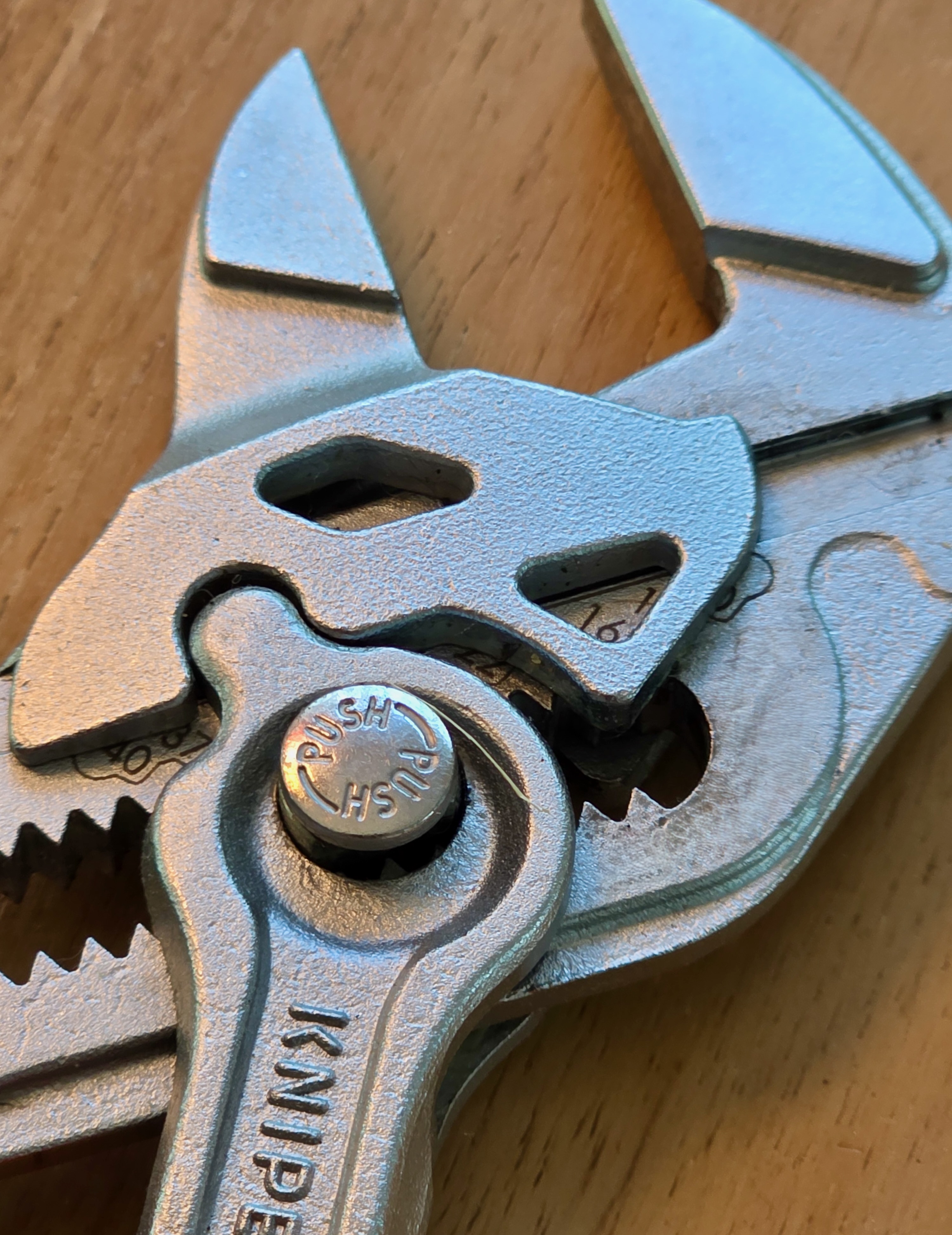
Smooth jaws
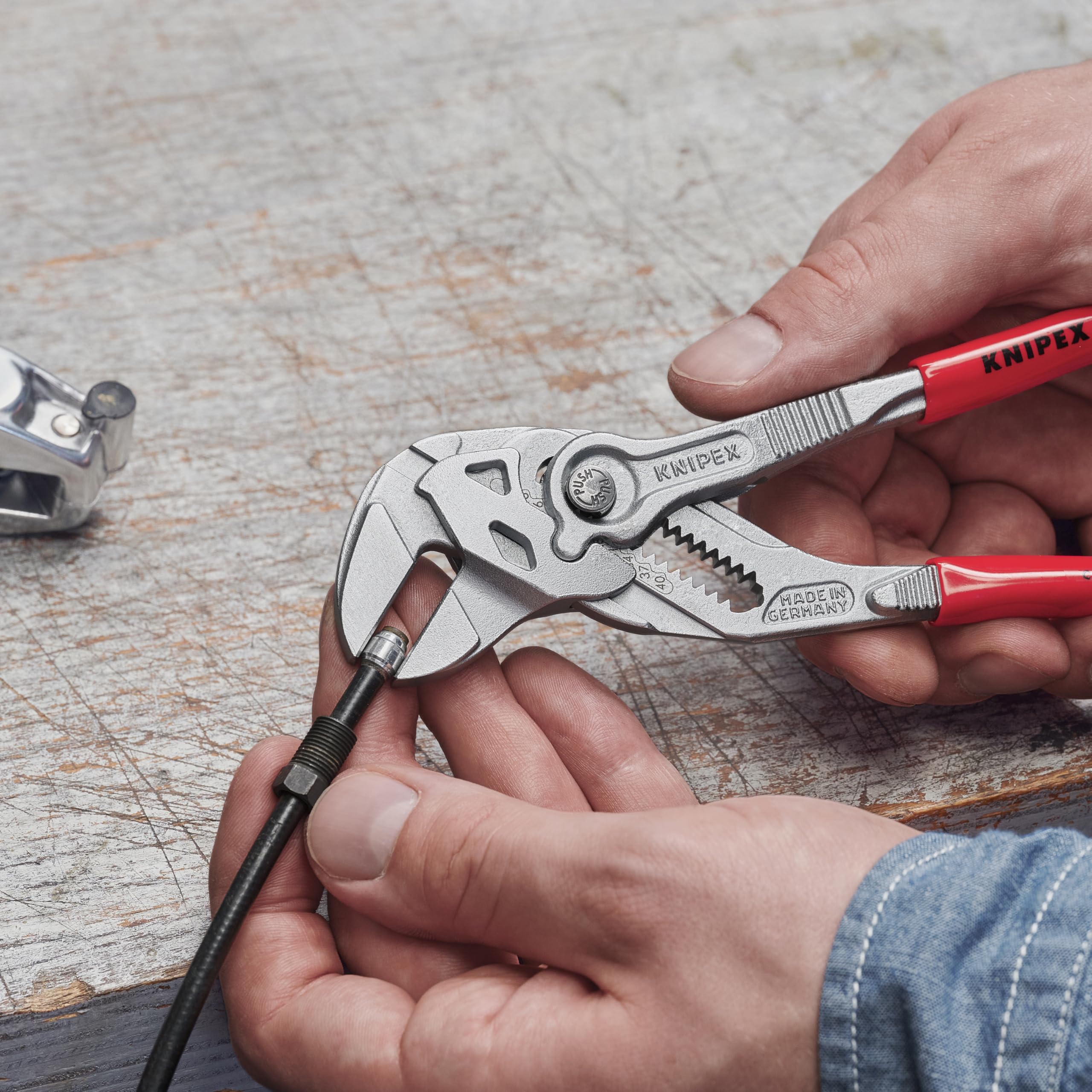
The two metal gripping faces, with no teeth at all, remain parallel during clamping.
Published 3 August 2026
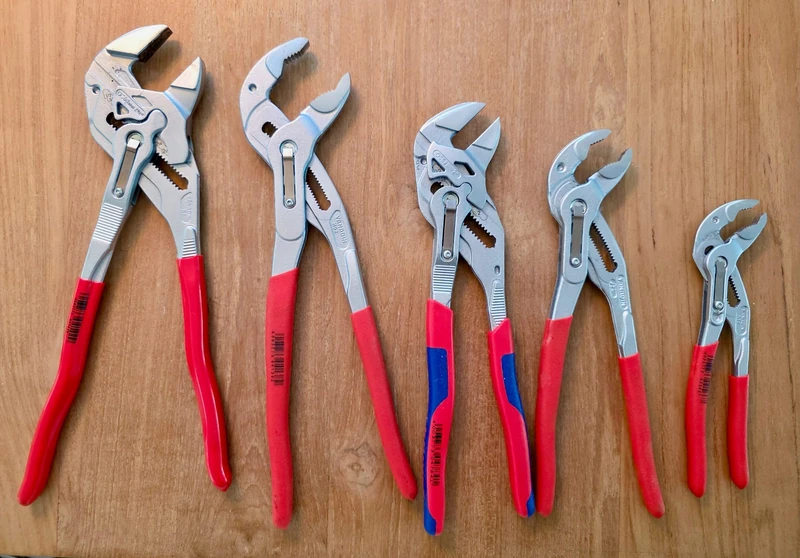
In brief
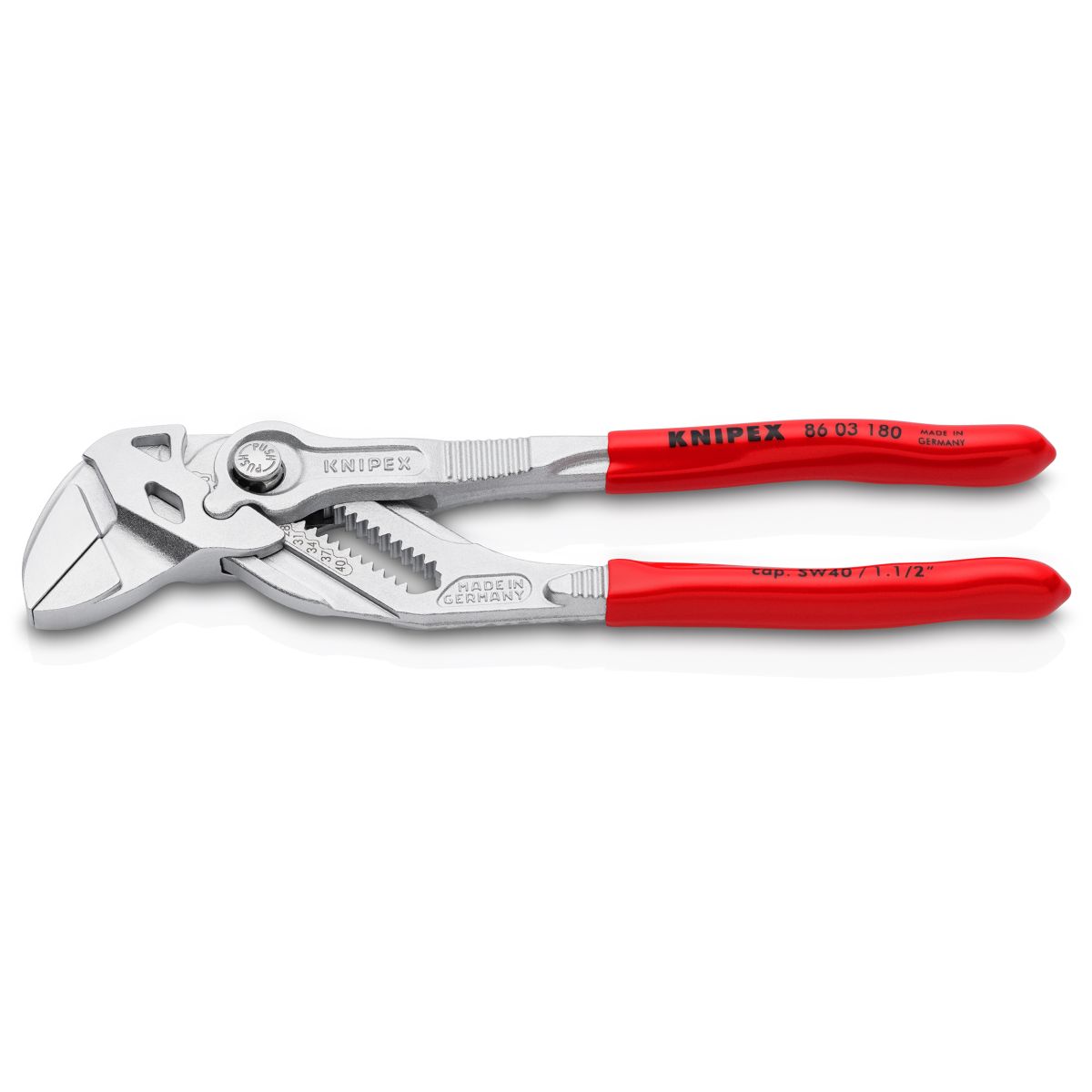
The KNIPEX 86 03 180 is a 180 mm pliers wrench, the tool the brand places in its Pliers Wrench family. It looks like a water pump pliers, but it differs on one decisive point: its jaws are smooth, parallel and free of play, where the classic water pump pliers has teeth.
This review is based on the manufacturer’s data sheet reproduced by a German retailer, on the Wikipedia page for water pump pliers and on the fact sheet for the NF ISO 8976 standard at the AFNOR shop. The figures cited come from these three pages.
In one sentence: the 86 03 180 is a precision pliers for sensitive surfaces and chrome fittings, not a brute-force tool nor an insulated tool for live work.
35 mm
stated capacity in nut opening
13
adjustment positions via push button
254 g
stated weight for 180 mm
10×
stated multiplication of hand force
The pliers wrench is described as a variant of water pump pliers. Wikipedia defines it by its smooth and always parallel gripping jaws, designed “to hold, press and bend, with tenfold hand force”, and suited “to assembling sensitive surfaces, in particular chrome fittings”.
Smooth jaws
The two metal gripping faces, with no teeth at all, remain parallel during clamping.
This is the heart of the matter. The toothed water pump pliers bite into metal; that is their strength on a seized nut, but it is also their limit on a chrome fitting the customer wants to keep pristine.
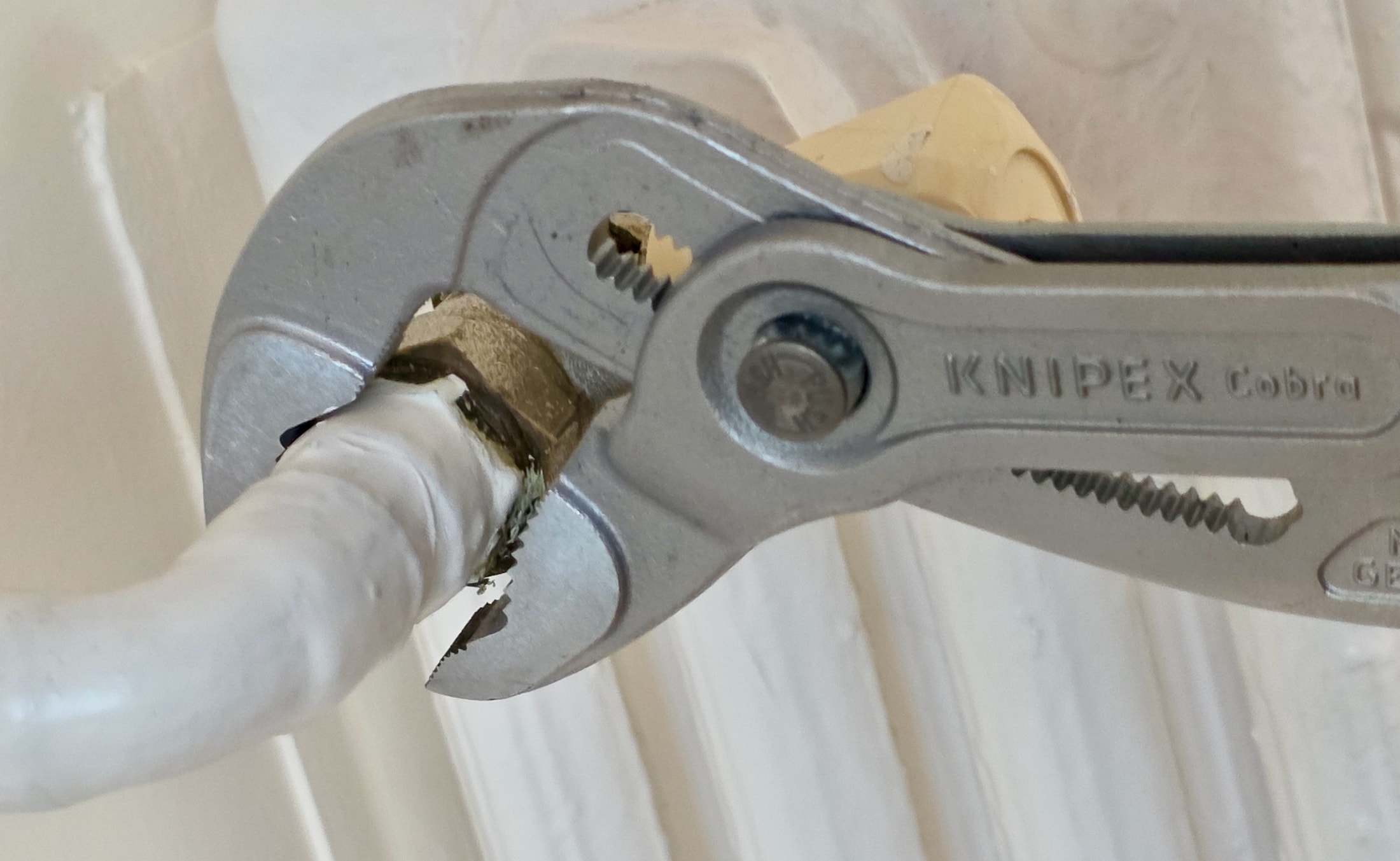
The same Wikipedia page notes the point that serves as the differentiating argument: the toothed jaws of water pump pliers mark copper and brass. On an exposed plumbing fitting, on a chrome panel nut or on a new cable gland, the teeth leave marks.
| Criterion | Toothed water pump pliers | Pliers wrench 86 03 180 |
|---|---|---|
| Criterion Jaws | Toothed water pump pliers Toothed, bite into the metal | Pliers wrench 86 03 180 Smooth, parallel, no play |
| Criterion Sensitive surfaces | Toothed water pump pliers Leave marks on copper and brass | Pliers wrench 86 03 180 No marks |
| Criterion Seized nut | Toothed water pump pliers Excellent grip | Pliers wrench 86 03 180 Good, but use with care |
| Criterion Chrome fitting | Toothed water pump pliers Avoid | Pliers wrench 86 03 180 Intended use |
| Criterion Adjustment | Toothed water pump pliers Groove joint | Pliers wrench 86 03 180 Push button, 13 positions |
The pliers wrench answers the opposite need of the water pump pliers: tighten without leaving a mark.
For an electrician, this distinction is not theoretical. The panel of a renovated home is inspected with the customer’s eye: a terminal-block nut scratched by a toothed tool stands out. The smooth jaw changes the gesture.
The German distributor TBS-Aachen’s product page repeats the KNIPEX manufacturer data. Here is the summary, as I read it.
| Parameter | Advertised value |
|---|---|
| Parameter Reference | Advertised value 86 03 180 (Pliers Wrench family) |
| Parameter Length | Advertised value 180 mm |
| Parameter Weight | Advertised value 254 g |
| Parameter Nut capacity | Advertised value 35 mm / 1 3/8" |
| Parameter Adjustment positions | Advertised value 13 |
| Parameter Jaw thicknesses | Advertised value B1 = 5,0 mm ; B2 = 8 mm ; B3 = 12 mm |
| Parameter Material | Advertised value Chrome vanadium electric steel, forged, oil-hardened |
| Parameter Handles | Advertised value Plastic-coated |
| Parameter Mechanism | Advertised value Push button, notched adjustment, ratchet effect |
| Parameter EAN | Advertised value 4003773035466 |
Data read from the TBS-Aachen distributor page, which repeats the KNIPEX data.
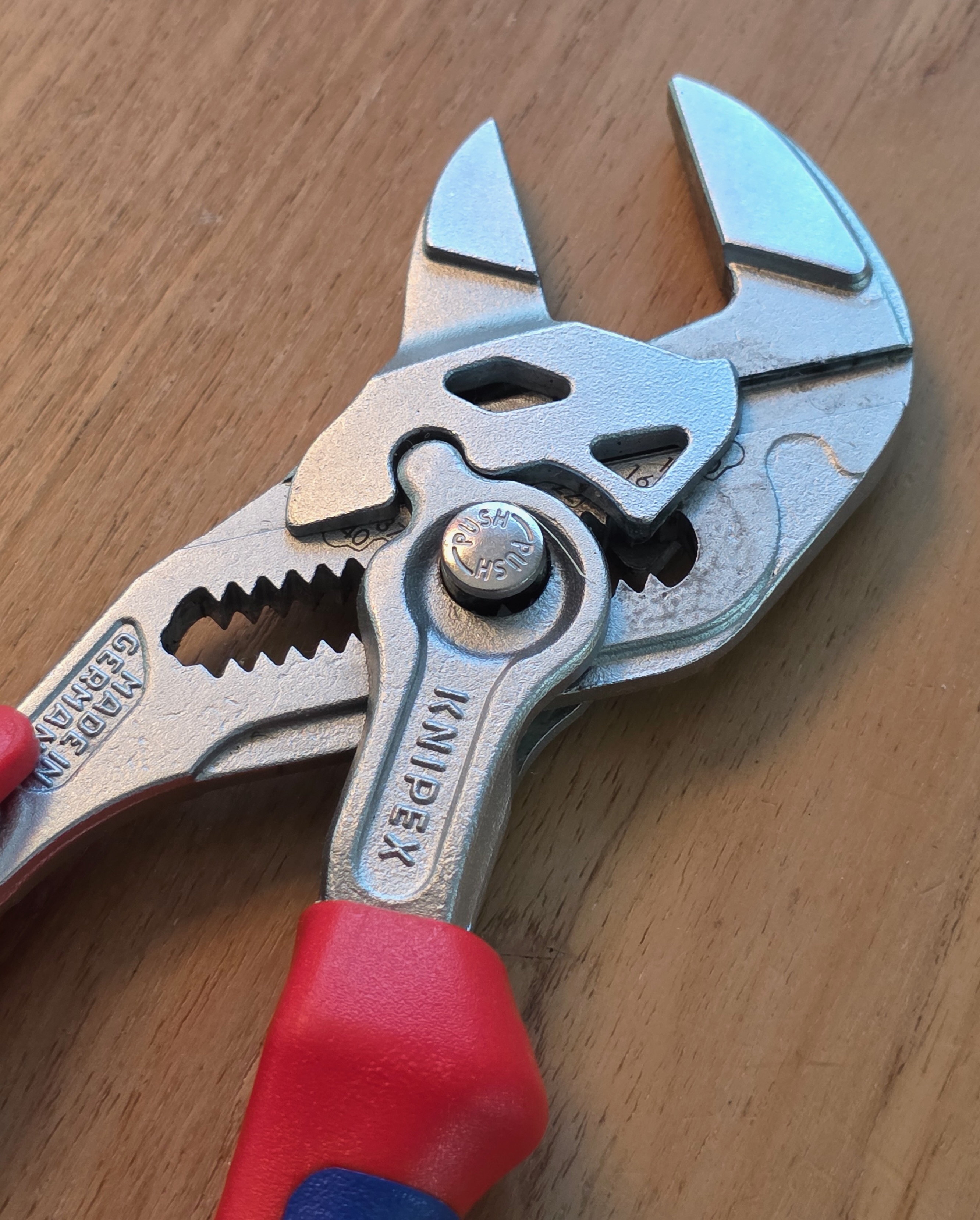
PUSH button
The button marked PUSH shifts the jaw along the notches: it is the one that sets the continuous opening.
The 180 mm length puts this pliers wrench in belt-pocket format: short enough to live in an electrician’s tool bag, long enough for a reasonable tightening torque. The 254 g weight is barely noticeable.
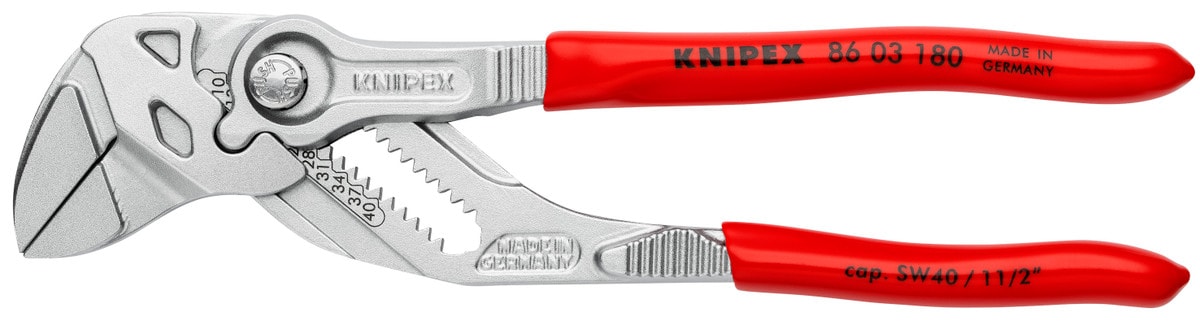
The material is chrome-vanadium electric steel, forged and oil-hardened. It is the classic recipe for professional pliers: oil hardening produces jaws that keep their working edge without becoming brittle.
The mechanism promises a ratchet effect between the jaws and a multiplication of roughly 10 times the manual force. In practice, a moderate effort at the wrist turns into clear pressure on the nut, without the hand having to strain.
In use, adjustment is done with the thumb: you push the button marked PUSH, slide the jaw along the serrations, then release to lock. The 13 positions correspond to the notches of that slide, and the opening adjusts continuously within the 35 mm capacity limit.
The push button is operated with one hand, which matters when the other hand is already holding the cable or the nut.
The parallelism of the jaws during tightening is not a spec sheet detail: it spreads the pressure over both faces of the nut, where a toothed profile concentrates it on two edges. On a treated surface, this distribution avoids the contact points that crush the chrome.
The ratchet effect completes the motion: you can release the grip and take it again without disengaging the jaw, and the tightening stays identical every time. It is the mechanism that makes the motion quick to adopt, even for a tool you do not take out every day.
The spec sheet says it clearly: this pliers replaces a set of open-end wrenches, metric and imperial. That is the main buying argument. Instead of carrying five wrenches of different sizes, you set a continuous opening and tighten nuts up to 35 mm, whatever their pitch.
The second argument concerns the finish: the smooth, parallel jaws, with no play, are designed for “gentle assembly of hardware on treated surfaces”, that is, chrome fittings. I come back to this point for the electrician further down.
Concretely, replacing a set of open-end wrenches comes down to two gains. First, weight: 254 g for a tool that covers nuts up to 35 mm, where several wrenches of different sizes add weight in the bag.
Then the action: no more searching for the right size, you set the opening and tighten, whatever the nut pitch.
The variant documented here is rated for 35 mm capacity. For larger flats I choose a larger pliers-wrench variant or the appropriate wrench, so the first buying check is the range of nut sizes I actually use.
A point of caution I must flag: the specifications of the 86 03 180 differ depending on the spec sheet and the year of manufacture.
The TBS-Aachen spec sheet describes a version with 13 positions and 35 mm capacity. That is the one that is authoritative in this article.
Several other pages (the knipex.com spec sheet, spec sheets from Leroy Merlin, Conrad and Rubix) mention a redesigned version: 40 mm capacity, 15 positions, double laser-engraved scale with metric at the front and inches at the back. Check these figures on the seller’s spec sheet.
Attention
Do not mix the two sets of figures for the same purchase. If you order an 86 03 180, check the seller’s page to see whether it states 13 positions and 35 mm or 15 positions and 40 mm. Depending on the stock, you receive one version or the other, and the laser graduations only exist on the most recent one.
This is the point I would settle first on a product page before paying. The stated weight also varies depending on the source: the German page gives 254 g, other sites mention 247 g. Differences of a few grams do not change usage; different positions and capacity do.
To identify the version in a listing, I rely on three clues. The first is the stated capacity: 35 mm or 40 mm, the most reliable data point when it is written in black and white.
The second is the graduation: the redesigned version carries a laser-engraved double scale, metric at the front and inches at the back, which the other production does not show.
The third is the weight: 254 g or 247 g depending on the page, a difference that changes nothing in use but confirms that two pages do not necessarily describe the same production.
The EAN 4003773035466, for its part, identifies the reference 86 03 180 but cannot settle the question on its own: it says nothing about the version delivered. It is the combination of the three clues that avoids the unpleasant surprise when unboxing, and the seller remains the only one who can confirm the stock they ship.
There is no specific electrical use for this pliers wrench: it is neither a stripping tool nor a crimping tool. The value lies in the clean tightening of trim and connection parts that I handle on almost every job.
The logical uses, consistent with the manufacturer’s positioning, are as follows:
I frame these uses as field deductions, not as manufacturer data: the spec sheet doesn’t mention them. But the logic is simple. A plier that doesn’t mark chrome answers exactly the problem of the finishing nut that toothed water pump pliers would damage.
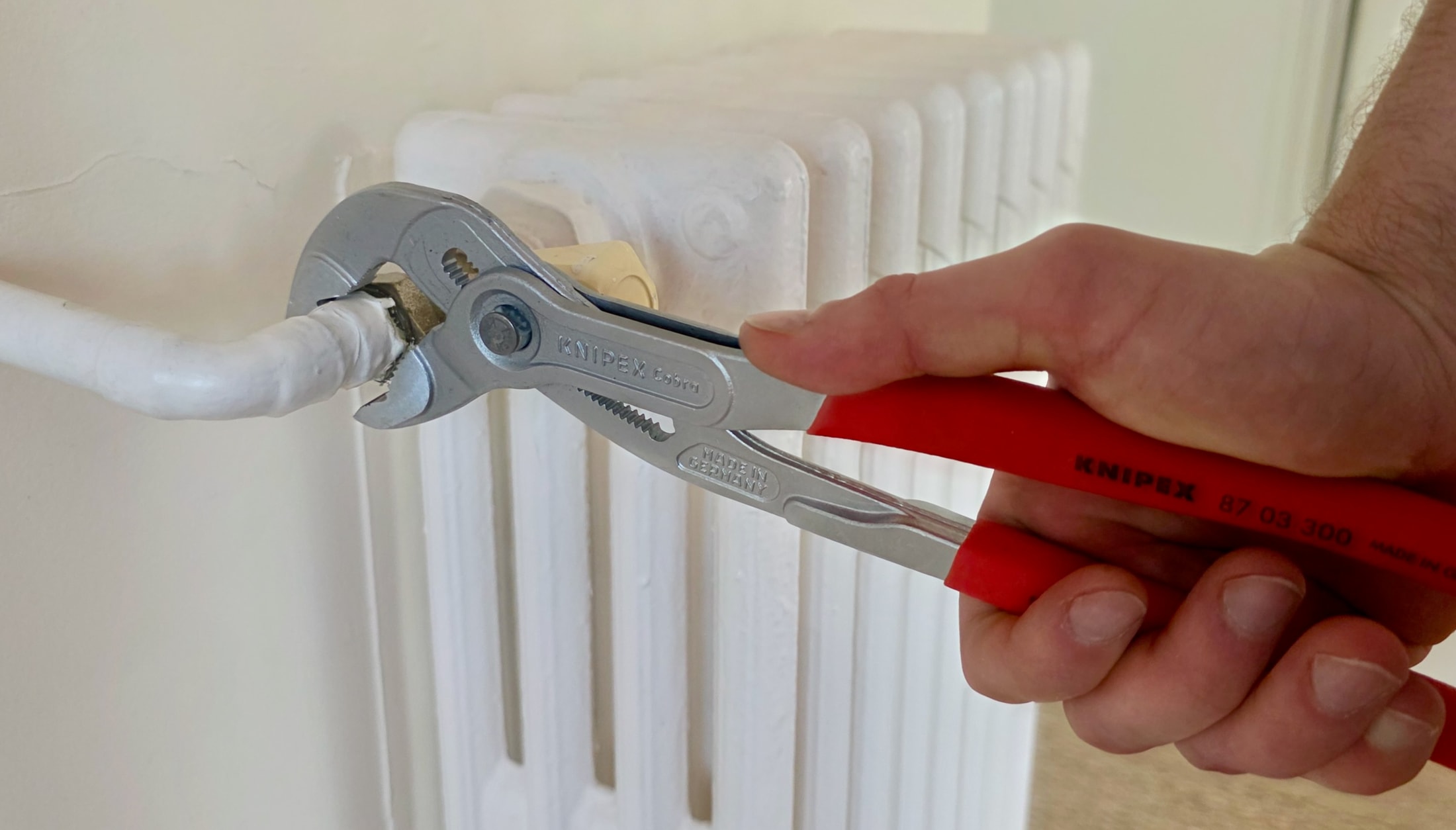
For a beginner putting together their kit, the 86 03 180 is one of the pliers that are justified after the water pump pliers, not before. I detail the choice further down.
The 86 03 180 is a mechanical pliers wrench with no VDE marking in the cited documentation. I therefore use this reference for de-energized work.
Info
For live work I use a tool carrying the appropriate tested insulation marking. The plastic handle coating on the 86 03 180 is a grip finish, not a VDE approval.
It’s the same rule as for my whole toolbox: a plastic-sheathed plier is not an insulated tool because of that. The handle sheathing is for comfort and grip, not for electrical protection. Only a standards-compliant, verified marking on the tool authorizes it for live work.
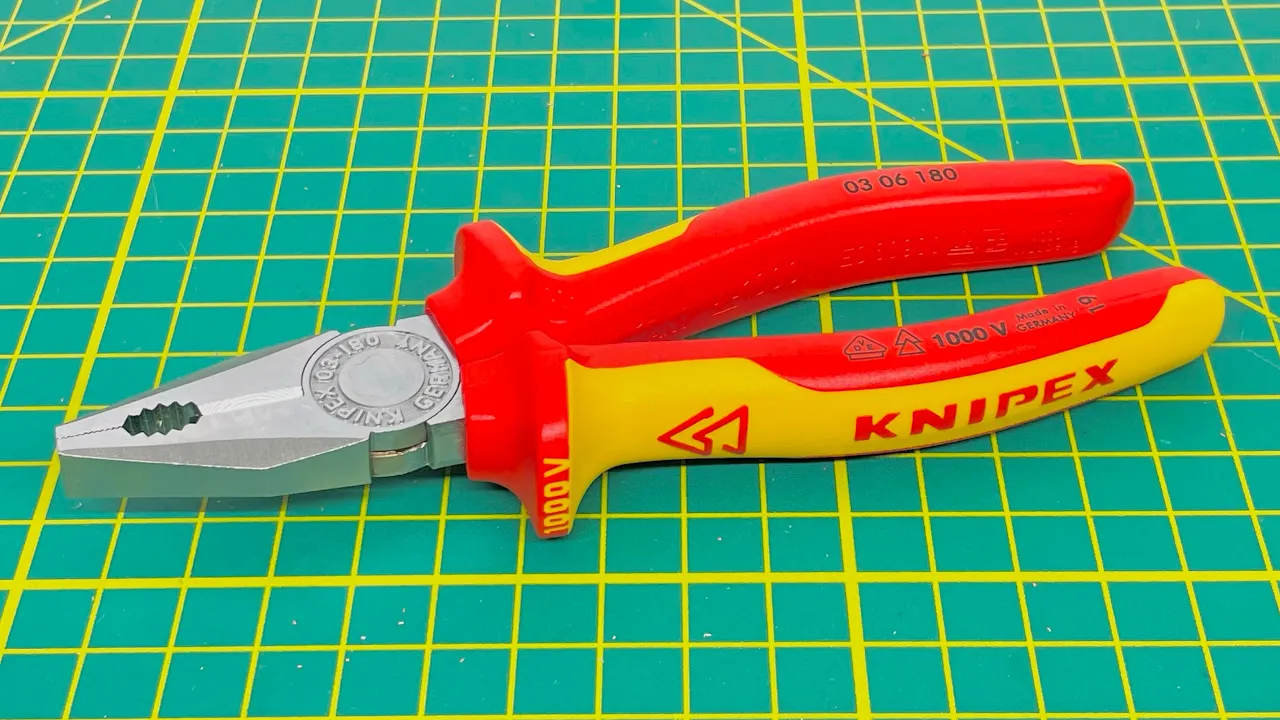
If your need is live work, opt for marked and tested pliers, not this reference. The 86 03 180 remains a gripping tool for the de-energized toolbox.
I do not use a one-off retailer price as a benchmark for the 86 03 180. Before buying, check the exact version — 13 positions and 35 mm or 15 positions and 40 mm — and a dated quote for that specific variant.
Conseil
Before buying, the version is decisive: 13 positions and 35 mm or 15 positions and 40 mm. Two listings with the same short name can describe different builds.
A word about the standard, because it comes up in every search on this subject.
The NF ISO 8976, titled “Pliers and nippers — Multiple slip joint pliers — Dimensions and test values”, has a December 2004 edition, cancelled and replaced by the December 2021 edition, in force, under the ICS codes 25.140.30 according to the AFNOR shop.
The important point: this standard applies to multiple slip joint pliers (multiple slip joint pliers), not the pliers wrench. The 86 03 180 is a distinct product, with smooth, parallel jaws and without a toothed rack.
The title of the standard says what it covers: on one side the dimensions of multiple slip joint pliers, on the other the test values, that is, the forces the tool must withstand during the tests without permanent deformation.
A toothed multigrip pliers comes within this scope because it is defined by its rack; the pliers wrench relies on a push-button and internal detents, a different adjustment mechanism that does not belong to the covered family.
That does not mean the 86 03 180 escapes all scrutiny: the manufacturer’s data sheet states forged and oil-hardened chrome-vanadium steel, and it is that sheet you should read to judge sturdiness.
But you should not look for a conformity guarantee for this pliers in NF ISO 8976, and any listing that invokes it deserves to be questioned with the exact document reference.
Info
The 86 03 180 does not fall under NF ISO 8976: that standard applies to classic toothed multigrip pliers, whereas the pliers wrench uses a smooth parallel jaw with force multiplication.
If you read an “ISO 8976 compliant” claim for a pliers wrench on a product sheet, ask for the exact reference and the conformity document. In the toothed multigrip family, the standard of December 2021 is the one in force, not the 2004 edition.
The choice depends on the surface and the task. Serrated water-pump pliers and a pliers wrench perform different functions and complement each other accordingly.
| Situation | Serrated water-pump pliers | Pliers wrench 86 03 180 |
|---|---|---|
| Situation Seized, rusty nut | Serrated water-pump pliers Serrated gripping surface | Pliers wrench 86 03 180 Smooth parallel jaws |
| Situation Visible chrome fitting | Serrated water-pump pliers Serrated gripping surface | Pliers wrench 86 03 180 Smooth parallel jaws |
| Situation Cable gland | Serrated water-pump pliers Grip through serrations | Pliers wrench 86 03 180 Controlled tightening |
| Situation Tool function | Serrated water-pump pliers Grip varied shapes | Pliers wrench 86 03 180 Wrench-like tightening |
| Situation Working live | Serrated water-pump pliers Check the exact insulated version | Pliers wrench 86 03 180 Check the exact insulated version |
Water-pump pliers and a pliers wrench mainly differ in tooth profile, jaw geometry and intended task.
I use serrated water-pump pliers for strong gripping and the pliers wrench for smooth surfaces and controlled tightening.
The detailed comparison between the KNIPEX water pump pliers and the Facom water pump pliers gives useful reference points for this choice of tool family: I detail it in my comparison of the Cobra versus the Facom water pump pliers.
KNIPEX’s place in the electrician’s tool box can also be understood with the KNIPEX versus Wiha comparison and with the history of the brand.
The 86 03 180 positions itself as a finishing and precision plier, with three qualities announced and confirmed by the documentation:
Three points place the reference in context: I use it de-energized, check the exact 13-position / 35 mm or 15-position / 40 mm variant when buying, and use the smooth jaws for clean gripping and controlled tightening. For a seized nut I choose serrated water-pump pliers because that is a different tool function.
If your need is to cleanly tighten chrome fittings, cable glands and finishing nuts with the power off, this plier matches the technical requirements. If your need is the seized nut on the job site, first reach for a good pair of serrated water pump pliers.
For an electrician who is building up their kit, I would rank it among the second-pass purchases, along with the budget set aside for a beginner’s equipment. Before the pliers wrench come the voltage tester, the insulated screwdriver and the power strip. After that, the finishing pliers makes sense.
The first mistake is to believe it is insulated because its handles are coated in plastic. The coating is not insulation: without a verified marking, this pliers wrench remains a tool for de-energized work.
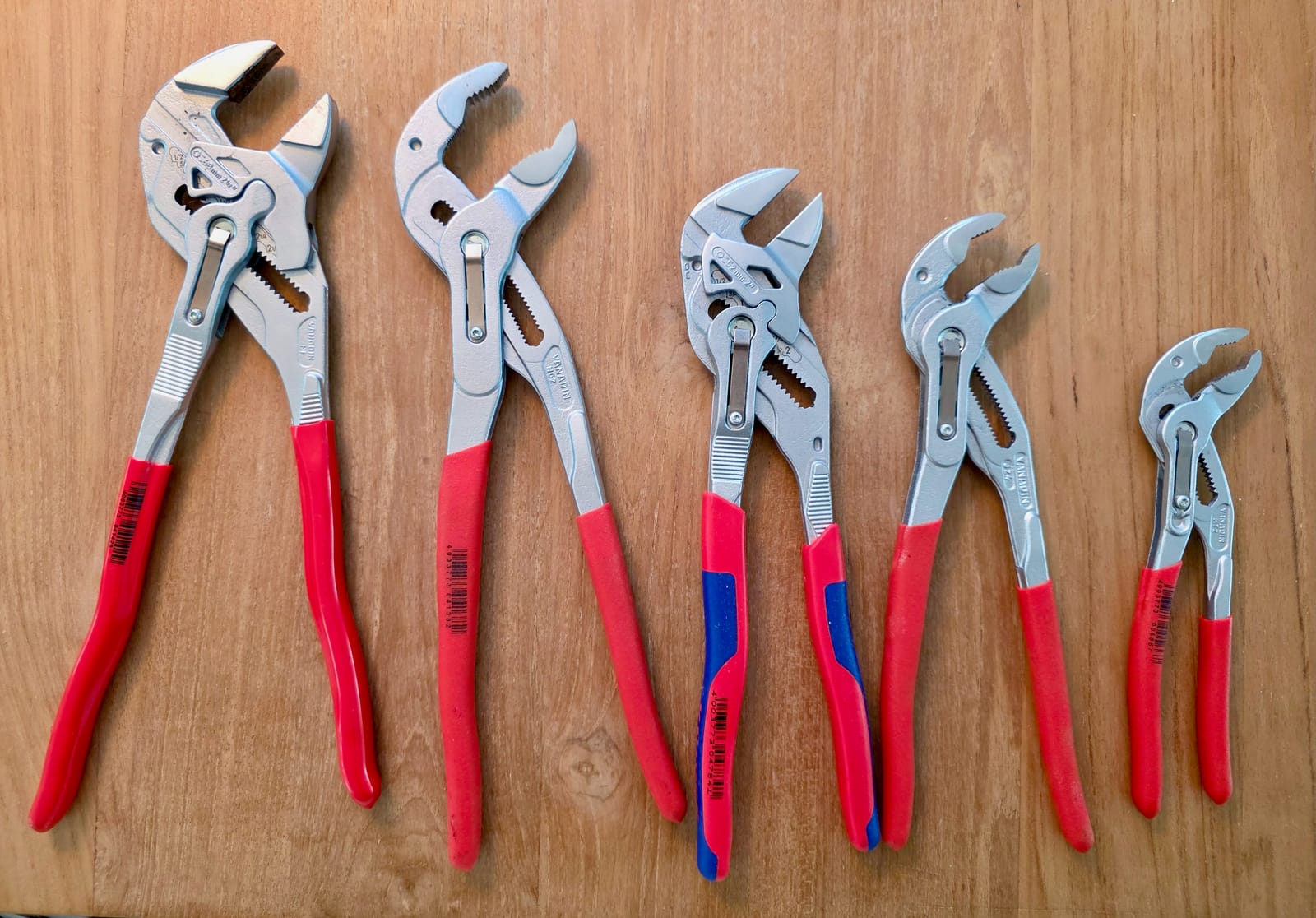
Coated handles
The red coating on the handles is a gripping comfort, not electrical insulation.
The second mistake is confusing the versions when ordering. A listing that promises 40 mm and 15 positions does not describe the same build as the spec sheet with 35 mm and 13 positions. Check the number before paying.
The third mistake is forcing on it like on a power strip. The multiplication of about 10 times the hand force changes the equation: the motion must be measured, especially on a chrome fitting that the smooth jaw does not protect from excess torque.
I set the opening before placing the jaw on the nut, never after engaging it. An opening that is too wide makes the jaw slide on the flats and rubs the surface; too closed, it has to be forced to engage.
My reference point is simple: the jaw sits flat on both flats, with no visible play, and the push button locks at the nearest notch. I check this point on every grip, because two nuts of the same diameter do not always sit the same way.
Once the grip is closed, I tighten with a turn of the wrist, without a shoulder jerk. The motion remains measured: the advertised multiplication turns a moderate effort into firm pressure on the nut, and the hand does not have to fight.
As soon as I feel solid contact, I stop. I release the grip, I take hold of the jaw again and I check two things: that the nut has not moved and that the surface has remained intact.
After a dusty job, I blow out dust and filings with my Makita 18 V brushless cordless blower, then wipe the jaws. I then apply a light film of oil on the pivot and on the pusher, without flooding the mechanism, then I put the pliers away with the jaws closed in their pouch.
Three signs make me stop: a pusher that no longer locks at the detent, play appearing between the two jaws and a parallelism that is lost when tightening. In these cases, I have the tool checked instead of forcing it.
I also forbid myself from hitting the handle to break a nut loose, from using the pliers as a lever and from tightening beyond the stated capacity. These actions wear the ratchet mechanism faster than normal use.
On a cable gland, I hold the body with one hand and tighten with the other. The smooth jaw does not crush the flats like a serrated jaw, which matters on a chrome-plated body or on a plastic material.
I stop at firm contact, then I check by hand that the assembly no longer turns. It is the final check that does the work, not the force put into tightening.
In an exposed panel or on a cover the customer looks at, I prefer the pliers wrench to the multigrip pliers. Terminal nut, cable outlet, chrome-plated accessory: the jaw sits flat and the finish stays clean.
I keep the same opening for all nuts of the same size, which gives consistent tightening from one point to the next. An adjustment redone for each nut is visible in the final result.
On an equipotential bonding connection, I want an intact surface and solid contact. The smooth jaw leaves the lug and the nut as they are, without the crushed edges a serrated jaw leaves.
I tighten until contact, then I check with a finger that nothing moves. If the nut resists, I change tools instead of forcing it.
I set the pliers wrench aside in several situations. Seized or rusted nut: the serrated multigrip pliers bite and hold better. Nut wider than the stated capacity: I go back to the open-end wrench instead of spreading the jaw by hand.
Then, angled access, where the head of the pliers does not sit flat on the flats. And any live work: this pliers wrench is not insulated, so it stays in the toolbox when the circuit is energized.
I add a point of caution: this is not a torque tool. When a manual gives a tightening torque, I take the wrench intended for that purpose, not the pliers wrench.
Faced with a second-hand pliers wrench or one sold on a marketplace, I test the push button before paying. It must slide and lock firmly into the detent. A pliers wrench whose detent slips once closed is no use to me, even at a low price.
I then check the parallelism of the jaws, the condition of the reference engraving and that of the handles. Poor-quality engraving or a seized mechanism should be a warning sign, just as on a new tool.
3 questions
InteractiveThe KNIPEX 86 03 180 pliers wrench
3 questions to check the essentials
Choose an answer
No, it’s a pliers wrench: smooth, parallel and play-free jaws, no toothed rack. It belongs to the water pump pliers family in spirit, but it answers a different need: tightening without marking sensitive surfaces. The difference between the two families is detailed in the water pump pliers comparison.
None of the verified sources list it as insulated to 1 000 V. The coated handles are for gripping, not for electrical protection. I reserve it for de-energized work; for live work, you need a tool that complies with the insulated tools standard.
According to the verified spec sheet: 180 mm long, 254 g, 35 mm capacity (1 3/8"), 13 adjustment positions, jaws from 5,0 to 12 mm depending on thickness, forged, oil-hardened chrome-vanadium steel, plastic-coated handles.
I do not use a one-off retailer price as a benchmark here. Before buying, check the exact 86 03 180 version and a dated quote for that variant.
That’s the manufacturer’s argument: it replaces a set of open-end wrenches, metric and inch, with a capacity of 35 mm. It covers the common nuts on job sites and at home, but it doesn’t do everything: a seized nut is still a job for a good toothed water pump pliers.
NF ISO 8976 of December 2021 (in force) covers water pump pliers, not the pliers wrench. The pliers wrench is not subject to this standard: it sits alongside the family of classic water pump pliers.
Théo Desrousseaux
Electrician and editor
I work in the field and edit this magazine. Every guide is reviewed for its target country before publication.
Practical electrical installation guides, diagnostic methods and tool recommendations compared against the technical wiring standards of this national edition.
Founded in 1882 in Germany, Knipex makes the pliers chosen by professional electricians: history, innovations and a lasting commitment.
Read the guide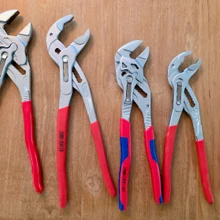 Guide Knipex Cobra vs Facom: water pump pliers compared Cobra 87 01 250 vs Facom 181A.25G: 25 positions against 12, jaws, opening, ISO 8976 standard and insulation compared reference by reference. Read the guide
 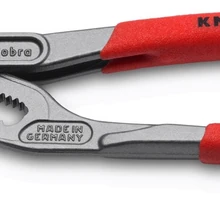 Guide KNIPEX 87 51 180 pliers: review and electrician uses KNIPEX Cobra ES 87 51 180 water pump pliers: technical specs, hands-on handling, push-button adjustment, 180 mm format and usage framework. Read the guide
 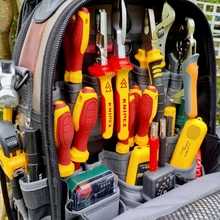 Guide Knipex, Wiha or Wera: comparison for electricians Knipex, Wiha or Wera: compare VDE pliers and screwdrivers by equivalent references, ergonomics, certification and field use for electricians. Read the guide