Stabila electronic level: worth it in 2026?
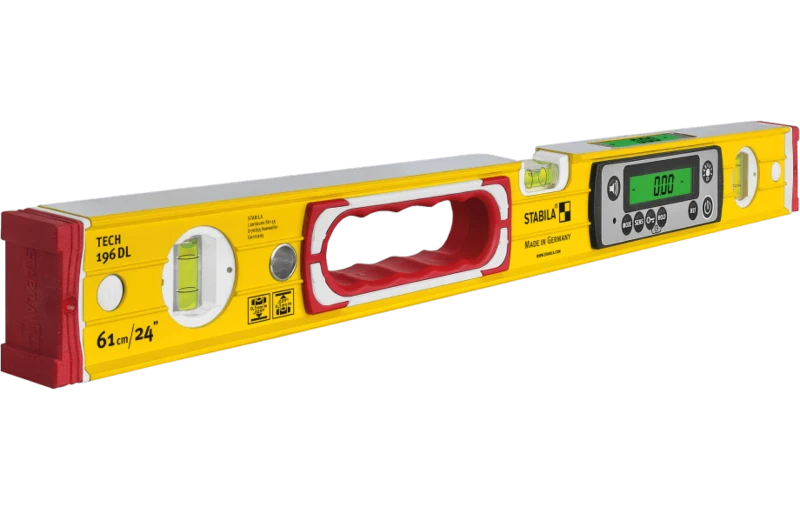
In brief
- The digital side is useful for reading the slope off a digital display, reproducing an angle and working with audible guidance.
- The classic vial is still specified at 0.5 mm/m: electronics don’t automatically make a level more accurate.
- The TECH 196 DL makes sense for regular professional use, but it remains expensive for simple level checks.
- The choice between the TECH 196 DL and the TECH 196 M DL depends mainly on the need for magnets on metal supports.
Yes, the STABILA electronic level can be useful, but not for every task. I find it worthwhile when an installation requires a slope value, a repeatable angle or a reading that’s hard to take at eye level.
To check that an outlet, a shelf or a small enclosure is level, I’m often faster with a good quality spirit level. The electronic model costs significantly more, needs batteries and compensates for neither an uneven surface nor a poor checking method.
± 0.05°
stated electronic accuracy at 0° and 90°
± 0.10°
stated accuracy between 1° and 89°
0.5 mm/m
stated accuracy of the vials in the normal and inverted positions
IP67
stated protection against dust and temporary immersion
400 h
stated battery life without the backlight, with 2 AA batteries
What the electronics really add
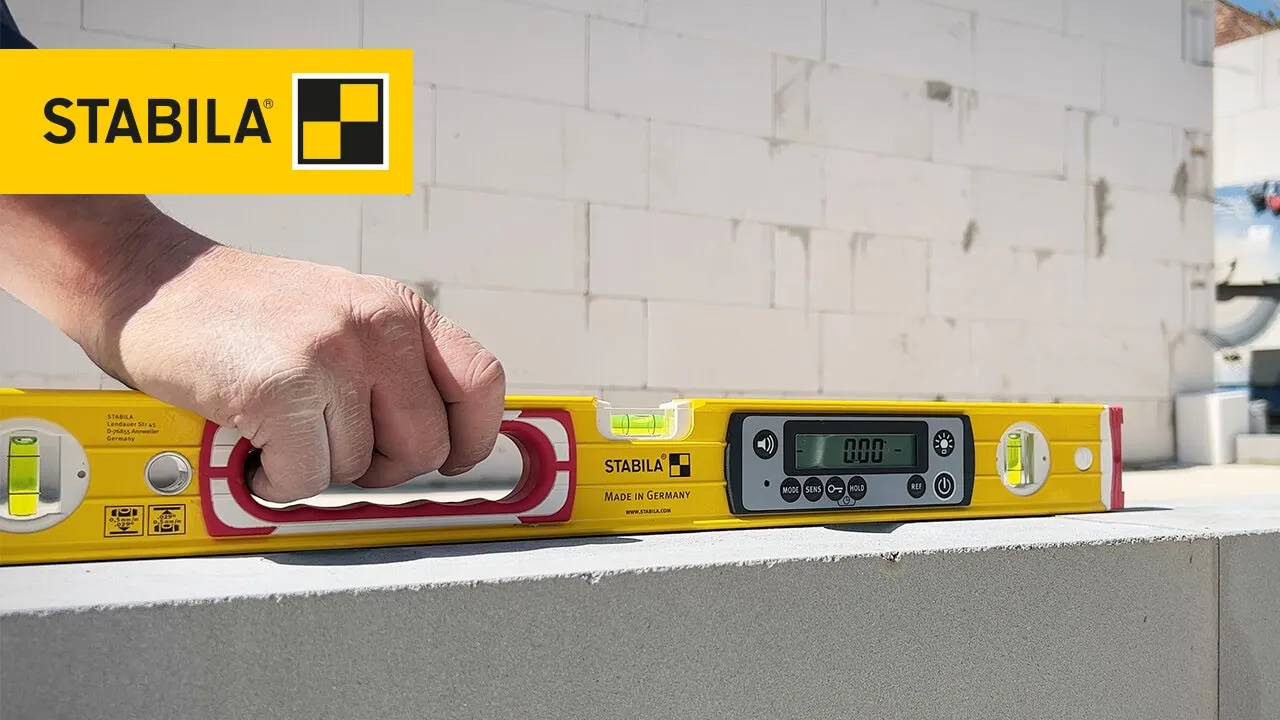
The TECH 196 DL displays the tilt in degrees, percent, millimetres per metre and imperial units. This direct conversion avoids a separate calculation and reduces reading errors when a drawing or an instruction manual requires a specific unit.
The level has two backlit displays. The display flips automatically depending on the tool’s position, so the result stays readable when the level is turned over or held overhead.
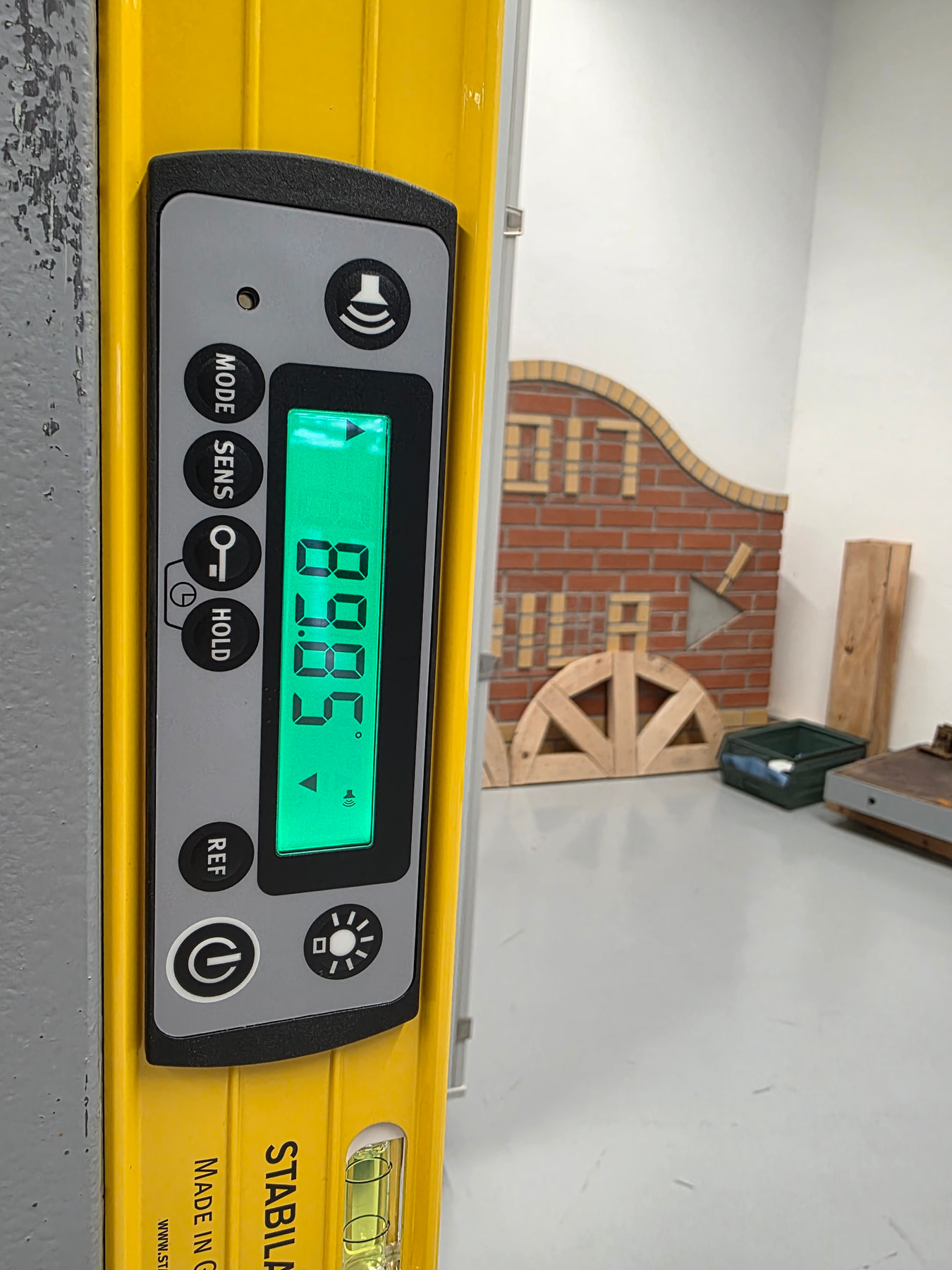
The audible guidance is one of the features I find most practical on site. The signal helps you get close to a target value without constantly looking at the screen, especially when I need to keep my eyes on the fixing, the workpiece or the drill bit.
I still keep one clear limit: sound is an aid, not a check in itself. I always check the displayed value and the quality of the contact before final tightening.
The manufacturer also advertises an IP67 construction under the name ULTRA-PROTECT, with a module protected against dust and against temporary immersion in water up to 1 m for 30 minutes. This resistance is consistent with a tool exposed to plaster, light rain, dirt and repeated cleaning.
The sealing is checked by hand by technicians, using a pressure leak test on the module. Philipp also says that a unit withstood several weeks of immersion during internal tests — a factory anecdote to take as such: the official specification remains the IP67 above.
Finally, the TECH 196 M DL version adds powerful magnets. On a cable tray, a metal stud or a steel structure, I can hold the level without tying up one of my hands, as long as the surface is clean and flat enough.
Is electronics really more precise than the bubble?
This is the point that deserves the most nuance. STABILA quotes a precision of ± 0.05° at 0° and 90° for the digital module, then ± 0.10° between 1° and 89°.
Expressed as a slope, 0.05° corresponds to about 0.87 mm/m; 0.10° corresponds to about 1.75 mm/m.
For the vials, the manufacturer quotes ± 0.5 mm/m, which is about 0.029°. On paper, the vial is therefore no less accurate close to the horizontal: it can even quote a tighter tolerance than the digital module.
These precision figures are manufacturer-declared tolerances. They do not replace checking the accuracy of a particular level after an impact or before critical work.
STABILA publicly documents its process and its checks in detail.
This comparison explains my verdict. With digital, you do not just buy precision: you mainly buy a readable value, a selectable unit, audible guidance and the ability to reproduce an angle.
| Reading system | Quoted tolerance | What I take from it |
|---|---|---|
| Reading system Conventional vial | Quoted tolerance ± 0.5 mm/m | What I take from it Very well suited to horizontal and vertical checks |
| Reading system Digital module at 0° and 90° | Quoted tolerance ± 0.05°, i.e. about ± 0.87 mm/m | What I take from it Practical numeric readout, with no inherent accuracy advantage over the vial |
| Reading system Digital module between 1° and 89° | Quoted tolerance ± 0.10°, i.e. about ± 1.75 mm/m | What I take from it Useful for measuring and reproducing intermediate angles |
| Reading system Actual result on the jobsite | Quoted tolerance Also depends on how it is placed | What I take from it A speck of dust, a dip or a bent profile can skew the measurement |
Three digits do not fix a bad contact, a profile that is too short or a bowed wall.
I find the same logic with other instruments. In my comparison Fluke or Chauvin Arnoux, a numeric value is only useful if the sensor, the method and the measurement category match the work being done.
A display can give a false impression of certainty. Three digits do not fix a bad contact, a profile that is too short or a bowed wall.
The jobs where I find the electronic Stabila useful
Setting a prescribed slope
The first use is measuring a slope specified on a drawing or in a manual. I can work directly in degrees, as a percentage or in millimetres per metre without converting the value in my head.
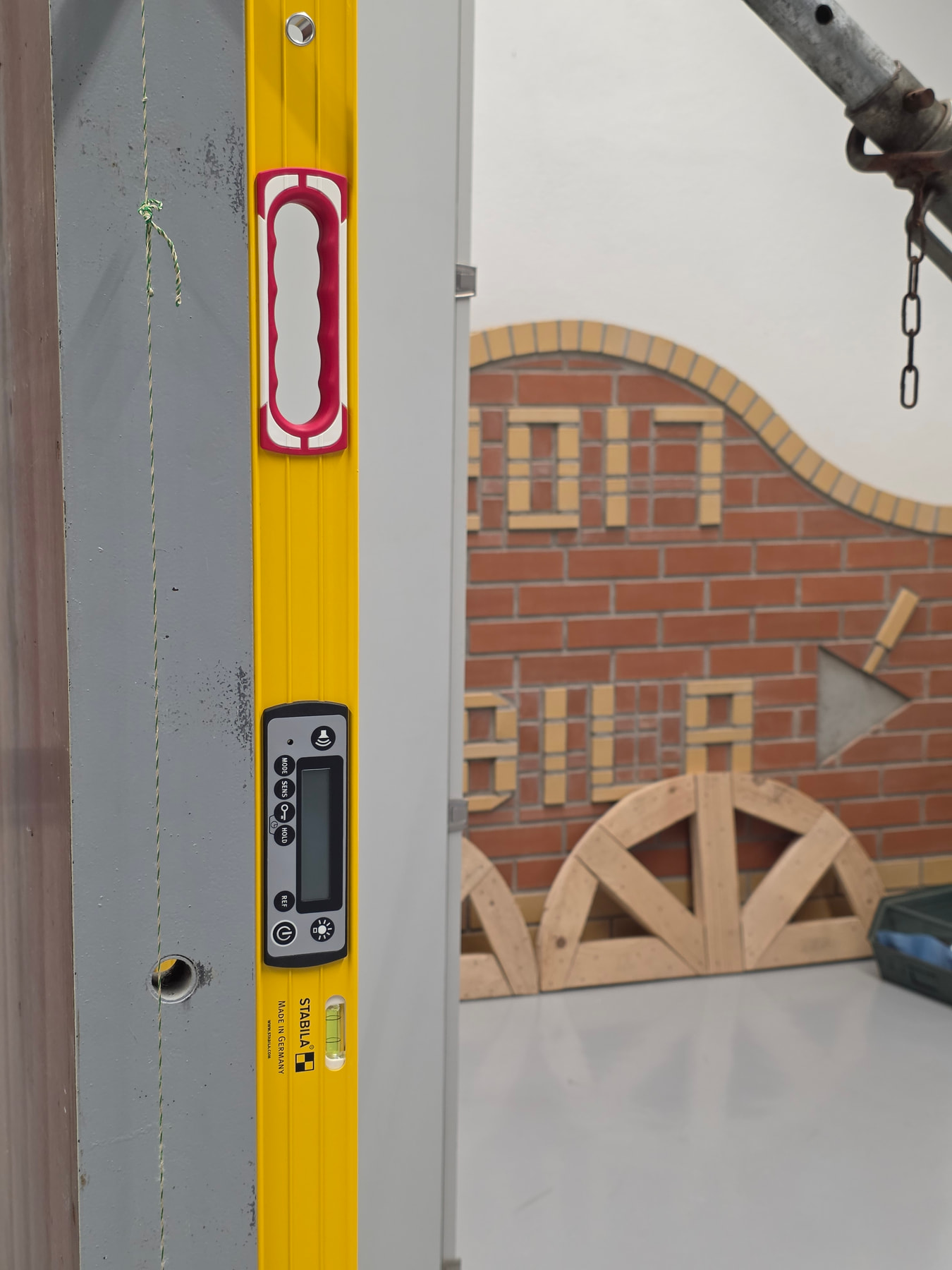
It’s useful for a support bracket, a drain, a shelf, a coping, or a part that has to keep a constant incline. I never choose the slope at random: I take the value from the manufacturer, from the drawing or the applicable technical document.
On an air conditioning job, the level can help mark out a slope intended for a run or a drain. It does not replace the manufacturer’s instructions or the precautions detailed in my article on installing air conditioning.
Reproducing an existing angle
The second use is transferring an angle. I measure a slope on one part, then reproduce that value on the next ones.
This method is useful for repeated brackets, ramps, cladding or equipment installed in a row. It avoids making an approximate template when the value has to stay identical.
Working when the vial is hard to see
Under a ceiling, behind a piece of equipment or in a tight corner, the vial can be hard to read. The reversible display and the audible signal then make checking easier.
This is the case when marking out certain light fittings or brackets. Good positioning is still essential, as it is when choosing a hole saw of the right diameter for a recessed spotlight.
Mounting on metal structures
The magnetic version of the TECH 196 M DL makes sense on steel. The magnets hold the tool in place while I adjust a bracket or line up a fixing.
On wood, concrete, plaster or non-magnetic aluminium, this extra cost adds little. So I would rather spend the extra on the right length than on unusable magnets.
Checking work against a specified value
A numeric display makes documented checking easier. I can measure a slope, note it down and compare it with an expected value without roughly describing the position of the bubble.
This approach is useful when a job involves several checkpoints. It is similar to the logic behind a Catu DT-300 earth tester: the device becomes relevant when the value guides a decision, not simply because it has a screen.
Situations where I keep a conventional level
For hanging a frame, adjusting a piece of furniture or quickly checking a shelf, a digital level doesn’t save me enough time. Start-up, reading and battery management add a minor hassle to a task the vial handles instantly.
To align sockets on an uneven wall, the main problem isn’t always the angle. I first have to choose a reference, check the height and allow for the wall finish.
The same goes for a wall Ethernet socket. A display reading 0.00° does not guarantee that the boxes are at the same height if the starting line or the centre-to-centre spacing is wrong.
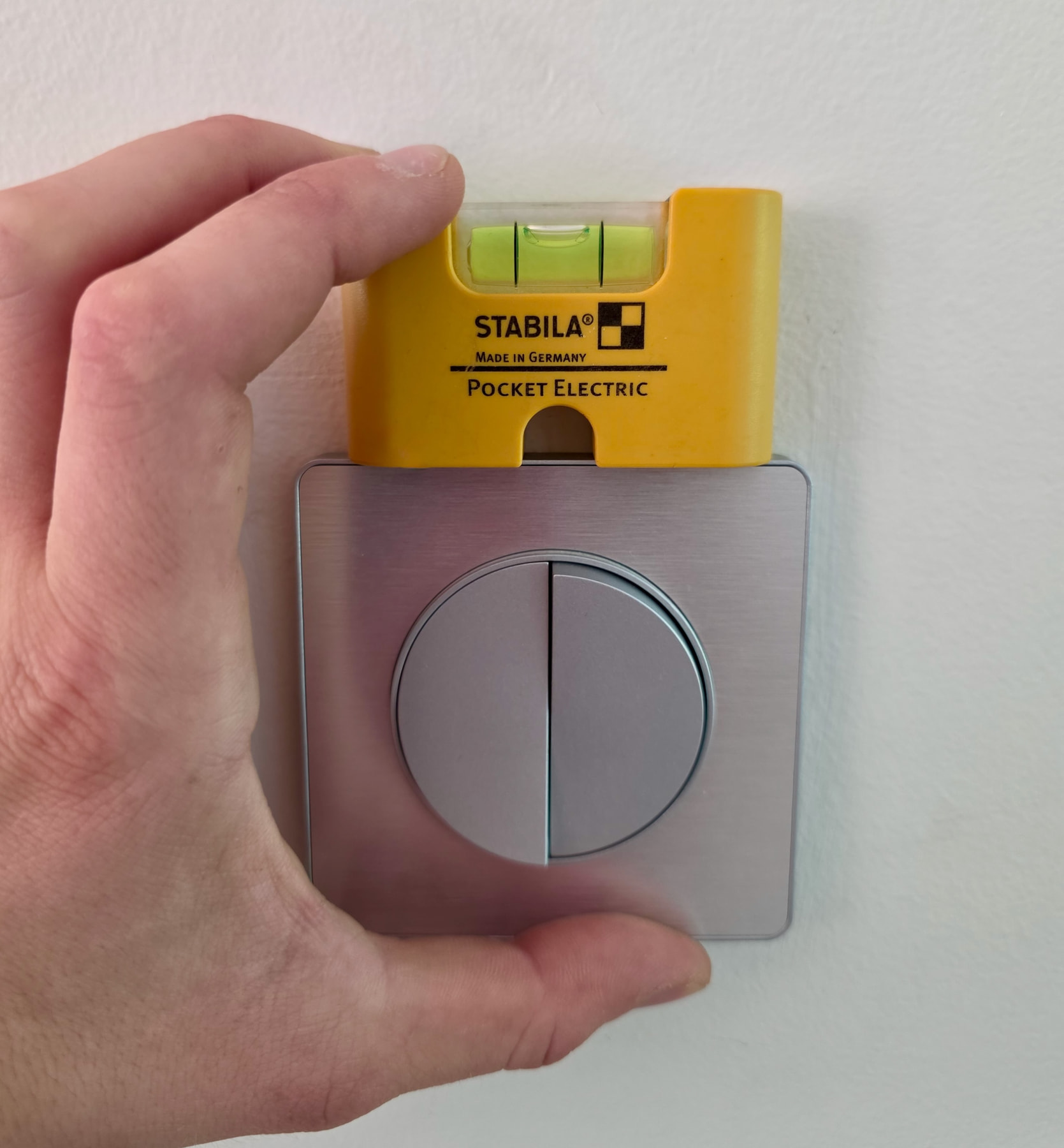
To align a socket, a small level placed directly on the wiring accessory is often enough: here, a magnetic Stabila mini level.
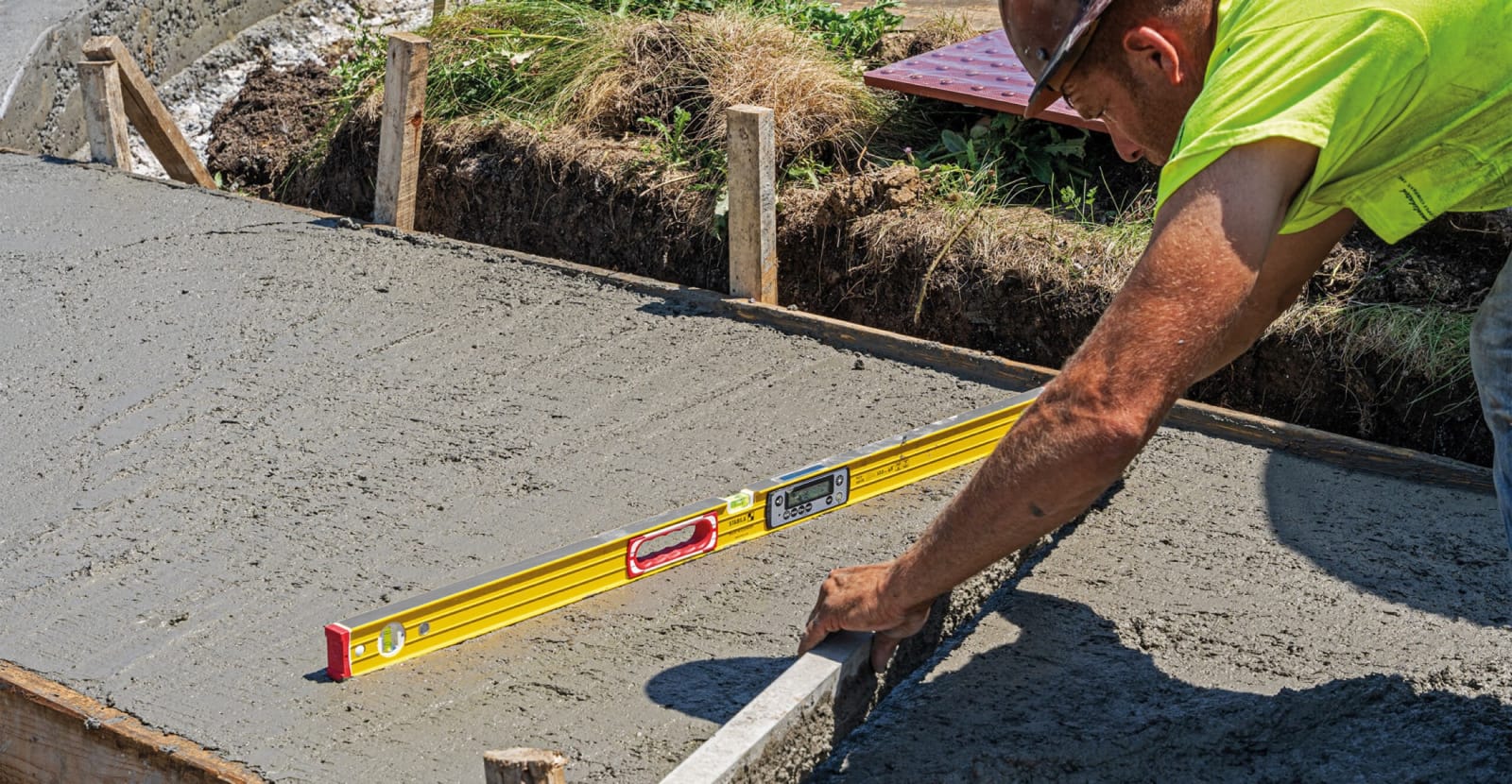
STABILA's manufacturer photo illustrates the digital angle display alongside a traditional vial. It is not a photo of my own electrical installation.
Source: STABILA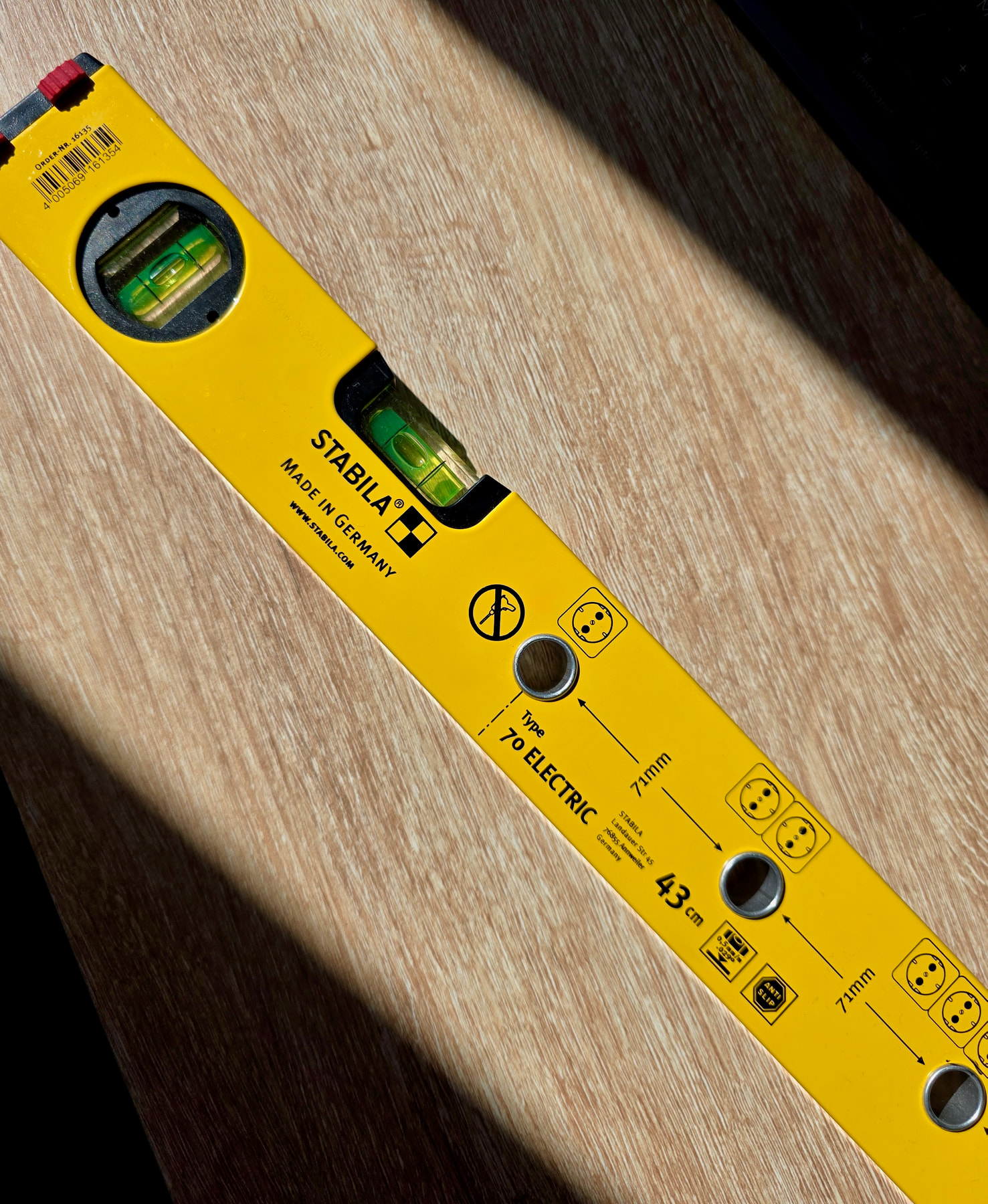
For these routine adjustments, a Stabila type 70 spirit level remains the fastest: no switching on and no battery.
For a UK consumer unit, I would check that the enclosure is level, but I focus mainly on the mounting, the conductor routing, the accessibility and the available spare capacity. My consumer unit guide shows that alignment is only a small part of the job.
Finally, an electronic level does not replace a laser when you need to project a reference over several metres or around a room. The level checks the surface it rests on, whereas a laser marks out a plane or a line at a distance.
| Need | Spirit level | Digital level | Line laser |
|---|---|---|---|
| Need Check level or plumb | Spirit level Very well suited | Digital level Suitable, but often overkill | Line laser Possible, with setup |
| Need Read a slope value | Spirit level Indirect reading | Digital level Very well suited | Line laser Depends on the model and how it is mounted |
| Need Transfer an angle | Spirit level Not very practical | Digital level Suitable | Line laser Possible with accessories, depending on the laser |
| Need Mark out over several metres | Spirit level Limited to its length | Digital level Limited to its length | Line laser Very well suited |
| Need Work on steel | Spirit level Magnetic version is useful | Digital level TECH 196 M DL is a good fit | Line laser Magnetic mount often required |
| Need Occasional home use | Spirit level Sensible choice | Digital level Hard to justify the cost | Line laser Useful for a larger renovation |
TECH 196 DL or TECH 196 M DL: which one should you choose?
The TECH 196 DL is the versatile version without magnets. I reach for it on wood, masonry, furniture, wall mounts, and any surface where magnets add nothing.
The TECH 196 M DL is designed for ferromagnetic surfaces. I find it a good fit for steel structures, some cable trays, metal frames, and technical equipment that has a suitable mounting surface.
I don’t pick the magnetic version simply because it seems more complete. It is more expensive, and the magnets can attract metal shavings, which means careful cleaning before every measurement.
Length matters at least as much as the version. I choose a level as close as possible in length to the item being checked, because a small model placed on a long support may not reveal a bow or a dip.
The TECH 196 DL range covers seven lengths, from 23 to 183 cm. The short 23 cm model is a special case: it is designed as a compact inclinometer and does not have the classic vials of the longer versions. I see it more as an angle-setting tool than as the main level on site.
Is the price justified?
STABILA does not publish a recommended retail price for the TECH 196 DL and the TECH 196 M DL: the price has to be requested from a trade supplier or by quote, depending on the length and the magnetic version.
At this price level, I don’t recommend buying it for two shelves a year. A robust, correctly sized Stabila spirit level costs less, works without batteries and already handles everyday checks.
For a tradesperson who regularly measures slopes, the calculation is different. If the display avoids conversions, speeds up repeated adjustments and lets you take a usable reading, the time saved can justify the difference.
I take the same approach for a professional multimeter. A more expensive tool makes sense when its functions are used often and genuinely reduce errors or extra handling.
Info
I don’t judge the price by the number of buttons. I compare it to the number of times a slope reading or the audible signal solves a real problem.
Limitations to know before buying
The contact surface remains a deciding factor
A grain of plaster, a burr, a bead of paint or a wood shaving under the base is enough to alter the reading. The stated accuracy assumes clean and stable contact.
So I clean the base and the surface before a precise measurement. On an uneven wall, I check several areas instead of trusting a single reading.
Length can mask or reveal defects
A short level can show a good reading over a small area while the whole surface is bowed. Conversely, a long level can rock on two high points and reveal a central dip.
I choose the length according to the room being checked. This simple rule often has more impact on the result than switching from a bubble vial to a screen.
Batteries create a dependency
The module runs on two AA batteries. The vials remain usable on models that have them, but the digital and audible functions stop working once the batteries are flat.
I keep spare batteries on hand and remove them during extended storage. I also check the condition of the battery compartment after exposure to moisture or heavy soiling.
The IP67 rating does not make the tool indestructible
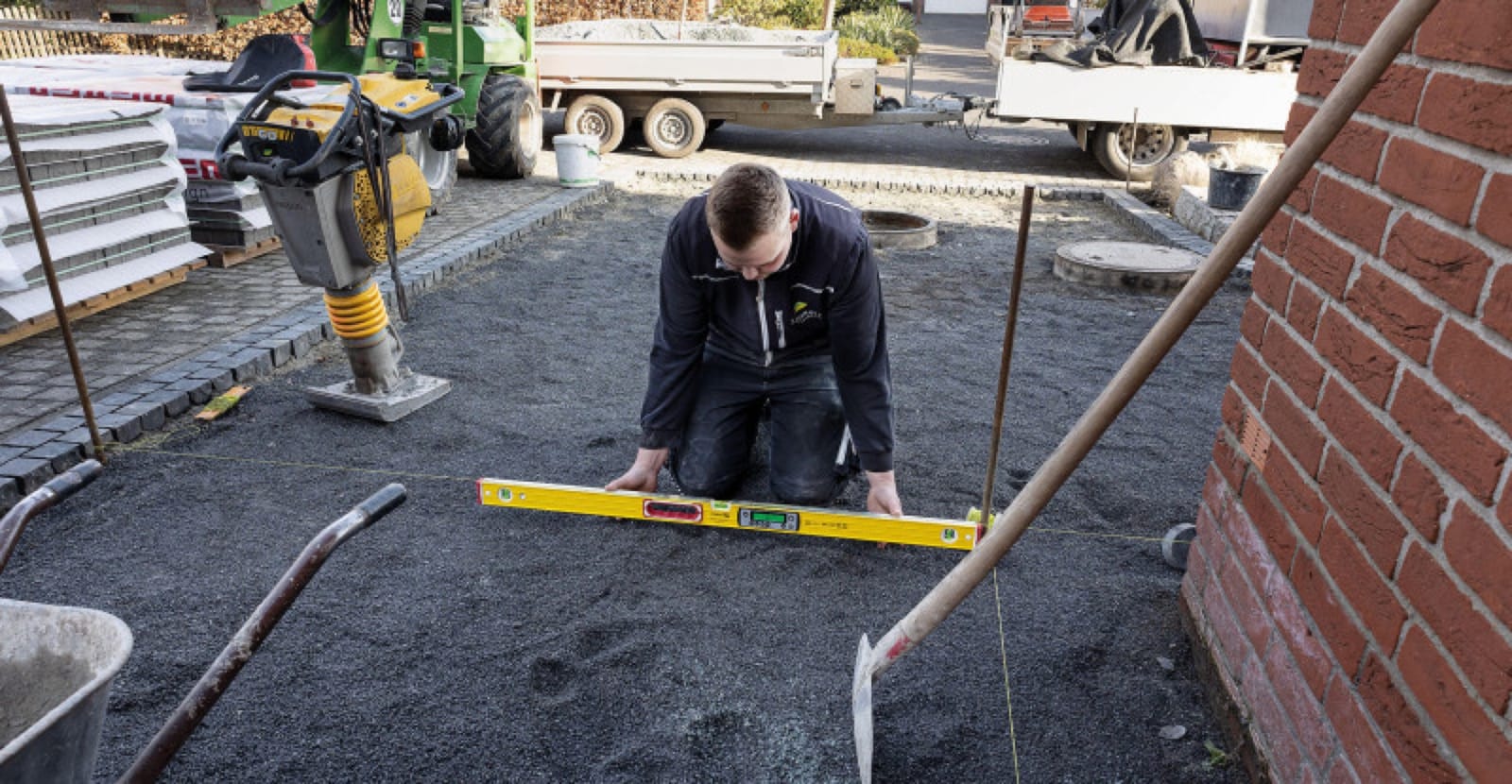
The stated rating covers protection against dust and water under defined conditions. It does not protect against a warped base, a violent impact on the screen or poor storage under load.
After a drop, the manufacturer states that the CAL-FREE system does not need daily calibration, even after significant temperature changes — the manual still sets out an accuracy check procedure. I check the tool whenever an impact makes me doubt the measurement.
Sound is no substitute for a safe workplace
Audio guidance can save you from turning your head, but it does not turn a badly placed stepladder into a safe workplace. Recommendations from Prévention BTP point out that working at height requires a work plan and suitable protective measures.
So I put access, the platform, and the tools ahead of the measurement. The INRS’s ergonomic principles point in the same direction: the tool must fit into a properly designed work situation, not compensate for a dangerous posture.
My method for getting a reliable measurement
-
I clean the base and the support. I remove dust, shavings, plaster, and burrs. I run my hand over the area to spot any bump that could tip the level.
-
I choose an appropriate length. I take a level close to the length of the part. For a long support, I add several checks to detect any bend.
-
I place the level without forcing it. I let the tool rest on its base. Pressure on just one side can change how it sits and produce an artificially stable reading.
-
I select the correct unit. I use the one specified on the plan or in the manual. I don’t confuse a slope percentage with an angle in degrees.
-
I turn the tool around to check. I take a second measurement after rotating 180 degrees on the same axis. An unusual discrepancy calls for another check and a look at the manual.
-
I check before final tightening. I check one last time after the temporary fixing, then after tightening. A screw can make the support pivot or bend slightly.
This method still applies with a conventional level. Electronics improve the readout, but reliability always comes from preparation, from repeating the check and from understanding the surface you are fixing to.
My daily routine, storage and transport
Before I switch the module on, I wipe the base and the frame with a dry cloth and look at the surface I am about to check. Dust, plaster and shavings can sit under the frame without being visible, and they are a common cause of a reading that does not match the job.
On site, I check the displayed unit before I take a value. In poor light, I shade the screen with my hand instead of tilting the level to read it, and I wait for the value to settle before writing it down.
When a reading drifts, I lift the tool, clean the contact points and start again. I never force the frame against a hollow or rough surface to make the value look right.
For transport, I lay the level flat and keep nothing heavy on top of it. In the van, I give it a fixed spot rather than letting it slide under the tool bag.
Between jobs, I store it on a shelf or in a drawer, with the base free of load. In a dusty workshop, I keep it away from grit so that the display and the buttons stay clean.
After a day on plaster or dust, I clean the base and the frame with a damp cloth and let the tool dry before putting it away. The habit takes little time and leaves the base ready for the next job.
Who do I recommend this level to?
I recommend it first and foremost to tradespeople who regularly install components to a set angle/fall: joiners, shopfitters, metalworkers, kitchen fitters, technical installers and building professionals. For an electrician, the benefit depends on the type of jobs undertaken.
In my trade, I mainly use it when the installation goes beyond simply fitting electrical accessories. Air-conditioning brackets / mounting brackets, metal structures, certain light fittings, technical enclosures and complex alignments can justify the digital readout.
I also recommend it to a homeowner taking on a major renovation and who can make use of the units shown. For occasional use, renting, borrowing or a conventional level remain more sensible.
I don’t recommend it to someone who is only looking for something more modern. As with the choice between Knipex and Wiha, the right question isn’t “which brand looks the most professional?”, but “which function will I actually use?”.
Conclusion: useful if slope is part of the job
The Stabila electronic level is not a gimmick, because it measures, converts and reproduces angles/slopes that a vial alone cannot quantify directly. Its stated ruggedness, its two displays and its audible guidance are suited to regular on-site use.
Nor is it essential for every job. To check the level of a socket, a cabinet or an electrical enclosure, a good spirit level is often still the simplest choice.
So my verdict is conditional: yes for repeated slopes, angles and adjustments; no for occasional DIY use limited to level and plumb. Before buying, I suggest listing three real tasks where the digital readout would save time.
If that list stays empty, the extra cost will be hard to justify.
Quiz: the useful reference points
3 questions
InteractiveQuiz: Stabila electronic level: useful or not in 2026?
3 concrete reference points cited in this guide
Choose an answer
Is an electronic Stabila level more accurate than a spirit level?
Not automatically. STABILA states ± 0.5 mm/m for the vials and ± 0.05° for the electronic module at 0° and 90°. The screen mainly provides a numerical value and guidance functions.
Is the TECH 196 DL useful for an electrician?
Yes, when I need to set a fall, a bracket or a repeat run. For aligning a few outlets or a small panel, a standard level is generally sufficient. Just as with everyday power tools, the price is only justified by frequent use.
What is the difference between the TECH 196 DL and the TECH 196 M DL?
The TECH 196 M DL has magnets intended for ferromagnetic surfaces. The standard version is better suited when I mainly work on wood, masonry or furniture.
Can the electronic level replace a line laser?
No. The level checks the surface it rests on, while a laser projects a reference at a distance across several metres or several walls. The two tools serve different needs.
Does the TECH 196 DL need to be calibrated after a drop?
The manufacturer states that no daily calibration is necessary, even after a drop or a change in temperature. Even so, I carry out an accuracy check whenever an impact leaves me in any doubt.
Is the price justified for a DIYer?
It’s mainly justified when a renovation involves repeated slopes and angles. For occasional horizontal or vertical checks, a sturdy spirit level offers better value for money.
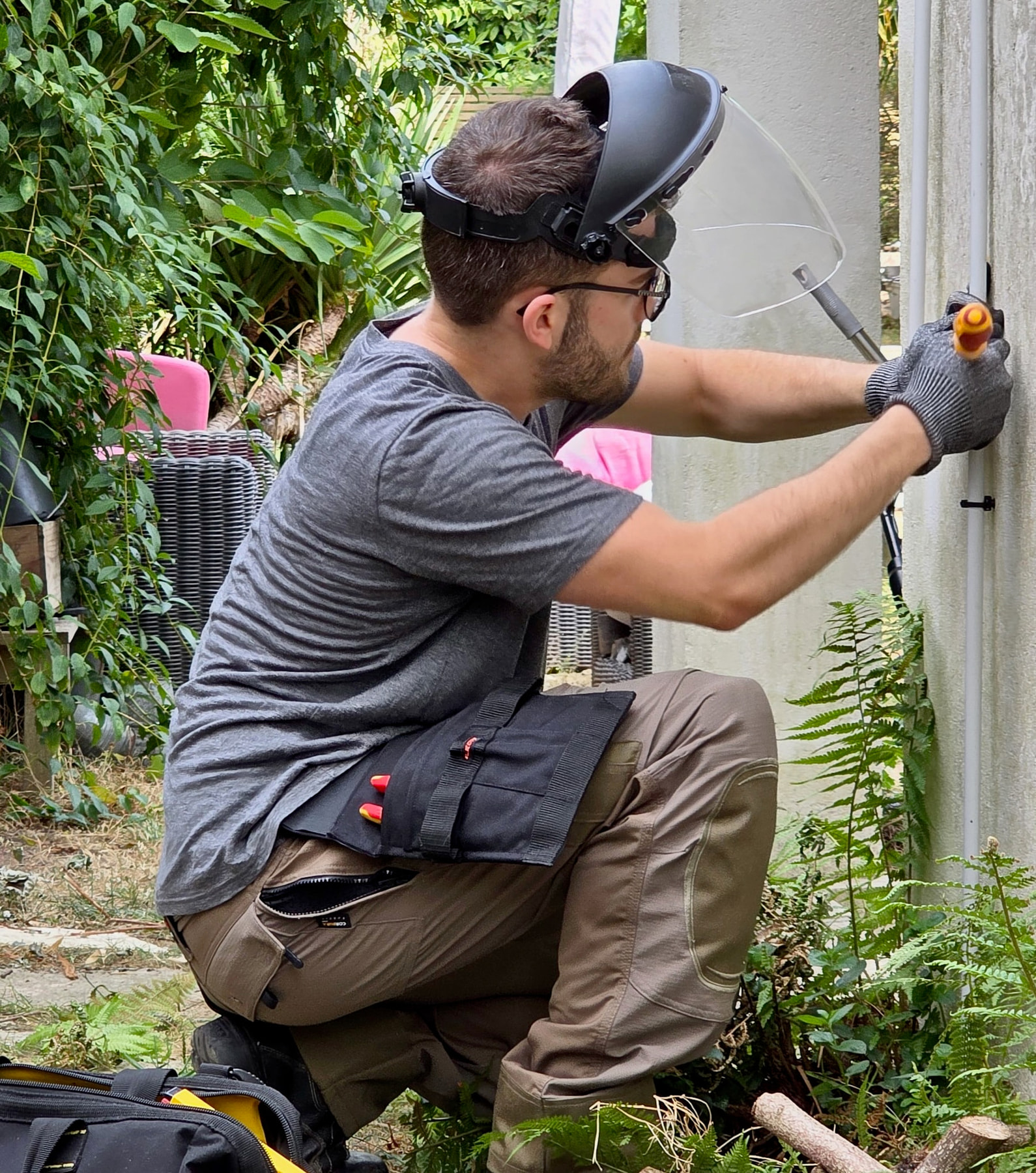
Théo Desrousseaux
Electrician and editor
I work in the field and edit this magazine. Every guide is reviewed for its target country before publication.
Author → Credentials → Editorial method → Report a factual correction →
No email app? Copy the correction details
Email address and prefilled context:
theo@sparx-elec.fr
Article: https://www.sparx-elec.com/gb/stabila-electronic-level-worth-it/
Edition: GB — English
Factual issue: [describe the factual issue]
Passage: [quote or identify the passage]
Source: [optional source URL]
Sources and references
- 1. STABILA — TECH 196 DL digital spirit level
- 2. STABILA — Operating instructions TECH 196 DL and TECH 196 M DL
- 3. STABILA — Electronic spirit levels TECH 196 DL and TECH 196 M DL
- 4. STABILA — Type 70 Electric spirit level
- 5. INRS — Design and layout of workstations
- 6. Prévention BTP — Working at height: protective measures to implement
- 7. Guedo Outillage (France) — TECH 196 DL retailer listing
- 8. Topographie Laser (FR) — Electronic levels
More guides
Practical electrical installation guides, diagnostic methods and tool recommendations compared against the technical wiring standards of this national edition.
Laser levels: Bosch, STABILA or Leica
Line laser levels compared: Bosch, STABILA and Leica head to head. Green or red lines, real range, accuracy and how to choose the right one as an electrician.
Read the guide Guide Klauke EK 50 ML: characteristics and limitations Klauke EK 50 ML: verified specifications, compatible dies, the contents of the case and the limits for wiring and crimping before buying. Read the guide
 Guide STABILA, Stanley or Bosch: choosing a spirit level Comparison based on my visit to the STABILA factory, Stanley spec sheets and an electrician's use: vial mounting, accuracy, length and laser. Read the guide
 Guide STABILA: the history of the brand STABILA, a German manufacturer founded in 1889: the 1886 joint patent, the Meterfabrik in Annweiler, lasers and the brand's standing in France. Read the guide