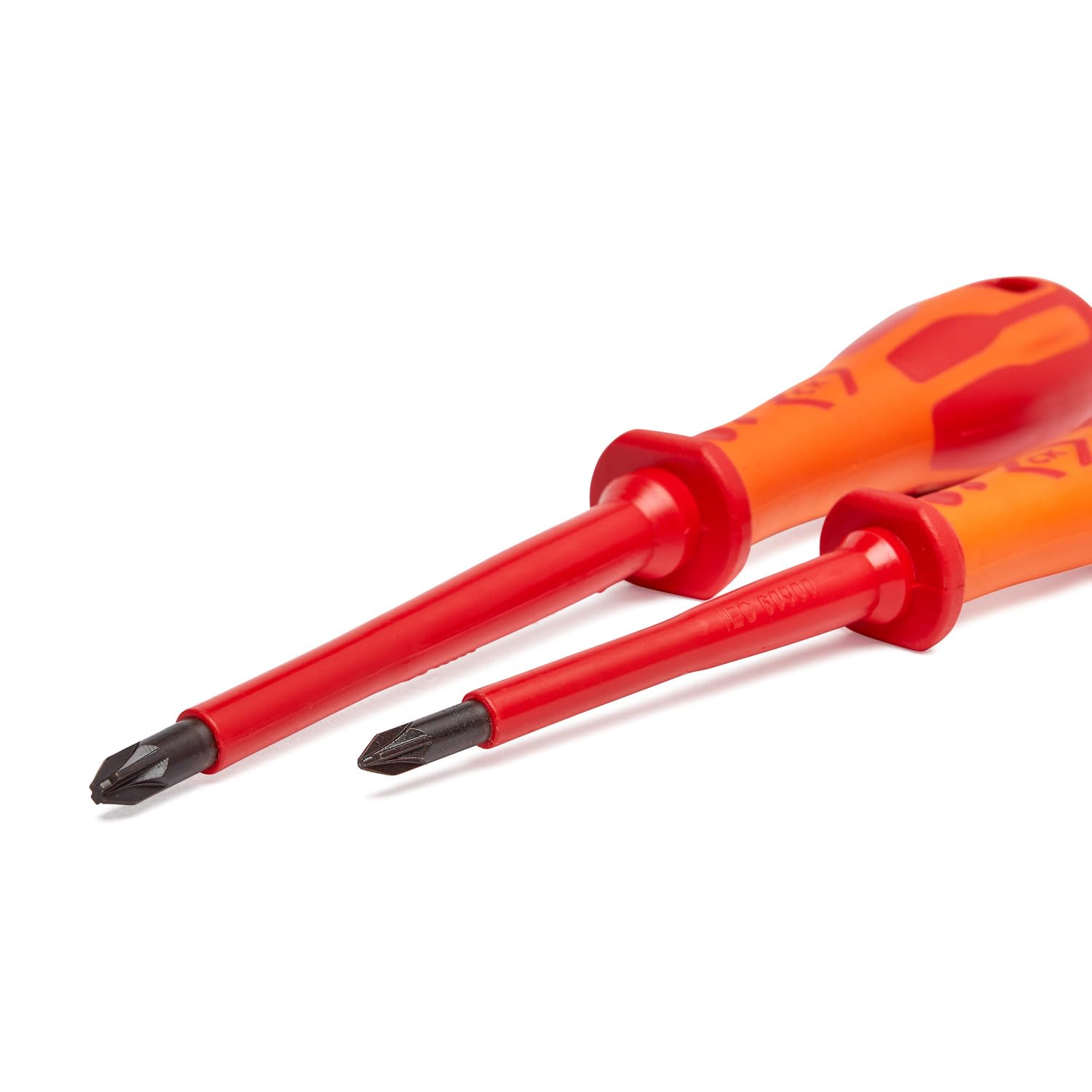
Dextro VDE Slim screwdriver
This slim profile determines access to the screws at the bottom of a terminal block well.
Source : m.media-amazon.comPublished 5 September 2026
In brief
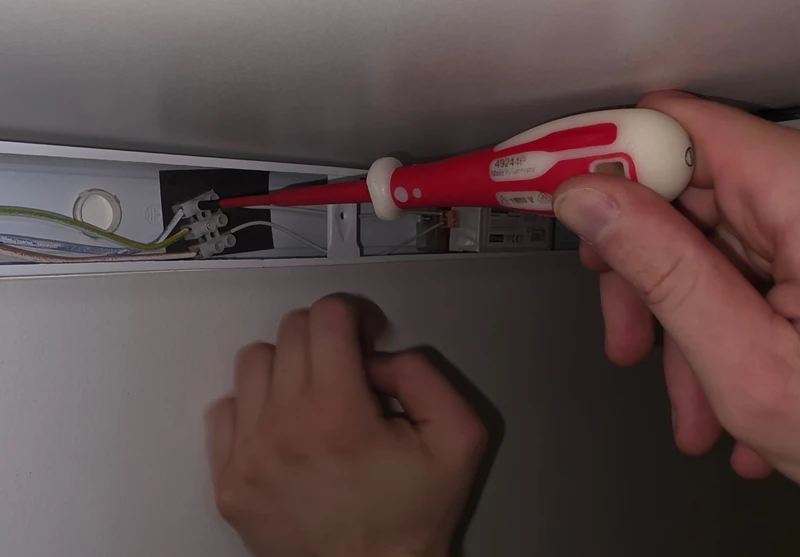
The Dextro VDE Slim screwdrivers from C.K Tools are insulated screwdrivers with a slim shaft: the insulation follows the diameter of the blade, without the shoulder that catches on the sides of a terminal block.
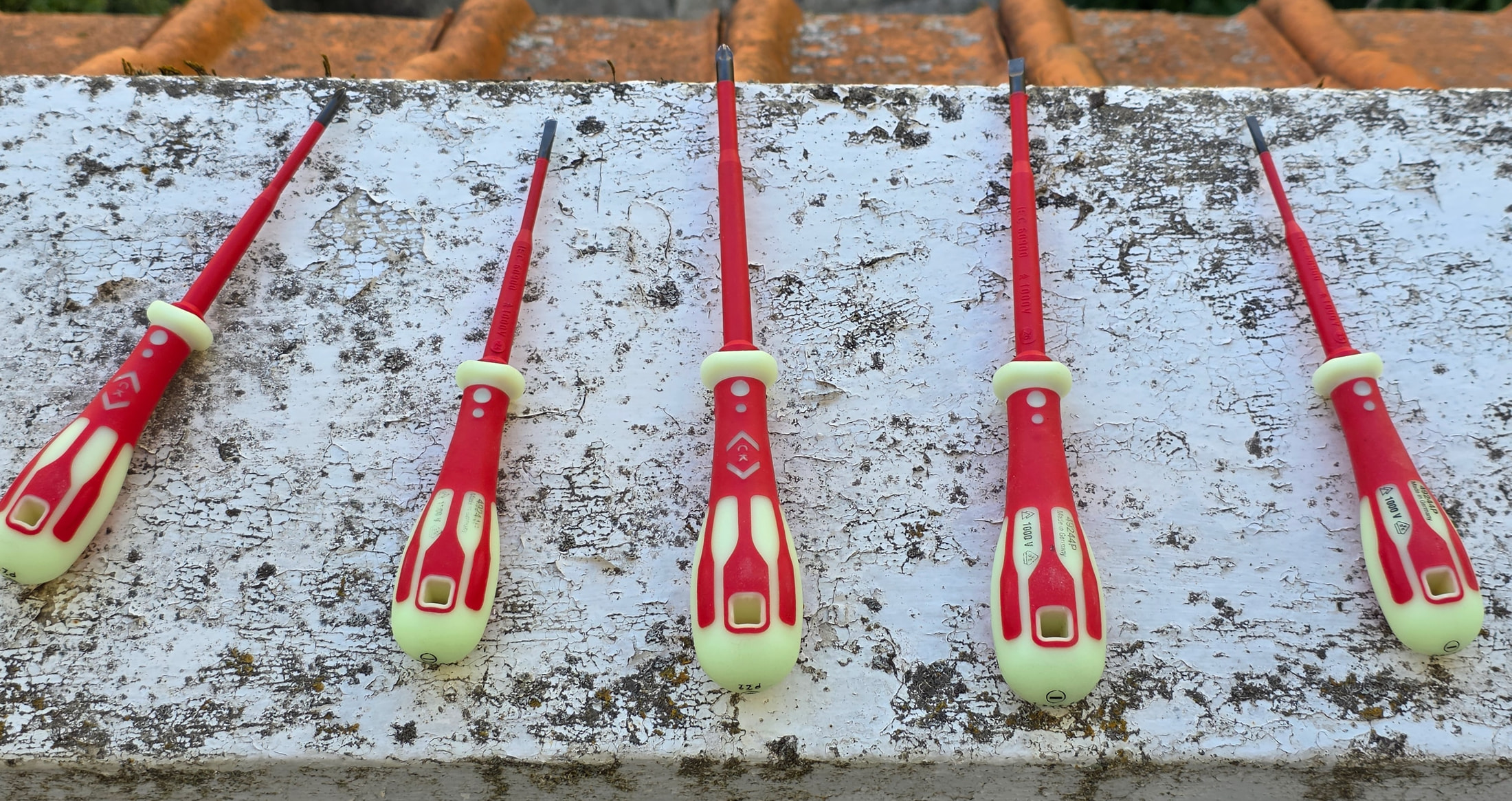
After several weeks of site work with the Slim Glo T49283PD set, the verdict fits in one sentence: blade thinness and tip grip deliver, and the Glow effect needs sunlight.
What I detail here: what these blades are worth at the bottom of a terminal block, what the Glow finishes and the Modulo profiles cover, and what the magnetic ring mounted on a thin shaft delivers.
10 000 V
individual test stated by the manufacturer on every screwdriver
1 000 V
declared live use, VDE approval
5
screwdrivers in the Slim Glo T49283PD set
0,6-1,0 mm
tip thickness of the flat slots, from 3,5 to 5,5 mm
An insulated screwdriver is rarely judged from a catalogue. It fits or it doesn’t at the bottom of a circuit breaker terminal block already tightened down hard by the previous installer.
On a classic insulated screwdriver, the handle and the sleeve form a shoulder wider than the blade. In the recess of a modular circuit breaker or contactor, it is the shoulder that stops it short before the tip reaches the screw.
In a modular device, the recess around the screw is narrow. Every tenth of a millimetre of shoulder costs access, and it is the tip that has to get through.
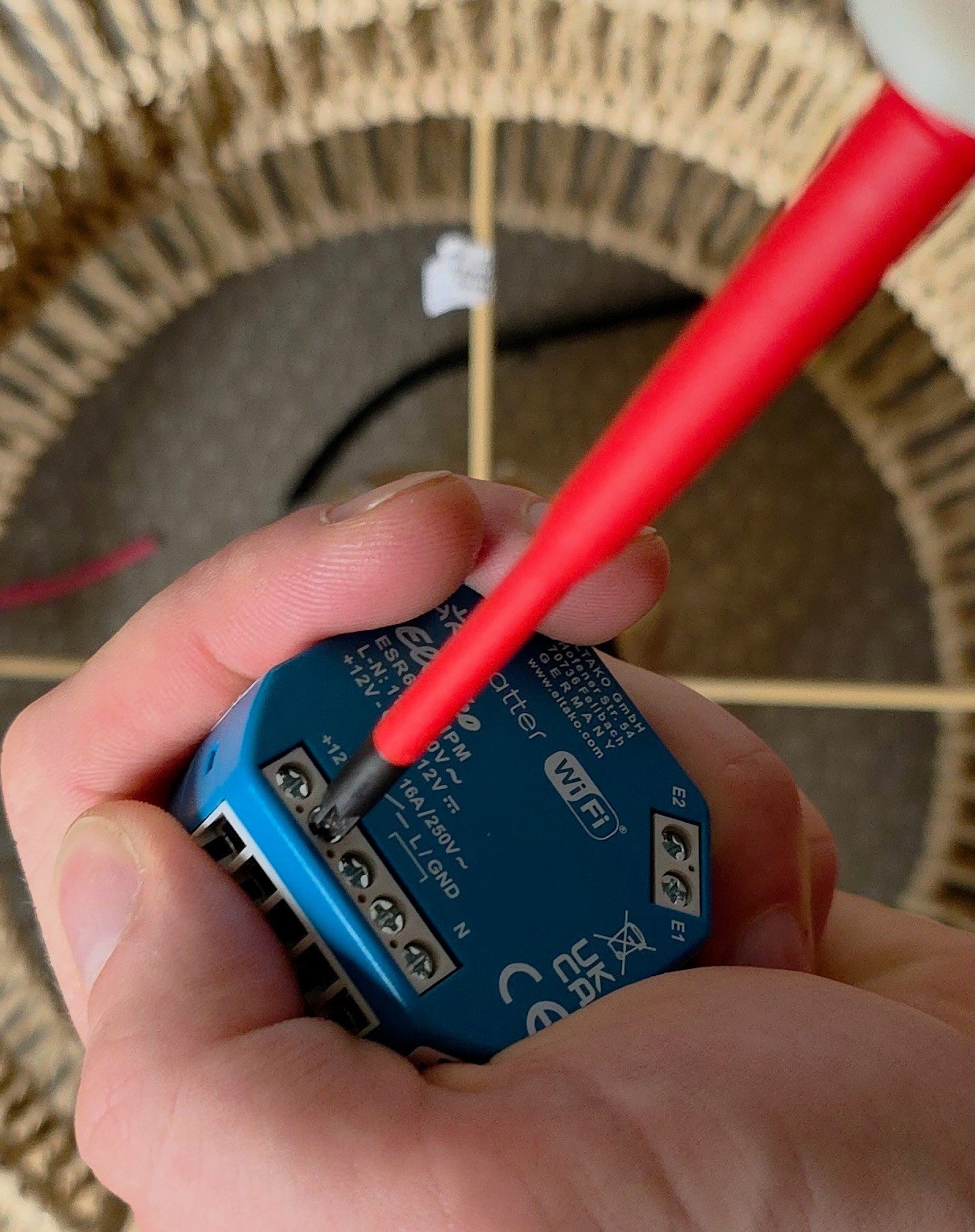
The Dextro VDE Slim series fixes this. The manufacturer’s data sheet states insulated “slim shafted” blades, whose sleeve follows the diameter of the shaft to reach recessed screws.
On thin shafts, the ring fits without force, including on the set’s PZ2 profiles and wide slots. Two practical points: it is removed before storage, and it does not replace checking the tip.
Dextro VDE Slim screwdriver
This slim profile determines access to the screws at the bottom of a terminal block well.
Source : m.media-amazon.comSame page, same manufacturer claims: chrome-vanadium steel, a two-component handle designed for electricians, an individual test claimed at 10 000 V for a stated use below 1 000 V.
The framework for these tools remains that of insulated hand tools: I detail the requirements in the guide on insulated 1 000 V tools.
| Dextro set | Tip profiles | What the spec sheet states |
|---|---|---|
| Dextro set T49283PD — Slim Glo set/5 | Tip profiles Slotted 3,5 / 4,0 / 5,5 mm and PZ1, PZ2 | What the spec sheet states Photoluminescent handles, insulated slim shank, individual test stated at 10 000 V for use below 1 000 V |
| Dextro set T49283D — Slim set/5 | Tip profiles Same five tip profiles | What the spec sheet states Insulated slim blades, chrome-vanadium steel, two-component handle, manufacture stated in Germany |
| Dextro set T49245 and derivatives — Modulo slim | Tip profiles MOD1.5, MOD1, MOD2 in slotted-Pozidriv | What the spec sheet states Combined tip, insulated slim shank, VDE approval stated |
The Dextro VDE Slim and Modulo slim ranges according to the manufacturer’s spec sheets
The set under test, the T49283PD, is the Glo version of the set/5: three slotted and two Pozidriv, the tip profiles for everyday panel troubleshooting.
The datasheet for the standard set T49283D lists the same tips and the same blades: the difference between the two sets comes down to the handle finish.
Sold individually, the range lists precise dimensions. It is the reference to order when a single screwdriver is missing from the tool bag.
| Reference | Tip | Blade | Handle |
|---|---|---|---|
| Reference T49243-1 | Tip PZ1 | Blade 100 mm | Handle 95 mm |
| Reference T49243-2 | Tip PZ2 | Blade 125 mm | Handle 107 mm |
| Reference T49244-035 | Tip Slotted 3,5 mm, 0,6 mm tip | Blade 100 mm | Handle 95 mm |
| Reference T49244-040 | Tip Slotted 4,0 mm, 0,8 mm tip | Blade 100 mm | Handle 95 mm |
| Reference T49244-055 | Tip Slotted 5,5 mm, 1,0 mm tip | Blade 125 mm | Handle 107 mm |
The five Dextro VDE Slim sizes sold individually, dimensions as published by the manufacturer
These dimensions are worth reading before buying: a 3,5 mm with a 0,6 mm thickness does not fit the same screws as a 5,5 mm with a 1,0 mm one.
Length follows the same principle: the 100 mm for control terminals and micromodules, the 125 mm when the screw is seated deeper, in a duct or a power terminal block.
In the hand, the dual-material handle settles into place: the rounded rear cap takes the hollow of the palm for pushing along the axis, the three-lobed body guides the fingertips on fine screwdriving.
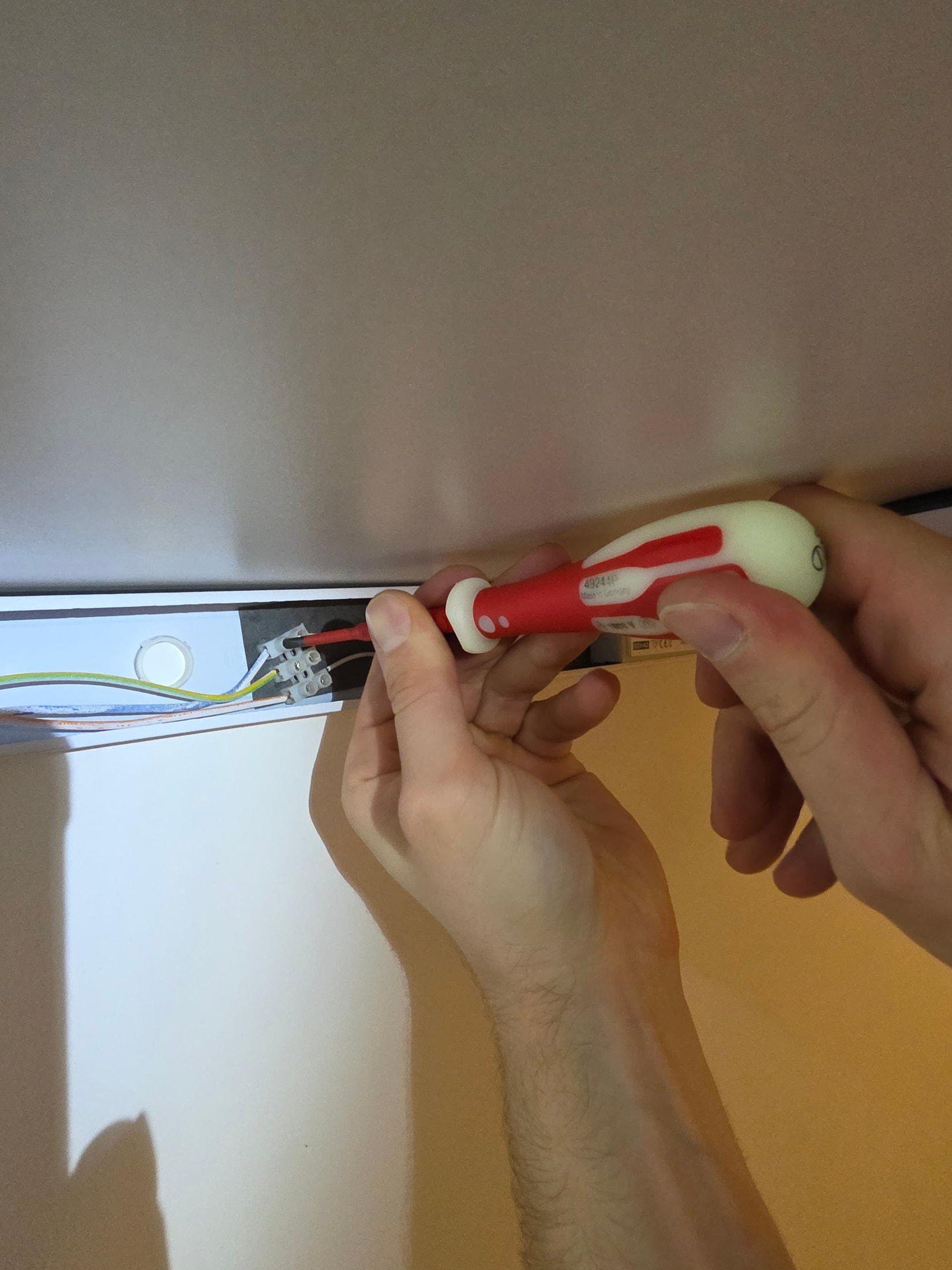
The datasheet for the Glo version states a handle molded directly onto the blade, a long slim neck, ridges under the head and the tip type marked on the handle. These details are confirmed on first handling.
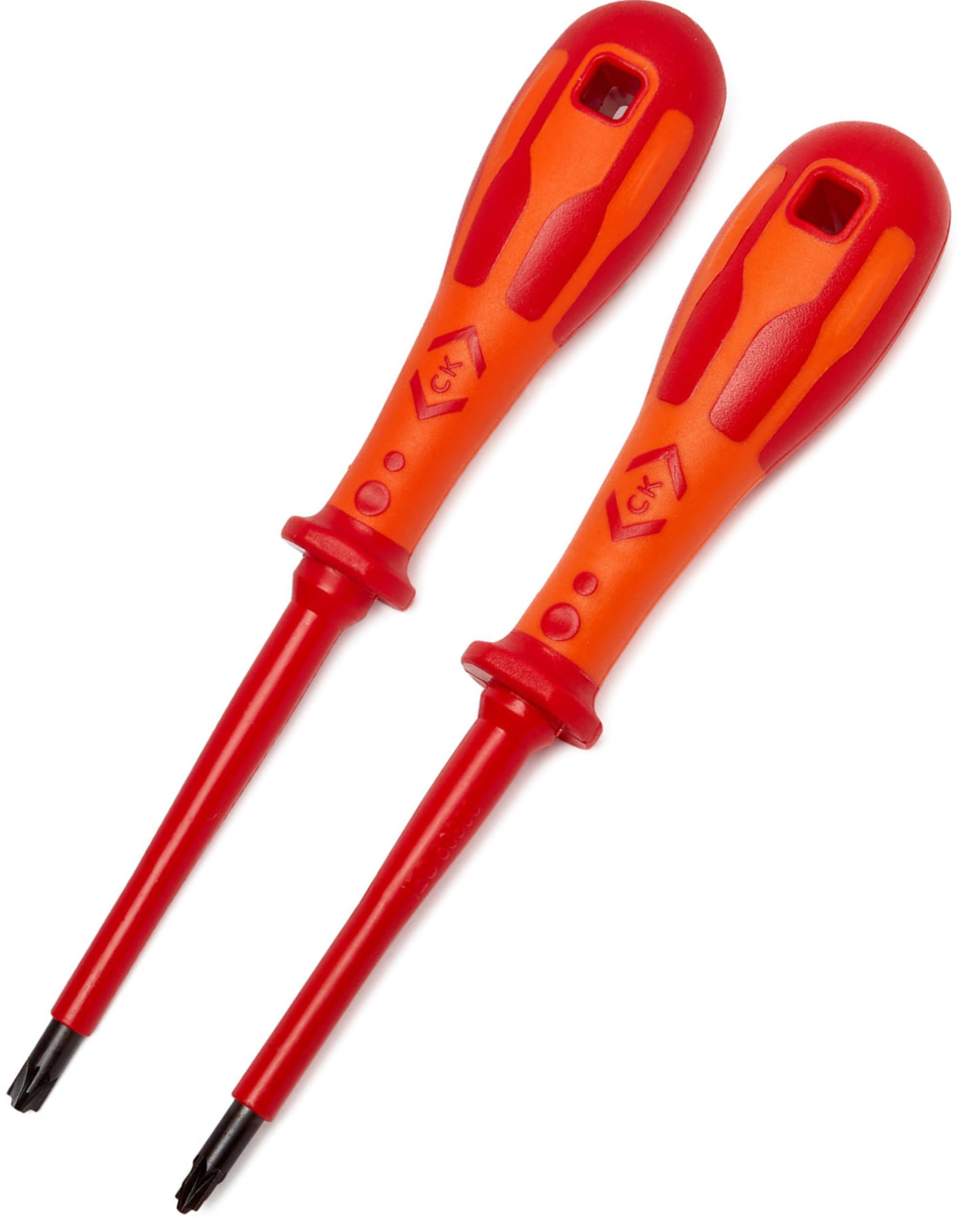
C.K Tools handles
The tip marking stays legible on the handle when the tool is pulled out of the pouch.
Source: m.media-amazon.comTightening torque, on a terminal block, is felt in the movement: the tool must transmit the force without the blade rubbing against the walls of the recess. A blade that slips means lost force and a marked screw.
Mechanical strength only shows under load. On my call-outs, the steel advertised as chrome-vanadium has not budged: the tip does not chip and the edges stay sharp.
Even at high torque on an oxidized terminal block or a seized thread, the metal does not twist. That is what prevents damage to the screw heads on new equipment.
Retour de chantier
On a terminal block tightened to the max by the previous technician, it is the tip that decides: it engages, or it slips and marks the head. With these blades, the screws on new devices come out intact.
The screwdriver’s balance also plays a role in fine screwing: a blade that is too heavy at the handle end tires the precision movement, especially on micromodules.
The Makita Mag Boost magnetic ring (E-03442) is not a C.K Tools product: it is a magnetic ring designed for impact driver bits, one I have been carrying around for months.
The thin shaft of the Dextro drivers suits it well. The ring slides along the insulated sheath until close to the tip, and the screw stays held against the end of the blade.
Beneath a consumer unit, the benefit is immediate: a screw that slips behind a metal DIN rail ends up out of reach, and fishing it out near exposed parts is no fun at all.
The Makita datasheet describes the accessory for 1/4 inch hex-shank bits; compatibility with a round screwdriver shaft is checked at fitting, with the ring slid onto the sheath.
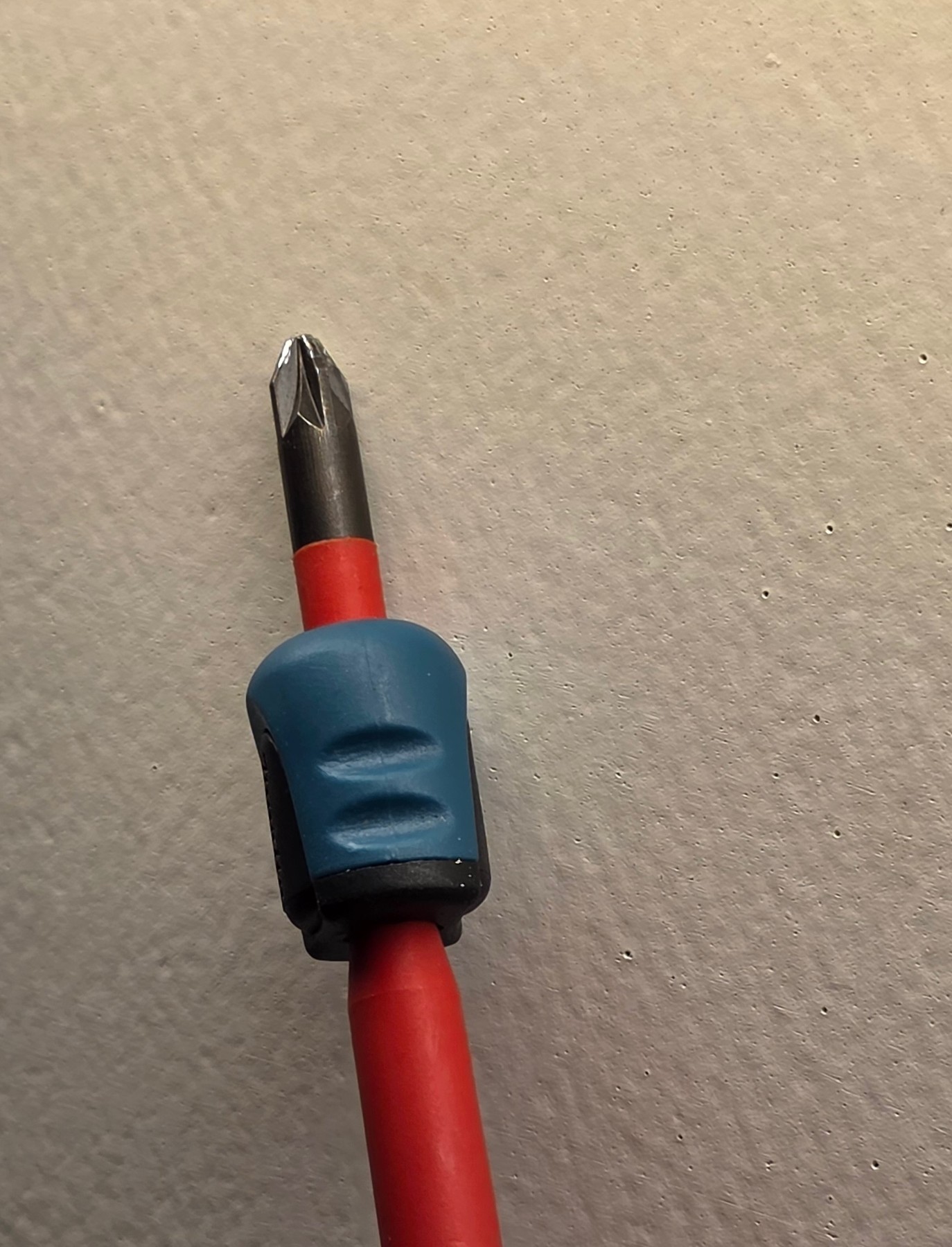
Slim blade and magnetic ring
The thin insulation lets a Makita Mag Boost magnetic ring slide on without binding.
Expose the insulated shaft
The ring goes on a clean sheath, with no foreign matter under the ring.
Slide the ring close to the tip
The magnet acts as close as possible to the profile, a few millimeters from the end.
Present the screw and check
The screw must hold at the end of the blade, even head down, before engaging the thread.
The Glow finish adds photoluminescent inserts to the sides of the handle. The manufacturer advertises them as a way to find the tool you set down in a dark room or up inside a false ceiling.
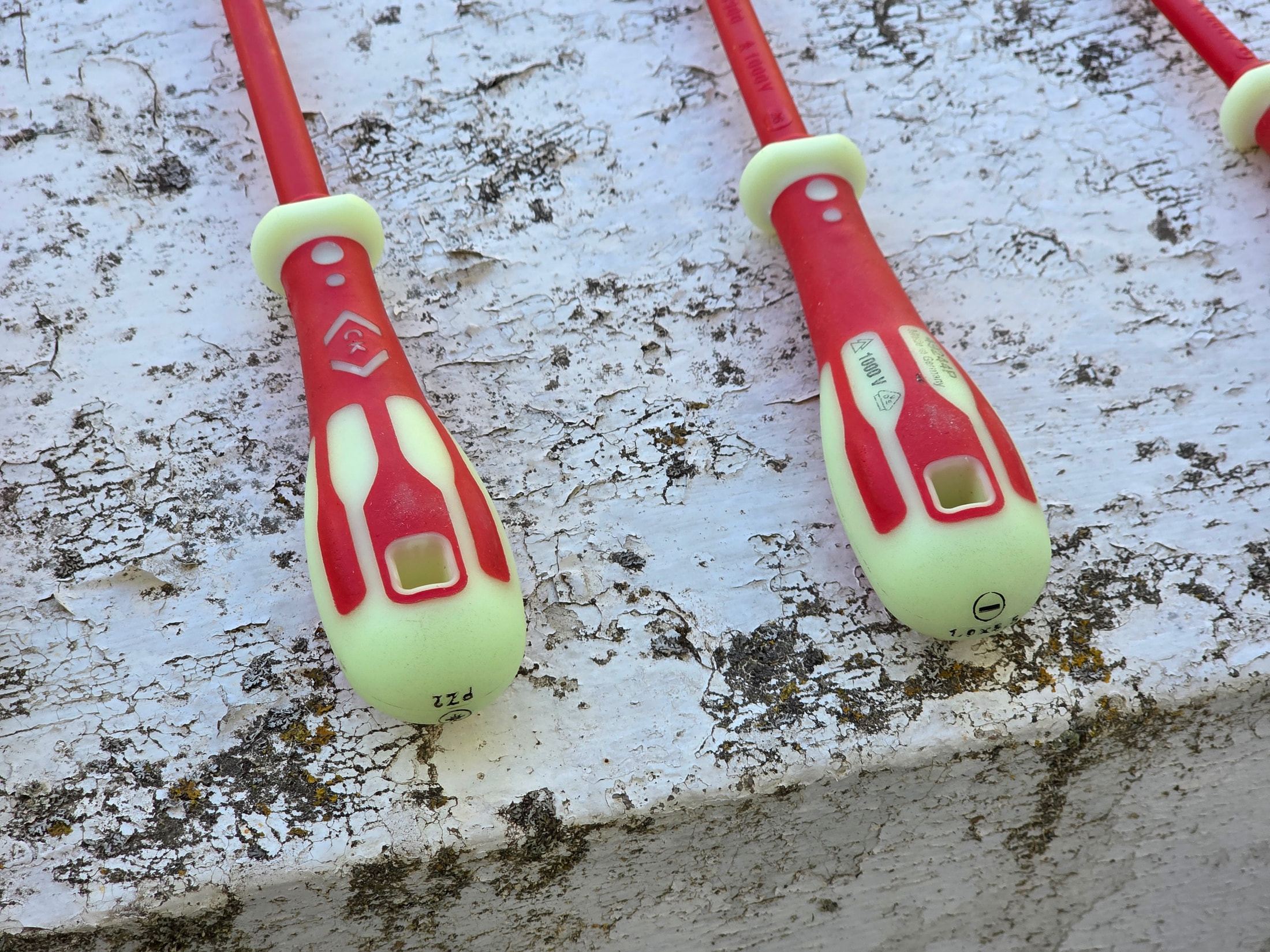
Phosphorescent handles and engravings
It is this marking that lets you identify the drive and the insulation class of a screwdriver in a pouch.
Photoluminescence works by accumulation: the pigment stores the light it receives, then slowly re-emits it when darkness returns.
Out of the box, exposed to light, the handle gives off a greenish glow clearly visible in the dark. The glow lasts a few tens of minutes before going out.
In real use, the finding is more nuanced. After a few days spent at the bottom of a tool pouch or in the van, the glow fades noticeably.
Nothing abnormal about that: the component only gives back what it received. Keep the handles a few hours in the sun, and the luminescence comes back strong.
On a job site, the luminous handle is mostly useful when the tool falls deep in a dark room: under a ceiling, in an enclosure or in an unlit pocket.
This finding affects neither the advertised 1 000 V insulation nor the mechanical strength of the blade. It only decides the choice between the Glo version and the standard set.
It is for the blade geometry, the light weight and the torque resistance that these screwdrivers hold their place in the tool bag. Photoluminescence is a bonus, not a safety argument.
Not all device screws are clear-cut: some heads accept both a flat and a Pozidriv. The Modulo slim range answers this case with a combined SL-PZ tip.
The manufacturer’s data sheet lists three sizes: MOD1.5 (reference T49245, 100 mm blade), MOD1 (T49245-1, 100 mm) and MOD2 (T49245-2, 125 mm).
Advertised diameters: 5,0 mm for the MOD1.5 and MOD1, 6,0 mm for the MOD2. The rest of the claims is identical to the Slim blades: thin insulated shaft and VDE approval.
For a new consumer unit or a device with mixed screws, two Modulo complete the set without duplication: the MOD2 takes the widest terminals, the MOD1.5 the small clamping points.
The choice of a combined tip comes down to the screw head: a plain Pozidriv screw does not need Modulo, a mixed screw benefits from it.
The brand’s history and ranges are told in the C.K Tools review; here, I stick to the screwdrivers.
The choice comes down to three questions: the tips you encounter, the space available at the bottom of the wells, and your tolerance for the Glow ritual.
| Choice | What it brings | What to know before buying |
|---|---|---|
| Choice Slim set/5 (T49283D) | What it brings The five tips for everyday fault-finding, thin insulated blades | What to know before buying The version without photoluminescence: same blade geometry |
| Choice Slim Glo set/5 (T49283PD) | What it brings The same blades, with photoluminescent handles | What to know before buying The glow recharges after a few hours of light |
| Choice Modulo slim (T49245 and derivatives) | What it brings The combined flat-Pozidriv tip | What to know before buying Completes a set: two sizes are usually enough |
Three ways to kit out a tool bag with the Dextro range
A set of five covers the recurring sizes: 3,5 and 4,0 mm for control terminals, 5,5 mm for power terminals, PZ1 and PZ2 for cross-head screws.
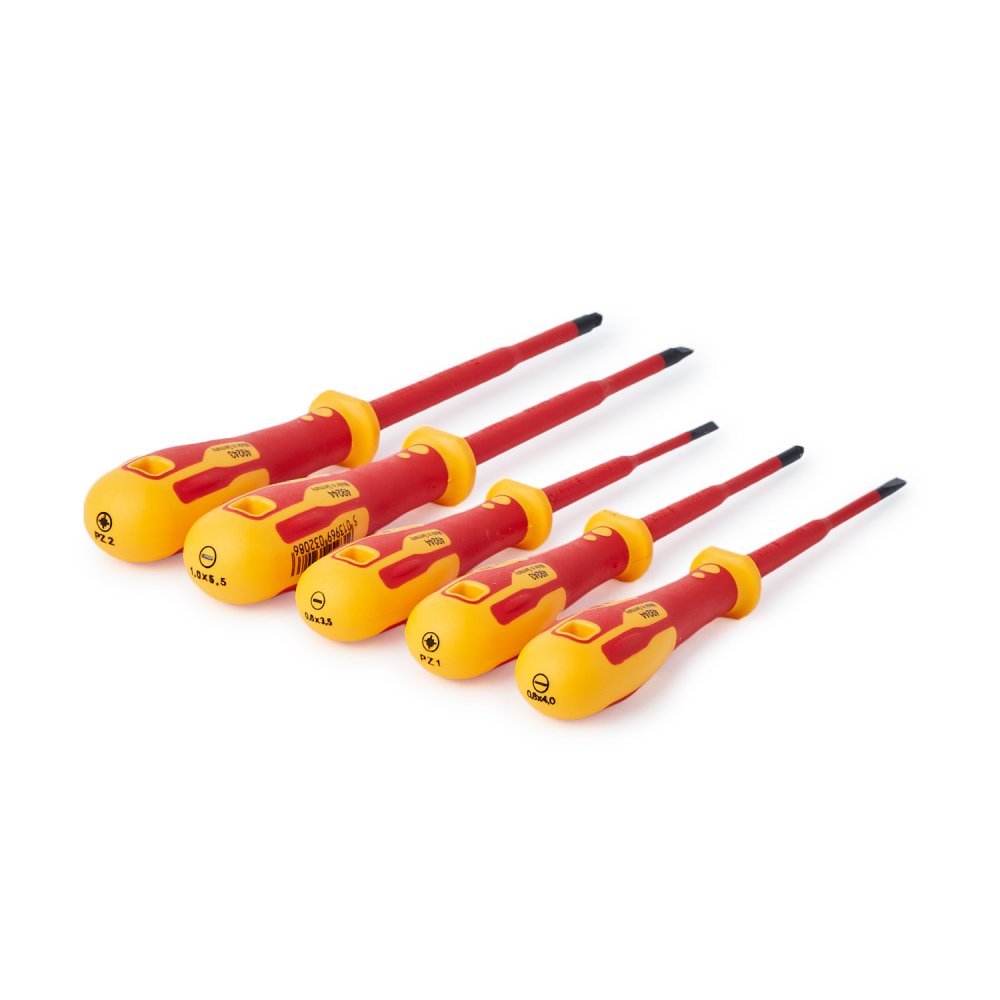
Between the standard version and the Glo version, the geometry and the steel are the same. The extra cost of the photoluminescent finish is assessed in use, not on the spec sheet.
The Glo set is aimed at those who often work in dark areas; the rest of the time, the standard version does the same job.
On price, the manufacturer does not publish a recommended retail price for these items: the price has to be requested from the trade.
A set of screwdrivers does not make a kit: the comparison of VDE 1 000 V tool kits shows what really completes an electrician’s tool bag.
For a first kit, the guide on a beginner electrician’s equipment prioritizes the purchases that matter.
Policies on tool warranty vary from one manufacturer to another: it is worth checking before purchase, not at replacement time.
An insulated screwdriver is only put away after a check: a marked tip or a nicked sheath is not made up for by a better grip.
Attention
An insulated tool is still a safety tool: at the slightest doubt about the sheath or the handle, it leaves the pouch and is no longer used in electrical environments.
Inspect the tip
A sharp tip, well machined, that engages in the slot without play. A blunt edge slips and marks the screw.
Check the insulation
Sheath continuous along the whole blade, with no nicks or swelling. A doubtful sheath sets the tool aside, even if the tip looks good.
Wipe and store with the blade protected
A clean cloth and storage that does not let the tips rub against each other: the edges last longer.
Expose the Glo handles
A few hours of daylight are enough to recharge the luminescence, useful when the tool falls to the bottom of a dark ceiling.
These steps take one minute and decide the service life of the blade.
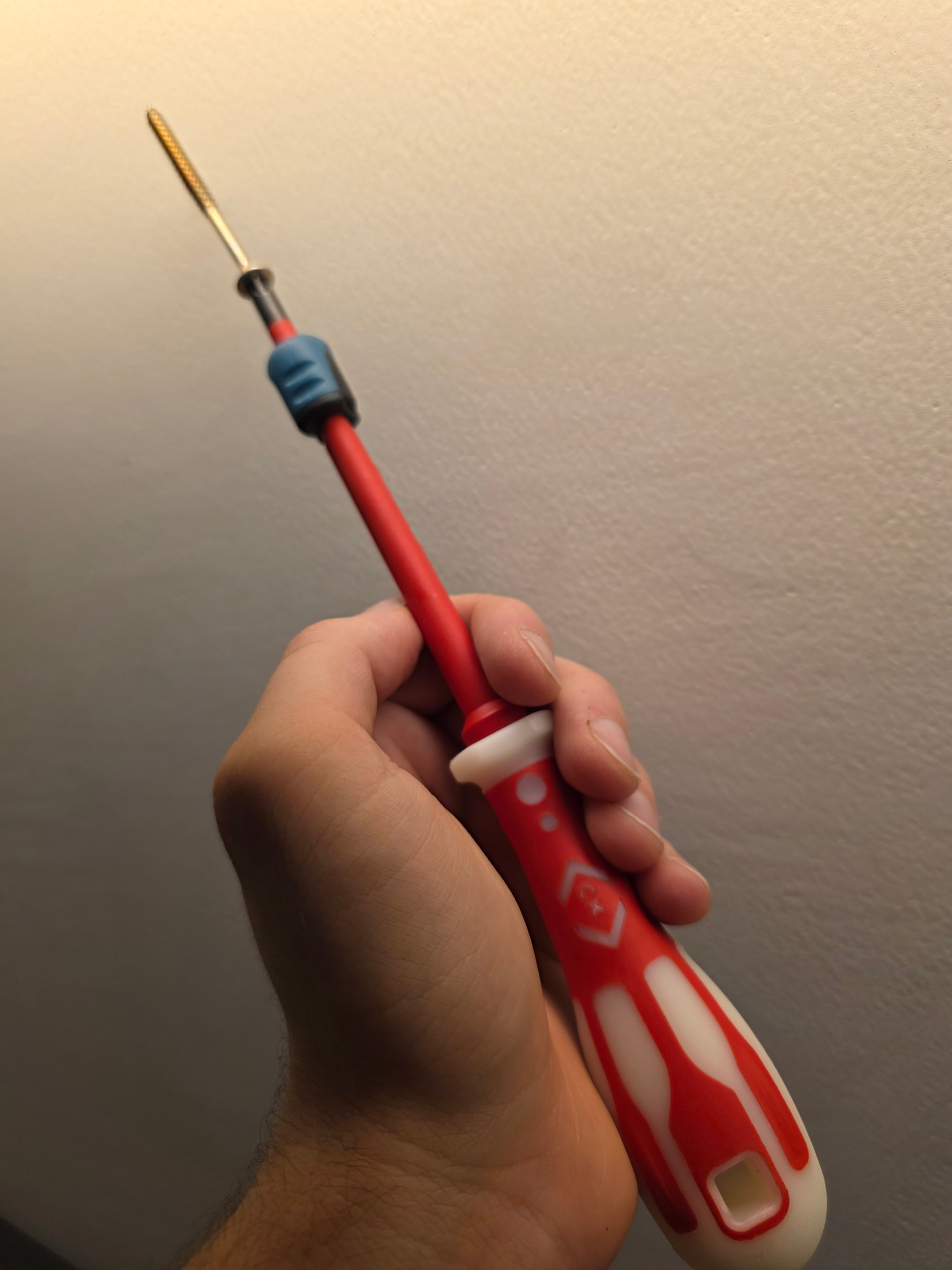
Dextro VDE screwdriver in hand
A blunt edge or a nicked sheath: the two defects that take the tool out of the pouch.
Sparx ElecWhen buying, vigilance also concerns provenance: the markers for recognizing a counterfeit tool hold true for an insulated screwdriver, where a fake sheath protects against nothing.
The tool is only one part of the setup: insulated gloves and preparing the job remain separate.
A terminal block tightened by someone else is reopened in a precise order. I start by reading the screw’s drive, and I only take out the blade afterwards.
I free the rusted screw with one firm motion, no jerking. It is slipping that mars a head, not the force used to loosen it.
I tighten while keeping the blade on axis, handle braced in my palm. Force is only useful on axis; at an angle, it damages the screw.
My rule comes down to one sentence: the thinnest blade that fills the slot. A blade that is too wide jams in the recess, a blade that is too thin spins in the head.
When a head is already marked, I switch drives instead of forcing it. Forcing a damaged screw does not fix anything.
On micromodules, I hold the handle short, with my fingertips, to keep contact between the tip and the screw.
My order of operations:
When the magnetic ring is on the shaft, I bring the screw to the tip of the blade before engaging it. The thread starts straight, and the screw does not fall between the modules.
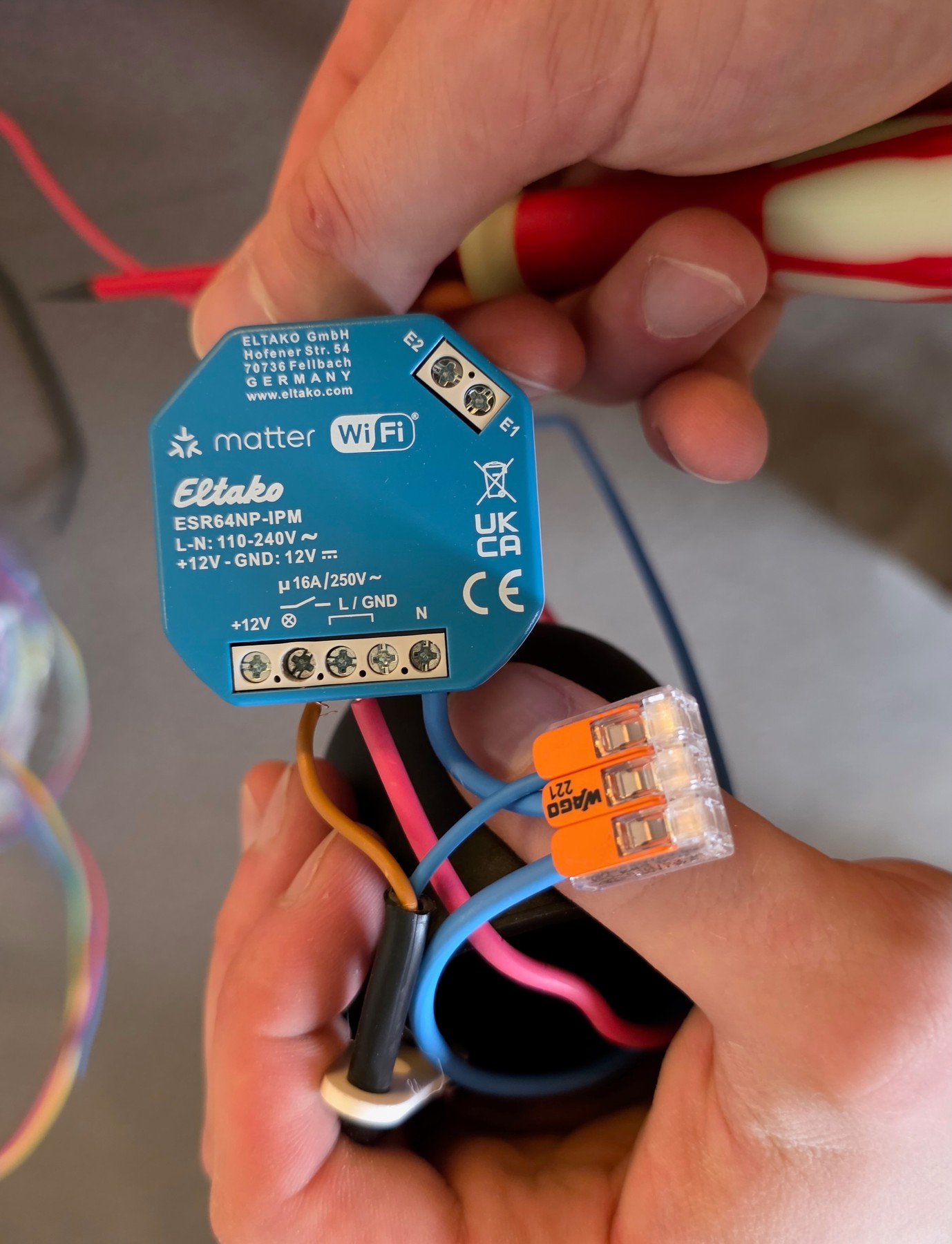
Forcing never makes up for an approximate size. If the blade floats in the recess, no amount of pushing will make it right.
Length matters as much as width: the short blade for control terminals and micromodules, the long blade when the screw is driven deep in cable trunking.
An oversized blade costs you in narrow wells: it jams between the walls, makes the tip slip and marks the plastic around the screw.
On a Pozidriv head, I do not make do with a flat blade. The lobes get marked, and the screw can no longer be tightened cleanly.
On a combination head, the Modulo screwdriver settles the question: the combined recess drives the screw with a flat blade as well as with a Pozidriv.
The set covers the recesses for everyday repairs, not every screw on a wiring accessory. The Modulo complements the set, it does not replace it.
Before ordering an individual reference, I note the missing recess in the pouch. A single blade can be replaced without buying another set.
I keep a sharp blade for new equipment, where a marked head shows immediately. Old repair screws handle an already broken-in blade better.
I clean the blades at the end of the job with a clean cloth. Dust and plaster stick to the insulation and end up hiding a nick.
Storage matters more than cleaning: tips protected, shafts that do not rub against each other. A dulled edge slips on the very first screw.
I refuse to use a screwdriver as a lever or as a punch. A bent shaft does not straighten out: the tool leaves the pouch and stays in the workshop.
After a drop on the tiles, I check the tip before putting it away. A questionable tip is no longer used in an electrical setting, even if the insulation looks intact.
The magnetic ring is removed before storage, wiped, away from the tips. I store it with the bits, not with the screwdrivers.
Before every return to the pouch: sharp tip, continuous insulation, uncracked handle. This ritual decides whether the tool comes back out the next day.
An insulated screwdriver is not judged by its age: nicked insulation or a cracked handle sets it aside, whatever the rest.
A frequent mistake on an oxidized terminal block does not come from the tool: it comes from the chosen fit. An approximate fit marks the head before the torque even rises.
Pushing on a screw that resists is the other classic mistake. When the tip has slipped once, the mark is there, and the next attempt will slip in the same place.
I stop at firm contact when I tighten. Beyond that, I mark the metal without holding the terminal any better and I wear out the threads for nothing.
Relying on the Glow as a lamp would be a mistake: the luminescence helps to find the tool again, not to light up the screw. In the dark, I keep my lamp.
Trusting questionable insulation on the pretext that the tip is good remains the mistake to avoid. It is the insulation that does the isolating, and nicked insulation puts the tool out of service.
Then there is the screw dropped behind a rail: the magnetic ring catches it at the end of the blade. Searching for it at the back of the panel with bare fingers is a reflex to unlearn.
I check the tightened screw before closing the device. A marked head shows now; afterwards, everything will have to be opened up again.
The fine shank isn’t only for circuit breakers. The same profile goes into a luminaire terminal block, a flush-mounted box or a terminal at the back of a trunking.
Under a suspended ceiling, I can hardly see what I’m doing: the slimmed insulation sleeve leaves room around the tip, and the movement stays controllable.
On a control terminal, the fine blade slips between tightly packed conductors without spreading them apart. An insulated blade with a shoulder pushes the wires aside before reaching the screw.
Easy access excuses nothing: a fine shank replaces neither preparation nor gloves. A simple job is still a job.
When a short blade doesn’t reach the head, I switch to the long blade instead of forcing the angle. The right access does more than force.
I choose the length by looking at the recess, not at the screw alone. A blade that is too short leaves the hand too close to the device.
The set stays in the pouch, with the ring and the lamp in the same pocket. On recessed screws, it’s that small gear that saves the movement.
And none of it replaces the check before tightening: tip, sleeve, handle. The blade is fine, it isn’t magic.
In a circuit-breaker recess, the hand no longer guides much once the blade is engaged. The eye works alone, the hand follows the axis.
I present the tip vertically, then I push along the axis of the recess, never at an angle. A movement at an angle is a marked imprint.
Before turning, I clear the area around the screw. A grain of dust or a pinched wire is enough to make the tip slip when the torque comes.
When space is tight, the magnetic ring holds the screw at the end of the blade. I present the thread and only let go when the screw bites.
On a deep terminal, the long blade replaces the arm: I gain access without bringing my hand near exposed parts.
When the screw resists loosening, I hold the handle with my full hand and keep my wrist in line, with no sideways movement.
I check that the head is tight before closing the device back up. A marked screw shows now, or will be paid for at the next repair.
What I check before switching devices:
After several weeks, two findings hold: the fine shaft does what it promises in narrow recesses, and the tip hold stands up to difficult tightening.
C.K Tools Dextro VDE Slim, set Glo T49283PD
Advantages
Points to watch
Hidden benefits
Five out of five, and I still take the set out of the bag. The slim blade does what it claims: the tip reaches recessed screws and engages without slipping, even on terminal blocks tightened down hard.
The torque hold holds up across every repair job, and the slim blade takes the magnetic ring that keeps the screw on the tip. One caveat worth knowing: the Glow handle only releases its glow after a few hours of exposure, a question of use, not of blade.
3 questions
InteractiveAre these C.K Tools suited to your type of work?
3 questions to determine whether this 1 000 V insulated tooling matches your jobs
Select the closest situation
It’s a thinned insulated shaft: the sheath follows the diameter of the blade instead of forming a shoulder. The tip thus reaches the recessed screws at the bottom of a terminal block, where a conventional insulated screwdriver catches on the sides of the device.
No. After a few days in a pouch, the glow fades; it takes a few hours in the sun to revive it. The insulation and the blade’s durability are not affected by this observation.
Not specifically: the Mag Boost E-03442 ring is a Makita accessory for impact driver bits. It fits on the thin shaft and holds the screw at the tip, which I verified on the set under test; it does not affect the insulation.
Because some combination screws accept a flat as well as a Pozidriv: the Modulo slim range combines both on the same tip, in three sizes MOD1.5, MOD1 and MOD2. It’s a complement to the set, not a replacement.
That’s its territory. The wells of modular circuit breakers are among the narrowest in a panel, and the thinness of the shaft changes the movement. The 100 mm blade covers small tightenings, the 125 mm the deeper terminals.
Disclosure C.K Tools : Dextro VDE screwdriver.

Théo Desrousseaux
Electrician and editor
I work in the field and edit this magazine. Every guide is reviewed for its target country before publication.
Sources and references
Practical electrical installation guides, diagnostic methods and tool recommendations compared against the technical wiring standards of this national edition.
What the C.K Tools RedLine VDE T3973-160 and T3910-210 pliers are worth: shear cutting, stripping, LOOP eyelet, and 1 000 V insulation, after testing.
Read the guide Guide C.K Tools review: VDE tools C.K Tools review: a German-origin brand now Welsh, VDE range of Dextro screwdrivers and RedLine pliers, IEC 60900 standards and published specifications. Read the guide
  Guide Wiha or Wera: which tool kit for an electrician? Wiha or Wera: VDE 1000 V screwdrivers and pliers, storage systems and a method for a tool set suited to real electrical work in the home. Read the guide
  Guide Knipex, Wiha or Wera: comparison for electricians Knipex, Wiha or Wera: compare VDE pliers and screwdrivers by equivalent references, ergonomics, certification and field use for electricians. Read the guide