Picard and Halder hammers: an electrician’s review
In brief
- The PICARD 0001701-0200 electrician's hammer is the only one of the three for which my opinion is already based on use on the job; the other two are described from their spec sheets and from handling them away from the site.
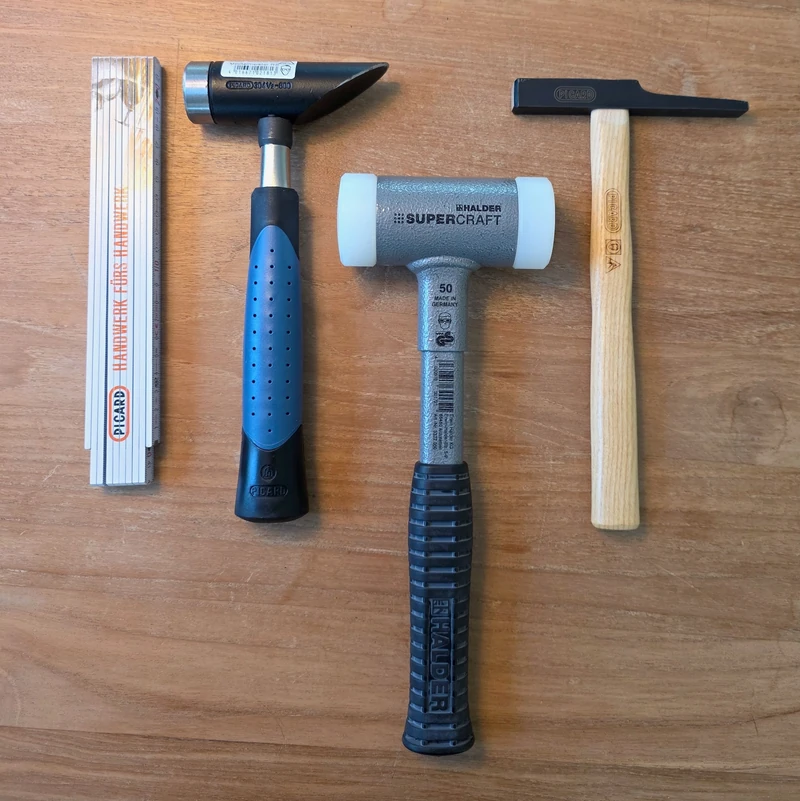
- Three tools received and photographed: the PICARD 0001701-0200 electrician's hammer (240 g), the Meisselmeister 0030490-600 and the SUPERCRAFT 3377.050.
- PICARD has been manufacturing in Wuppertal since 1857; the brand has been owned by Erwin Halder KG since 2017, founded in 1938 around the patented SIMPLEX mallet.
- According to Halder, SUPERCRAFT uses a steel-shot-filled head and replaceable nylon faces. The brochure compares different mallet families; its headline percentages are not test results for my 3377.050.
- For the Meisselmeister and the SUPERCRAFT, I separate handling away from the job site from manufacturer specifications: no on-site verdict is given for these two products.
PICARD and Halder sent me three hammers to test: the electrician’s hammer 0001701-0200, the Meisselmeister chisel hammer 0030490-600 and the SUPERCRAFT dead-blow mallet 3377.050.
The 0001701-0200 is the only one of the three I have already used on a job. The Meisselmeister and the SUPERCRAFT were received, photographed and handled off-site; so I keep their manufacturer specifications separate from my own field experience.
The manufacturer data sheets list three uses: precise striking for the electrician’s hammer, chasing and plaster for the Meisselmeister, and dead-blow striking for the SUPERCRAFT.
Having used the 0001701-0200 on a job, I can already judge its lightness, precision and handling. For the other two, I describe here the construction, the size and the stated uses, without attributing any on-site results to them.
Weight also changes how you carry it: 240 g for the electrician’s hammer and 860 g including the handle for the Meisselmeister. For the SUPERCRAFT 3377.050, Halder lists 1,033 g online but 1,150 g in its hand-tool catalogue. Both figures come from the manufacturer, not my own weighing.
240 g
PICARD 0001701-0200 electrician’s hammer with its ash handle, 260 mm long
860 g
Meisselmeister 0030490-600 with its C45 steel tube handle
50 mm
nylon striking-face diameter of the SUPERCRAFT 3377.050, according to Halder
1857
year PICARD was founded, in Wuppertal-Cronenberg
One point of context before getting into the details: the two brands have lived under the same roof since 2017, and you can feel the manufacturing consistency across the three tools.
PICARD and Halder: two houses, one family since 2017
PICARD was founded in 1857 by Johann Hermann Picard, in a forge in Wuppertal-Cronenberg.
The first tools targeted blacksmiths, plumbers, and locksmiths: hammers and sheet-metal shears. The hammer has remained the heart of production, from forging to polishing.
In 2017, Erwin Halder KG took over Joh. Hermann Picard GmbH and its subsidiary Ruthe Hammerfabrik. PICARD and RUTHE were combined into PICARD GmbH, and production stayed in Wuppertal-Cronenberg, where it continues to expand.
In 2024, PICARD carried out a brand relaunch built around three pillars: durability, ergonomics, and design. The Wuppertal forge still makes striking tools, rather than relying on its history alone.
It’s the classic logic of tool groups: a single company can bring together several historic brands.
On the other hand, Halder was founded in 1938 by engineer Erwin Halder to produce a patented soft-face mallet, the SIMPLEX. The company has remained family-owned, with around 220 employees and more than 85 years in business.
Its speciality is precision parts: more than 13,000 standard parts for toolmaking and mechanical engineering, clamping systems, and hand tools, where SIMPLEX, SUPERCRAFT, SECURAL, BLACKCRAFT, and FERROPLEX coexist.
The company has held ISO 9001 certification since 1994 and also makes parts for aviation, with sites in Europe and around the world.
For a buyer like me, this history comes down to two concrete things: continuity of the ranges and made in Germany manufacturing. PICARD claims production in Wuppertal combining drop forging, grinding and polishing; Halder speaks of “precision made in Germany”.
PICARD 0001701-0200 electrician’s hammer: 240 g of precision
The first tool sits in the hand without effort. It is an electrician’s hammer of French pattern, specified at 240 g including the handle and 260 mm long.
The PICARD datasheet classifies it among carpenter’s hammers, category 1701, and describes it as a tool designed for the precise, targeted work of the electrical trade.
The head is made of special alloy steel, hardened and tempered, with a black powder coating that protects against corrosion. The face and peen are ground, and the assembly with the handle uses a wedge (or “ring wedge”), the fitting that locks the handle into the head.
The handle is ash, straight-fitted (or “with a straight handle”). It is the classic wood for striking-tool handles: springy, light, pleasant in the hand. The full reference is 0001701-0200, with EAN 4016671035421.
On the compliance side, PICARD declares a tool free of conflict minerals, compliant with REACH (no SVHC substances) and RoHS. These are compliance declarations on paper, but they matter when you buy equipment meant to last.
In the hand, what strikes you first is the finish: the paint on the head is even, the wood is smooth to the touch, and the joint between the head and the handle shows no play.
At first glance, it feels like a well-made tool, not a cheap bargain-bin hammer.
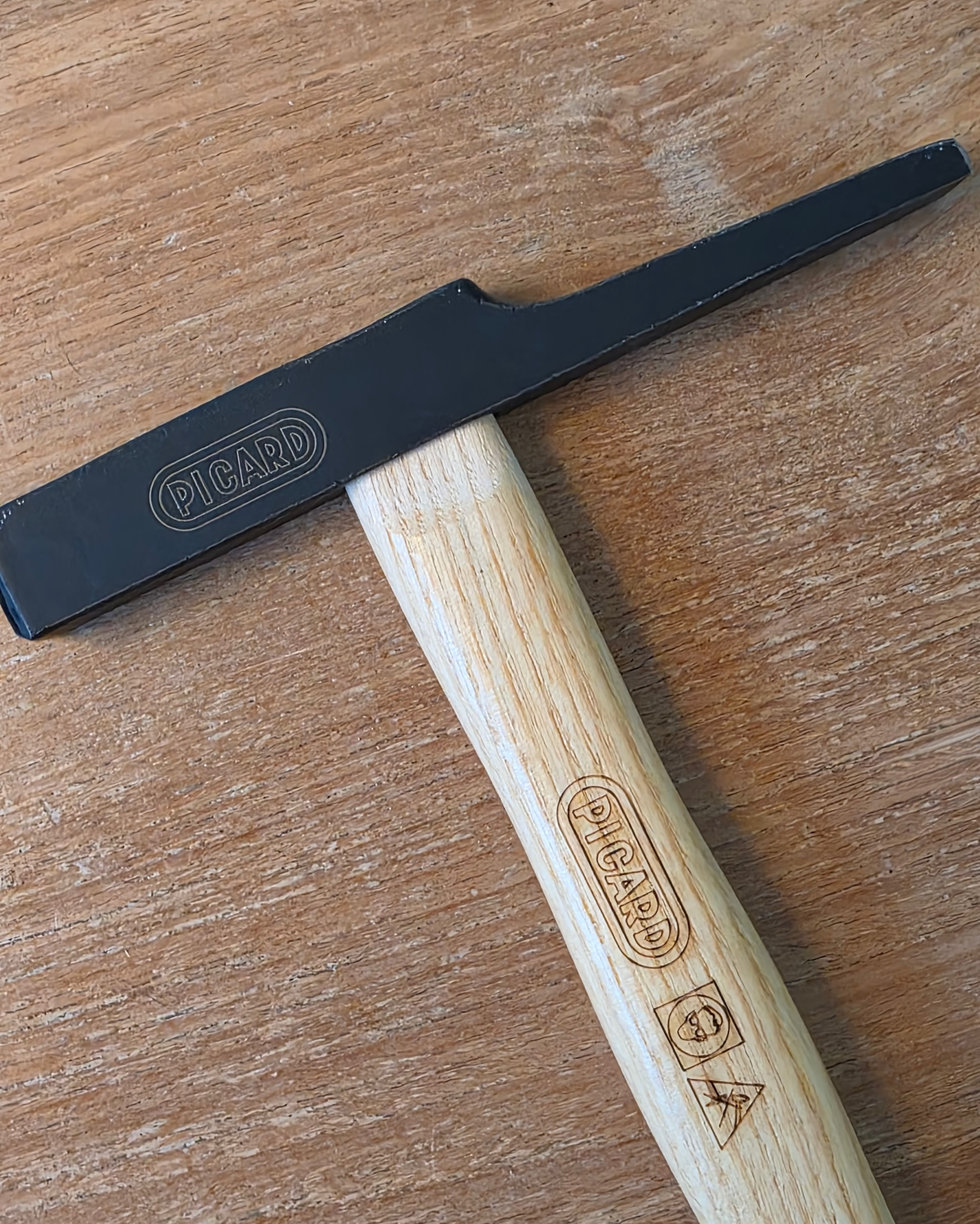
In use, its foremost quality is its light weight. At 240 g, it disappears in the hand and on the belt alike, and that is exactly what I ask of an electrician’s hammer: precise, repeated strikes without wrist fatigue.
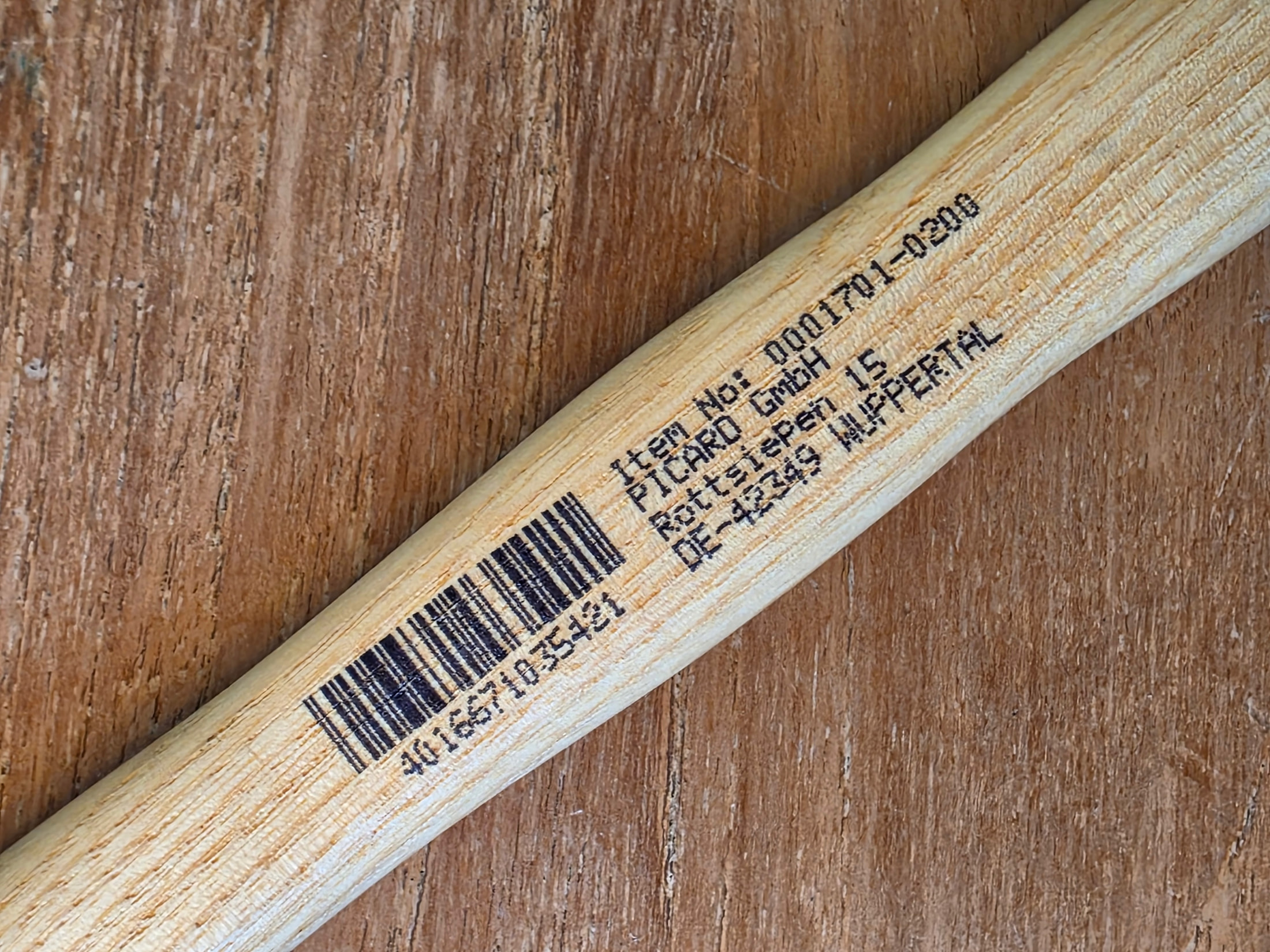
The ash handle plays a big part in that feel. The wood absorbs part of the shock and the grip stays firm, even when your other hand is holding something else.
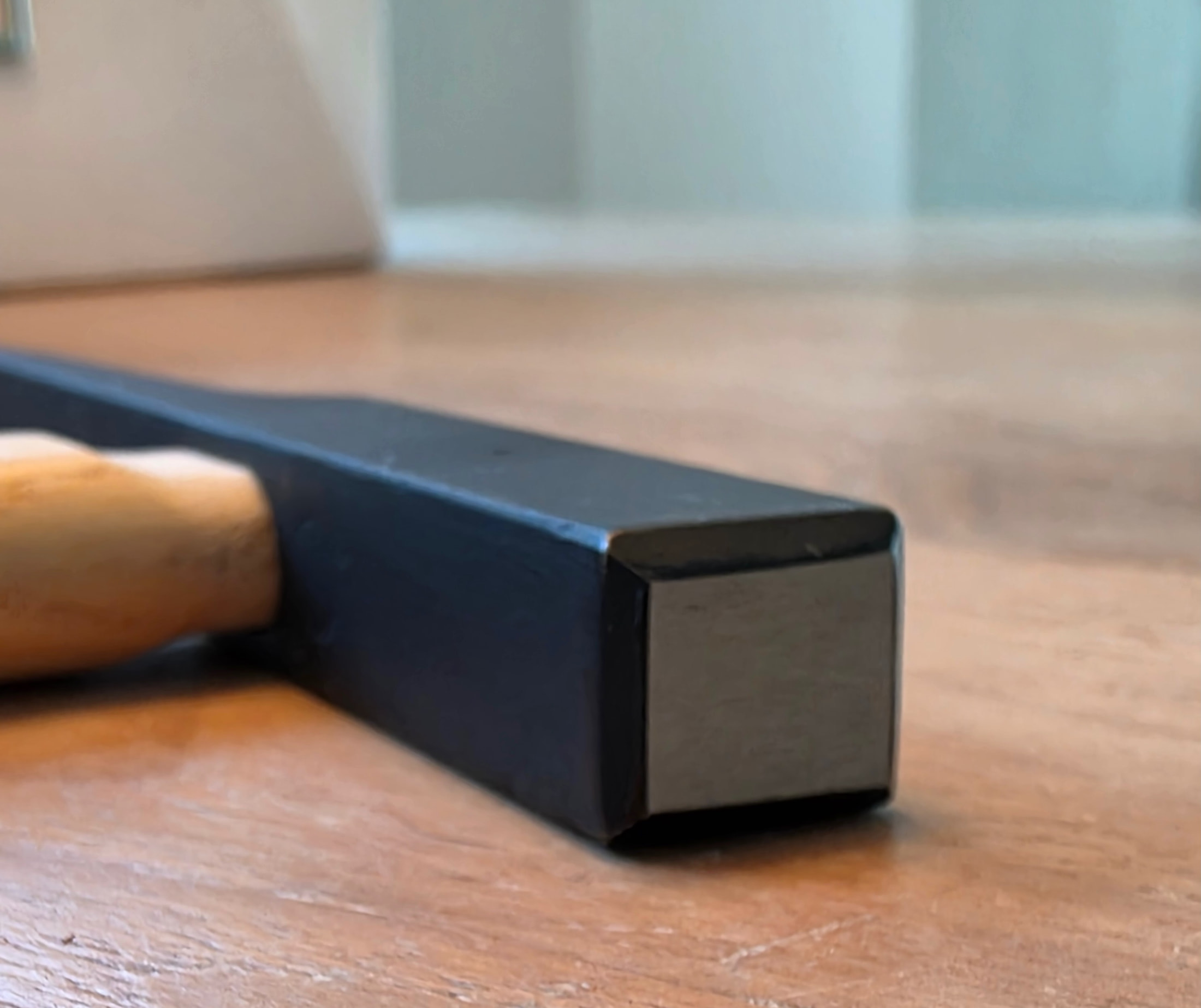
In an electrician’s tool bag, this hammer is the essential basic tool: it comes right after the pliers and insulated screwdrivers when you put together your first kit.
The rest of the kit stays the same: once the fixing is in place, the work goes back to pliers and your test instruments (or test gear), and the hammer goes back on the belt.
Meisselmeister 0030490-600: the hammer and chisel in a single tool
The second one is in a class of its own. The Meisselmeister 304 1/2, reference 0030490-600, is a combined hammer and chisel tool: you strike and chisel with the same tool, without putting it down.
PICARD lists it in its “Problemlöser” series, the problem solvers. The data sheet gives it a specific purpose: cutting chases one-handed and plaster removal, including in hard-to-reach places.
It is the kind of tool that saves you from going back and forth between the hammer and the chisel when you open up a wall to run a conduit.
The figures from the data sheet: 600 g for the head, 860 g with the handle, and 250 mm long. The handle is a C45 steel tube fitted with an ergonomic dual-density (two-part) grip that PICARD describes as vibration-reducing, with a soft-touch coating.
The head follows the PICARD recipe: hardened and tempered special alloy steel, powder-coated black for corrosion protection. The EAN for the whole tool is 4016671021813.
PICARD also lists the target trades: pavers, masons, stonemasons and landscaping. A chiselling tool, then, rather than a finishing hammer.
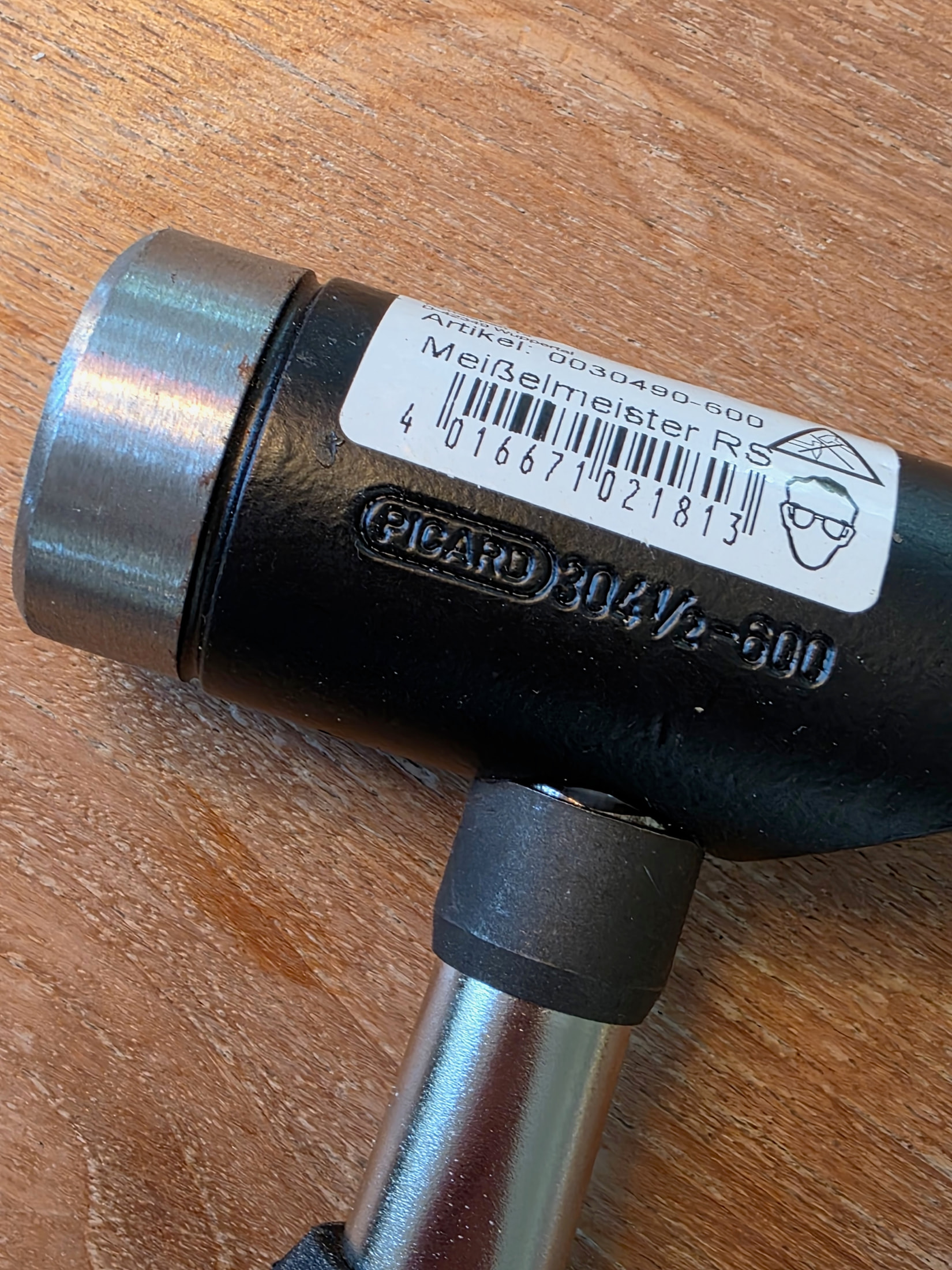
In the hand, away from site, the combination tool is well balanced for its weight. The two-component handle offers a firm grip, and the steel tube gives a sense of solidity in hand.
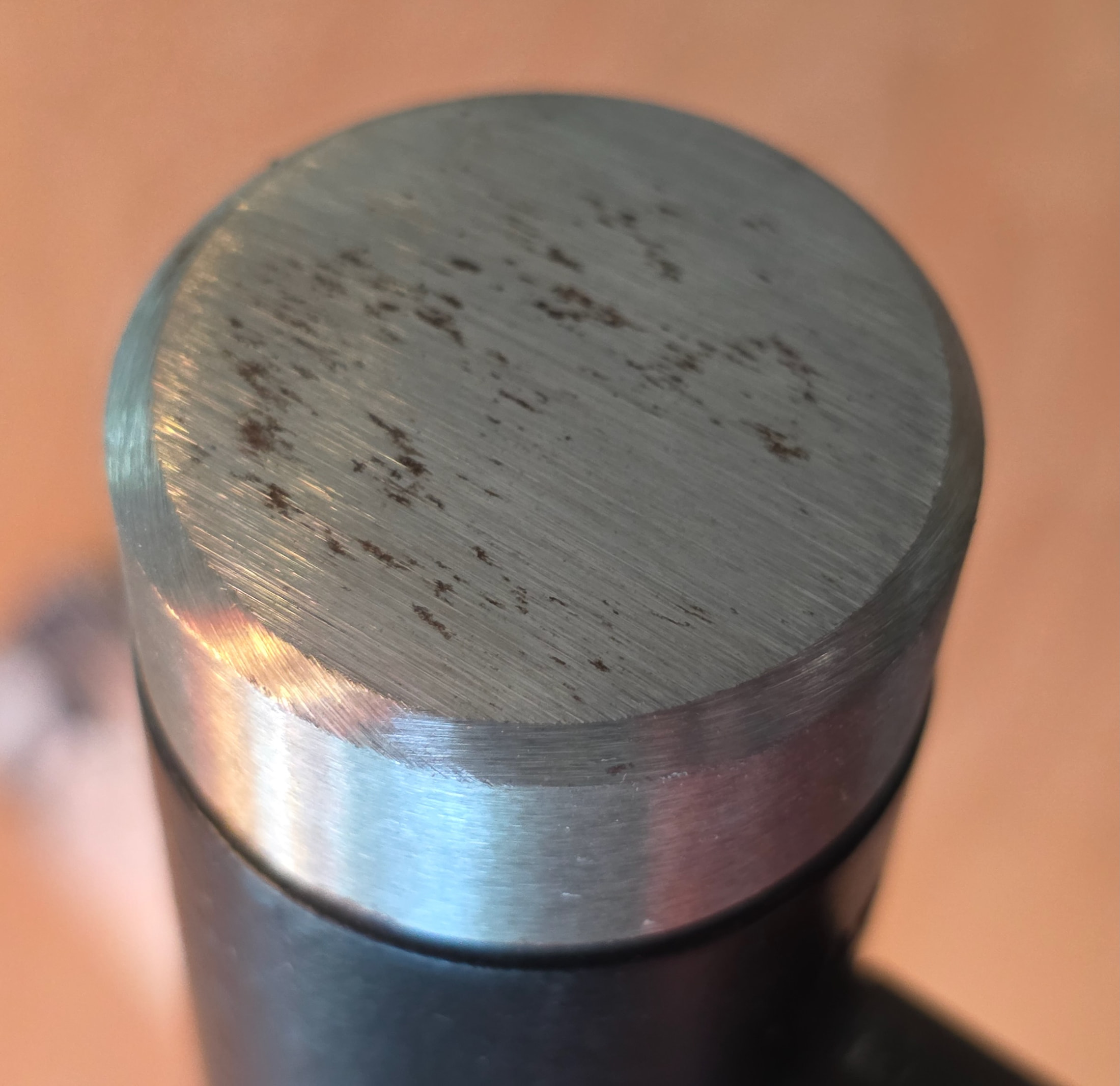
The perceived quality is the same as on the electrician’s hammer: crisp engravings, a neatly finished head, an assembly that inspires confidence.
This off-site handling lets me talk about finish, balance and grip, not about efficiency when chiselling.
Following the principle described by PICARD, the point of the combination tool is simple: bringing the hammer and the chisel together to keep one hand free while cutting an opening.
Two clarifications before buying. First, the stated use: PICARD intends it for chases and plaster. That is the scope documented on the manufacturer’s data sheet.
Next, the part number: it’s on the white label stuck to the tool, and it’s the first thing to check against counterfeits, a topic I dug into in the guide to identifying counterfeit tools.
SUPERCRAFT mallet 3377.050: the strike that doesn’t bounce back
Third tool: the no-rebound SUPERCRAFT 3377.050 mallet.
The principle deserves a closer look, because “no-rebound” doesn’t mean “cushions the strike”.
According to Halder, the head tube is filled with steel shot. On impact, the shot follows the movement with a slight delay: this is the principle the brand uses to achieve a no-rebound strike.
Halder states that the striking force is transferred to the workpiece rather than being sent back into the arm.
The brand presents this mechanism as a way to efficiently absorb impact energy and reduce joint fatigue.
The 3377.050 specification sheet details the rest: an unbreakable steel tube handle with an ergonomic, non-slip rubber grip, a protective sleeve for the handle in case of a missed blow, robot welds, a wear-resistant powder coating and replaceable inserts.
For the 3377.050, Halder specifies a 50 mm head diameter, 120 mm head length and 315 mm overall length.
Its online listing gives 1,033 g (about 36.44 oz), whereas the manufacturer’s hand-tool catalogue lists 1,150 g for the same reference. These are published specifications, not my own measurement.
The inserts are made of extruded nylon, a homogeneous material that the brand says reduces impact noise from metal parts and is suitable for sharp edges. According to Halder, they don’t chip, even at sub-zero temperatures.
All SUPERCRAFT hammers are tested by VPA-Remscheid and bear the GS mark, two quality-control credentials you will also find on the range page.
The photographed HALDER brochure compares three mallet families with a 500 g engineer’s hammer. It shows 41% less noise and 49% less vibration for the pictured wooden-handled SUPERCRAFT and 63% less noise and 59% less vibration for BLACKCRAFT. The manufacturer’s official H9 catalogue (2022, printed p. 157) instead gives 58% less vibration for BLACKCRAFT. These two manufacturer documents disagree.
I do not apply those percentages to the steel-handled 3377.050: the brochure does not identify the precise SUPERCRAFT model used. These are manufacturer claims, not measurements from my work.
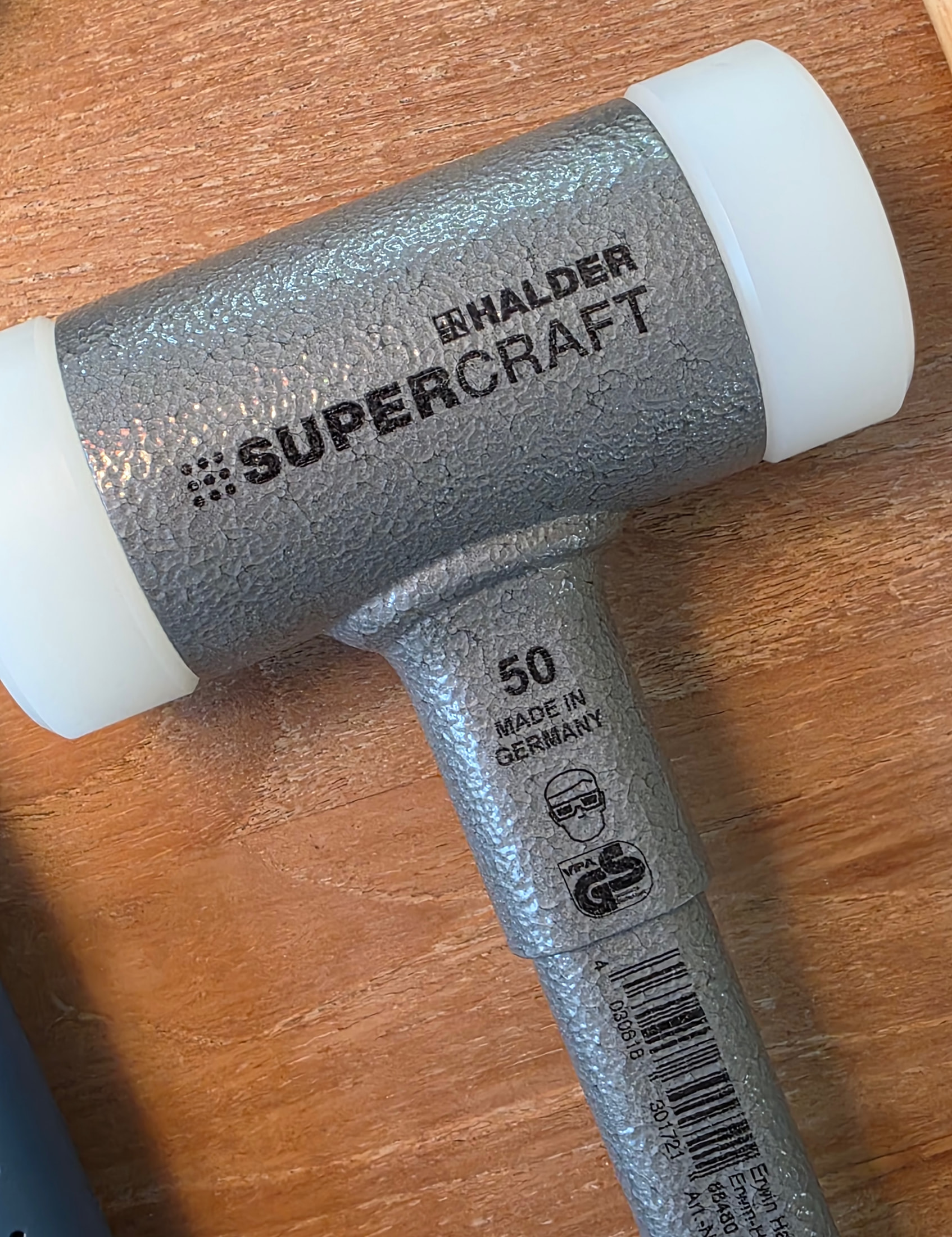
Away from site, I can assess the size, grip and build: the 3377.050 is the heaviest of the three by either published Halder weight, and its rubberized handle provides a stable hold. How it behaves on impact is not part of this hands-on first impression.
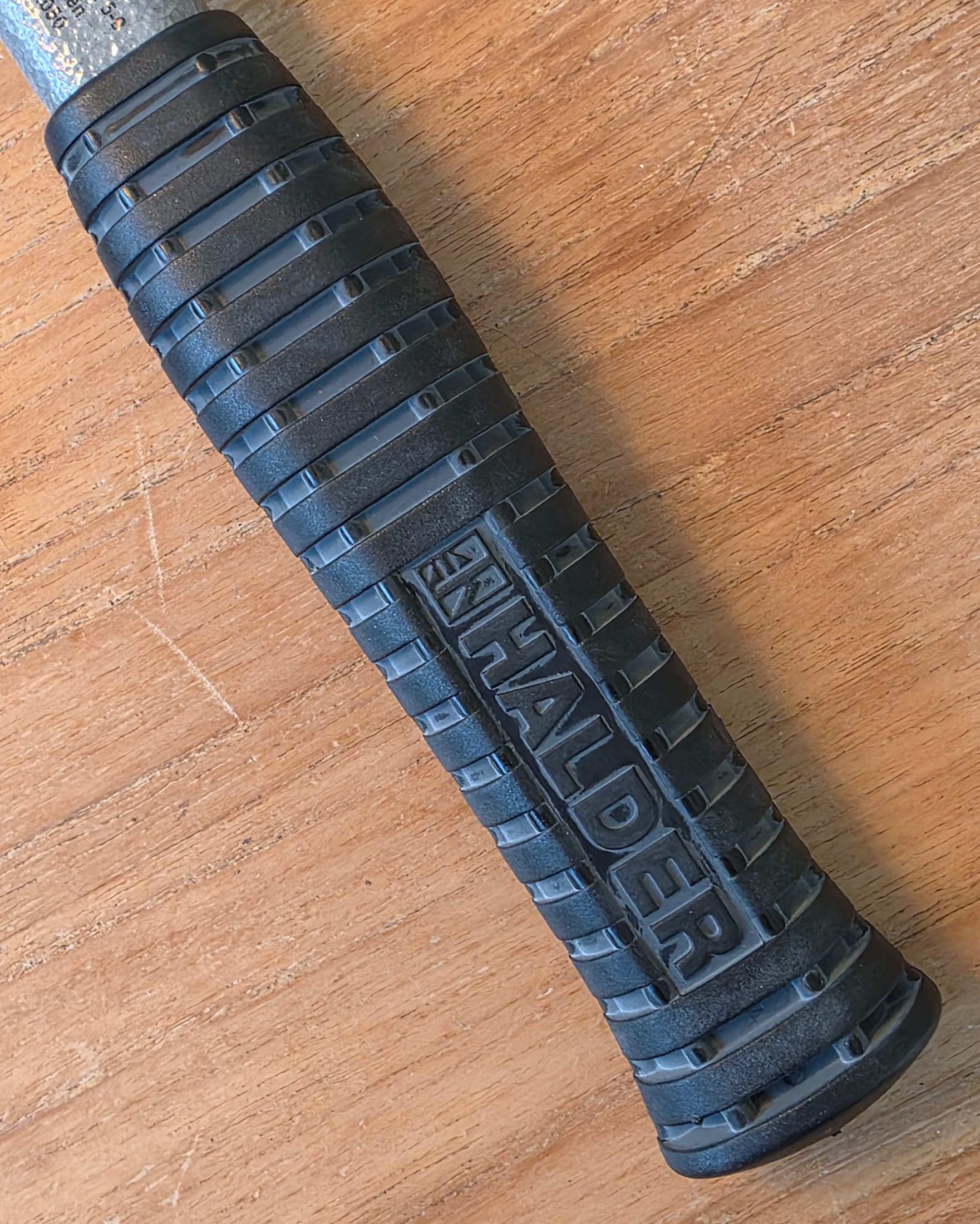
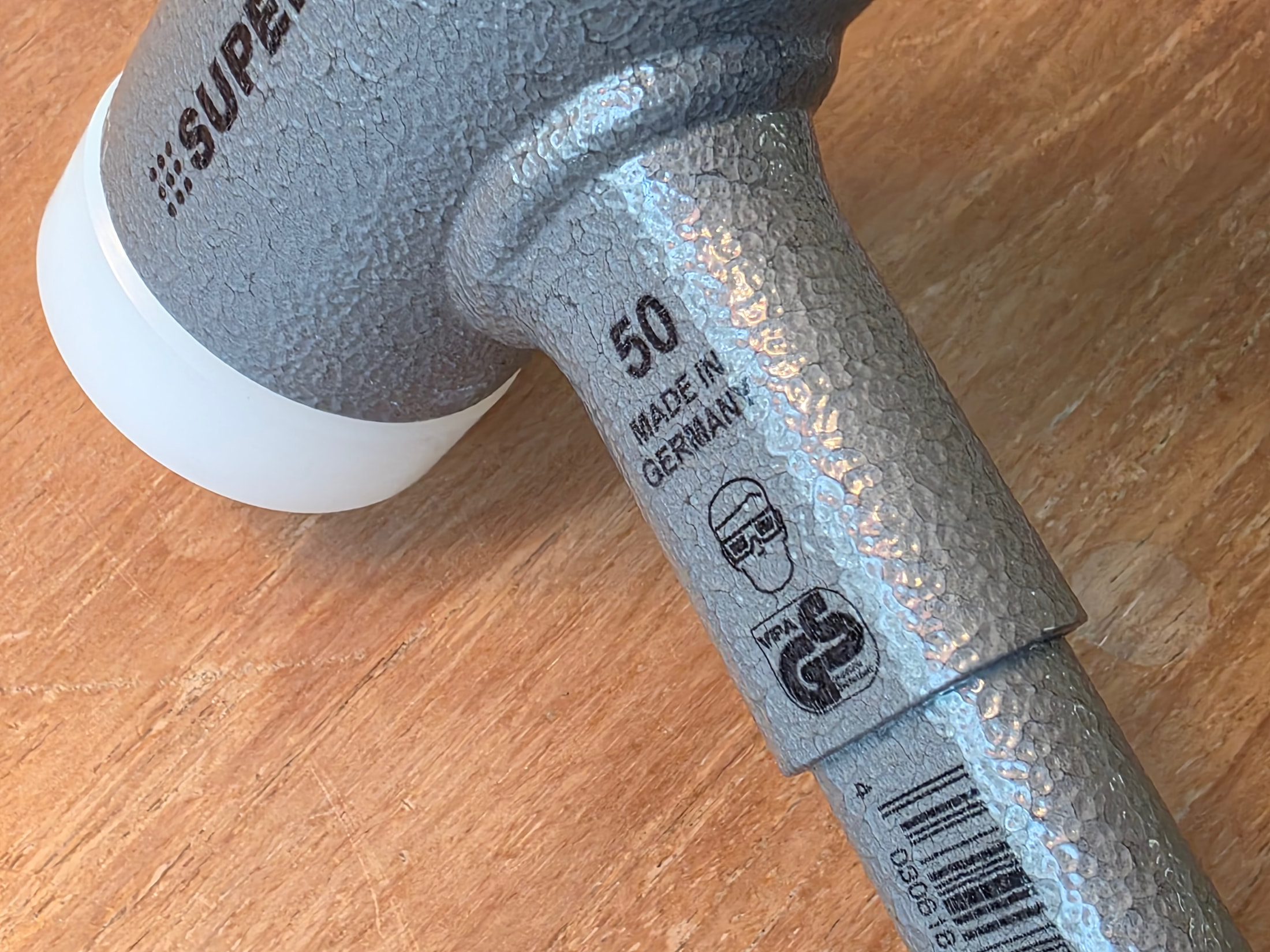
Here, the no-rebound mechanism and the reductions in noise and vibration remain specifications published by Halder. I do not present them as my own impressions.
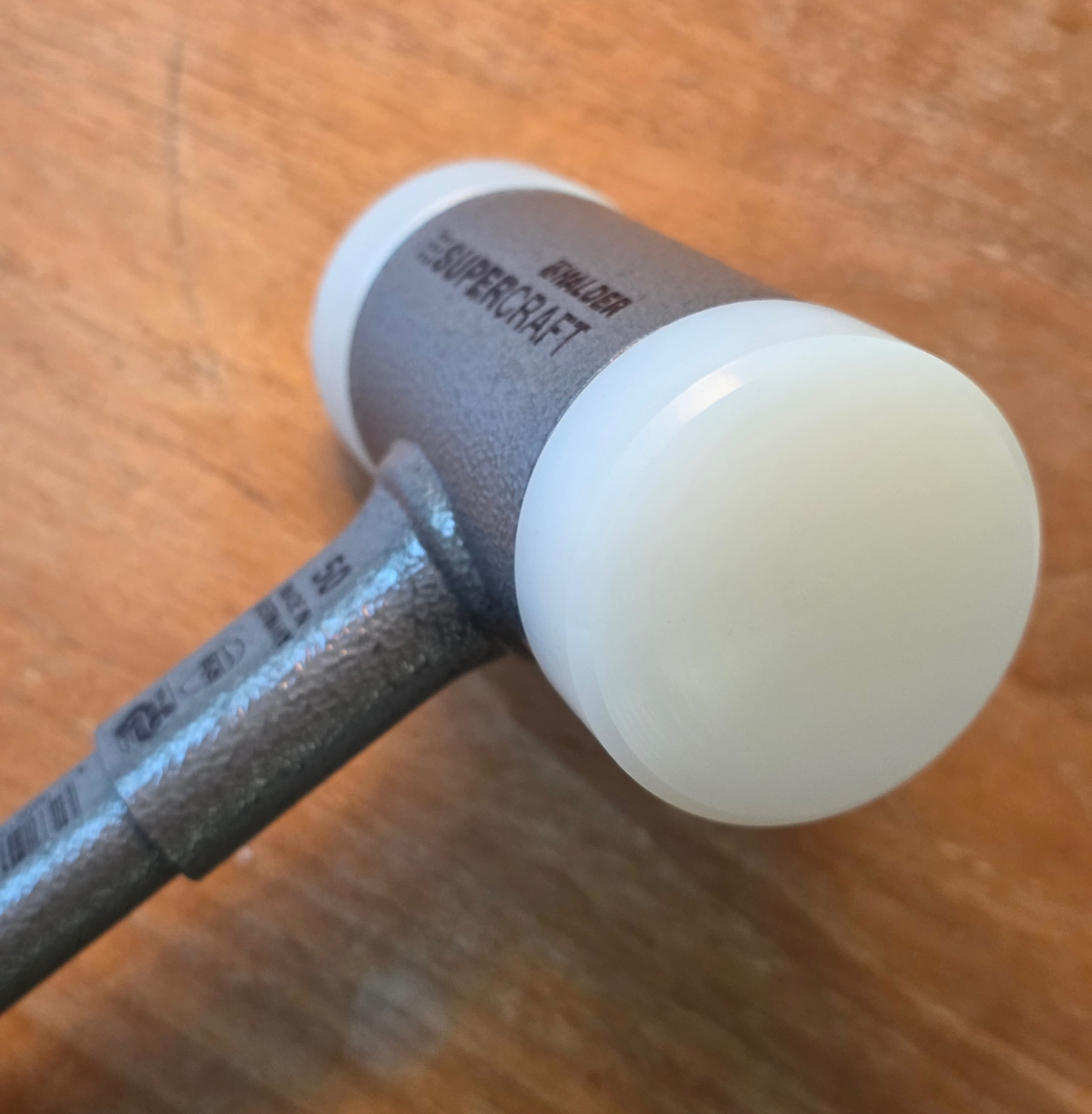
The range built around this mallet is broad: several handle families from Halder, in hickory, in steel tube with grip or in three-component fiberglass, and diameters listed from 20 to 80 mm depending on the page. The steel tube handle version is listed from D25 to D70.
A word on maintenance: the nylon inserts are replaceable, and that is a genuine selling point for durability in a tool that takes a beating all day long. On striking tools, the replaceable wear part makes all the difference compared with a tool that must be discarded once its striking face wears out.
The SIMPLEX catalogue and Halder’s documentation
Before these three tools, there is a founding object: the SIMPLEX mallet, patented by Erwin Halder in 1938. The range is still in the catalogue, and its logic sheds light on the rest of the brand’s range.
Halder documents a modular three-part system: the inserts, the handle and the housing, with central three-point tensioning. The inserts are available in 8 interchangeable hardness grades, for diameters from 30 to 140 mm, with 3 housing materials and 2 handle types.
In other words, you choose a mallet by the insert hardness suited to the part, and you replace the part when it wears out.
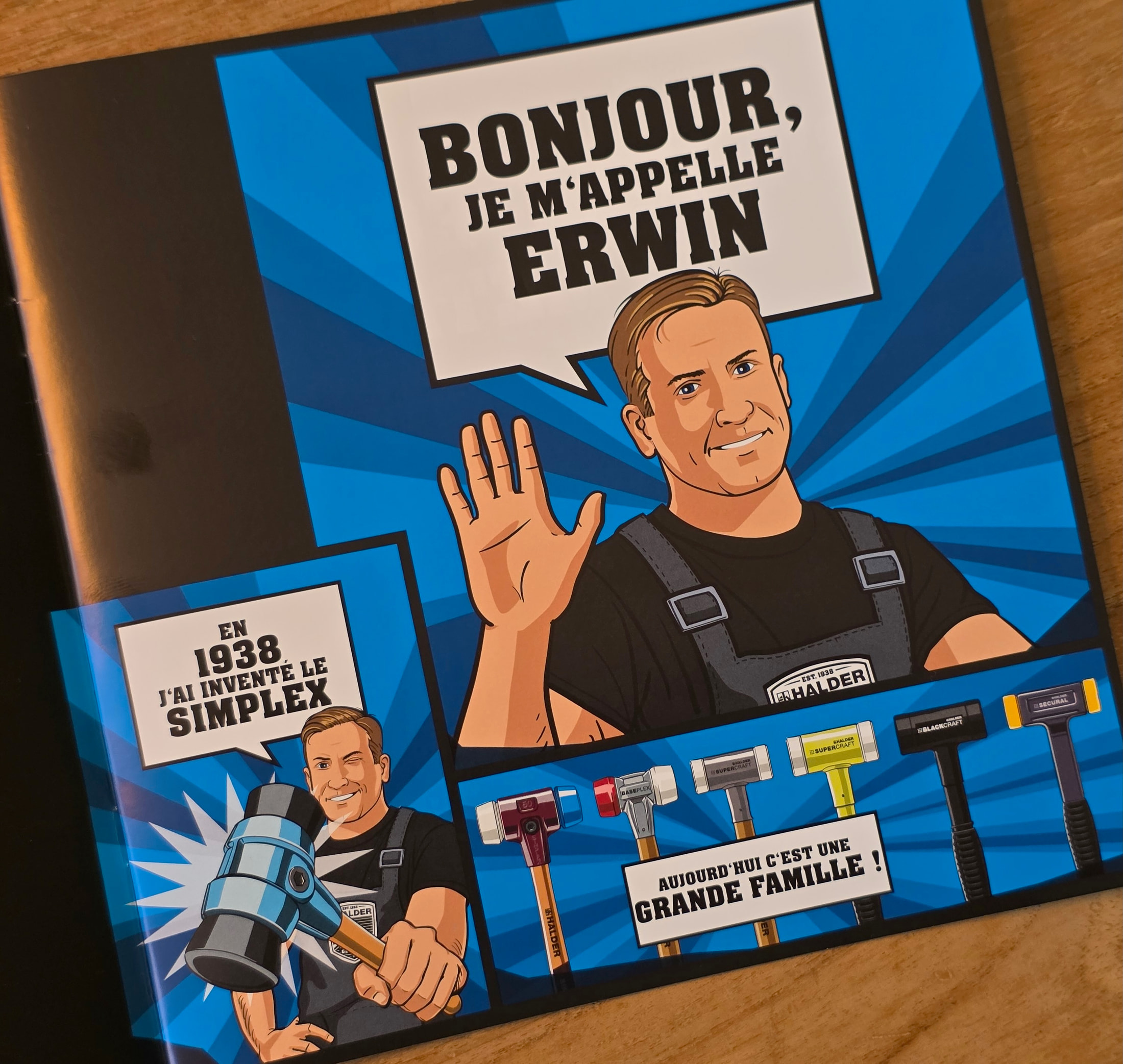
A brochure page traces the invention of the SIMPLEX mallet by Erwin Halder in 1938, the birth of the company.
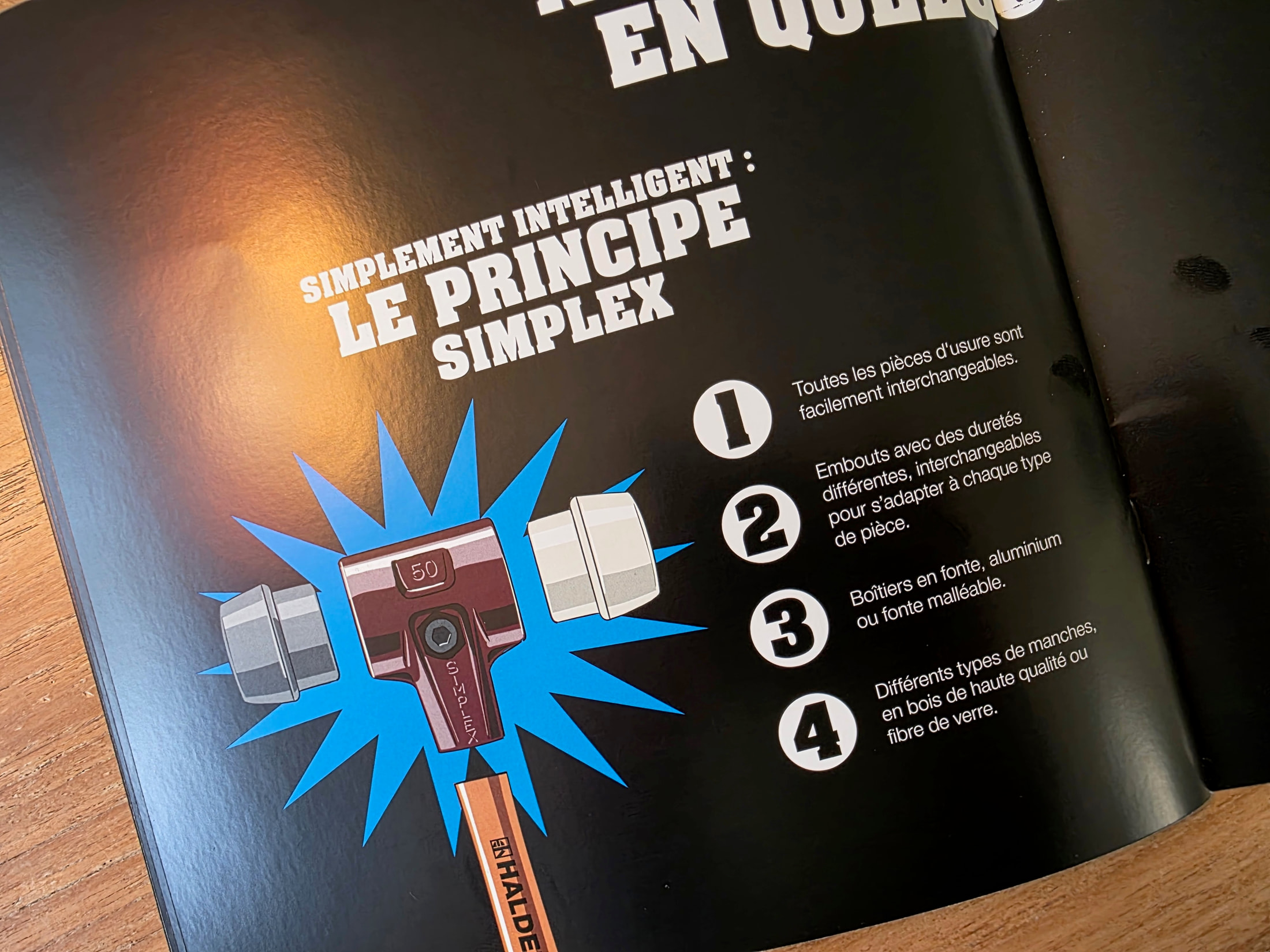
The SIMPLEX principle in three parts: interchangeable inserts, housing and handle, with eight insert hardnesses in the catalogue.
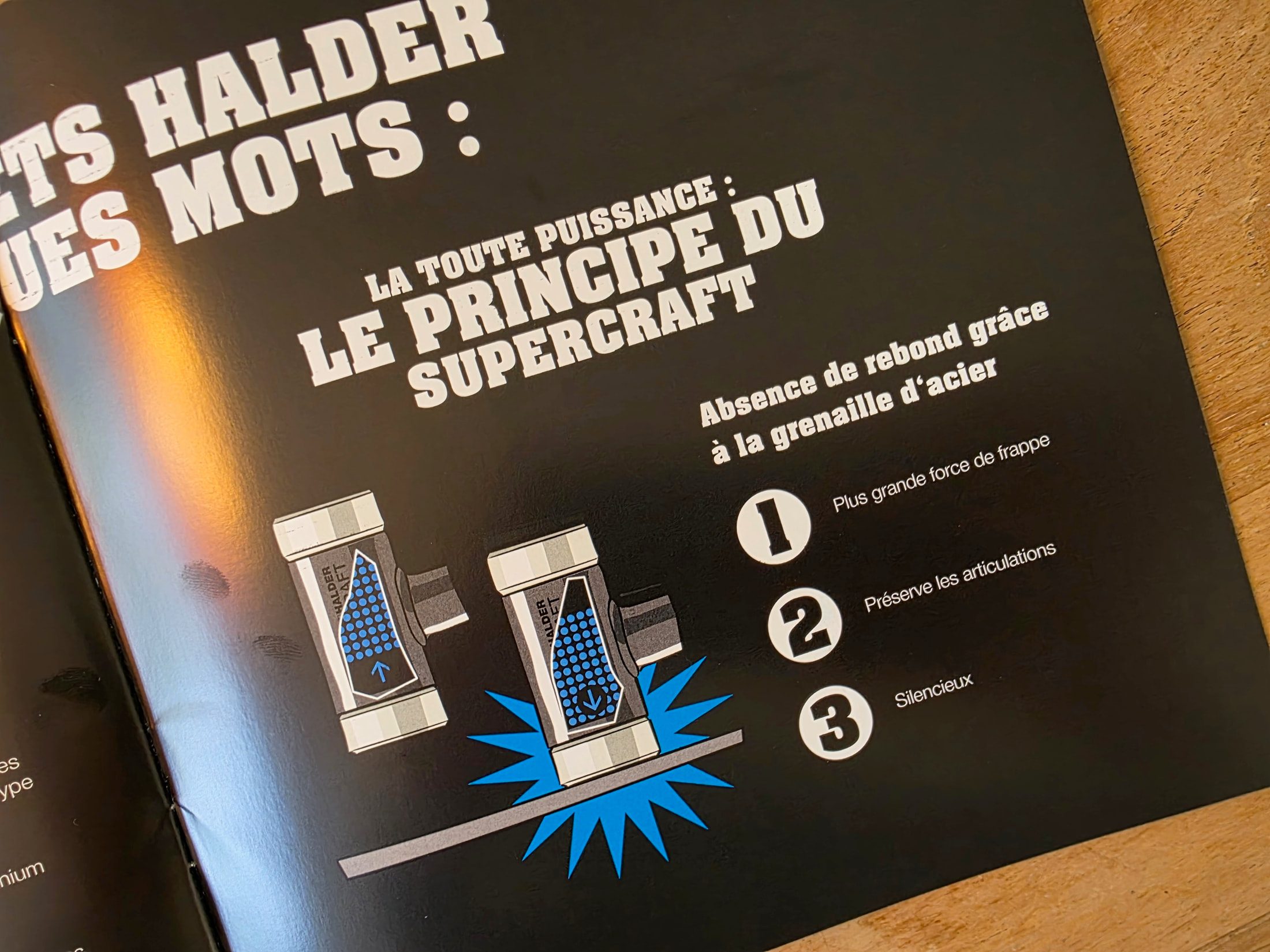
The cross-section of a SUPERCRAFT head: the steel shot it contains explains the rebound-free strike.
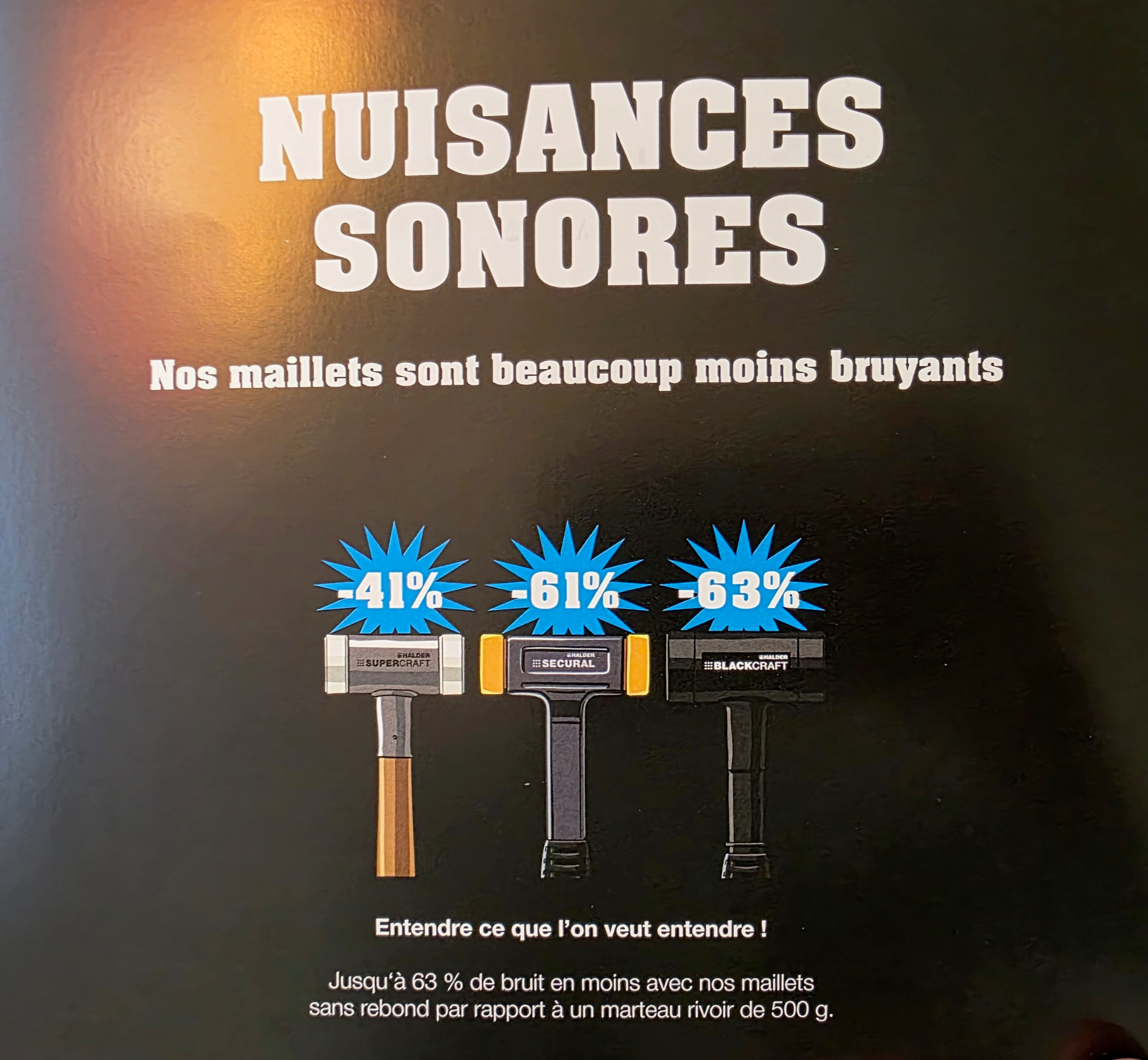
Manufacturer comparison with a 500 g engineer’s hammer: 41% less noise for the pictured wooden-handled SUPERCRAFT, 61% for SECURAL and 63% for BLACKCRAFT. No result is given for my 3377.050.
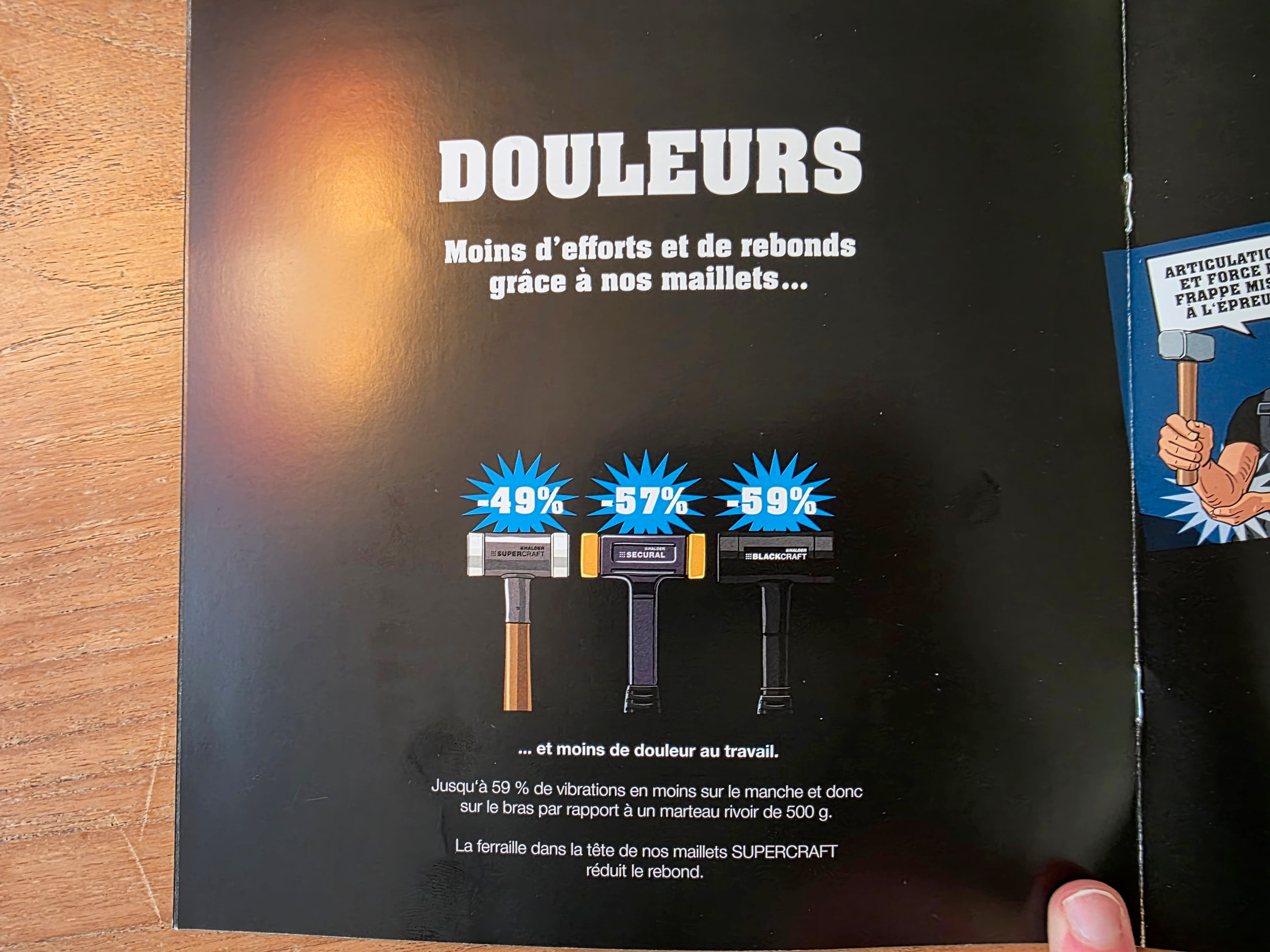
The photographed HALDER brochure gives 49% less vibration for the pictured SUPERCRAFT, 57% for SECURAL and 59% for BLACKCRAFT. The official H9 catalogue (2022, p. 157) instead states 58% for BLACKCRAFT. None is a measurement of my 3377.050.
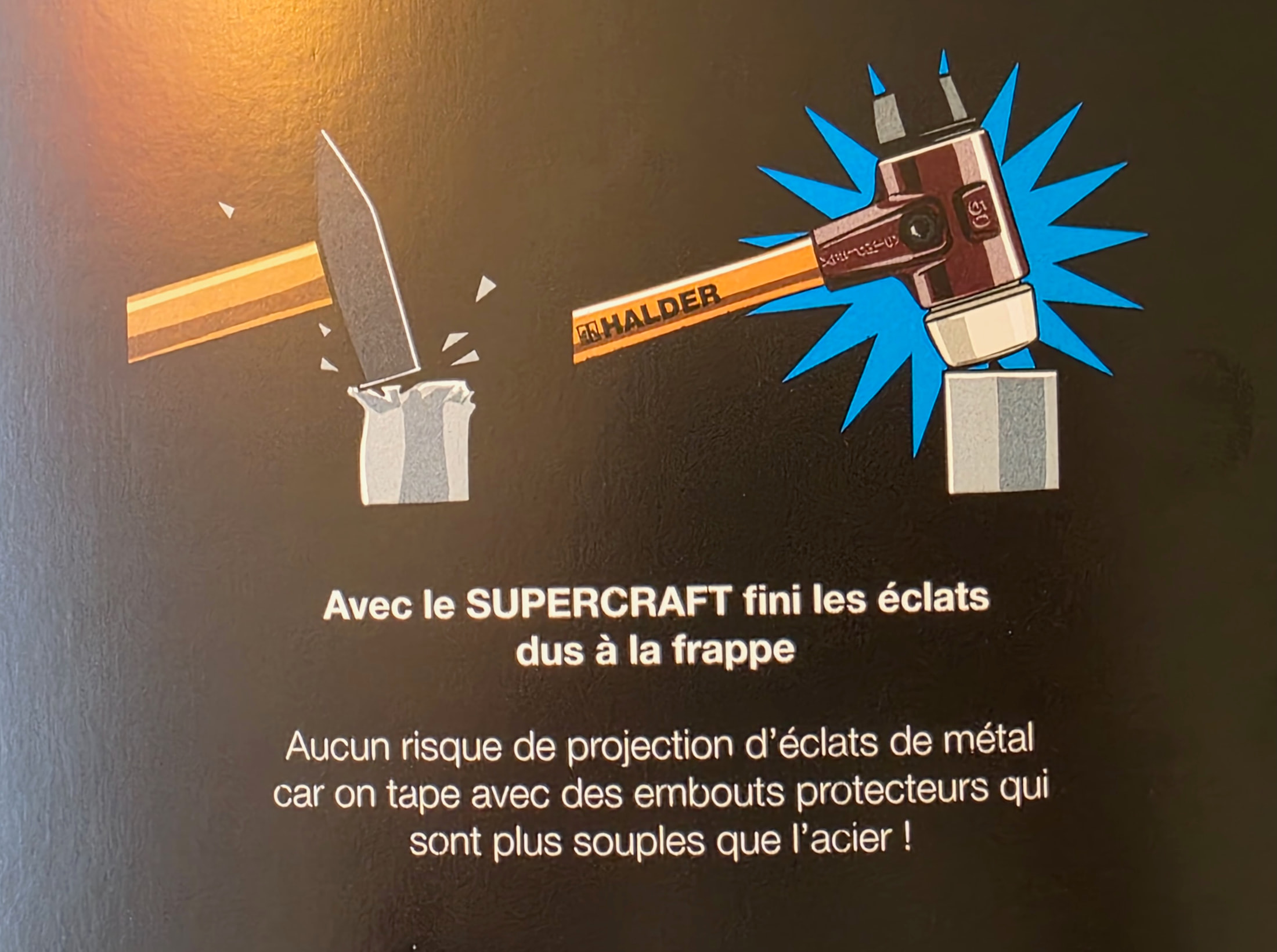
The brochure discusses softer inserts and depicts SIMPLEX rather than the specific 3377.050; it does not establish an absence of flying fragments or make eye protection unnecessary.
These pages come from the brand’s printed documentation. They explain how the two families work: modularity in SIMPLEX, the steel shot fill in SUPERCRAFT.
One caveat for reading these, valid for all manufacturer documents: these are brand pages, with their own figures. I cross-check them against hands-on time away from the site and against the product datasheets for dimensions.
Chiselling safety: what I keep in mind
The three designs are not substitutes for one another. The PICARD 0001701-0200 is a compact hammer for controlled, accurate blows. The Meisselmeister concentrates a hammer and a cutting edge in the same tool to open chases in suitable wall material. The SUPERCRAFT uses nylon faces for positioning or assembly jobs where a steel striking face would be unsuitable. For a wall chase, I first identify hidden electrical cables and other services before choosing the striking tool. In every case, the material being struck, the access and the protection required matter more than the nominal weight alone. Before work, I inspect the handles, head joints and striking faces for damage or looseness; a loose head or a chipped face is a reason to stop using the tool, not to strike harder.
A steel chiselling head and a nylon-faced mallet do not have the same hazards. Halder’s claim about avoiding metal splinters concerns the nylon inserts of the SUPERCRAFT, not the steel head of the Meisselmeister. Fragments from plaster, masonry or other struck material can still fly.
What I do on my end, and what I don’t compromise on: I keep my glasses on when I chisel. It’s a working rule I apply to myself on every hammer strike.
One final safety point: none of these hammers is presented as electrically insulated. For electrical work, safe isolation and proving dead come first, as set out by the UK HSE. A 1,000 V rating on a different hand tool does not make live work safe.
What I take away at this stage
The verdict isn’t the same for the three part numbers. On the 0001701-0200, I already have feedback from an actual job; for the other two, my personal feedback comes from hands-on time away from site.
The electrician’s hammer 0001701-0200 is the everyday companion. Light, precise and nicely finished, it handles routine strikes without feeling heavy on the wrist.
For the Meisselmeister 0030490-600, PICARD documents the chasing and plaster applications. In the hand, I can judge the balance, the grip and the finish; I’m not yet giving it a chiselling verdict.
For the SUPERCRAFT 3377.050, Halder documents the no-rebound mechanism, the nylon tips and the claimed reductions in noise and vibration. My hands-on confirms the size and the grip, not the behaviour on impact.
For everyday electrical work, the 0001701-0200 is therefore the only one of the three on which I give a field verdict here.
On durability, three points will be judged over time: tip wear, the ageing of the ash and how the tubular shaft holds up. My next checks will focus on whether the nylon inserts can be replaced easily once worn, whether the ash handle develops play and whether the tubular grip stays secure after repeated use. These are tests still to be done, not established results.
For carrying, these hammers fit into a wider electrician’s hand-tool selection or on a belt tool holder, depending on whether you want to keep them on you or stow them away between jobs.
Field verdict — PICARD electrician's hammer 0001701-0200
The 0001701-0200 is the hammer I keep close at hand on the job: well balanced at 240 g, with a pleasant ash handle and a neat finish, both in the photos and in the hand.
Its spec sheet assigns it to the precise, targeted work of the electrical trade. It’s in that role, actually put to use, that I find it excellent.
Hands-on — PICARD Meisselmeister 0030490-600
My personal feedback here concerns the hands-on away from the jobsite: the Meisselmeister combines hammer and chisel in one package at 860 g including the handle, with a two-component grip, a C45 steel tube and a neat finish.
Chasing and plastering are the uses PICARD gives. I don’t turn those manufacturer uses into a performance verdict before an on-site test of this model.
Hands-on — HALDER SUPERCRAFT 3377.050
My personal feedback here covers the hands-on feel away from site: the SUPERCRAFT has a dense build and a stable grip.
Halder specifies replaceable nylon inserts, a recoilless mechanism and the advertised reductions in noise and vibration. I won’t treat these specs as a personal finding until I’ve tested them in real-world conditions.
Frequently asked questions about PICARD and Halder hammers
Are PICARD hammers still made in Germany?
Yes, according to the manufacturers’ documentation. PICARD was founded in 1857 in Wuppertal-Cronenberg, where production remained after Erwin Halder KG acquired PICARD and RUTHE in 2017. The two acquired businesses were combined into PICARD GmbH. Halder also describes its production as “precision made in Germany”.
What’s the difference between the PICARD 0001701-0200 electrician’s hammer and the Meisselmeister 0030490-600?
These are not the same tools. The 0001701-0200 is a French-pattern electrician’s hammer at 240 g, designed for precise, targeted work. The 0030490-600 is a 600 g hammer and chisel combo (860 g with handle), specified for chasing and plaster removal. One is for finishing work, the other for opening up.
How does the HALDER SUPERCRAFT recoilless mallet work?
According to Halder, the mallet head is filled with steel shot. On impact, the shot follows with a slight delay: this is the recoilless striking principle described by the brand, with the force transmitted to the workpiece rather than sent back up your arm. The 3377.050 version comes with replaceable nylon inserts.
What noise and vibration reduction does the SUPERCRAFT 3377.050 offer?
I have not measured noise or vibration on my 3377.050. The photographed brochure gives 41% / 49% for a pictured wooden-handled SUPERCRAFT and 63% / 59% for BLACKCRAFT (noise / vibration), against a 500 g hammer. HALDER’s official H9 catalogue (2022, p. 157) instead states 58% for BLACKCRAFT vibration. The sources differ; neither figure measures my 3377.050.
Do you need safety glasses to chisel with a hammer like the Meisselmeister?
Yes. I wear safety glasses whenever I chisel. The Meisselmeister has a hardened steel head; Halder’s claims about nylon inserts apply to the separate SUPERCRAFT mallet, not to this steel-headed tool. Plaster, stone and metal fragments can still fly during chiselling.
Are the inserts and wear parts replaceable?
Yes, for both mallet families. The inserts on the SUPERCRAFT 3377.050 are replaceable, and the SIMPLEX system comes with eight interchangeable inserts of different hardnesses, diameters from 30 to 140 mm, 3 housings and 2 handle types. With striking tools, a replaceable wear part is what separates a durable tool from a disposable one.
Disclosure PICARD and Halder : electrician’s hammer, chisel hammer and SUPERCRAFT mallet.
Théo Desrousseaux
Electrician and editor
I work in the field and edit this magazine. Every guide is reviewed for its target country before publication.
Author → Credentials → Editorial method → Report a factual correction →
No email app? Copy the correction details
Email address and prefilled context:
theo@sparx-elec.fr
Article: https://www.sparx-elec.com/gb/picard-halder-hammers-review/
Edition: GB — English
Factual issue: [describe the factual issue]
Passage: [quote or identify the passage]
Source: [optional source URL]
Sources and references
- 1. PICARD — electrician's hammer data sheet 0001701-0200
- 2. PICARD — Meisselmeister 0030490-600 data sheet
- 3. PICARD — brand history
- 4. Halder — company history
- 5. Halder — SIMPLEX mallet range
- 6. Halder — quality and safety
- 7. Halder — SUPERCRAFT mallet 3377.050 data sheet
- 8. Halder — how non-rebound SUPERCRAFT hammers work
- 9. Halder — SUPERCRAFT 3377.050 current manufacturer specification (1,033 g)
- 10. Halder — hand-tools catalogue H8, SUPERCRAFT 3377.050 (1,150 g), page 61
- 11. Halder — official H9 hand-tools catalogue (2022, printed p. 157)
- 12. UK HSE — electrical work and safe isolation on building sites Official
More guides
Practical electrical installation guides, diagnostic methods and tool recommendations compared against the technical wiring standards of this national edition.
KNIPEX 87 51 180 pliers: review and electrician uses
KNIPEX Cobra ES 87 51 180 water pump pliers: technical specs, hands-on handling, push-button adjustment, 180 mm format and usage framework.
Read the guide Guide Wiha or Wera: which tool kit for an electrician? Wiha or Wera: VDE 1000 V screwdrivers and pliers, storage systems and a method for a tool set suited to real electrical work in the home. Read the guide
 Guide Ilkott trousers review: 2026 field test Ilkott review of the Fresh Collection trousers and AA61 bag, tested on real jobs: flexibility, freshness, pockets, knee pads, tool bag. Read the guide
 Guide Laser levels: Bosch, STABILA or Leica Line laser levels compared: Bosch, STABILA and Leica head to head. Green or red lines, real range, accuracy and how to choose the right one as an electrician. Read the guide