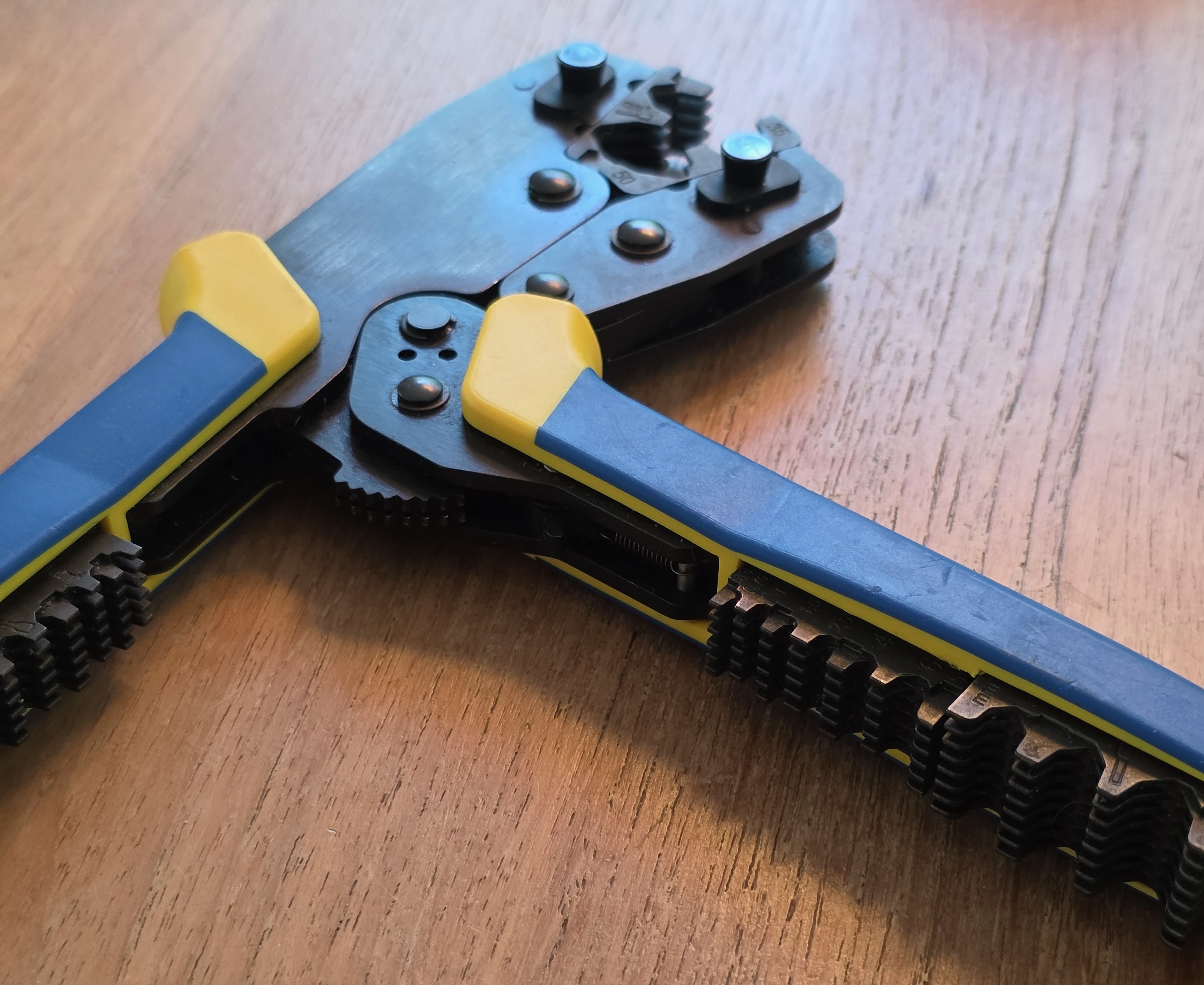
Open crimping tool
The open jaw shows the part that presses the indentation into the lug.
Published 3 August 2026
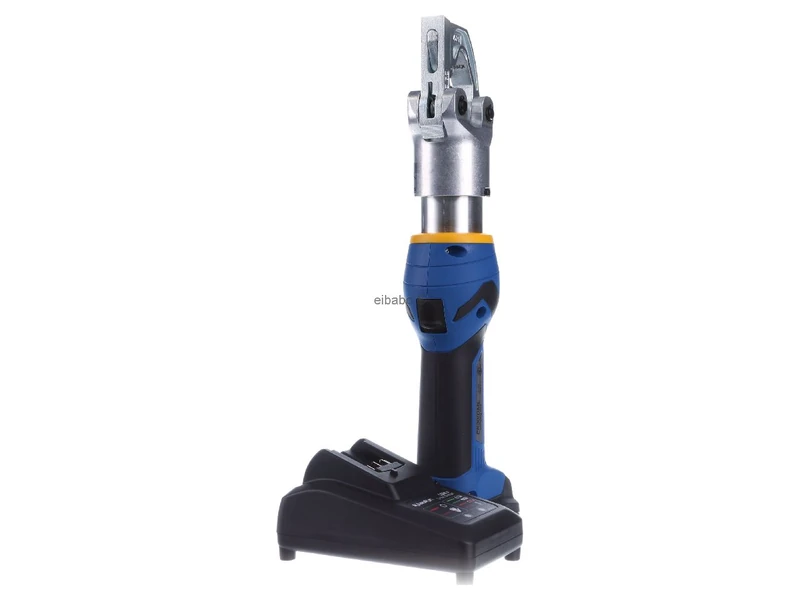 Photo : Klauke — EK30IDML product page
 In brief
The Klauke EK30IDML is a battery-powered hydraulic crimper without dies, which produces an indent crimp (by indentation) from 6 to 120 mm² in a single cycle.
Announced at 30 kN and 1,95 kg with battery, it targets electrical cabinets and switchboards, where R, L and F series copper tubular lugs dominate.
This review draws on the product sheet, the Klauke datasheet, distributor sheets and tester testimonials published by a reseller. They document the specifications and use cases.
I have had the EK30IDML in hand and tested it; the cross-sections and connector approvals below come from the cited technical documentation.
What makes this model interesting on paper is precisely the absence of dies. You don’t change an insert to go from a 50 lug to a 120 lug: the closed folding jaw does the crimping on its own. It’s the main time-saving argument, and it’s also what marks out its territory within the Klauke range.
30 kN
announced crimping force
6-120 mm²
announced range in copper
1,95 kg
weight with battery
150
approximate crimps per charge
The EK30IDML belongs to Klauke’s “ML” family, the entry-level cordless range using the Klauke 10.8 V battery system. The model was presented as a new product in 2021, positioned by the manufacturer for electrical cabinets and panel builders, according to a reseller sheet dated 09/07/2021.
The principle: the closed, folding jaw (“flip top”) and pivoting 350°, compresses the lug by indentation with no die being necessary. I insert the stripped cable and its lug, I press a single button, and the hydraulic ram performs the cycle.
The values below come from the reseller spec sheets cited in this article; those sources contain the discrepancies flagged further down.
| Specification | Recorded value |
|---|---|
| Specification Crimping force | Recorded value 30 kN |
| Specification Stroke / opening | Recorded value 22 mm |
| Specification Claimed range | Recorded value 6 to 120 mm² (copper) |
| Specification Cycle time | Recorded value 2.5 to 5 s depending on the cross-section |
| Specification Crimps per charge | Recorded value about 150 |
| Specification Weight with battery | Recorded value 1.95 kg |
| Specification Operating temperature | Recorded value −10 °C to +40 °C |
| Specification Head | Recorded value closed, folding, pivoting 350° |
| Specification Control | Recorded value single button, automatic ram return |
EK30IDML specifications recorded from the reseller spec sheets consulted.
Two LEDs accompany use: a battery level LED and a maintenance LED. Ram return is automatic at the end of the cycle, with the option of a manual return if needed. Nothing superfluous on paper: the tool stays understated, consistent with a professional entry-level positioning.
The most telling point comes from the tester testimonials published by a reseller on 31/05/2023. A tester equipped with a Klauke EK60UNV-L since 2004 had to crimp a 120 mm² lug 4 times with his old die-based tool.
With the EK30IDML, he completes the same connection in 1 crimp, thanks to the wide indentation of the jaw.
Open crimping tool
The open jaw shows the part that presses the indentation into the lug.
This 1 versus 4 ratio sums up the value of the concept: fewer cycles, less time, and a motion that no longer depends on the die being fitted at the right time.
To measure the gain, you have to look at what the jaw actually does: instead of compressing the lug in several successive passes, it presses a single wide indentation onto the contact area.
The hydraulic ram advances continuously, the jaw closes, and the cycle stops on its own once the deformation is complete, with automatic return of the ram.
This is the mechanism that explains the 1 to 4 ratio reported by the tester: where the die-based tool had to repeat the action to cover the circumference of a 120 mm² lug, the single indent covers the connection in a single cycle.
The announced time of 2,5 to 5 s depending on the cross-section follows the same logic: the larger the cross-section, the longer the ram stroke.
The benefit is twofold in my view: fewer actions per connection, and an action that stays the same whatever the cross-section. That is what sets the die-free indent concept apart from a conventional tool, where each cross-section requires its own insert and its own number of compressions.
Another tester, who works in 50 and 95 mm², insists on a point every electrician knows: with a die-based tool, you have to carry, find and change the insert suited to each cross-section.
With no die, nothing to look for, nothing to lose, and a tool light enough to be used “for the small jobs in between”, in his words.
The first tester, who also uses a K05 and an EK50ML, highlights how compact and light it is, “a great help on some job sites”. For work in enclosures, where you bend over, crouch down and work in tight spaces, the weight of 1,95 kg and the swivel head change the ergonomics.
Info
The testimonials quoted are real and dated (31/05/2023), published by a reseller. They describe uses by panel builders and on distribution sites, not standardized tests.
The stated 6 to 120 mm² range describes indent crimping on compressed conductors. For the solderless lugs listed in the cited documentation, the documented range goes up to 95 mm².
The choice therefore depends on the specific connector family and its documented approval, not on the 120 mm² figure alone.
For butt splices, the Klauke range assigns the EKWF120ML. The cited tester feedback about an asymmetric profile on that connector type mainly reinforces this separation between connector families.
The EK30IDML is designed for R, L and F series tubular lugs, not for this profile.
For work centred on flexible-wire butt splices, use the EKWF120ML; the EK30IDML stays within the tubular-lug and connector families documented for it.
The compatibility documented by the reseller datasheets consulted is precise. The EK30IDML covers copper tubular lugs from the R, L and F series (and Q depending on the shape), as well as ring lugs, pin terminals and standardised copper connectors.
| Connection | Documented reference |
|---|---|
| Connection Copper tubular lugs | Documented reference Series R, L and F, and Q depending on the shape |
| Connection Ring lugs | Documented reference DIN 46234 |
| Connection Pin lugs | Documented reference DIN 46230 |
| Connection Copper connectors | Documented reference DIN 46341, up to 95 mm² |
| Connection Conductors | Documented reference Fine wires, classes 2, 5 and 6 |
Compatibility of the EK30IDML as noted in the reseller datasheets consulted.
The conductors concerned are the fine wires of classes 2, 5 and 6 according to DIN EN 60228 (formerly DIN VDE 0295), that is, those found in flexible cables and distribution cables. Indent crimping deforms the lug around the compressed conductor, which is well suited to cabinet and panel applications.
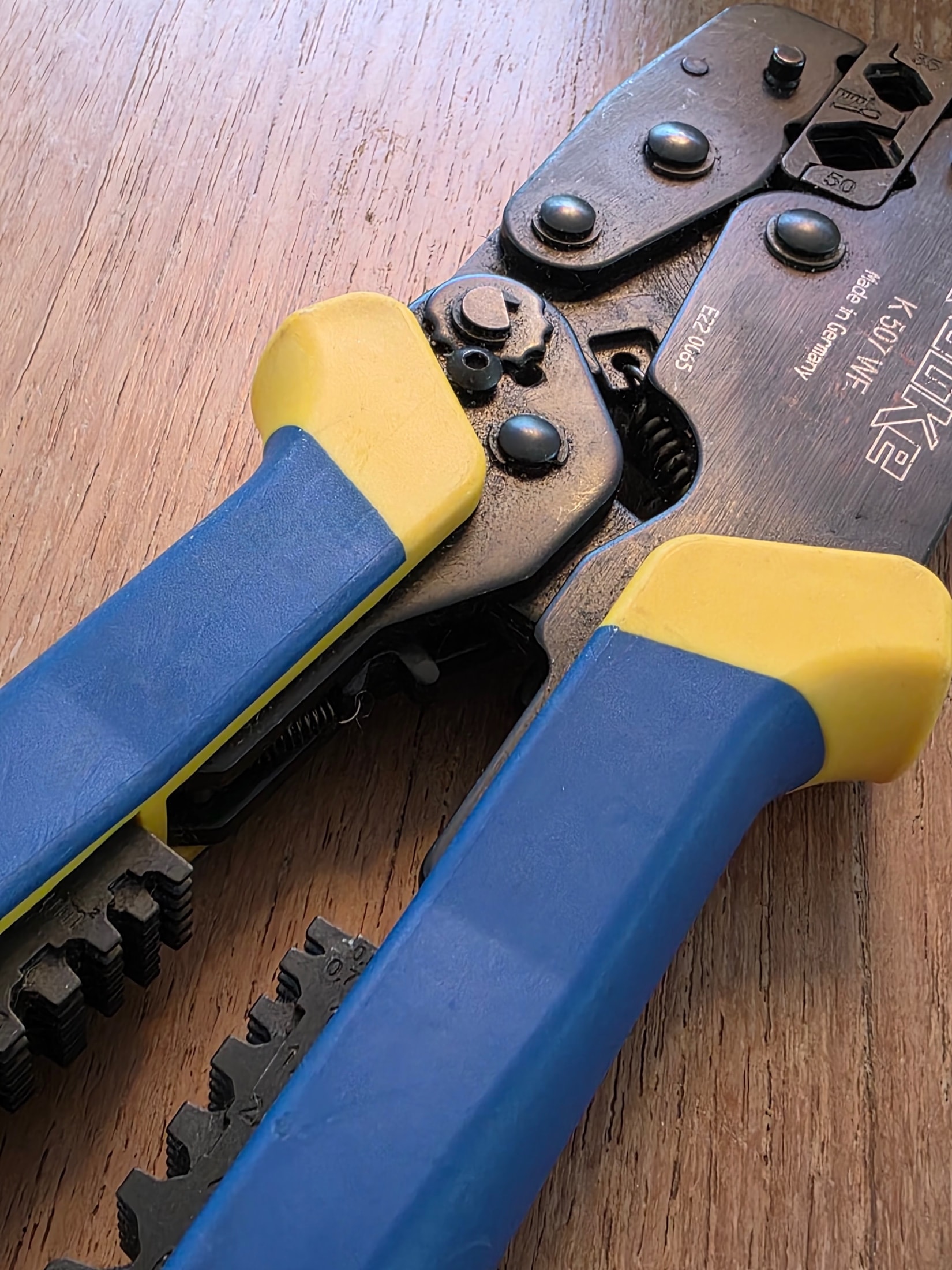
Klauke crimping tool die
The die matches a specific cross-section: the principle of the matched cross-section.
For choosing the lug itself, the basic rules of lug and cable crimping apply: clean stripping, a matched cross-section, and compliance with the lug manufacturer’s recommendations.
The compatibility of dies and crimping profiles remains a topic in its own right when you mix brands.
Before opening the head, I prepare everything on the workbench: stripped cable, copper tubular lug of the right cross-section, and fine-stranded conductor of classes 2, 5 or 6.
I stay within the R, L and F series covered by the tool, and I keep in mind the 95 mm² limit for solderless lugs.
Clean stripping counts for as much as the crimp itself: clean barrel, without cut strands or insulation in the contact zone, and I save myself a redo.
I place the lug in the die, close the folding head, then I press the single button. The ram advances on its own, and the cycle lasts about 2.5 to 5 seconds depending on the cross-section.
I keep the lug aligned with the die axis throughout the cycle: that is what gives an indentation centered on the barrel.
The ram return is automatic at the end of the cycle, with a manual return possible if I have to interrupt. I never force the die to save time.
Once the cycle ends, I check the lug: clear indentation, even deformation, no strand sticking out of the barrel.
For a power connection, I refer to the lug manufacturer’s values and check that the connection stays within the tool’s scope.
A questionable crimp is redone with a new lug: I never fix an indentation with a second pass.
This is the point where the sources contradict each other, and it needs to be said clearly. The 2021 datasheet lists a Li-Ion battery of 1.5 Ah (16.2 Wh) and a charging time of around 40 minutes. The current package contents state a RAML1225 battery of 2.5 Ah (27 Wh) and a charge time of around 45 minutes.
The most likely interpretation: the product was updated with the 2.5 Ah battery, with the 2021 datasheet being out of date. The cross-check is consistent: 2.5 Ah × 10.8 V = 27 Wh, which matches the RAML1225 label well. It is still wise to check the contents of the case at the time of purchase.
According to retailer listings, the case contains:
The replacement battery is reference RAML1225, which confirms the move to 2.5 Ah capacity. The stated runtime is around 150 crimps per charge, which covers a day of cabinet work without recharging.
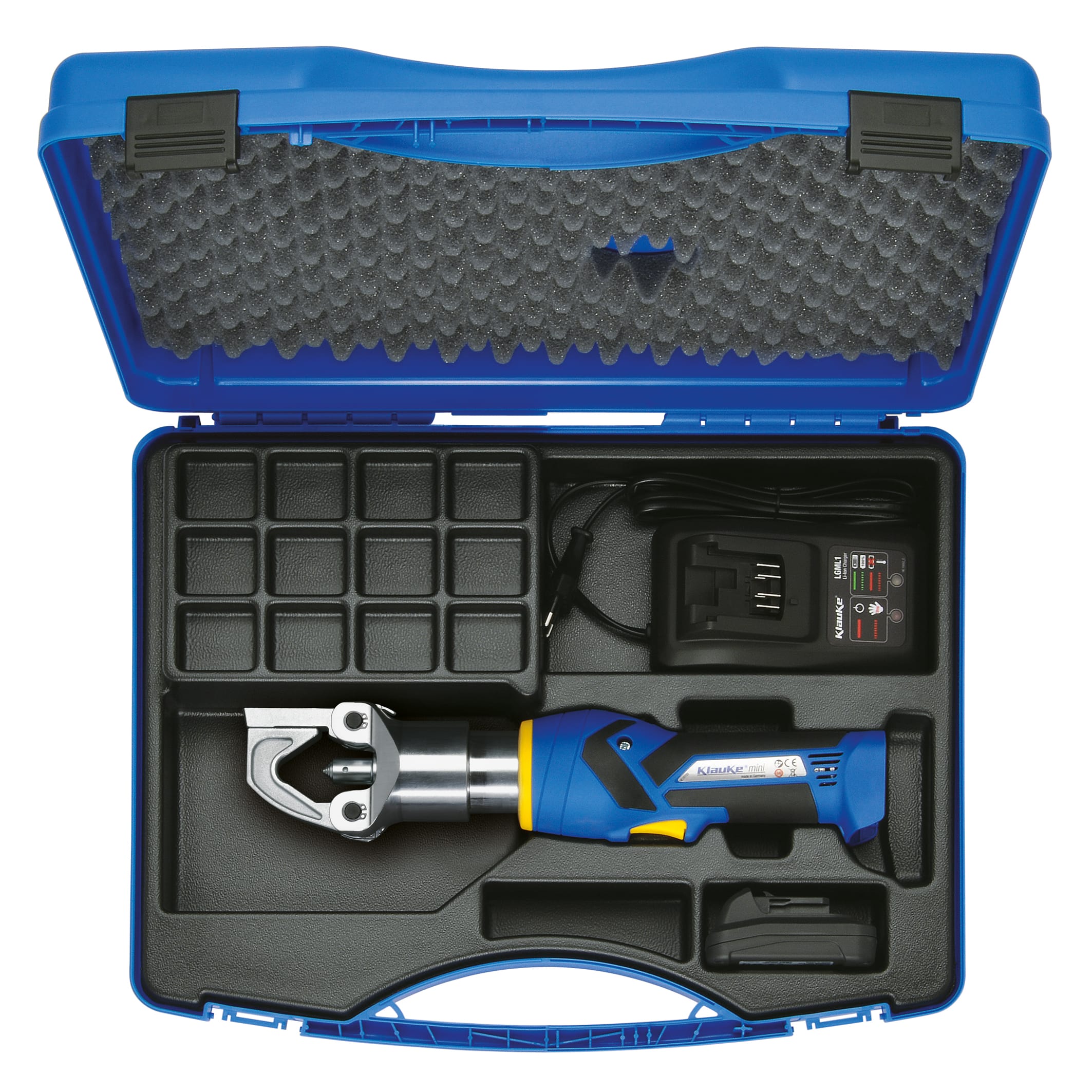
The supplied LGML1 charger runs on 230 V: a standard outlet is enough, in the workshop as well as on the job site at the end of the day.
The stated charging time ranges from around 40 minutes according to the 2021 datasheet to 45 minutes according to current reseller listings, a difference consistent with the battery’s move to the 2,5 Ah capacity.
The battery level LED lets you check the charge status at a glance before heading out on a job. With around 150 crimps per charge, a day of cabinet work lasts without intermediate charging, provided you recharge every evening to set off the next day with a full battery.
The battery uses the Klauke 10.8 V system; the documented replacement reference is RAML1225. For longer jobs without access to an outlet, a matching spare battery can therefore be planned explicitly.
Reseller listings mention the shipping constraints for battery-powered tools: UN 3481 (lithium-ion batteries contained in equipment), ADR 3.3 and special provision 188. In practice, the tool with its battery follows the transport rules for equipment containing batteries, not those for batteries alone.
A reseller FAQ states an annual inspection and maintenance every 3 years or 10 000 crimps. Those figures do not appear in the datasheet.
Info
For the actual maintenance schedule, the manual supplied with the tool is the governing reference; the reseller FAQ remains a secondary source.
The maintenance LED remains a documented tool feature. I note the commissioning date and take the specific inspection and maintenance intervals from the supplied manual.
The same exchange indicates that Klauke only warrants connections made with its own lugs, tested as a system according to the IEC 61238 standard (thermal cycling, tensile test, short-circuit test).
In other words: the tool-plus-lug pairing matters, and using a third-party lug falls outside the brand’s warranty scope.
In power crimping, connection quality depends on the tool, lug and conductor working as a system. The warranty statement here is attributed to the reseller FAQ; the applicable warranty terms are those in Klauke’s system documentation.
Most failures do not come from the tool, but from the action: lug improperly seated, cable stripped too short, cross-section misjudged before the cycle.
Before crimping, I check the connector family rather than the 6 to 120 mm² figure alone: the cited documentation lists solderless lugs up to 95 mm².
For butt splices, Klauke assigns the EKWF120ML; the cited tester feedback about an asymmetric profile supports that separation of applications.
The third is putting the tool away without a final check. I look at the lug deformation and how well the cable holds before moving on to the next connection.
Klauke does not publish a recommended retail price for the EK30IDML: the official datasheet points to distributors without displaying a price.
In France, network wholesalers do not publish their prices online for this reference: no published French price is available, and the price has to be requested from a trade distributor or on a quote.
To judge a price, I first look at what the case contains, because the gap between two offers often comes down to the contents more than the price.
The advertised kit includes the EK30IDML tool, the RAML1225 battery, the LGML1 charger, the KKML carrying case and the manual: this full scope is what must be compared from one supplier to another, and not the bare tool alone.
Finally, I recall the discrepancy between the listings pointed out above: as long as no published French price is available, the price is confirmed by quote before deciding.
Conseil
Beware of inconsistent reseller listings on this model. One listing states 18 V, 38 kN and 3 kg, and another displays “40 kN” in its title: these values contradict the corroborated combination of 30 kN / 1.95 kg / 6 to 120 mm². When a listing disagrees, use that corroborated specification set as the comparison target.
The EK30IDML is one of the entries in the ML family. Three neighboring models surround it, with clearly distinct territories:
| Model | Profile | Sections | Marker |
|---|---|---|---|
| Model EK30IDML | Profile Indent, without die | Sections 6 to 120 mm² (95 mm² for lugs) | Marker Without die |
| Model EK354ML | Profile Indent | Sections 6 to 150 mm², 35 kN | Marker 35 kN |
| Model EKWF120ML | Profile Connectors | Sections 6 to 120 mm² | Marker Connectors |
| Model EKM60ID | Profile Indent, connected | Sections Up to 240 mm², 30 to 60 kN | Marker Bluetooth |
Positioning of the nearby Klauke crimping tools, based on the listings reviewed.
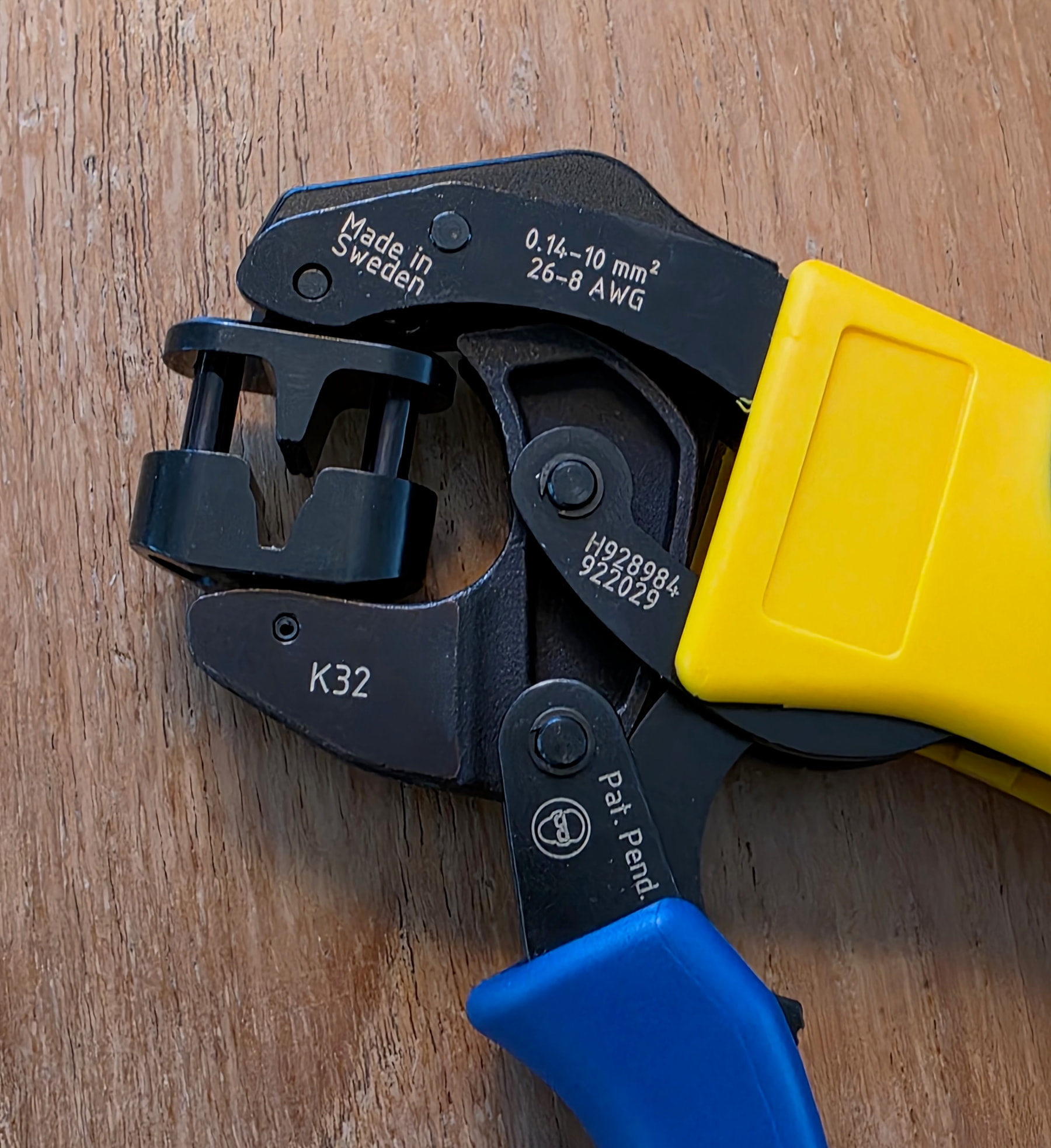
Klauke K32 crimping tool head
The range engraved on the head places the K32 among small wiring cross-sections.
The logic reads simply: the EK30IDML handles tubular lugs with indent crimping without an accessory, the EK354ML adds cross-section and force but keeps the indent principle, the EKWF120ML is the tool for connectors, and the EKM60ID covers very large cross-sections with connected tracking.
For small wiring cross-sections, the manual K32 TWIST-it pliers remain relevant, just like the EK50ML in electromechanics for fine insulated connections.
To decide within the range, I don’t look at the cross-section alone, but at the type of connection. Copper tubular lugs in series, with no die to change: the EK30IDML fulfills its role.
If more cross-section and force are needed while staying with indent, the EK354ML takes over. If connectors dominate the site, I go straight to the EKWF120ML.
For very large cross-sections with connected tracking, the EKM60ID completes the family. The EK30IDML uses Klauke’s 10.8 V battery system, with RAML1225 as the documented battery reference.
The manufacturer’s positioning (panel builders) and tester feedback converge: the EK30IDML serves where tubular lugs are handled in quantity, in confined spaces.
The folding and swiveling head at 350°, the weight of 1.95 kg and the short cycle of 2.5 to 5 s are designed for cabinet interiors, where you don’t want to carry around a tool with dies.
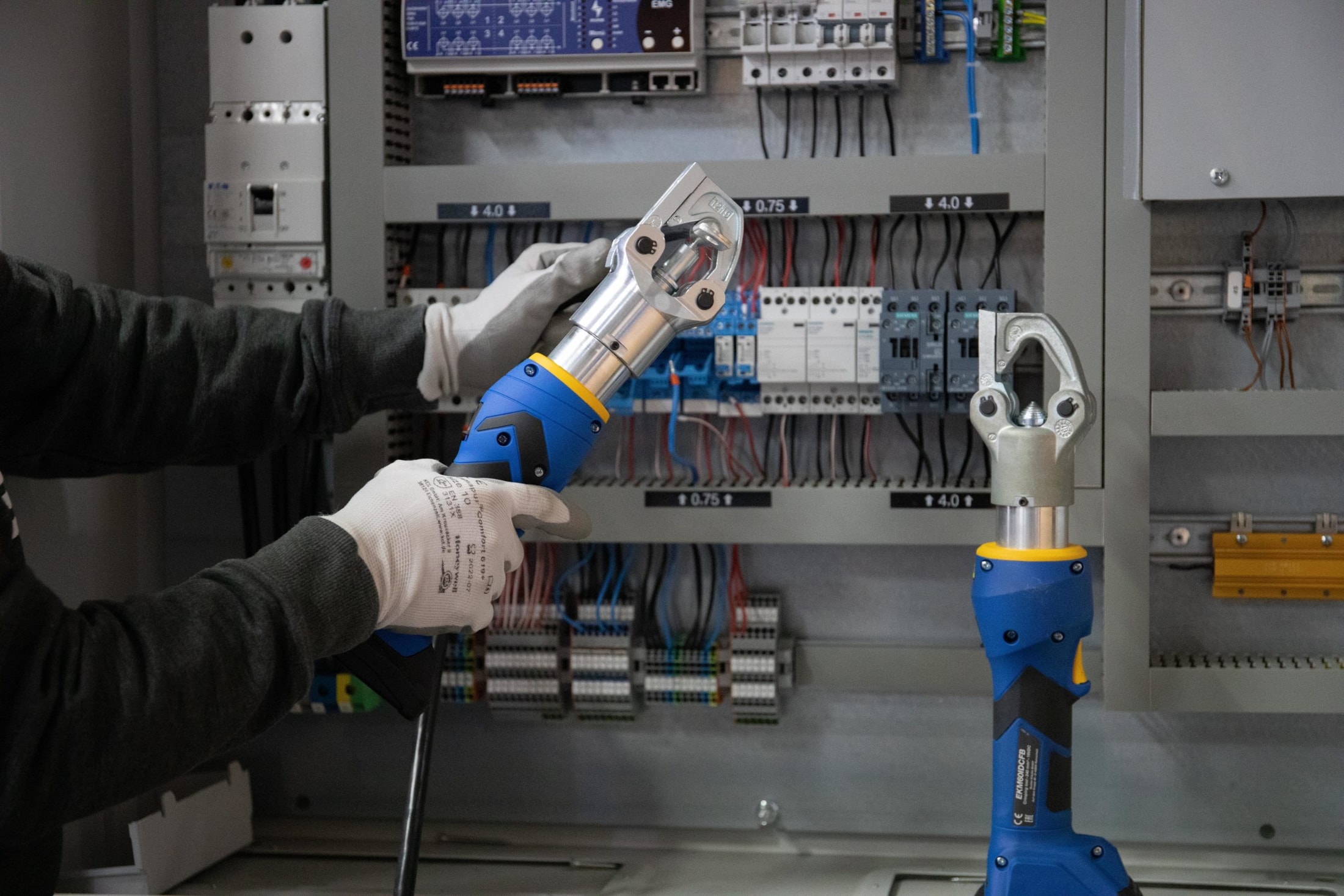
A few documented usage benchmarks: operating temperature from −10 °C to +40 °C, one-button operation, automatic ram return, and a battery LED plus a maintenance LED. Nothing replaces checking the manual for lockout and the manufacturer’s limits before first use.
Info
An electric crimping tool does not transform a connection: it makes it faster. Clean stripping, a lug suited to the cross-section and checking the crimp remain mandatory steps, as the lug crimping guide points out.
The Klauke EK30IDML meets a specific need: crimping copper tubular lugs in series without changing the die, with 30 kN and a form factor suited to cabinets. Tester feedback documents a real gain, up to 1 crimp instead of 4 on 120 mm².
Its application is clearly defined: R, L and F tubular lugs, documented solderless lugs up to 95 mm², and Klauke’s 10.8 V battery system. Butt splices are handled by the EKWF120ML in the range.
For panel builders and repeated tubular-lug work, the EK30IDML matches its documented purpose. Other connector families or small control cross-sections call for tools designed for those applications.
3 questions
InteractiveKlauke EK30IDML crimper without dies
3 questions to check the essential reference points
Choose an answer
The EK30IDML crimps with die-less indentations: the closed jaw performs the crimp on its own, from 6 to 120 mm². A tester equipped with an EK60UNV-L had to crimp a 120 mm² lug 4 times, versus 1 crimp with the EK30IDML.
The stated range is 6 to 120 mm² in copper, but for solderless lugs, the documented limit is 95 mm². Beyond that, look at the EK354ML, rated up to 150 mm² with 35 kN. See also the rules for crimping cable lugs.
No, it is designed for R, L and F series tubular lugs. Testers report an asymmetric crimp on connectors, solved by the EKWF120ML, Klauke's dedicated tool.
Klauke's 10.8 V Li-Ion battery system. The 2021 datasheet stated 1,5 Ah (16,2 Wh); the current scope of delivery includes the RAML1225 with 2,5 Ah (27 Wh), with a charge time of around 45 minutes and around 150 crimps per charge.
Klauke does not publish a recommended retail price for this model. The French price is not published online: the price must be requested from a distributor or via a quote, by comparing the contents of the kit (tool, battery, charger, case).
A reseller FAQ states an annual inspection and maintenance every 3 years or 10 000 crimps. For the actual intervals and warranty terms, use the Klauke documentation supplied with the tool and system.
Théo Desrousseaux
Electrician and editor
I work in the field and edit this magazine. Every guide is reviewed for its target country before publication.
Practical electrical installation guides, diagnostic methods and tool recommendations compared against the technical wiring standards of this national edition.

Founded in 1879 in Remscheid, Klauke moved from watchmaker's pliers to lugs and crimpers. Its history, range and place in electrical engineering.
Read the guide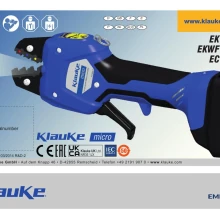 Guide Klauke EK 50 ML: characteristics and limitations Klauke EK 50 ML: verified specifications, compatible dies, the contents of the case and the limits for wiring and crimping before buying. Read the guide
 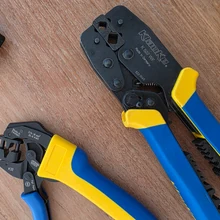 Guide Klauke K32 TWIST-it and K507 WF: electrician review Field test of the Klauke K32 TWIST-it and K 507 WF manual crimping tools, supplied by the brand: 0.14-10 and 0.5-50 mm² ranges and verdicts. Read the guide
  Guide Ilkott pants review: 2026 field test Ilkott review of the Fresh Collection pants and AA61 bag, tested on real jobs: flexibility, freshness, pockets, knee pads, tool bag. Read the guide