FACOM lifetime warranty: UK cover and exclusions
In brief
- FACOM offers lifetime replacement or repair for eligible tools, subject to the applicable terms and confirmation of a qualifying materials or workmanship defect.
- Not every FACOM product has lifetime cover. The manufacturer also publishes two-, three- and five-year terms, so the exact product page matters.
- For tradespeople, long-term warranty support can strengthen a purchasing decision, but downtime, transport and exclusions still have to be considered.
- UK terms are not the French terms: returns may need to be carriage paid, inspection is required, and wear, neglect and misuse are excluded.
- The FACOM tools shown come from a documented French product shipment and photo collection, not a completed UK warranty claim.
FACOM publishes lifetime replacement and repair warranties for eligible tools, but neither offers unlimited cover. The outcome depends on the exact model, the terms applicable to the purchase and a qualifying materials or workmanship defect. For a UK buyer, those conditions matter more than the word ‘lifetime’ alone.
They are not a promise to replace every damaged tool, whatever happened to it or however it was used.
The question matters because a tradesperson might buy a pair of pliers or a set of screwdrivers expecting to carry them for years. An occasional breakdown is one concern; having to buy the same tool again and again is another.
A manufacturer offering a route to a replacement or repair long after the purchase can offer real value.
This UK edition uses the international FACOM terms published on facom.com, rather than treating a French distributor procedure as British policy.
The French site offers useful examples of individual product references, but its rules about purchase receipts and its particular distribution network cannot simply be copied into an article for the UK.
I also separate three sorts of evidence: what FACOM states in its official documents, what a photograph proves about a real tool, and what would need a recorded claim or repeated field testing. It is possible to appreciate the warranty without inventing a success story that never happened.
What a lifetime guarantee actually promises
The global FACOM warranty page lists Lifetime Replacement Guarantee and Lifetime Repair Guarantee as distinct forms of protection. For both, the stated trigger is a product becoming defective because of faulty materials or workmanship within its lifetime.
Replacement and repair are not interchangeable words in the contractual promise.
A replacement policy is attractive because a failed tool can potentially be substituted for a usable one, subject to the claim being accepted. A repair policy may be more relevant to an assembly that can be brought back into service.
Neither label tells you the likely turnaround time before the manufacturer has inspected the specific product.
The word lifetime is not a statement that the product cannot wear out. Nor does it automatically mean an unqualified promise for the whole company catalogue. It describes the potential length of the manufacturer cover for eligible references, under the applicable terms.
The difference is easiest to see with a simple hypothetical case. Suppose a screwdriver experiences a material defect during its intended use, many years after purchase.
If its warranty provides lifetime replacement and the manufacturer confirms the defect, that is the type of situation the published commitment addresses. Now suppose the same screwdriver is used as a chisel or pry bar and bends.
A lifetime headline does not remove the exclusion for use outside its intended purpose.
Before paying extra for an expensive tool, I would therefore ask two separate questions: what kind of defect is covered, and which remedy is actually available on this model? A logo or a general warranty banner is not enough.
Replacement, repair and limited warranties side by side
FACOM’s international site publishes five broad categories: lifetime replacement, lifetime repair, five years, three years and two years. The conditions may also differ by country, distributor and product family.
The correct category should be found on the exact part number’s product page or confirmed by the appropriate FACOM support team.
| Published category | Basic manufacturer undertaking | Check before relying on it |
|---|---|---|
| Published category Lifetime replacement | Basic manufacturer undertaking Replace a qualifying defective tool at no charge when a materials or workmanship fault is confirmed | Check before relying on it Product eligibility, inspection, return carriage, exclusions and availability |
| Published category Lifetime repair | Basic manufacturer undertaking Repair a qualifying defective tool at no charge when an eligible fault is confirmed | Check before relying on it Repair route, likely downtime, components covered and inspection |
| Published category Five years | Basic manufacturer undertaking Repair or replace a qualifying defective product during the published period | Check before relying on it Purchase date and the individual product category |
| Published category Three years | Basic manufacturer undertaking Repair or replace where the limited conditions are satisfied | Check before relying on it Whether calibration, accuracy drift or misuse is excluded |
| Published category Two years | Basic manufacturer undertaking Repair or replace a qualifying defect during the specified period | Check before relying on it The product type, date of purchase and documentation requested |
The summary follows FACOM's published global warranty. It does not replace the exact terms for a UK product.
Lifetime replacement is more than an extended two-year promise
An ordinary limited warranty eventually reaches its end date. A lifetime replacement arrangement removes that simple calendar limit for the reference to which it applies, while still testing the cause of the defect and the requirements written into the agreement.
For a tool kept in a workshop for a decade, that distinction is valuable. Its owner may not be able to locate an old order quickly, and the tool may be an established part of an everyday routine. A supported replacement could allow the same kind of work to continue without a second purchase at full price.
That is the strongest favourable case for FACOM: it gives the user a reason to invest in suitable long-lived hand tools. It is not a quantified claim that every FACOM product lasts ten years or that a claim is always accepted.
Such figures would require independently observed failure and claim data that are not available in this article.
Lifetime repair addresses a different need
Some tools have mechanisms or assemblies that can be repaired. The lifetime repair category offers a path to restoring the eligible item after a confirmed manufacturing or material fault. For someone who appreciates an established tool, repair can make sense.
It also creates a practical question: how will work continue while the tool is away? A broken critical tool cannot always wait for a courier and assessment. A tradesperson may need a suitable spare, or to rent or borrow an alternative if a particular job cannot proceed without it.
I would never interpret lifetime repair as a commitment to a same-day exchange. A repair claim has to move through acceptance, logistics and the physical work required. It is more informative to ask support about the current case than to repeat an unverified average turnaround.
Limited terms matter for technical equipment
FACOM also sells technical tools and workshop equipment. Two-, three- and five-year categories in the global guarantee are not a contradiction of the lifetime arrangements. They are separate commitments that reflect different products.
For example, the French warranty documentation places electric, hydraulic and pneumatic equipment in a D2 category and controlled-torque tools in a D3 category. That is French product-family information, not a substitute for checking the UK page for a particular item.
It illustrates why even two tools sold under the same brand may have different cover.
Controlled-torque tools warrant extra care. Mechanical accuracy may drift with use, and calibration is not the same as a manufacturing defect. Neither the warranty headline nor a brand reputation replaces the verification that a torque value remains reliable for the work.
Metal tool storage can also have a separate limited guarantee. A drawer runner, wheel, lock and the drawer’s metal body need not share identical coverage. Buying a complete cabinet does not make each accessory a lifetime-replacement hand tool.
The exclusions are part of the promise, not hidden fine print
The international FACOM terms explicitly exclude fair wear and tear, particularly on wear components. They also exclude failure to use a product for the manufacturer’s intended purpose or in accordance with instructions, neglect and inadequate maintenance.
That is why a legitimate warranty and a rejected claim can both exist. One situation may be a recognised manufacturing defect; another may arise from an impact, overload, moisture damage or a modification. A photograph alone may not establish the cause.
The manufacturer reserves the right to inspect tools claimed under warranty.
There is a straightforward way to read that limitation. If an item has genuinely failed while used as specified, the warranty may offer meaningful help. If it is damaged because it was used as something else entirely, the published undertaking is not open-ended accident insurance.
As an electrician, I also keep workplace safety separate from a warranty claim. A screwdriver that is bent, cracked or damaged in a safety-critical area should not remain in use simply because a replacement might eventually be granted.
In particular, a warranty is not a replacement for the appropriate electrical isolation measures or a tool’s insulation markings.
Three questions prevent most misunderstandings: what does the part number actually say, what happened to the tool, and what do the manufacturer’s exclusions cover? None should be answered from an advertising slogan alone.
FACOM screwdrivers: a real photograph, not a fabricated endurance test
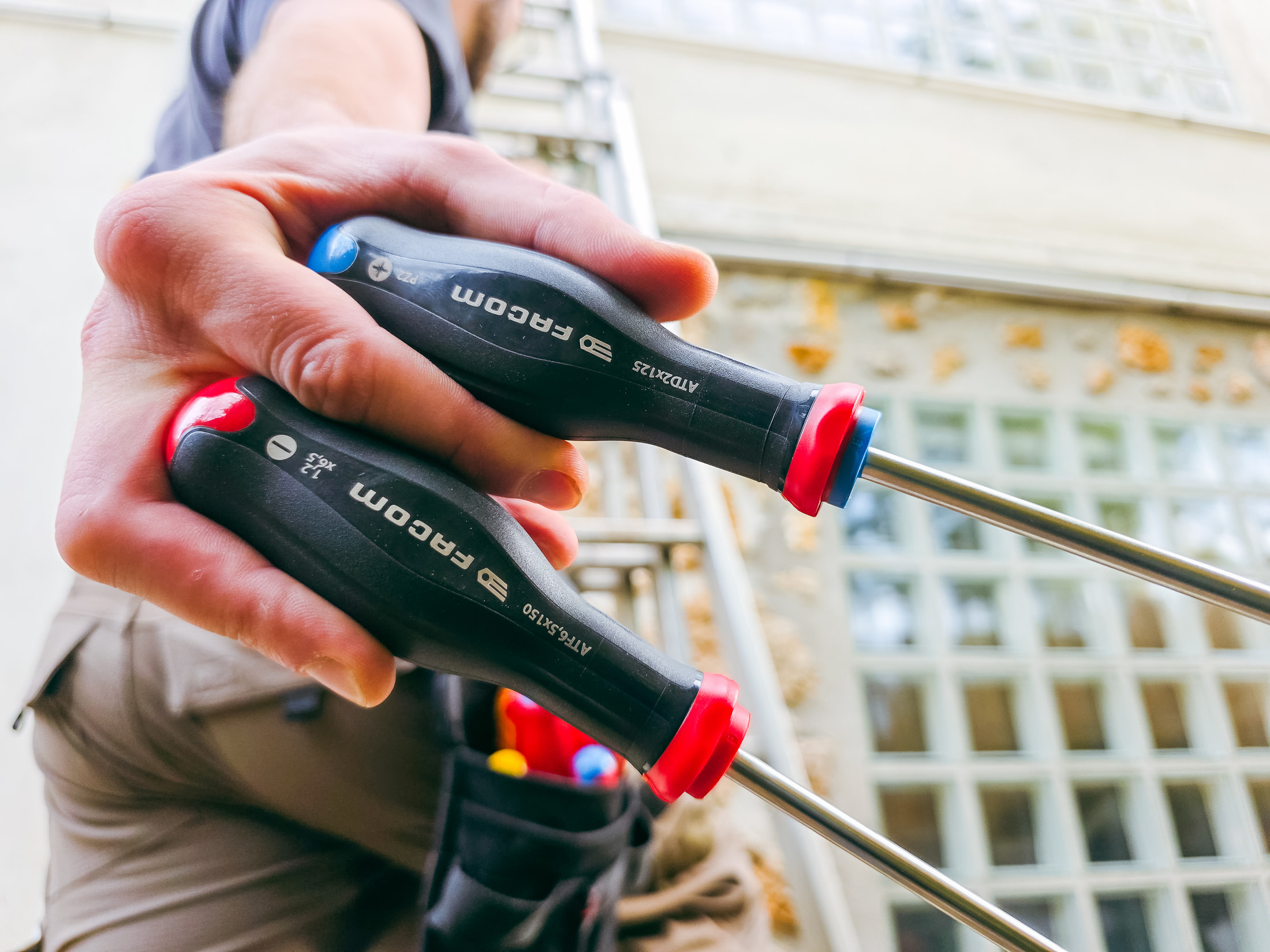
The photo archive includes two FACOM screwdrivers identified by their file name as ATD2X125 and ATF6.5X150. They are relevant because they represent the type of hand tool for which a durable warranty may influence a tradesperson’s purchase.
FACOM’s French product page for the ATD series includes the ATD2X125 and states a lifetime exchange guarantee. That is a valid example of the promise as published by FACOM France.
It does not automatically prove the same paperwork route, proof requirements or legal position for a UK sale of that reference.
Nor does the picture establish that I have used these specific screwdrivers on dozens of jobs. It shows a pair of identifiable tools and a moment of handling them.
Separately, correspondence with the FACOM team confirms that several screwdrivers and pliers were received for a field-review project in France. Future product testing is not retrospectively completed by that delivery.
An honest review is more useful when the evidence is separated this way. The manufacturer provides the warranty terms; the photographer documents the tools; repeated real-world usage would support a verdict on their performance. Conflating these stages would weaken the article rather than improve it.
SWINGO automatic wire stripper: what is established
FACOM France lists the SWINGO 793936PB automatic wire stripper with a lifetime exchange warranty. Its product page gives a nominal stripping range of 0.02–10 mm² and an adjustable stripping length of 3–18 mm. These are published specifications, not measurements made by me.
The distinction matters when comparing it with manual strippers, cable cutters or combination pliers. A lifetime guarantee is a reason to investigate a product, but the quality of stripping and conductor protection still needs a proper practical test, ideally across real cable samples and repeated uses.
I would test consistency, access inside an enclosure, adjustment, hand comfort and the state of copper strands after stripping. None of these results can be invented from the marketing sheet. A claim that the SWINGO outperforms another named stripper would need actual comparable evidence.
For a UK purchase, check whether the precise version available from the seller has the same published terms. A French listing for a PB suffix does not tell a UK reader that every similarly named SKU, kit or older variant has identical conditions.
A FACOM 181A plier and the limits of brand-wide claims
For dimensions and jaw geometry, see my Knipex Cobra versus FACOM 181A comparison. It is a product comparison, not evidence of identical warranty cover.
The 181A.25G is another precise FACOM reference documented in the manufacturer’s catalogue. Rather than assume that every multigrip plier has identical warranty treatment, I would verify the stated cover for this part number, in the UK, before relying on it.
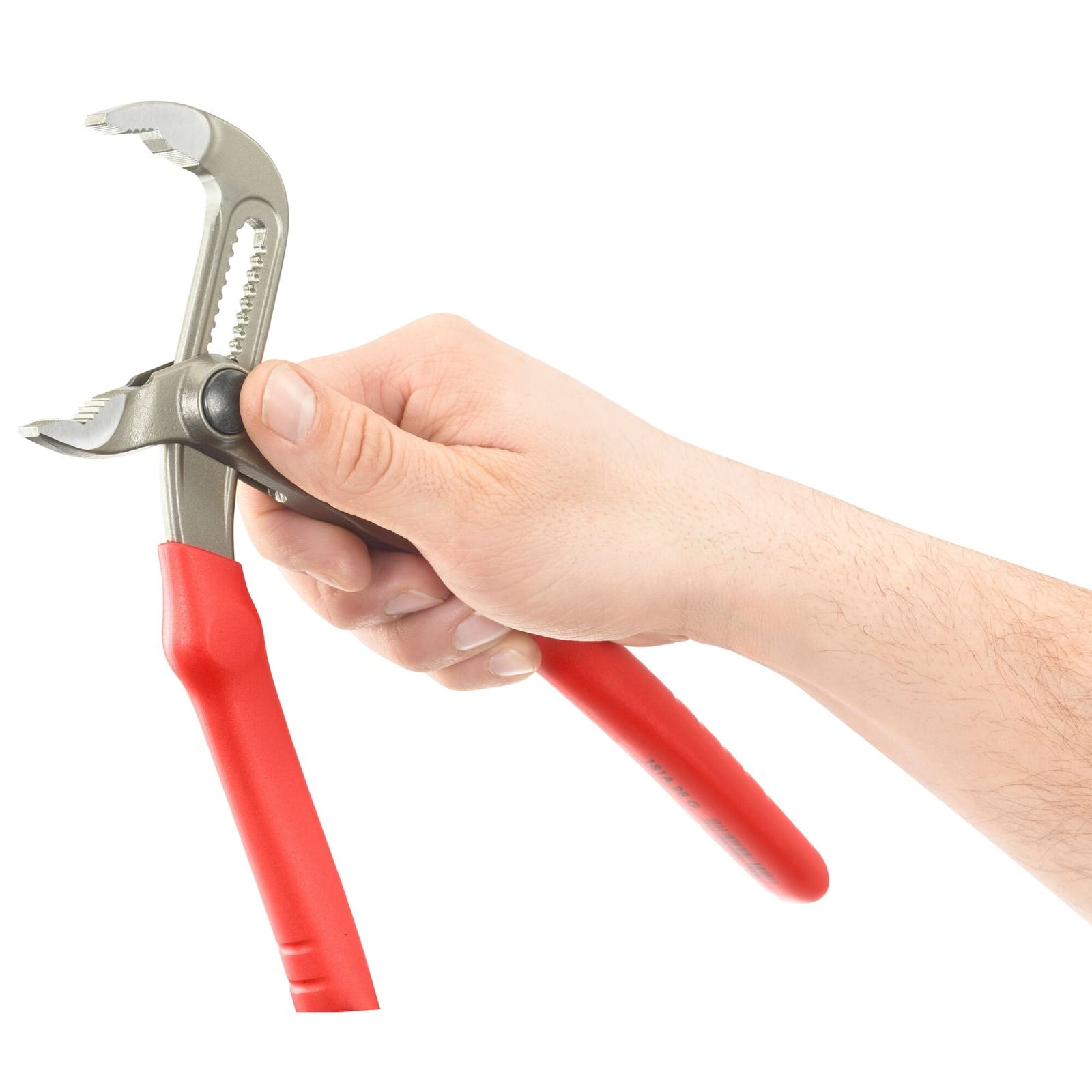
Pliers, screwdrivers and wire strippers have different working requirements. A plier designed to grip a mechanical fitting is not automatically a rated insulated tool for electrical work. The warranty applies to qualifying defects in the specified product, not to a different use or purpose.
A kit creates another possible misunderstanding. FACOM France gives examples of modules where the guarantee is specified for each included reference. The foam tray, box and individual tools need not share one lifetime arrangement.
This is a useful habit in the UK too: identify the component that failed, not merely the name of the kit printed on the packaging.
The reason to stay specific is positive rather than defensive. A buyer who understands the reference can make a strong case for an eligible claim; a buyer relying on a vague brand-wide promise risks disappointment that could have been avoided.
How I would approach a UK FACOM claim
The global warranty states that an item claimed as defective can be examined by the manufacturer and that it must be returned carriage paid under those terms.
The company reserves the right to repair tools or replace defective parts rather than necessarily replace the entire article. For limited warranty periods it may request proof of purchase to establish the date.
These are material differences from the simplified French E/R explanation, which says a branded tool can be considered without an original receipt. An article for a UK user must not imply that the French document overrides the international return conditions.
Before sending anything, I would contact the relevant FACOM support channel or retailer to confirm the process for the actual product. That should include the postal address or authorised route, whether prior approval is needed, how carriage is handled, and which information the claim requires.
I would prepare an accurate description: part number, when the fault appeared, what the tool was designed to do, what I was doing at the time and whether there were any visible signs of misuse or external damage. A clear photograph can be helpful, but the manufacturer can still require the item for inspection.
Keep the receipt where available, especially for a limited warranty. Keep a copy of correspondence and postage details. If a critical tool is temporarily out of service, arrange a backup; do not schedule a job on the assumption that the claim will be settled by a particular date.
This is a proposed practical method, not a report of a personal UK FACOM warranty return. I have no verified UK claim outcome to present here.
UK consumer rights are a separate question
A voluntary manufacturer guarantee is not the same as statutory rights against the seller. The UK Consumer Rights Act 2015 protects consumers buying goods from traders, including rights related to satisfactory quality, fitness for purpose and description.
The circumstances and remedies matter, and the manufacturer warranty does not extinguish those rights.
A six-year limitation period mentioned for England and Wales, or five years for Scotland, is often misreported as a blanket warranty of that duration.
The UK legislation’s explanatory notes make clear that this is not an unconditional entitlement to compensation for any failure during those years. There must be a relevant breach of the statutory standards.
The consumer context is crucial here. Someone buying tools principally for a trade or business is not automatically in the same legal position as a consumer purchasing household goods. That trade purchase may depend on contractual terms and other applicable law.
A good article for tradespeople must not give them a consumer entitlement that does not fit their transaction.
For a qualifying consumer purchase, the route through the retailer and legal rights may be more appropriate than a manufacturer’s guarantee. For an older item beyond a contractual warranty period, the lifetime manufacturer’s promise may provide an additional route where the reference qualifies.
It is therefore useful to keep the two files separate: one for the sales transaction and consumer or business rights, and one for the manufacturer warranty. Which route is appropriate depends on the issue, date, product and purchaser.
Does a lifetime guarantee save a professional money?
Before selecting a whole screwdriver kit on warranty terms, I compare how the tools fit the work. My Wiha versus Wera electrician’s kit guide examines that practical choice separately.
It can, but no honest answer can provide a universal saving without real prices, defect rates and claim outcomes. Buying the cheapest tool repeatedly has a different cost profile from buying a better-equipped tool once and keeping it for many years. Yet a premium price alone does not prove durability.
The useful calculation is about total cost of ownership, including replacements, downtime, maintenance and the availability of suitable alternatives. A successful lifetime claim on a tool that remains part of the everyday kit may reduce future spending.
A warranty claim involving a long wait may still mean buying or borrowing a replacement for the job at hand.
Consider a screwdriver that is used often. A decent handle, the correct tip and resistance to normal work can justify a higher initial investment. If the manufacturer offers lifetime support for a genuine defect, the purchasing case becomes stronger.
I would value that without pretending the paperwork can eliminate wear or misuse.
Now consider a calibrated torque tool. Its useful working life also depends on calibration and care. A limited warranty is not necessarily a poor offer if the tool is the right one, reliable and serviceable.
Comparing it to a lifetime-guaranteed basic screwdriver tells us little about whether it is the right purchase.
The question is what the guarantee supports in the real workflow, not how impressive its name sounds. If the tool is mission-critical, backup availability can be worth more than a theoretical lifetime replacement.
If it is used occasionally, spending more for a warranty that may never be needed could have limited value.
This is why I view FACOM’s lifetime guarantee as one strong part of a buying decision, alongside grip, fit, performance and safe use.
Is FACOM better than other brands on warranty?
Bahco UK also advertises lifetime warranty cover for eligible professional hand tools. Its published conditions define lifetime as the normal life expected of the tool, and distinguish wear from manufacturing defects.
That gives a concrete point of comparison with FACOM’s published replacement and repair categories. Both terms deserve scrutiny: product eligibility, proof of sale, carriage and the route to a decision matter more than the word lifetime alone.
The evidence allows a useful comparison of terms, not a league table of reliability. Different companies may offer lifetime cover on some tools, shorter terms on others, or access to repair services with separate conditions.
A warranty’s practical value also depends on the local retailer and the claims process.
FACOM’s notable strength is that its official documents explicitly distinguish lifetime replacement from lifetime repair. Its global site also sets out the limited categories and exclusions in one place. That clarity is valuable when deciding whether to invest in a tool expected to last.
A competitor’s lifetime promise should be compared on precisely the same axes: which individual products qualify, what happens after failure, which types of wear are excluded, who pays carriage and how local claims are handled. An attractive slogan on a shop page cannot answer those questions.
It would not be sound to say FACOM tools fail less often than a competitor’s based solely on those warranty pages. Nor is the existence of a repair centre proof that every repair has a better turnaround. Both claims need observed performance data.
For a professional purchase, I would compare two actual product numbers rather than two brand names. I would also record the local support route before buying. That takes little time and prevents the sort of wrong expectation that fuels claims that lifetime guarantees are scams.
Why the word lifetime varies by country
The French FACOM guarantee page identifies E exchange and R repair, with a distinct promise that a marked eligible tool can be considered without an original purchase receipt.
The global site, relevant here, phrases the warranty around defects in materials or workmanship and includes carriage and inspection conditions.
Other national FACOM sites use their own wording and documents. A guarantee can be generous in several markets without all the paperwork, distributors or legal remedies being identical. I would never tell a UK owner to insist on a French process simply because an English translation of that process exists.
This also matters for used tools, imported tools and older references. The manufacturer may need to establish the precise product and local route. If the purchase was cross-border, the relevant trading terms should be checked, not guessed from the country of the company logo.
The useful takeaway remains positive: FACOM does publish genuine lifetime repair and replacement commitments. Their boundaries are what make the promise practical and assessable, rather than an unlimited free replacement ticket for every damaged object.
Final assessment: a credible reason to choose FACOM
For eligible hand tools, I consider FACOM’s lifetime guarantee a substantial advantage, especially for people who expect to use and maintain the same equipment for a long time. The manufacturer defines replacement and repair arrangements and also publishes limited terms and exclusions.
I would not buy blindly on the lifetime headline alone. The part number, intended use, UK return conditions and backup plan matter. My positive view of the guarantee does not claim a successful personal warranty case or a completed long-term field test of the photographed tools.
Is the FACOM lifetime guarantee a scam?
No. FACOM publishes lifetime replacement and lifetime repair undertakings for eligible products with qualifying material or workmanship defects. It is not unlimited cover for every type of damage or every item in the catalogue.
Does FACOM replace rather than repair every defective tool?
No. The applicable warranty may provide replacement or repair. FACOM's global terms also reserve the right to repair tools or replace defective parts rather than the complete article.
Is a receipt needed for a UK FACOM warranty claim?
Keep your proof of purchase. The international terms expressly allow a request for it on limited warranties. The French no-receipt rule for E and R should not be assumed to govern every UK return.
Does FACOM pay return postage?
The published global terms say a claimed tool is returned carriage paid. Confirm the instructions and actual costs with the relevant UK support or retailer before shipping.
Are all FACOM screwdrivers covered for life?
Do not assume so. Check the exact part number and its product-specific guarantee. The French ATD series provides an example of lifetime exchange, but that does not settle every SKU or market.
Is the SWINGO 793936PB covered by a lifetime guarantee?
The French product listing states lifetime exchange for the 793936PB. For a UK purchase, confirm the listed version and local guarantee terms before relying on that document.
Does the UK Consumer Rights Act guarantee a tool for six years?
No. Limitation periods for certain claims must not be confused with unconditional six-year cover. Statutory consumer rights depend on a breach of the relevant legal standard and on the purchaser's status.
Has the author personally used FACOM warranty service?
No documented personal FACOM claim is presented here. The article draws on manufacturer documents, product photos and confirmed tool receipts, not an invented service experience.
Disclosure FACOM : hand tools supplied for a French field-review project, including pliers and screwdrivers confirmed received in October 2026.

Théo Desrousseaux
Electrician and editor
I work in the field and edit this magazine. Every guide is reviewed for its target country before publication.
Author → Credentials → Editorial method → Report a factual correction →
No email app? Copy the correction details
Email address and prefilled context:
theo@sparx-elec.fr
Article: https://www.sparx-elec.com/gb/facom-lifetime-warranty-scam/
Edition: GB — English
Factual issue: [describe the factual issue]
Passage: [quote or identify the passage]
Source: [optional source URL]
Sources and references
- 1. FACOM — Global warranty and conditions
- 2. FACOM — Warranty types, European site
- 3. FACOM — Official product catalogue
- 4. FACOM France — Product-specific ATD screwdriver warranty
- 5. FACOM France — SWINGO 793936PB product and warranty
- 6. FACOM France — Manufacturer guarantee categories
- 7. UK legislation — Consumer Rights Act 2015 Official
- 8. UK legislation — Consumer Rights Act explanatory notes Official
- 9. Citizens Advice — Claim using a warranty or guarantee
- 10. Bahco UK — General warranty terms for professional hand tools
More guides
Practical electrical installation guides, diagnostic methods and tool recommendations compared against the technical wiring standards of this national edition.
FACOM ATD2X125 vs ATF6.5X150 screwdrivers
FACOM PROTWIST ATD2X125 PZ2 and ATF6.5X150 slotted screwdrivers compared: verified blade sizes, electrical safety, suitability, limits and UK warranty.
Read the guide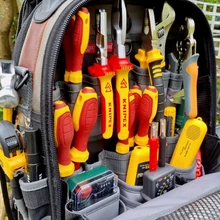 Guide Knipex, Wiha or Wera: comparison for electricians Knipex, Wiha or Wera: compare equivalent VDE pliers and screwdrivers by ergonomics, certification and field use for professional electricians. Read the guide
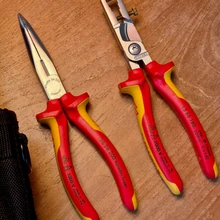 Guide Knipex: the story of the brand Founded in 1882 in Germany, Knipex makes the pliers chosen by professional electricians: history, innovations and a lasting commitment. Read the guide
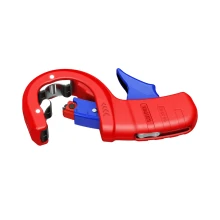 Guide KNIPEX DPT50 pipe cutter (90 23 02): review KNIPEX DPT50 pipe cutter (90 23 02) : diameters 32, 40 and 50 mm, price, blade durability and relevance for the work of an electrician. Read the guide