Prepare
Clean the base and choose a stable support; the bubble does not need to be centred.
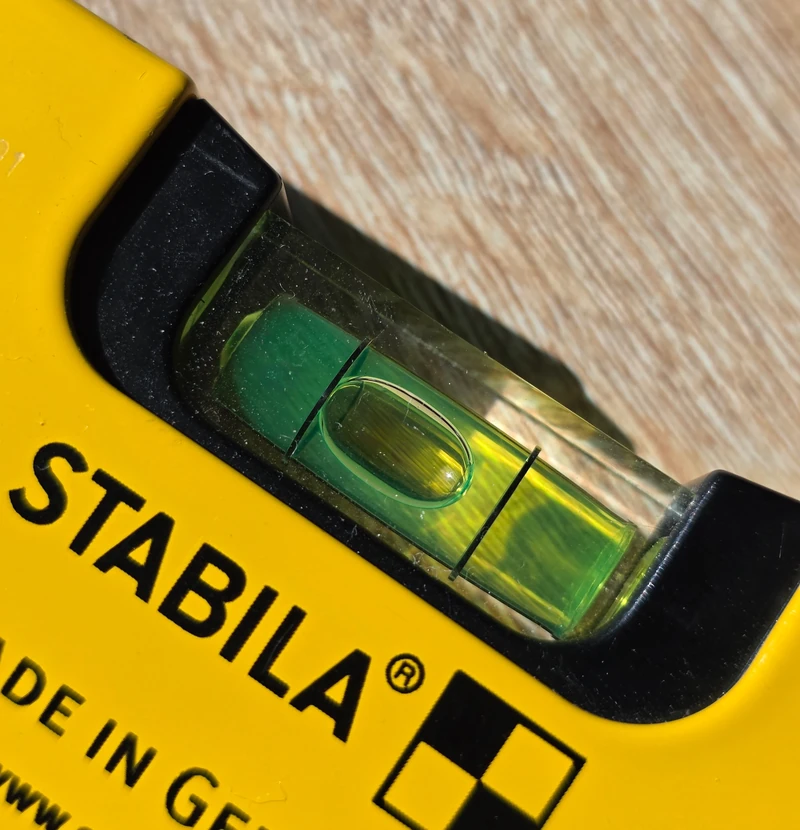
In brief
STABILA, Stanley, and Bosch all have their place among measuring tools. When installing a panel, aligning boxes, or laying out light fixtures, I first compare the function, the length, and the construction of the instrument, not simply its logo.
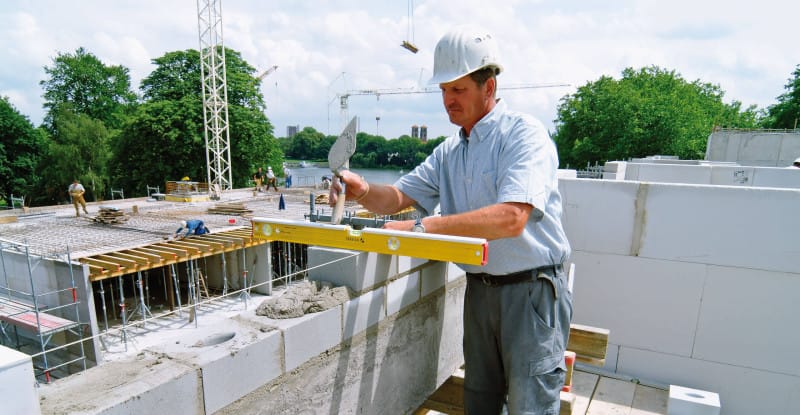
On 25 August 2026, I visited the STABILA factory and campus in Annweiler with Philipp Scholz. There, I learned about the vial assembly process, how the profiles are machined and finished, and the manufacturing checks. I also attended a demonstration explaining different mounting principles.
This visit adds concrete observations to the comparison, beyond the sales sheets.
Transparency: STABILA organised this visit and these demonstrations, including the choice of instruments presented. So I distinguish between what I observed, what the manufacturer claims, and what I have checked in my own work.
I did not run an independent program of drop tests and repeated measurements on multiple units of each brand; no comparative laboratory results are claimed here.
August 25, 2026
visit to the STABILA factory and campus in Annweiler
5 checks
internal quality checks on aluminium levels according to STABILA
14,000/day
maximum production capacity stated at Annweiler in 2026
± 0.5 mm/m
normal tolerance stated for the two level models compared
10 years
manufacturer warranty stated by STABILA for its aluminium levels, subject to conditions
STABILA’s industrial origins go back to the Ullrich family and the folding rules made in the 19th century. Gustav Ullrich founded the Annweiler Meterfabrik in 1889, and the STABILA brand was registered in 1929. Two milestones matter for today’s level: the acrylic vial patent of 1952 and the patent for permanent vial mounting of 1979.
During my visit, I saw how machining, vial production and spirit level inspection are organised in Annweiler. STABILA says it makes the components for these levels from raw materials, including aluminium and plastic pellets. A 1 400 m² production hall opened in 2020 increased its capacity while keeping some manual steps.
In 2026, the manufacturer quotes a capacity of up to 14,000 spirit levels per day. It also states five internal quality checks for every aluminium level. These are manufacturer figures informed by my visit, not a count or an independent audit I carried out on every batch.
Accuracy depends on the complete assembly. The profile must have a geometry compatible with its reference surfaces; the vials are produced, aligned and then fixed in place. STABILA documents precision milling that takes into account the length, cross-section and position of the profile.
A well-adjusted vial would not be enough to make a twisted profile accurate.
This industrial work explains my interest in the brand for professional use. It does not remove the need for a check after a significant drop, for choosing a suitable length or for reading the vial correctly.
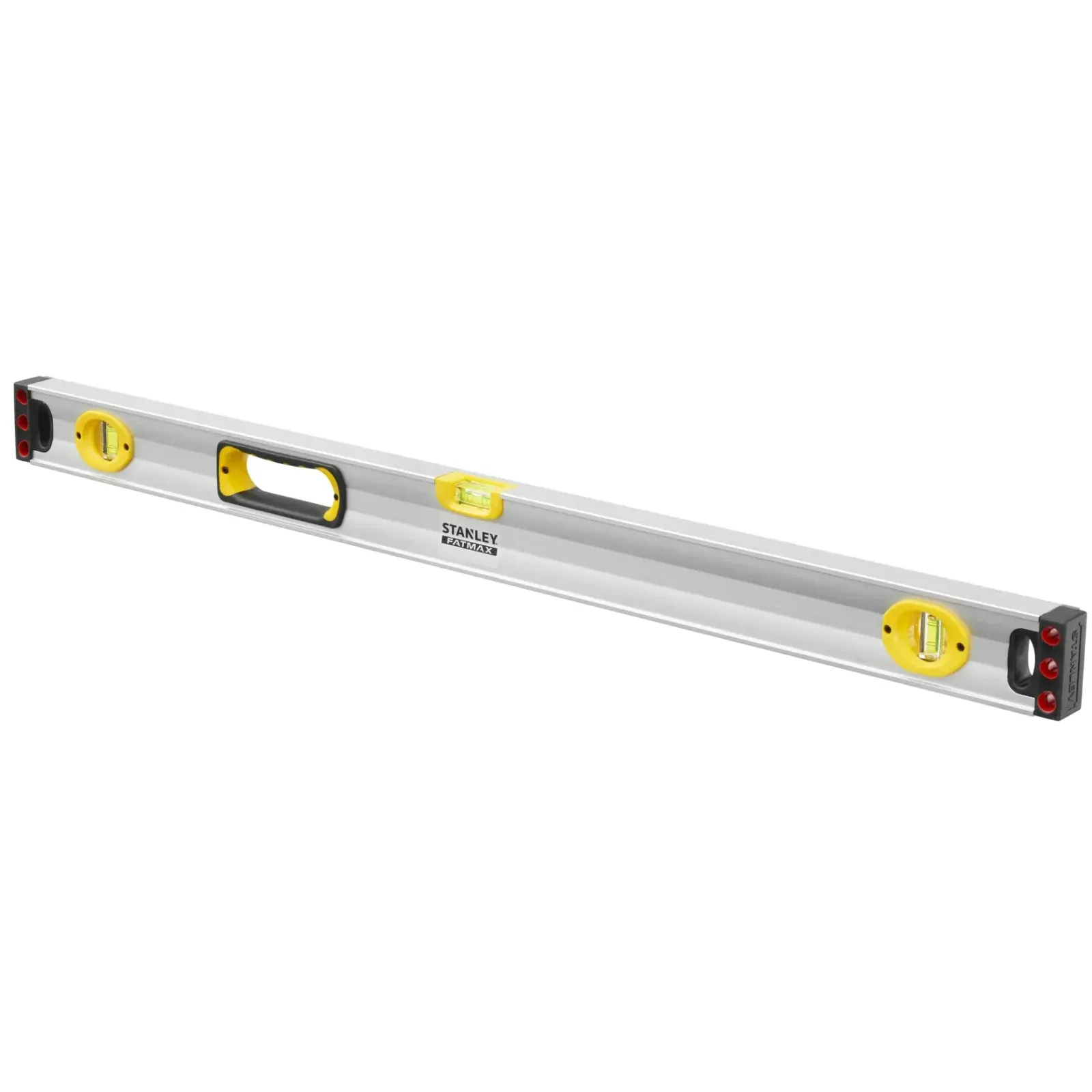
Stanley covers a wide range of hand tools. Here I focus on one identifiable model, the FATMAX Pro magnetic 90 cm 1-43-537, rather than assuming that every model from a brand has the same mounting.
Its French spec sheet states ± 0.5 mm/m, three high-visibility reversible vials, machined bases, one of them magnetic, a reinforced aluminium body and shock-absorbing end caps.
At the STABILA Campus, I saw examples of vial mountings presented to illustrate the difference between a durable bond and an attached or clipped-in fixing. The presentation makes the mechanical principle understandable, but I do not identify the demonstration samples as the Stanley 1-43-537 without documented identification.
The photographs taken on STABILA premises where other manufacturers’ brands are recognizable have been removed from this article.
Depending on the FATMAX Pro generation, Stanley describes different vial and end-cap protection solutions. I therefore keep to the documented specifications of each model, without concluding that all Stanley vials are clipped in or that they necessarily lose accuracy on the first impact.
The French product page for the 1-43-537 advertises a lifetime accuracy guarantee and also mentions a limited two-year warranty in a separate section. You need to check the respective terms and conditions to find out what is actually covered.
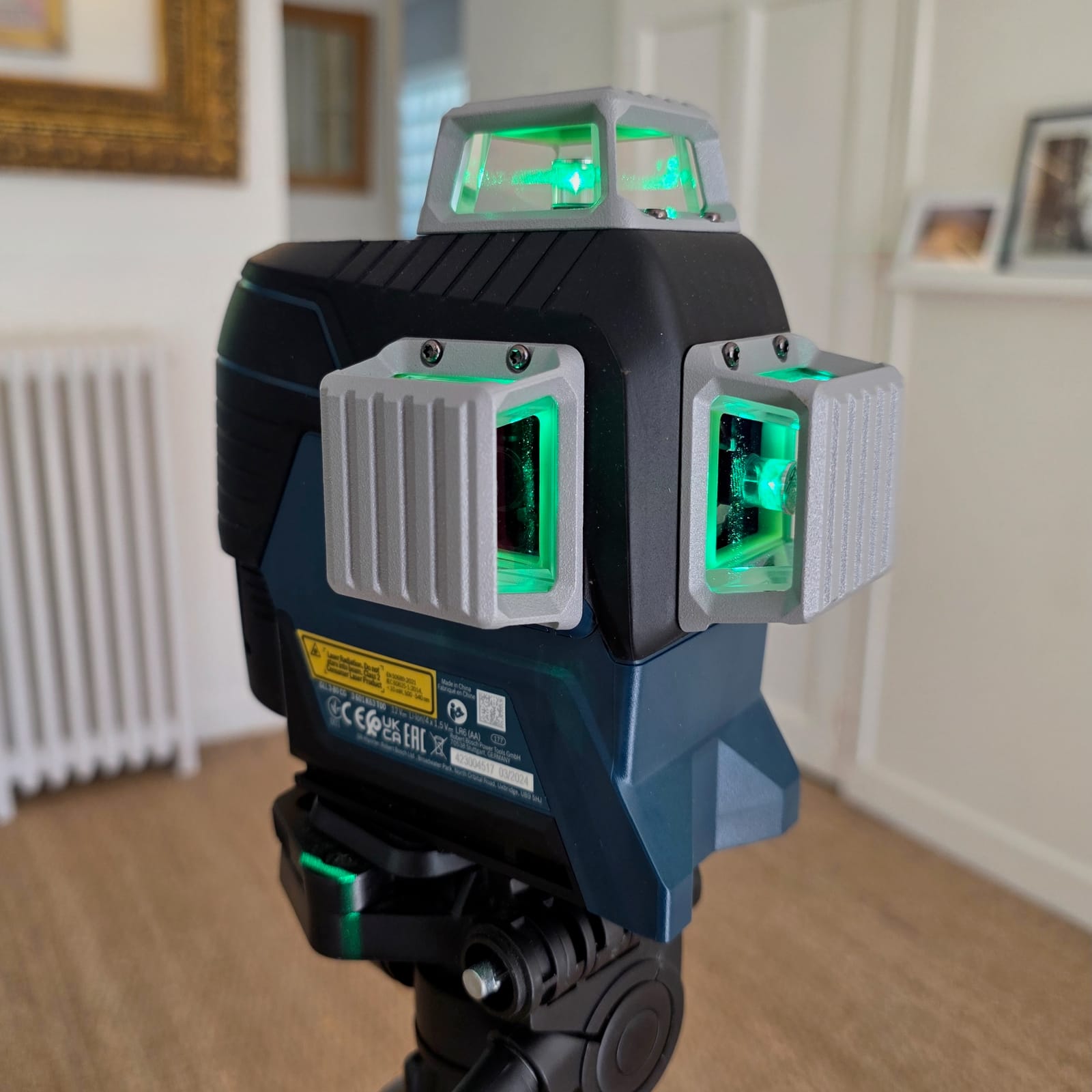
Bosch Professional also sells spirit levels, including 60 and 120 cm models. To transfer a reference over distance, its GLL 3-80 laser illustrates a different function: three 360° lines, a stated leveling accuracy of ± 0.3 mm/m, and a stated range of 30 m without a receiver and up to 120 m with a compatible receiver.
A line laser projects a reference through space; a manual level checks a surface by contact. The specifications of these two instruments do not assess the same task. On my jobsites, I therefore use them in a complementary way.
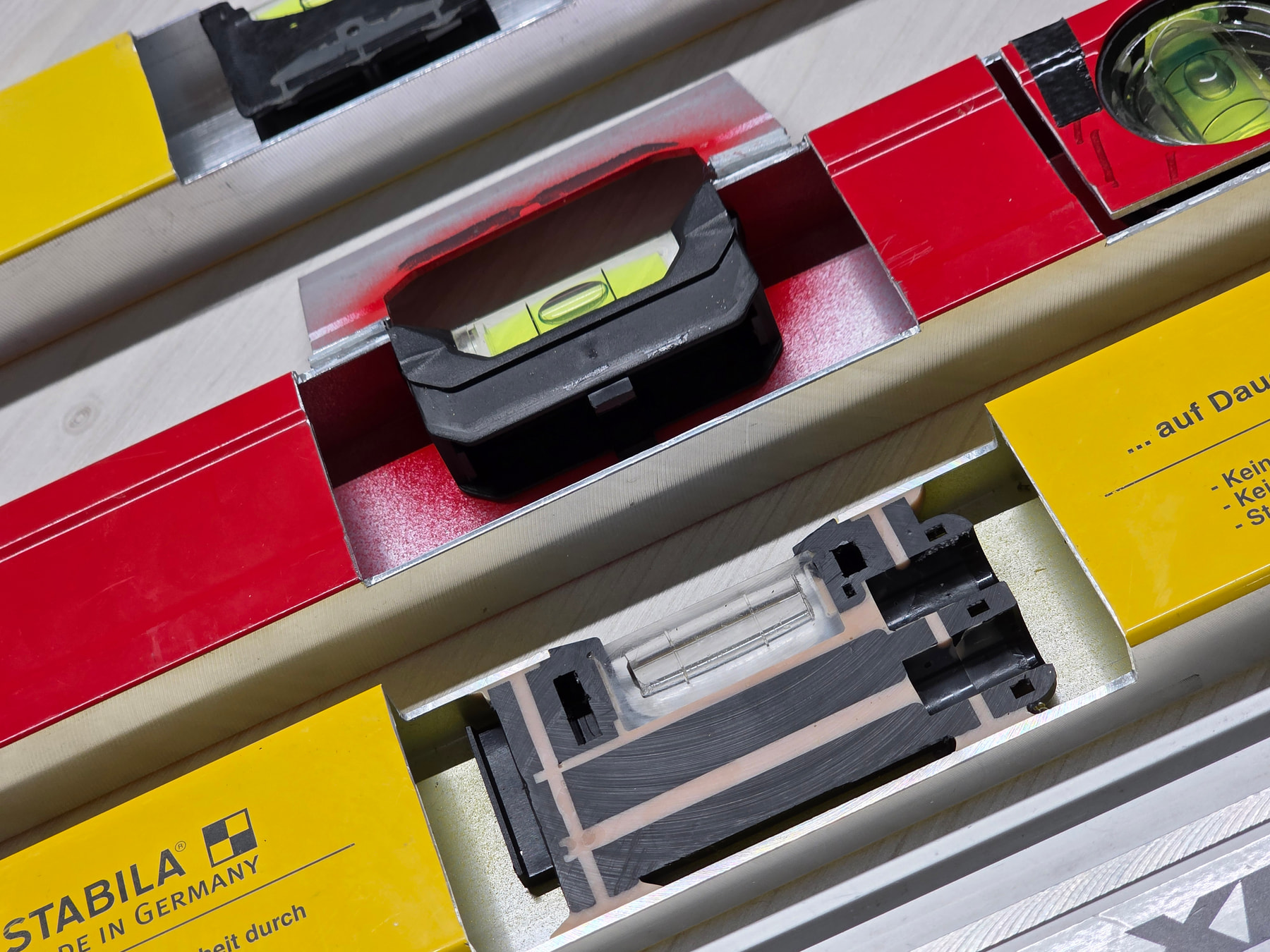
This is the central point of the demonstration at Annweiler. In the LOCKED VIALS system, the vial is cast into a mount developed by STABILA so that it stays fixed in place without stress. The mount is secured in the frame (box-section frame) so as to keep the alignment between the vial and the base.
The manufacturer’s documentation describes a permanent bond with a special synthetic resin, also described in its technical documents as an epoxy resin.
This design addresses a concrete mechanism: a vial whose mount does not move relative to the base keeps its internal alignment more easily.
STABILA associates this bonding with maintaining accuracy through use. I was able to see and understand the assembly during my visit; I do not turn this presentation into a comparative claim of superior strength against other brands.
The permanent integration system was patented in 1979. It does not make the aluminium profile immune to distortion: after a hard fall, the base and the geometry of the level must still be checked. Another brand may use a different fixing or protection method; comparing its strength requires knowing the model and running equivalent tests.
The official STABILA eCampus video explains how vials are fitted and how the manufacturer addresses measuring accuracy; it is not an independent comparison test.
The manufacturing process combines the profile geometry, the making of the vials, their alignment relative to the measuring surfaces and the final checks. STABILA’s documentation states five in-house quality checks during the manufacture of every aluminium level.
The visit to the Campus allowed me to understand how much these operations matter for the finished product.
Depending on the series, the profiles are reinforced with ribs, machined or coated. The Type R 300 uses a five-chamber profile designed to resist twisting. The 96 and 196 series use reinforced rectangular bodies.
Magnetic models, shock-absorbing end caps and milled surfaces each serve their own purpose: their characteristics do not carry over to every model.
The vial is a precision component: transparent acrylic glass, surfaces designed to limit refraction, reading rings and a fluorescent liquid designed to resist UV. STABILA states a reading range of −20 °C to +50 °C. On a dark job site or in an awkward position, a vial’s readability is a functional feature, not a decorative detail.
The STABILA 96-2 K and the Stanley 1-43-537 both state ± 0.5 mm/m in the normal position on the base. This figure is a maximum tolerance quoted under the manufacturer’s measuring conditions; it does not mean that every individual unit has exactly this error.
The visit highlights STABILA’s adjustment work, but without a series of independent measurements on the two models, I do not publish a quantified average difference.
The French standard NF E11-301 exists for spirit levels. Its existence is not an automatic certification of every accuracy claim made for each level sold. I distinguish published specifications, manufacturing checks, and independent tests: these are not interchangeable forms of evidence.
A level can lose its accuracy when its vial shifts relative to the frame, when its frame deforms, or when its base rests on dirt. The LOCKED VIALS seal addresses the first risk: it does not eliminate the other two.
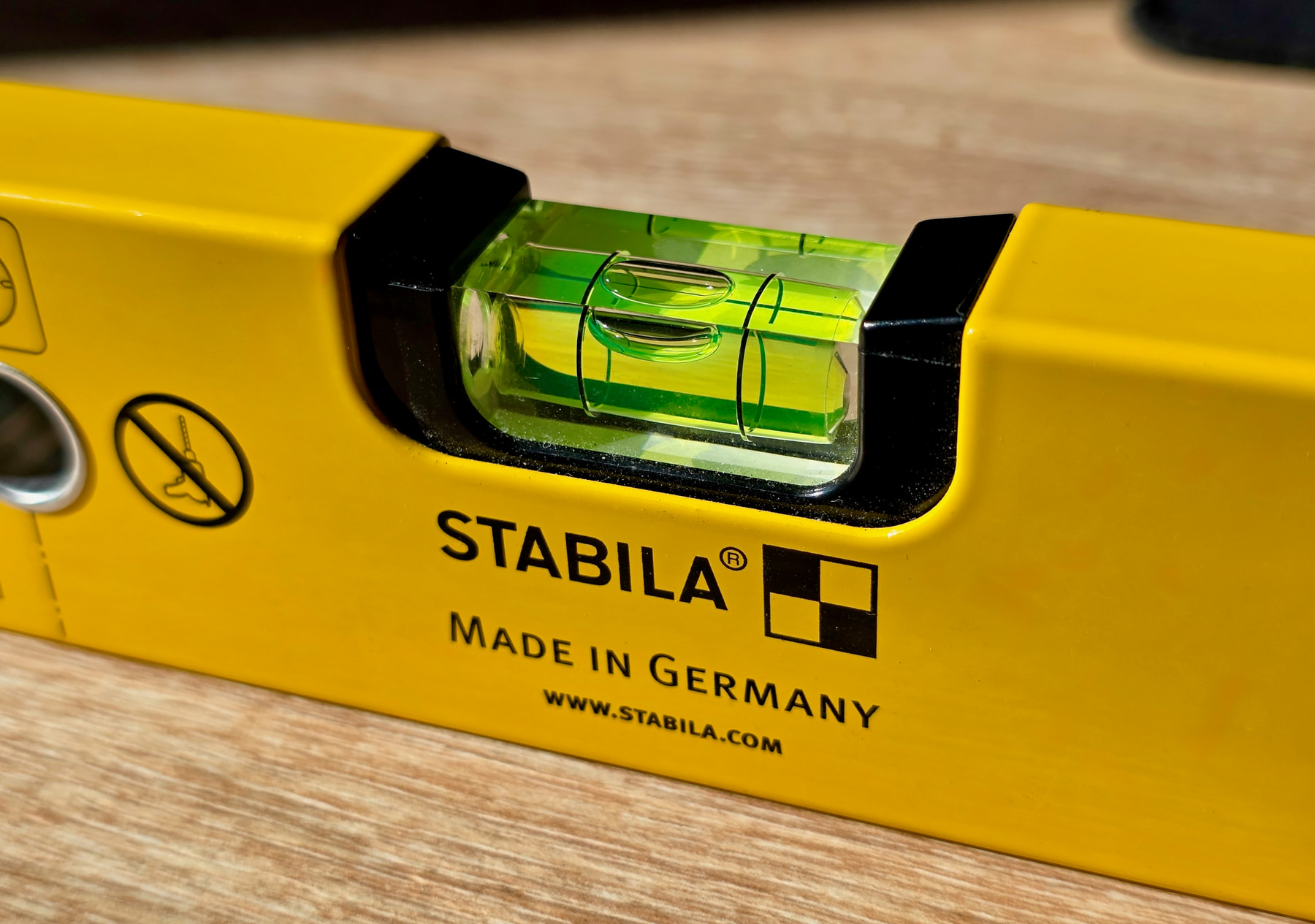
If the vial is not permanently sealed to the frame, it can shift after an impact, throwing off the reading with no obvious external sign. That is the technical risk addressed by the process STABILA patented in 1979. This explanation concerns one type of assembly, not “the competitors” as a whole or the Stanley 1-43-537, whose internal construction has not been established in this article.
STABILA advertises a ten-year manufacturer’s warranty on its aluminium levels, with conditions and exclusions, in particular for deformed frames. Stanley publishes its own warranty terms for the FATMAX Pro mentioned.
Neither a warranty period nor a presentation at the Campus constitutes a comparative measure of accuracy after repeated drops.
In my work, my STABILA levels have stayed consistent in my reversal checks over time. This is my experience with my own units, not a statistical study of competing products. It explains why I pay attention to how the vials are mounted when I choose a tool.
After an impact, I check the entire geometry of the level. A properly secured vial does not make up for a warped base. Any repair or replacement depends on the exact warranty terms.
Attention
Philipp Scholz showed me a quick variant of the test at the Campus: place the level on a stable reference, note the bubble, turn it around and compare. The official STABILA method describes this check; it can reveal an obvious fault without a metrology station, without a calibration bench.
Prepare
Clean the base and choose a stable support; the bubble does not need to be centred.
Mark
Mark the position of the level and record the first reading.
Turn around
Turn the level through 180 degrees, then sit the same face back on the same reference surface.
Compare
An abnormal deviation calls for a check, taking the manufacturer's tolerances into account.
Check plumb
Repeat the check for the vertical vial, on a stable support.
A centred bubble on a pocket level only assesses the small section of surface it touches; it cannot check a whole large panel/plate surface. Conversely, a two-metre level is sometimes impossible to use behind a distribution board. The length, the profile and the contact points need to be adapted to suit the job.
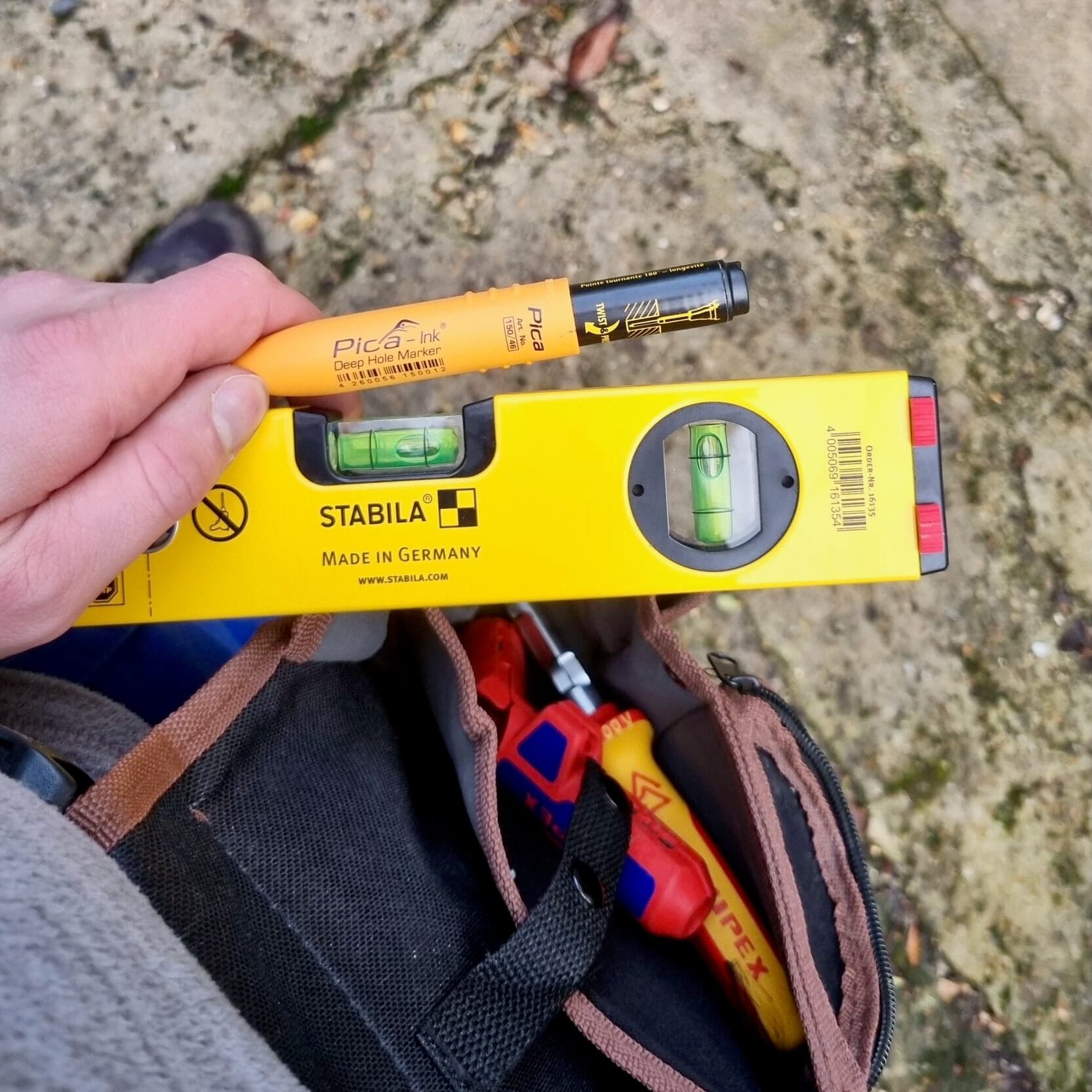
For my call-out work, I like the combination of a 40 cm level and another of 80–100 cm. The first fits close to a box, the second connects several points for marking out. This is feedback from practical use, not a requirement for every trade.
| Indicative length | Possible use | Points to watch |
|---|---|---|
| Indicative length 20 to 25 cm | Possible use Single box or accessory | Points to watch Very local check |
| Indicative length 40 cm | Possible use Small enclosure, short trunking | Points to watch Check that the base makes full contact |
| Indicative length 60 cm | Possible use Plate or short row | Points to watch The usable length depends on access |
| Indicative length 80 to 100 cm | Possible use Aligning several sockets and marking out | Points to watch Bulk in the tool bag |
| Indicative length 120 to 200 cm | Possible use Long surface or partition wall | Points to watch A laser can help when transferring levels over long distances. |
Guidelines from my experience as an electrician, to be adapted to the actual dimensions of the surface.
For a flush-mounted box, I take the short level: it sits inside the enclosure where a long profile would not fit. For a run of sockets, I switch to the longer model so that a single reading covers the whole row.
For conduit and trunking, I look at the straight run first. A short level checks one saddle or a short offset, while a long level shows whether the whole run is straight or only locally level.
When I mount a plate or a light fitting, I choose the level that spans the fixing points, then check that the base touches the surface at both ends.
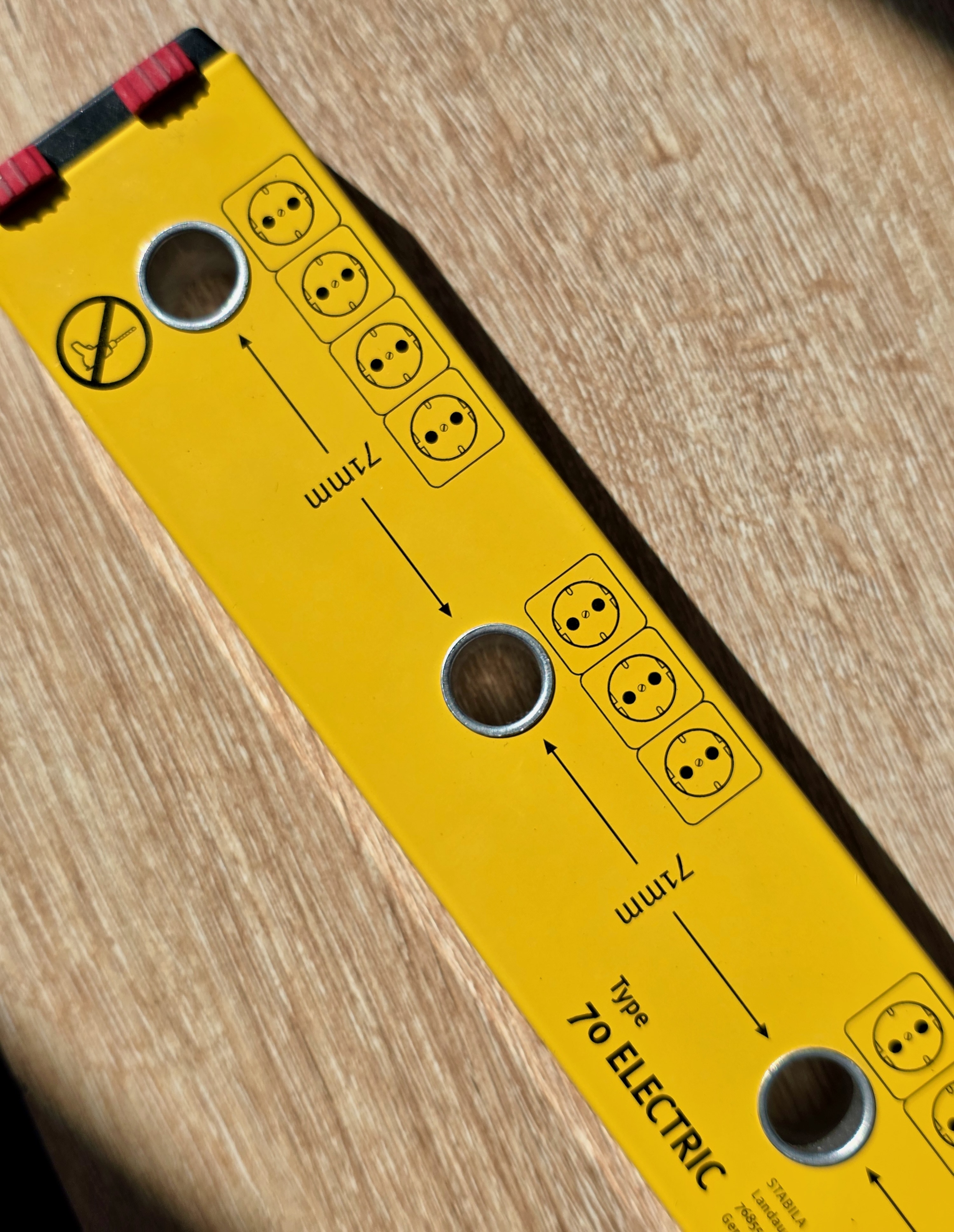
I keep both lengths in the van because I rarely know in advance what a call-out will need. The choice follows the geometry of the work in front of me, not a fixed rule.
On a long run, I take two or three readings along the same line rather than trusting a single position in the middle. That is where a longer profile earns its place.
A magnetic base is useful on a steel enclosure, a frame or a metal cable tray. It does not improve inherent accuracy on plaster or concrete. I also check the readability of the vials, the bulk of the profile and how easy it is to clean.
On an old wall, two high points can give a straight line even though the surface dips. I check several contact points and the layout before installing the trunking / containment: the quality of the level is no substitute for a good installation method.
A spirit level checks a surface locally; an electronic level adds a measured slope reading depending on the model; a line laser projects a reference into the room. None of them removes the need for the others.
For installing a box, I prefer the short level. To align several light fixtures or mark the same height on different walls, I use a laser.
The threshold of around two metres that is sometimes quoted is a rule of thumb from my own use, not a universal boundary: an obstacle can justify the laser before that point, and a long level can be enough after it.
| Criterion | Spirit level | Electronic level | Line laser |
|---|---|---|---|
| Criterion Function | Spirit level Contact check | Electronic level Check and slope measurement | Line laser Projection of a reference |
| Criterion Quoted accuracy | Spirit level ± 0.5 mm/m on both references compared in normal position | Electronic level Varies with model and angle | Line laser ± 0.3 mm/m on the GLL 3-80 |
| Criterion Power source | Spirit level None | Electronic level Batteries or battery pack, depending on model | Line laser Batteries or battery pack, depending on model |
| Criterion Multiple walls | Spirit level Successive transfers | Electronic level Successive transfers | Line laser Common projected reference |
| Criterion Use | Spirit level Box, enclosure | Electronic level Slope or angle to transfer | Line laser Partition, ceiling, light fixtures |
Functions and manufacturer data: no direct ranking between two distinct types of measurement.
A laser line can become hard to see in sunlight and may require a compatible receiver. A spirit level remains independent of batteries but requires the vial to be accessible and well lit. The available light, the number of points and the setup time determine which tool is the most practical.
The visit to Annweiler showed what goes into the price of a level: durable sealing of the vial, machined profile and manufacturing checks. For an electrician who regularly marks out supports, these are things that count. But they are not proof that every Stanley model would be less reliable.
So I compare the products actually offered in the trade, of comparable length and equipment, with the prices I have seen. Without dated price records, claiming “twice as expensive” or “three times cheaper” for an entire brand would be misleading.
STABILA advertises a ten-year manufacturer’s warranty on its aluminium levels, with exclusions including when the profile becomes deformed. For the Stanley 1-43-537, the French datasheet shows a lifetime accuracy guarantee and a limited two-year warranty in a separate section. These guarantees must be read in line with their exact terms.
| Reference | Documented specifications | To check before purchase |
|---|---|---|
| Reference STABILA Type 96-2 K | Documented specifications LOCKED VIALS; ± 0.5 mm/m in normal position; ± 0.75 mm/m in inverted position; masonry protection | To check before purchase Length, price and warranty terms |
| Reference Stanley FATMAX Pro 1-43-537 | Documented specifications 90 cm; ± 0.5 mm/m; shock-resistant end caps; magnetic base | To check before purchase Build quality, price and warranty terms |
| Reference Bosch GLL 3-80 | Documented specifications Three 360° lines; ± 0.3 mm/m; IP54 | To check before purchase Kit, accessories, visibility and compatible receiver |
Manufacturers' specifications and my visit are no substitute for checking the individual unit chosen.
I personally favour STABILA spirit levels for my professional work. This preference rests on my own units, the factory visit, the LOCKED VIALS demonstration and the documented quality checks. This is reasoned practitioner feedback, not an independent measurement proving a statistical difference between brands.
A Stanley FATMAX Pro remains an alternative to weigh up depending on length, features, price and intended use, without assuming an assembly defect that is absent from its spec sheet. Bosch also offers spirit levels, but here I mainly cover its laser for distance projection. Each of these products serves a genuine purpose.
The visit lets me explain precisely why STABILA opted for a sealed assembly and why this solution interests me. I don’t publish a 5/5 versus 2/5 radar chart: a demonstration organized by a manufacturer and the printed tolerances would not justify such scores.
Choosing a professional spirit level based on its design
Advantages
Drawbacks
First mistake: buying the right brand but in too short a length. A pocket level can check a box but not a whole long plate. I match my contact points and my instrument to the geometry of the surface.
Second mistake: dropping a level and then carrying on without checking it. Even a sealed vial does not stop the frame from bending. Inspecting and turning the level over take little time compared with redoing a row of wiring accessories.
Third mistake: believing a laser replaces a manual level. The first projects a reference plane; the second checks the surface it touches. For laying out across a room, I want the laser. For a box held in a chase, I want a compact level.
I clean the vials with a soft cloth and a little water when the site is dusty. I avoid aggressive solvents on the acrylic, which I want to keep clear rather than hazy.
The base matters as much as the vial. A grain of sand or a blob of plaster under the measuring face lifts one end and throws the reading out, so I wipe it before every alignment.
Before I use a level, I look at the bubble: it should move freely and settle back to the same place. A cracked vial, a discoloured liquid or a loose end cap means the tool goes back in the van.
On the longer levels, I also run a hand along the profile to feel for dents or burrs left by previous jobs.
In the van, I store levels upright in a rack or along a partition, never flat on the floor where materials slide. A heavy box resting on a long profile is a common way to bend it without any visible mark.
I keep the short level in a drawer with the hand tools and the long one clipped to the rack. Leaving a level across two crates or under a coil of cable is asking for a knock.
I also avoid leaving the instruments pressed against a panel that takes direct sun all day, simply so that they stay within the reading range stated for the vial.
3 questions
InteractiveQuiz: STABILA, Stanley or Bosch
Three technical reference points
Choose an answer
The models cited both state ± 0.5 mm/m in normal position. I prefer STABILA for my own use, particularly in light of my visit to its factory and the LOCKED VIALS process, but I don't have an independent testing programme that would quantify an average real-world accuracy gap between these models.
The process holds the vial in a block sealed to the profile to prevent it from shifting inside. It was presented during my visit to the STABILA Campus. It does not make a profile immune to deformation after an impact.
No. The assembly examples at the Campus were chosen and presented by STABILA. The article describes the Stanley model based on its own spec sheet, without attributing another level's assembly to it. The photographs of competing brands taken at the Campus have been removed.
STABILA advertises ten years on its aluminium levels, subject to conditions. The Stanley 1-43-537 states a lifetime accuracy guarantee and a limited two-year warranty in another section. You need to read the terms of each.
A level of around 60 cm may suit some mounting plates; an 80 to 100 cm model makes longer alignments easier. Choose according to the area you actually need to check and how accessible the surface is.
When a reference has to be transferred between distant points or across several planes. Two metres can serve as a practical guide, not a universal threshold: obstacles, range and setup time all count.
Clean the base, inspect the profile and compare the bubble before and after turning it end for end on the same reference, allowing for the tolerance. If the readings differ, have the tool checked or replaced.
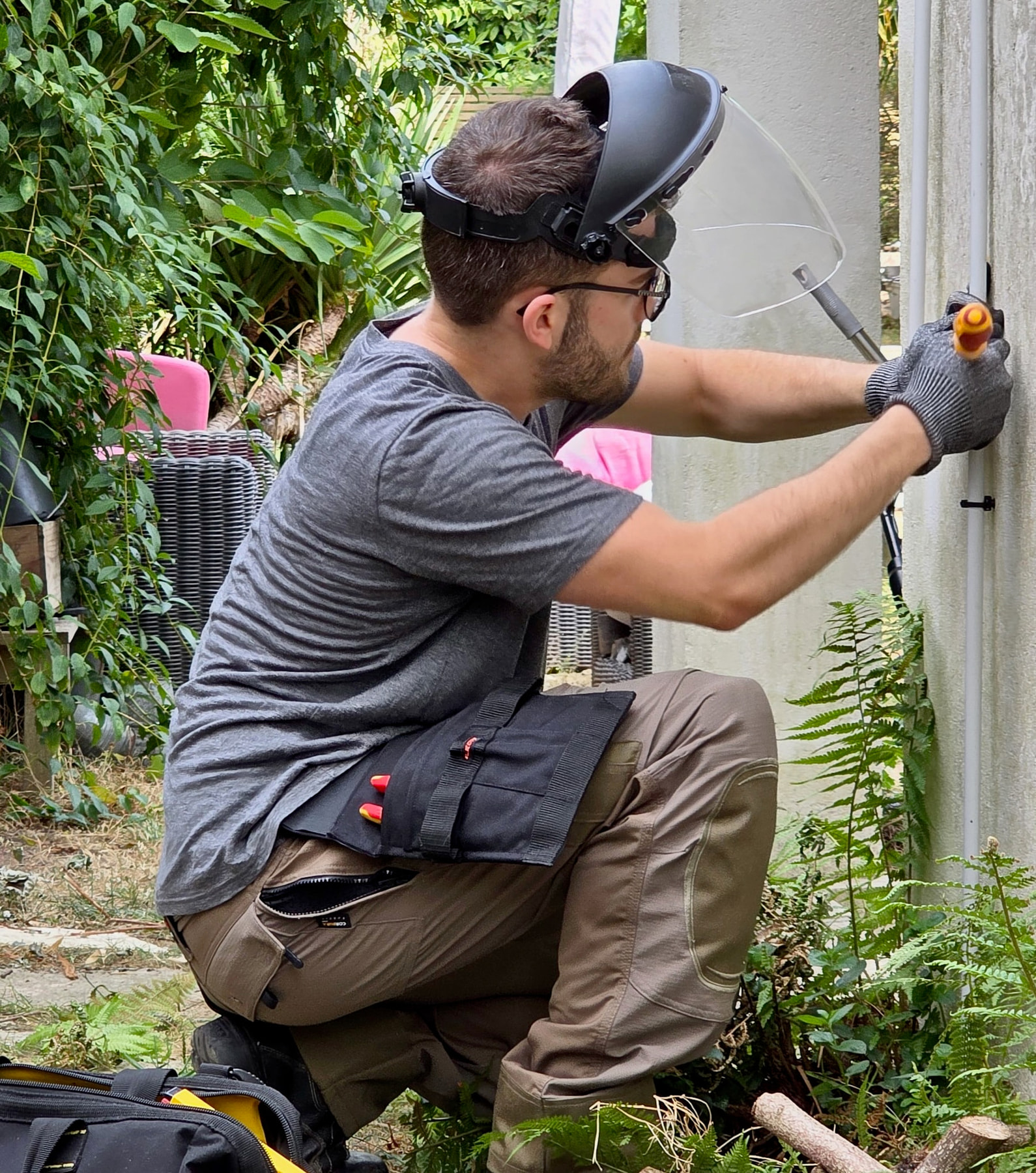
Théo Desrousseaux
Electrician and editor
I work in the field and edit this magazine. Every guide is reviewed for its target country before publication.
Author → Credentials → Editorial method → Report a factual correction →
Email address and prefilled context:
theo@sparx-elec.fr
Article: https://www.sparx-elec.com/gb/spirit-level-stabila-vs-stanley-vs-bosch/
Edition: GB — English
Factual issue: [describe the factual issue]
Passage: [quote or identify the passage]
Source: [optional source URL]
Sources and references
Practical electrical installation guides, diagnostic methods and tool recommendations compared against the technical wiring standards of this national edition.
Line laser levels compared: Bosch, STABILA and Leica head to head. Green or red lines, real range, accuracy and how to choose the right one as an electrician.
Read the guide Guide STABILA: the history of the brand STABILA, a German manufacturer founded in 1889: the 1886 joint patent, the Meterfabrik in Annweiler, lasers and the brand's standing in France. Read the guide
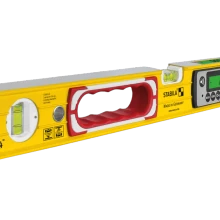 Guide Stabila electronic level: worth it in 2026? The Stabila electronic level measures angles and slopes. I detail its uses, its limits and the users for whom it is worth the money. Read the guide
 Guide Wiha or Wera: which tool kit for an electrician? Wiha or Wera: VDE 1000 V screwdrivers and pliers, storage systems and a method for a tool set suited to real electrical work in the home. Read the guide