
A shopfront that answers three questions before you go in
Trading history, a fixed place of business and a review scheme are all on the front of this shop. None of them is a substitute for the register, but each one is checkable.
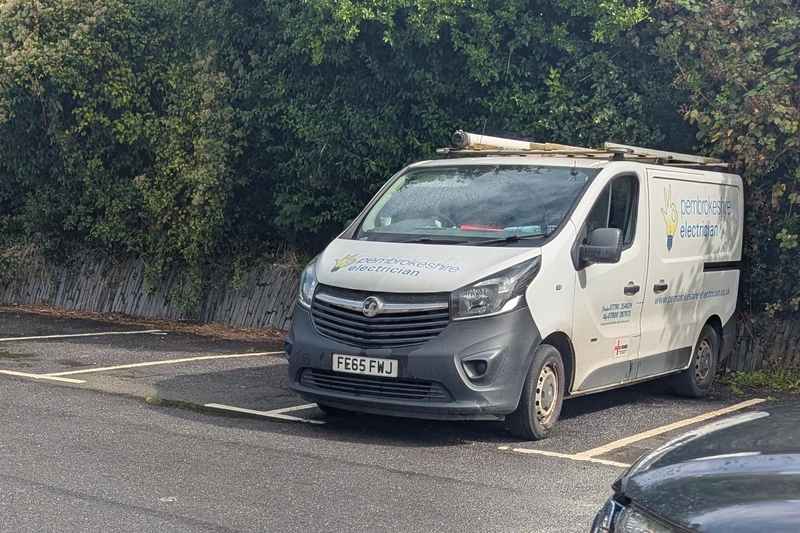 Photo : Jaggery via Wikimedia Commons (CC BY-SA 2.0)
In brief
An electrician’s hourly rate becomes useful when the quote states VAT, the minimum booking and what is included. A £90 rate plus standard-rate VAT means £108 payable for one charged hour; materials and attendance may still be separate.
An invoice rate is a charge-out rate, not an employee’s wage. It funds the work on site and the business costs behind that visit.
I compare published contractor tariffs with the scope attached to them, then use surveys and consumer guides as context. An average cannot confirm what a particular electrician will charge for your job.
£108
NOD planned-work hourly rate, including VAT
1 hour
minimum labour booking in that published tariff
£240
NOD emergency attendance plus first labour hour, including VAT
20%
standard VAT rate; check the quote's tax treatment
A self-employed electrician does not sell hours the way a shop sells stock off a shelf. The hour you pay for carries everything that made the hour possible.
Four different things sit inside a quoted rate, and only the first one looks like work.
Take a £55 rate apart along those lines and what is left for the person doing the work lands much closer to the £25 to £35 an hour MyJobQuote reports for an experienced employed electrician than to the £55 printed on the quote.
That gap is not profiteering. It is the cost of being available, insured and equipped on a Tuesday morning in February when the phone has not rung since Friday.
Three UK sources, all current in 2026, give three different answers to the same question. Each is honest about what it measured. None of them measured the same thing.
| Figure | What it actually measures | Source and date |
|---|---|---|
| Figure £38 an hour | What it actually measures Average hourly rate across a survey of UK electrical businesses whose answers ranged from £12 to £75 | Source and date Logic4training, 15 June 2026 |
| Figure £312 a day | What it actually measures Average day rate from the same survey, down from £335 in 2025 | Source and date Logic4training, 15 June 2026 |
| Figure £55 an hour | What it actually measures Figure used in the body table of a consumer cost guide, beside £500 a day and £90 an hour for emergency work | Source and date Checkatrade, updated October 2026 |
| Figure £40 to £70 an hour | What it actually measures The band the same guide says most electricians charge, printed in the same article as the £55 and £90 figures | Source and date Checkatrade, October 2026 |
| Figure £25 to £35 an hour | What it actually measures What an experienced employed electrician earns, not what a customer is billed | Source and date MyJobQuote, earnings guide |
| Figure £39,039 a year | What it actually measures Median full-time gross pay for electricians and electrical fitters across the UK | Source and date ONS ASHE 2025, cited by Logic4training |
Every figure is reproduced as its publisher states it. They are not interchangeable.
Read down that column and the contradiction is not between sources. It is inside one of them.
Checkatrade’s hourly rate guide, in the version updated in October 2026, opens with a summary box giving about £50 an hour, a £45 to £60 range and about £400 a day. Further down the same page, the price table gives £55 an hour, £500 a day and £90 an hour for emergency call-outs.
The prose in between says most electricians charge £40 to £70 an hour.
Those differences justify checking the guide’s scope, VAT assumptions and update date. They do not establish why its publisher used different figures, nor the quality of a particular electrician’s work.
The lesson for a householder is not that the guide is worthless. It is that a published average is a starting point, not a quotation, and that the only figure that means anything is the one attached to a defined scope of work.
Attention
If a cost guide quotes £50 an hour in its summary and £55 in its table, do not combine the two as if they were one precise market measurement. Ask the electrician directly, and ask what the hour excludes.
NOD Electrical Services publishes the following rates for South London, observed on 18 November 2026. These are one business’s advertised charges, not a UK average or a completed customer’s invoice.
| Booking | Price including VAT | Time covered | Separate costs |
|---|---|---|---|
| Booking Planned work | Price including VAT £108 | Time covered First hour; minimum one hour | Separate costs Materials and applicable parking or local charges |
| Booking Additional time | Price including VAT £54 | Time covered Each further 30 minutes | Separate costs Same exclusions as the booking |
| Booking Emergency visit | Price including VAT £240 | Time covered £132 attendance plus £108 for the first labour hour | Separate costs Further time, materials and applicable premiums |
NOD's published tariff, read 18 November 2026. The business shows VAT at 20%; weekend labour carries a 25% surcharge.
Confirm the attendance charge, time increments and extras before booking. A fixed quote for planned installation work may use a different charging basis.
Most domestic electrical work in the UK is priced on one of three clocks, and confusing them is where quotes stop being comparable.
The hourly clock suits small, unpredictable work: a fault that may take twenty minutes or two hours, a socket that has stopped working, a light that flickers. It is the least predictable for the customer and the easiest for the electrician to justify.
The day clock suits planned work: a consumer unit change, a rewire in progress, a day of first fix. A day rate tracks the hourly rate closely, because a full day carries no extra travel and no gap between jobs.
In the quoted survey, £312 divided by eight is £39 an hour, close to the separate £38 hourly average. But a day rate is a quoted package, not a compulsory multiplication rule.
Likewise, eight hours at £55 is £440, not £500. A published £500 day rate needs its own scope and assumptions; it cannot be explained by that multiplication.
The job clock, or fixed price, suits anything that has been done often enough to be estimated accurately. Socket replacements, light fittings, outside lights and consumer unit changes are routinely sold this way, and the fixed price is where most published cost tables come from.
None of the three is more honest than the others. They simply fail in different ways. An hourly rate punishes the customer for a difficult fault. A fixed price punishes the electrician for one. A day rate punishes everybody if the day runs short.
The single most misunderstood line on a domestic electrical invoice is the minimum charge, commonly one hour and sometimes a half day.
The reason is arithmetic. A visit costs the same whether the fault takes eight minutes or fifty: the van leaves the yard, parks, the tools come out, the tester is set up, the certificate is written, the van goes back. An electrician who billed eight minutes would lose money on every quick job and would quickly stop taking quick jobs.
Separately, an emergency call-out carries its own fee on top of the hourly rate. Logic4training reports emergency call-out fees starting around £24, with most flat charges landing between £65 and £120 in 2026, charged before any hourly rate begins. That is not a penalty for calling at night.
It is the price of a business that keeps somebody on standby.
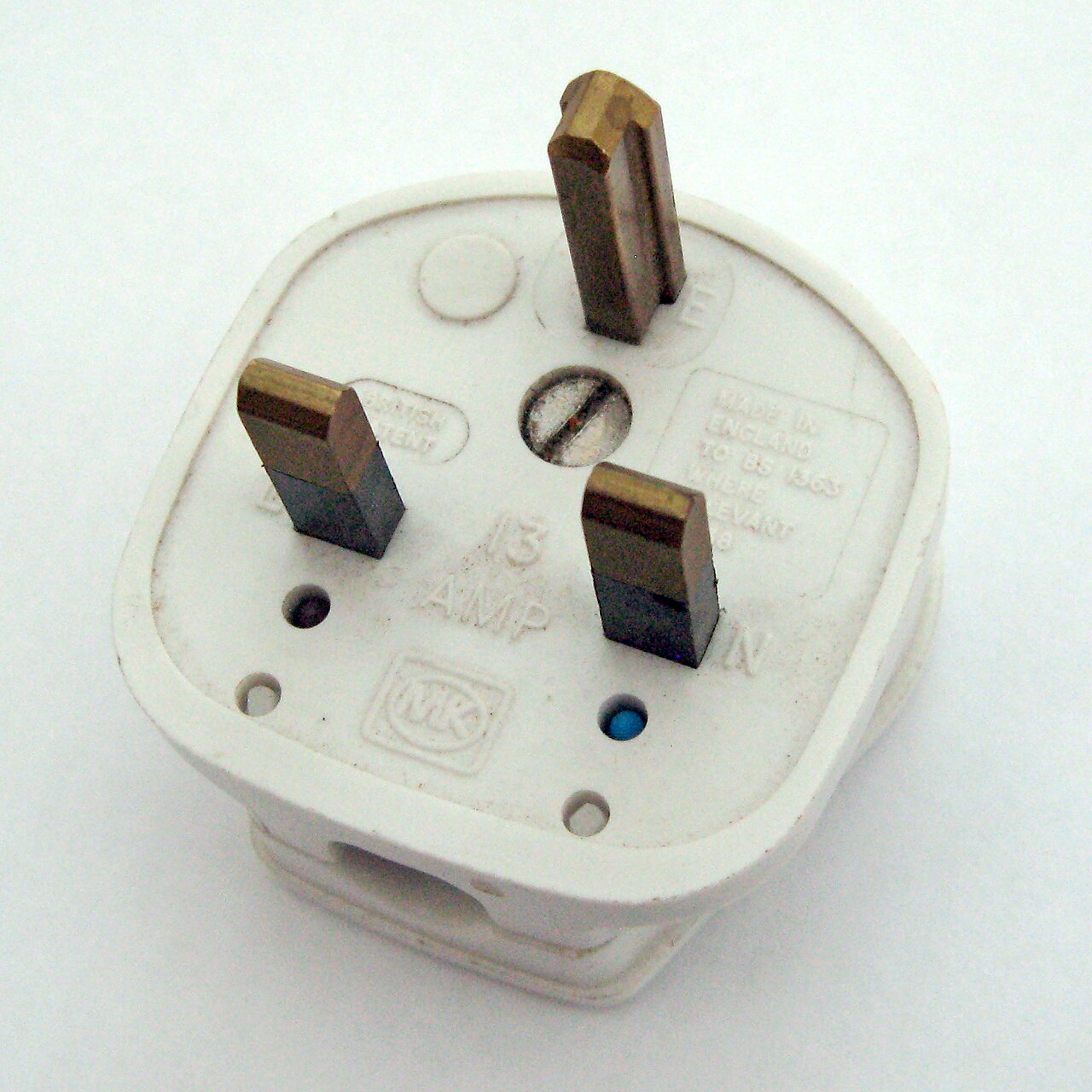
Fault finding is the other side of the same coin: a socket that has stopped working is billed by the hour precisely because nobody can know in advance whether the cause is a loose terminal or a damaged cable under a floor.
This is where the hourly rate stops being the useful number. A plug top, a fused spur, a single socket faceplate: each is a short job with a fixed cost of attendance attached. Ask for the minimum charge before you ask for the hourly rate, because on small work the minimum is what you will actually pay.
Public argument about electricians’ rates usually compares a charge-out figure with a wage, which is like comparing a shop’s till receipts with the shopkeeper’s salary.
The overheads are real, they are annual, and they arrive whether or not the phone rings.
| Line in the build-up | Indicative annual cost for a one-person business |
|---|---|
| Line in the build-up Van, fuel, servicing and insurance | Indicative annual cost for a one-person business £6,000 to £10,000 |
| Line in the build-up Public liability and tools cover | Indicative annual cost for a one-person business £400 to £1,200 |
| Line in the build-up Scheme registration and assessment | Indicative annual cost for a one-person business £500 to £900 |
| Line in the build-up Calibration of test instruments | Indicative annual cost for a one-person business £300 to £700 |
| Line in the build-up Van stock, consumables and PPE | Indicative annual cost for a one-person business £1,500 to £3,000 |
| Line in the build-up Accountancy and software | Indicative annual cost for a one-person business £600 to £1,500 |
| Line in the build-up Chargeable hours actually invoiced | Indicative annual cost for a one-person business 1,200 to 1,500 a year |
A model, not a quotation: the ranges are indicative for a sole trader in 2026 and are meant to show the shape of the arithmetic, not to price a job.
Run those figures against a £55 rate and roughly 1,400 invoiced hours, and the turnover is about £77,000. Deducting business costs gives profit before personal taxes. Compare that with a gross salary only on a consistent basis: subtracting tax from one side but not the other creates a misleading comparison.
Paid holiday and pension arrangements also differ.
The National Careers Service puts the employed range at £26,000 for a starter and £45,000 for an experienced electrician, which is the same order of magnitude and none of it is a charge-out rate.
That is the honest answer to why the rate looks high and the electrician does not feel rich. It is also the reason a £25 an hour quote should be read as a question rather than a bargain.
VAT is where price comparison quietly breaks.
A business must register for VAT once turnover passes £90,000 in a rolling twelve-month period, and standard-rated work is then charged at 20 per cent. Below the threshold, registration is optional.
The consequence is simple and frequently missed. A VAT-registered electrician quoting £55 excluding standard-rate VAT charges £66 including VAT; a quote already stating £55 including VAT remains £55. An unregistered sole trader quoting £55 charges £55. Those two quotes are £11 an hour apart and neither is dishonest.
An unregistered business quoting £45 and a registered business quoting £54 including VAT are not the same price to a householder: the totals are £45 and £54.
A fair comparison is between the final payable totals for the same scope, not the net amount one business retains after VAT.
Conseil
Ask one question before comparing anything: is this figure inclusive of VAT, and are you VAT registered? Write the answer next to each quote. On a £500 job the difference is £100, which is larger than most of the hourly-rate differences people argue about.
A second, quieter point: materials. Some electricians mark up parts, some pass them through at cost and charge the time instead. Neither is wrong, but a low hourly rate with a large materials margin is a different commercial offer from a high rate with parts at cost. Ask how parts are billed.
Two electricians can quote for the same small job and be pricing two different things, because in England and Wales some of that work is notifiable under Part P of the Building Regulations and some is not.
Part P1 is short and broad: reasonable provision shall be made in the design and installation of electrical installations to protect persons from fire and injury. The Approved Document that supports it sets out which work is notifiable, and the English 2013 edition has a reduced notification list. Wales retains different requirements.
In England, the principal notifiable categories are: the installation of a new circuit, the replacement of a consumer unit, and any addition or alteration to an existing circuit in a special location.
Everything else is notifiable-free, including additions and alterations outside special locations, maintenance, repair and like-for-like replacement. In England, work is not notifiable merely because it is in a kitchen or outdoors; a new circuit remains notifiable, which is still the single most common misunderstanding about Part P.
In England, the notification definition covers specified areas around a bath or shower and rooms containing a pool or sauna heater. It is not automatically the whole bathroom. Check the defined area rather than treat every minor bathroom replacement as notifiable.
Two consequences follow for the invoice.
The first is that notifiable work must be either self-certified by a contractor registered with a competent person scheme or approved by a building control body, and building control charges a fee for that approval.
The fee is set by the local authority, not by the electrician, and it does not shrink with the size of the job, so it weighs heaviest on the small notifiable jobs, which is precisely where a householder is most tempted to cut corners on price.
The second is enforcement, and it applies to the householder as much as to the trade.
Part P applies to relevant electrical work in dwellings, including DIY work. Notifiable work needs an appropriate certification route; doing it yourself does not remove that requirement.
I agree the route before work starts. Depending on the circumstances, it can involve a registered competent person, a registered third-party certifier or a building control body. The electrical inspection and testing still have to be completed.
In England, routes include self-certification by an appropriately registered installer or notification to building control. Registered third-party certification is another permitted route where available and arranged correctly.
Third-party certification did not abolish the building-control route for non-scheme installers. Agree the procedure before work starts rather than assume a later inspection can supply every missing certificate.
That sign-off is a real cost, and it is one of the reasons an unregistered business can quote less for notifiable work without being cheaper in any useful sense.
Info
The current Part P position is not one document for the whole UK. The England edition in force dates from 6 April 2013; Wales adopted its own version from 31 July 2014. Scotland and Northern Ireland operate different building standards systems entirely, so a rate quoted in Cardiff and a rate quoted in Glasgow are not answering the same regulatory question.
This is the single best explanation for a quote that looks inexplicably high. A registered business quoting for notifiable work carries a certification cost and an assessment obligation that an unregistered competitor does not.
A difference may reflect scope, overheads, margin or the notification route, and it is the customer who inherits the problem when it is missing.
For most household work the hourly rate never appears on the invoice. The job is priced as a job, and the published tables below are the closest thing to a market price that exists in the UK. Inspection work is the clearest example: an EICR on a three-bedroom house is priced on circuits, not on hours.
| Job | Typical UK price, 2026 | Average reported |
|---|---|---|
| Job Socket replacement | Typical UK price, 2026 £25 to £80 | Average reported £52.50 |
| Job Light fitting replacement | Typical UK price, 2026 £40 to £120 | Average reported £80 |
| Job Fault finding visit | Typical UK price, 2026 £50 to £200 | Average reported £125 |
| Job Consumer unit replacement | Typical UK price, 2026 £780 to £1,000 | Average reported £890 |
| Job EV charger installation | Typical UK price, 2026 £950 to £1,400 | Average reported £1,175 |
| Job Installation condition report (EICR) | Typical UK price, 2026 from around £250 | Average reported £212.50 |
Logic4training survey averages, June 2026. The EICR range is the survey's 'from around £250'; the £212.50 average is Checkatrade's October 2026 figure. Ranges, not fixed prices.
Two of these deserve a warning.
The consumer unit figure moved sharply: Logic4training reports an average of £890 in 2026 against £625 in 2025, and attributes the rise largely to material costs, with 92 per cent of the businesses surveyed reporting increases in the cost of materials.
A board change is also the job most often mispriced by customers, because the price depends on how many circuits exist and how much remedial earthing the installation needs once the cover comes off. The guide to consumer unit protection explains why the device count, not the enclosure, drives that price.
The EV charger figure assumes a straightforward run from the consumer unit. A charger on the far side of a house, a supply that needs upgrading, or an earth arrangement that will not support the charger’s protection requirements can move the number well past the top of the range.
The installation requirements are set by the charger and by BS 7671, not by the price guide, and the UK charger installation guide sets out what those requirements actually add.
Four things decide whether two quotes are for the same job, and none of them is the hourly rate.
A good quote answers all four without being asked. A quote that answers none of them is not cheaper, it is merely unfinished.
A business that claims scheme membership should provide verifiable details. Without membership, ask how competence and any required building-control approval will be established; the absence of a scheme number alone does not make the quote unlawful.
There is a version of saving money on electrical work that transfers a liability rather than removing a cost.
Insurance is the first place it appears. A fire attributed to non-compliant work is a conversation with a loss adjuster, and an installation with no certificate and no notification is a weak position to argue from.
A sale is another point when missing documents can surface. A solicitor may ask for evidence of notifiable work. The next step depends on the work, available records and the transaction; neither a fixed regularisation bill nor a price reduction is inevitable.
A tenancy is the third, and it is the only one where the law is unambiguous.
Under the Electrical Safety Standards in the Private Rented Sector (England) Regulations 2020, a private landlord must have the installation inspected and tested at intervals of no more than five years, give the report to tenants within 28 days of the inspection, and give a copy to the local authority within 7 days of a written request.
A cheap inspection that produces a report nobody will stand behind satisfies nothing.
None of that argues for paying the highest quote. It argues for paying a rate that has a certificate, an insurance policy and a registration number behind it, and for treating the difference as the cost of the paperwork rather than somebody’s profit.
The practical check takes four minutes and does not require any technical knowledge.
Ask for the competent person scheme name and the registration number, then verify it on the scheme’s own register rather than on a sticker. Ask for the public liability certificate and read the limit. Ask whether the business is VAT registered, so the quotes are comparable.
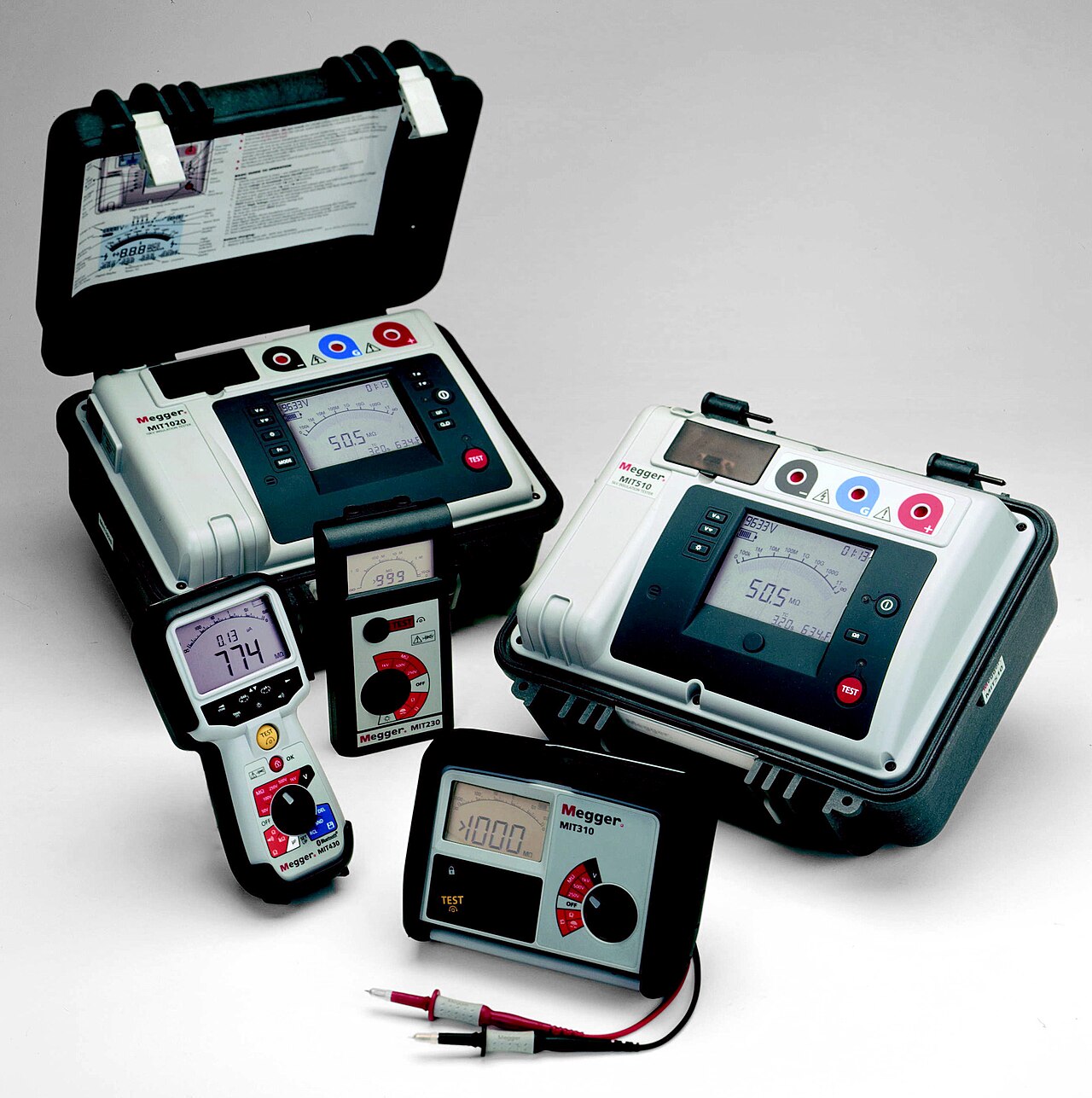
Ask for the calibration certificate date on the test instruments if the work involves inspection and testing, and ask how accuracy is maintained. An expired certificate alone does not prove that every reading is wrong; documented accuracy checks matter.
A shopfront that answers three questions before you go in
Trading history, a fixed place of business and a review scheme are all on the front of this shop. None of them is a substitute for the register, but each one is checkable.
The register check matters more than the sticker for a specific reason. Being on a review site means customers have left reviews. Being on a competent person scheme means the business has been assessed on its work and can self-certify notifiable installations.
Those are different claims. Scheme assessment helps verify a business and can enable self-certification, while the inspector’s actual competence and the completed work remain essential.
The survey figures and the contractor tariff answer different questions.
The £38, £55 and £90 figures describe different published datasets or services. They do not establish a particular electrician’s costs or competence. I compare daytime work with daytime work, emergency attendance with emergency attendance, and the total for the same scope rather than treating all three as interchangeable rates.
Keep employed pay, survey results and advertised customer rates separate. None establishes the quality of a particular electrician’s work.
To compare offers, fix the scope, VAT position and certification, then examine the payable total. Different businesses can still charge different amounts for the same defined job.
I compare the defined job and the final payable total before the hourly rate. For planned work, a fixed quote can make that comparison easier; for fault-finding, an agreed initial allowance and a review point keep the uncertainty visible.
Rates depend on the business and scope. For example, NOD in South London publishes £108 an hour including VAT, with a one-hour minimum for planned work. Survey averages and consumer-guide estimates are context, not a quote for your address. Check attendance, time increments, materials and VAT.
A call-out fee can be separate from labour. NOD lists emergency attendance at £132 including VAT, plus £108 for the first labour hour. That is £240 before further time, materials or applicable premiums. Other businesses may combine these items; ask for the total.
Check VAT, minimum attendance, travel, testing and scope before drawing a conclusion. A VAT-registered business can be below the mandatory £90,000 threshold through voluntary registration. Compare the VAT-inclusive totals; the difference is not automatically tax or quality.
Not automatically. Ask explicitly whether the price includes the certificate, the building control notification or scheme self-certification, and any making good. On notifiable work these items are a fixed cost that does not shrink with the size of the job.
Compare the total for a defined scope, competence, insurance and the certification route. Verify any claimed scheme membership, but do not treat an unregistered business as automatically unlawful. Price alone does not establish quality.
Check the business’s out-of-hours tariff. NOD publishes a 25% weekend labour surcharge; other providers can use different rates or minimum bookings. Ask for the attendance fee, labour allowance and VAT-inclusive total before accepting an urgent visit.

Théo Desrousseaux
Electrician and editor
I work in the field and edit this magazine. Every guide is reviewed for its target country before publication.
Author → Credentials → Editorial method → Report a factual correction →
Email address and prefilled context:
theo@sparx-elec.fr
Article: https://www.sparx-elec.com/gb/electrician-cost-per-hour/
Edition: GB — English
Factual issue: [describe the factual issue]
Passage: [quote or identify the passage]
Source: [optional source URL]
Sources and references
Practical electrical installation guides, diagnostic methods and tool recommendations compared against the technical wiring standards of this national edition.
What an EICR costs for a 3-bedroom house in 2026, what drives the price per circuit, and what C2 remedials add before the report turns satisfactory.
Read the guide Guide Electric shower installation cost UK Published electric shower fitting prices, VAT and exclusions: compare a replacement on the existing circuit with work needing new wiring or protection. Read the guide
 Guide Electrical safety certificate for landlords What landlords in England must do about the electrical safety certificate: EICR rules, the five-year cycle, C1 to C3 codes, 2026 costs and penalties. Read the guide