Read the last report properly
Check the next inspection date and whether any observations were left unresolved.
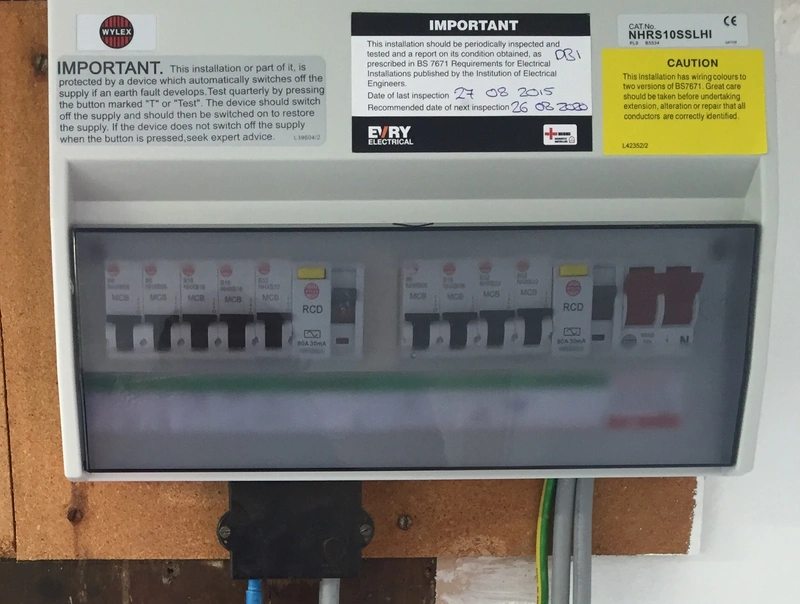 Photo : Evry Electrical via Wikimedia Commons
In brief
A landlord letting a home in England must hold an Electrical Installation Condition Report covering the fixed electrical installation, inspected at intervals of no more than five years, or sooner where specified, by a qualified person.
The phrase “electrical safety certificate” is trade shorthand: the document normally required for an existing installation is an EICR, rather than a generic assurance that the electrics are safe.
The duty sits in the Electrical Safety Standards in the Private Rented Sector (England) Regulations 2020, made under the Housing and Planning Act 2016.
I check the next inspection date, the overall assessment and the outstanding actions together. A recent report with unresolved C2 observations is not a pass, and an earlier date specified by the inspector takes priority over the usual five-year interval.
An old report remains useful evidence of the installation’s history. It does not satisfy a current inspection duty once the required interval has elapsed.
Everything else follows: what the electrician inspects, what the classification codes mean, how long you have to act on them, what it costs in 2026, and what happens when a council decides you have not complied.
5 years
maximum interval between inspections in England
28 days
to send the report to an existing tenant
4
classification codes used on the report
£40,000
maximum civil penalty per breach since 2025
Three documents get confused, and the confusion costs landlords money. An Electrical Installation Certificate (EIC) is issued after new work: a rewire, a new circuit, a consumer unit replacement. A Minor Electrical Installation Works Certificate (MEIWC) covers a small alteration, such as adding a socket to an existing circuit.
An Electrical Installation Condition Report is neither: it is a periodic assessment of an installation already in service, and it is the usual record for the landlord duty. For a newly built property or a complete rewire, government guidance also accepts the EIC for the initial five-year period, subject to the continuing safety duties.
The report records the results of inspection and testing, lists every defect with a classification code, states whether the installation is satisfactory or unsatisfactory for continued use, and gives the date by which the next inspection is due.
That date is what matters for your compliance diary, not the date the electrician printed the PDF.
A useful shorthand: the EICR answers one question. Can this installation stay in service until the next inspection? It is not a maintenance contract, it does not make the installation new, and it does not transfer responsibility away from the landlord.
The duty to keep the installation in a safe condition sits with the person who lets the property, before and after the report lands.
The rules were extended to social housing in England, with transitional dates. For older social tenancies, the first installation inspections and supplied-equipment checks were due before 1 November 2026.
Social landlords must also record the required checks of equipment they provide. The fixed-installation regulations do not impose the same five-year equipment-testing duty on private landlords in England; that is not an exemption from keeping supplied appliances safe.
The trigger is not the type of building, it is the type of occupation. The regulations apply where the tenant has a right to occupy the premises as their only or main residence and pays rent, whether or not that rent is a market rent.
Licences count as tenancies for this purpose, so a lodger-style arrangement inside the same household is treated differently from a self-contained let.
Schedule 1 lists the exclusions, and they are narrower than most landlords assume.
Excluded are shared accommodation with the landlord or the landlord’s family, long leases of seven years or more including shared ownership, student halls of residence, hostels and refuges, care homes, hospitals and hospices, other accommodation tied to healthcare, and mobile homes, caravans and boats.
Houses in multiple occupation are inside the regime, not outside it. Shared rented homes and HMOs are also covered; HMO licensing and its additional conditions are a separate question.
What falls outside is the communal parts of a block, such as stairwells and shared corridors, which are covered by other housing legislation rather than by these regulations.
The exclusion that catches most people is the lodger case. Renting a room in your own home to someone who shares your kitchen and bathroom does not create the duty. Renting a self-contained flat above your house does.
An EICR is a four-stage process, and knowing the stages makes the quote easier to read. The electrician starts with a visual inspection of the accessories and the consumer unit, looking for cracked socket-outlets, scorch marks, missing enclosure covers, mislabelled circuits, and alterations that do not match BS 7671.
A good share of the defects on a typical report are visible before any instrument leaves the bag.
Testing includes dead tests, with the relevant circuits safely isolated, and any necessary live tests under controlled conditions. Continuity and insulation-resistance tests assess conductor paths and insulation; polarity is verified by appropriate methods.
Earth-fault loop assessment and RCD testing check the protective measures. The inspector decides the appropriate extent and methods, records limitations and does not describe a limited inspection as if every connection had been opened.
Polarity testing confirms that live and neutral are the right way round at every accessory and that protective devices sit in the live conductor. Earth fault loop impedance testing confirms that a fault will trip the protective device quickly enough.
RCD testing confirms that residual current devices operate within their time and current limits.
The third stage is recording, where every observation gets a code, and the fourth is issuing the report with a schedule of test results for each circuit.
That schedule is the part an experienced landlord reads first, because a circuit with a low insulation resistance reading is telling you something the summary page will only classify later.
The interval is a maximum, not a target. An installation with a satisfactory report still within its specified interval does not automatically need another inspection for a new tenancy, provided its condition gives no reason for earlier investigation; the landlord supplies a copy of the existing report instead.
Where the property has been rewired or newly built and holds an EIC less than five years old, that certificate can be supplied in place of an EICR for the remainder of the five-year period.
The deadlines are where compliance is most often lost, because they are short and they run from different events. The table below reproduces the duties in regulation 3.
| Who | Deadline | What you send |
|---|---|---|
| Who Existing tenant | Deadline Within 28 days of the inspection and test | What you send A copy of the report |
| Who New tenant | Deadline Before they occupy the premises | What you send A copy of the report |
| Who Prospective tenant | Deadline Within 28 days of a written request | What you send A copy of the report |
| Who Local council | Deadline Within 7 days of a written request | What you send A copy of the report |
| Who Next inspector | Deadline Before the next inspection and test | What you send The previous report |
| Who Remedial work | Deadline Within 28 days, or sooner if the report specifies | What you send The completed work |
| Who Written confirmation | Deadline Within 28 days of the work finishing | What you send The report plus confirmation |
Statutory deadlines for an EICR in England, from regulation 3 of SI 2020/312.
Two habits keep this manageable. The first is to diarise the next inspection date printed on the report rather than the date of the visit, then add a reminder 60 days earlier so quotes can be compared without pressure.
The second is to file the report alongside the tenancy agreement, because a council request gives you seven days, and seven days is not long enough to chase an electrician who has archived the file.
Use the next inspection date stated on the report, with five years as the maximum interval. A satisfactory verdict is not a promise that subsequent damage, alterations or newly reported faults can wait until that date.
The classification codes are the part of the EICR that determines what you spend. C1 means danger is present and there is a risk of injury; the inspector may make the hazard safe before leaving, which is why a C1 sometimes arrives with the circuit already isolated. C2 means potentially dangerous and requires urgent remedial work.
C3 means improvement recommended and does not make the report unsatisfactory. FI means further investigation is needed before a conclusion can be reached.
The rule that matters is simple. Any C1 or C2 makes the installation unsatisfactory for continued use, and required work must be completed within 28 days or the shorter period specified. C1 danger requires immediate action, not a wait until the deadline.
A report carrying only C3 observations is satisfactory and you are not obliged to act, though the recommendation may still justify an improvement. A C3 does not automatically become a C2 with age. An FI is not a pass either: the investigation still has to be carried out and may convert into a C1 or C2.
The classification follows the actual risk, not a fixed price list of defects. Accessible live parts can constitute C1 danger. A potentially dangerous deficiency requiring urgent correction is C2; an improvement without that level of risk is C3.
FI is used where further investigation is needed without delay to determine whether danger or potential danger exists. An agreed access limitation is not automatically FI, and a hidden joint does not by itself prevent an insulation-resistance test.
Ask the inspector to identify the observation, its location and its justification. The words “old board” or “missing RCD” alone do not explain every possible classification.
A circuit whose insulation resistance cannot be measured because a hidden joint is inaccessible is an FI.
An old installation is not automatically unsatisfactory because it differs from the current standard. Age is not a classification code. The assessment concerns its condition and whether its protective measures remain adequate for continued use.
Missing RCD protection needs context: the circuit, its use and the applicable risk determine the observation. Rewirable fuses alone do not prove that a full rewire or consumer-unit replacement is required.
The fuses themselves are not the problem; the absence of RCD protection and the age of the accessories are.
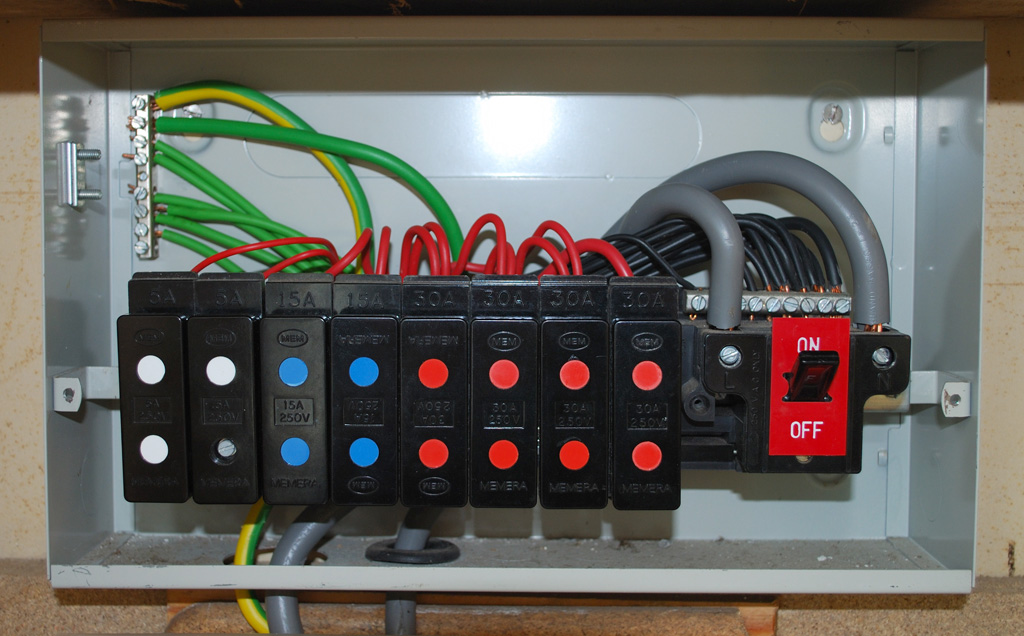
Other defects need testing or closer inspection. Poor protective-conductor continuity, inadequate bonding where it is required, damaged insulation and overheated connections can make an installation unsafe despite a tidy front cover.
Accessible live parts require immediate action. Other damaged accessories are classified according to the exposure and risk, rather than automatically assigned C2 because a replacement is inexpensive.
Damaged accessories are classified by the actual danger. Accessible live parts can be C1, requiring immediate action; other damage may justify C2 or another observation depending on the risk. The price of a replacement does not determine the code.
A sound older installation may remain serviceable. A damaged accessory, an inadequate protective measure and widespread cable deterioration call for different remedies.
I would expect the remedial quote to follow the observations and measurements: replace or repair what is defective, explain any wider work, and distinguish an essential safety correction from an optional upgrade.
Prepare access and report visible defects. Record cracked accessories, missing covers, loose fittings or signs of heat without dismantling anything. Arrange a competent person to make dangerous defects safe promptly; do not leave them for the scheduled inspection.
The aim is a genuinely safe installation, not to hide observations or buy a predetermined satisfactory result.
Clear access matters as much as the defects. The electrician needs to reach the consumer unit, the meter, the main earthing terminal and the accessories needed for the agreed inspection, including relevant points behind furniture or in the loft.
A visit spent moving boxes is a visit that runs over its quoted time, and the quote usually reflects that.
Gather the paperwork before the visit rather than after: the previous EICR, any EIC for earlier work, and the certificates for the boiler circuit or the EV charger. The inspector uses them to establish the history of the installation, and a documented alteration is treated differently from an unexplained one.
Read the last report properly
Check the next inspection date and whether any observations were left unresolved.
Arrange repairs to visible defects
Report damage and use a competent person for electrical repairs. Make dangerous conditions safe without waiting for the inspection.
Have protective measures verified
The inspector checks effective earthing and bonding where required. Metal pipework does not automatically need bonding merely because it is visible.
Label the consumer unit
A circuit chart that matches the board removes a C3 and helps the inspector work faster.
Book before the tenancy gap
Leave room for remedial work inside the 28-day window if the report comes back unsatisfactory.
When the report calls for remedial or further investigative work, the clock starts immediately: 28 days from the inspection, or any shorter period the report specifies. The work has to be done by a qualified person, and the confirmation has to reach the tenant and the local council within 28 days of the work being completed.
Acceptable confirmation is not a text message from the electrician. The regulations and the statutory guidance accept a satisfactory EICR, an Electrical Installation Certificate, a Minor Electrical Installation Works Certificate, or other appropriate electrical certification.
The point is that the document must show the defect has been resolved, not merely that someone attended.
Occasionally the 28-day deadline is not achievable for reasons outside the landlord’s control. The guidance gives the example of a consumer unit replacement that depends on the energy supplier fitting an isolator first, or work that is specialist in nature.
In those cases the landlord is not in breach if they can show they took all reasonable steps, which in practice means a written record of every call, appointment and rescheduled date.
Conseil
Keep a dated log of every step in the remedial process: the quote, the booking, the attendance, the certificate, and the date each document was sent to the tenant and the council. If an enforcement officer asks, the log is the difference between a landlord who tried and a landlord who did nothing.
Prices depend on the number of circuits, the age of the installation and the region, and the two large UK cost guides disagree at the edges. MyBuilder puts a one to two bedroom property at £120 to £200, a three-bedroom house at £200 to £250, a four-bedroom or larger property at £250 to £350, and commercial premises at £300 to £800.
Checkatrade gives a wider domestic range of £100 to £250, with flats from around £100 and houses from £250.
| Property | Typical EICR cost | What drives the price |
|---|---|---|
| Property Flat, 1 to 2 bedrooms | Typical EICR cost £120 to £200 | What drives the price Few circuits, short visit |
| Property House, 3 bedrooms | Typical EICR cost £200 to £250 | What drives the price Two to three hours on site |
| Property House, 4 bedrooms or more | Typical EICR cost £250 to £350 | What drives the price More circuits, outbuildings |
| Property Commercial unit | Typical EICR cost £300 to £800 | What drives the price Three-phase supply, more circuits |
EICR price ranges published by MyBuilder and Checkatrade in 2026.
Budget services advertise EICRs from around £69 for small properties, and the price is real, but the report is only as good as the time spent producing it. A test that takes 45 minutes on a three-bedroom house has not covered the same ground as a three-hour inspection, and the schedule of test results usually shows it.
Remedial work is quoted separately and varies far more than the inspection. Replacing a damaged socket typically costs £50 to £100. A consumer unit upgrade runs £300 to £500 or more. Rewiring a single circuit sits at £200 to £400, and earthing or bonding improvements at £100 to £300.
The regulations require a qualified person competent in inspection and testing. Membership of an appropriate registration scheme can help a landlord check competence, but is not a substitute for the skills required for this particular work.
Check the person’s relevant inspection qualifications, experience and testing arrangements. Installation experience alone does not establish competence to assess an existing installation and produce an EICR.
In practice that means a firm enrolled with a competent person scheme such as NICEIC, NAPIT or ELECSA, whose work is assessed and whose registration can be checked on the Electrical Competent Person register.
Registration is not a guarantee of a thorough report, so ask two questions before booking. The first is whether the quote includes the schedule of test results for every circuit, because a report without it is not an EICR.
The second is whether the electrician will issue the report with a next inspection date, because that date is the one your compliance diary depends on.
Be cautious with quotes that promise a pass. An inspector who tells you the outcome before seeing the installation is selling a document, not an assessment, and a landlord who later needs to rely on that document in front of a council has bought a liability.
The financial penalty for breaching the duties was raised from £30,000 to £40,000 by the 2025 amendment regulations, which also extended the regime to social landlords. Many cost guides still quote the older figure.
The penalty can be imposed more than once in the event of a continuing failure, so a landlord who ignores a notice does not pay once and settle the matter.
Enforcement usually starts with a remedial notice rather than a penalty. Where a council has reasonable grounds to believe there is a breach, it must serve a notice requiring the work to be done, and the landlord then has 21 days to make written representations.
The notice is suspended while those representations are considered, the council must give its decision within seven days of the 21-day period ending, and an appeal must be brought within 28 days of the notice being served.
Where the report indicates urgent remedial action, the council can act sooner with the tenant’s consent, after authorising a contractor in writing and giving the tenant at least 48 hours notice. The council can recover its costs from the landlord, and the landlord can appeal against the demand within 21 days.
Appeals go to the First-tier Tribunal (Property Chamber), not to the council that issued the notice.
Info
The regulations do not apply to communal areas such as stairwells and corridors in a block of flats, but councils can still enforce electrical defects there under the Housing Act 2004. Communal systems need their own maintenance regime.
All four nations now require an EICR every five years in the private rented sector, but the deadlines and the social sector coverage differ. A landlord with property in more than one nation cannot apply the English timetable everywhere.
| Nation | Copy to a new tenant | Social rented sector covered |
|---|---|---|
| Nation England | Copy to a new tenant Before occupation | Social rented sector covered Yes; transitional initial checks were due before 1 November 2026 |
| Nation Wales | Copy to a new tenant Within 14 days of moving in | Social rented sector covered Yes |
| Nation Scotland | Copy to a new tenant Before the tenancy starts | Social rented sector covered Yes |
| Nation Northern Ireland | Copy to a new tenant Before occupation | Social rented sector covered The cited regulations concern private tenancies |
Do not confuse the deadline after an inspection for an existing tenant with the deadline before occupation for a new tenant. Check the official guidance for the relevant nation.
Wales introduced the fitness-for-human-habitation framework from December 2022, with transitional arrangements for converted contracts. Its report-supply timetable differs from England’s and includes a 14-day period. Scotland requires the inspection every five years and the report before the tenancy starts.
Northern Ireland introduced the duty on 1 April 2025 for new tenancies, with existing tenancies given until 1 December 2025 to comply.
A landlord is not automatically in breach when a tenant blocks access, provided they can show they took all reasonable steps. The guidance is explicit that a landlord does not have to bring legal proceedings to secure entry in order to avoid breach, which is a useful protection for anyone facing a tenant who will not answer the phone.
What the landlord does need is evidence. Keep copies of every message, letter and call log showing the attempts to arrange access, alongside the previous report and any servicing records that show the installation was in good condition when last seen.
Once access is obtained, arrange the outstanding inspection and any required action promptly. Access difficulties do not erase a previous breach or justify ignoring a known danger.
The five-year report is a snapshot, and the duty to keep the installation safe runs continuously.
A visual check before each new tenancy takes minutes and catches the damage that would otherwise become a C2: a socket cracked by a removed plug, a light switch that has been over-tightened, a cable clipped badly during a DIY shelf installation.
Landlords with EV chargers, solar panels or battery storage should note that these circuits are part of the installation the EICR covers, and that specialist equipment may need a separate inspection by an appropriately qualified person in addition to the report.
The same applies to any fixed equipment the landlord supplies, which in the social sector is now covered by the ISIT record.
The phrase usually refers to an EICR for an existing installation. Government guidance also accepts an EIC for a newly built or completely rewired property for the initial five-year period. A generic statement or a minor-works certificate does not replace a whole-property assessment.
No more than five years, or the shorter interval specified in the report. New damage or a reported fault can require action sooner. An EIC for a newly built or completely rewired property can be accepted for the initial period, subject to the continuing safety duties.
No. C3 means improvement is recommended and does not make the report unsatisfactory, so no remedial work is legally required. Only C1 and C2 observations, and an unresolved FI, force action.
The council can serve a remedial notice, carry out the work itself and recover the cost, and impose a financial penalty of up to £40,000 per breach. For urgent defects it can act with the tenant's consent after 48 hours notice.
Not automatically. A satisfactory report still within its specified interval can be supplied to the new tenant before occupation in England. Check for intervening damage or deterioration; the remaining interval is not permission to ignore a new fault.
Only if you are a qualified person, competent to inspect and test to BS 7671 and able to produce the schedule of test results. Competence must cover inspection and testing, with suitable instruments and reliable verification records; registration is one way to help assess it.

Théo Desrousseaux
Electrician and editor
I work in the field and edit this magazine. Every guide is reviewed for its target country before publication.
Author → Credentials → Editorial method → Report a factual correction →
Email address and prefilled context:
theo@sparx-elec.fr
Article: https://www.sparx-elec.com/gb/electrical-safety-certificate-for-landlords/
Edition: GB — English
Factual issue: [describe the factual issue]
Passage: [quote or identify the passage]
Source: [optional source URL]
Sources and references
Practical electrical installation guides, diagnostic methods and tool recommendations compared against the technical wiring standards of this national edition.
What an EICR costs for a 3-bedroom house in 2026, what drives the price per circuit, and what C2 remedials add before the report turns satisfactory.
Read the guide Guide Electric shower installation cost UK Published electric shower fitting prices, VAT and exclusions: compare a replacement on the existing circuit with work needing new wiring or protection. Read the guide
 Guide Electrician cost per hour UK electrician hourly rates explained through published tariffs: minimum visits, VAT, emergency charges and the full price to compare before booking. Read the guide