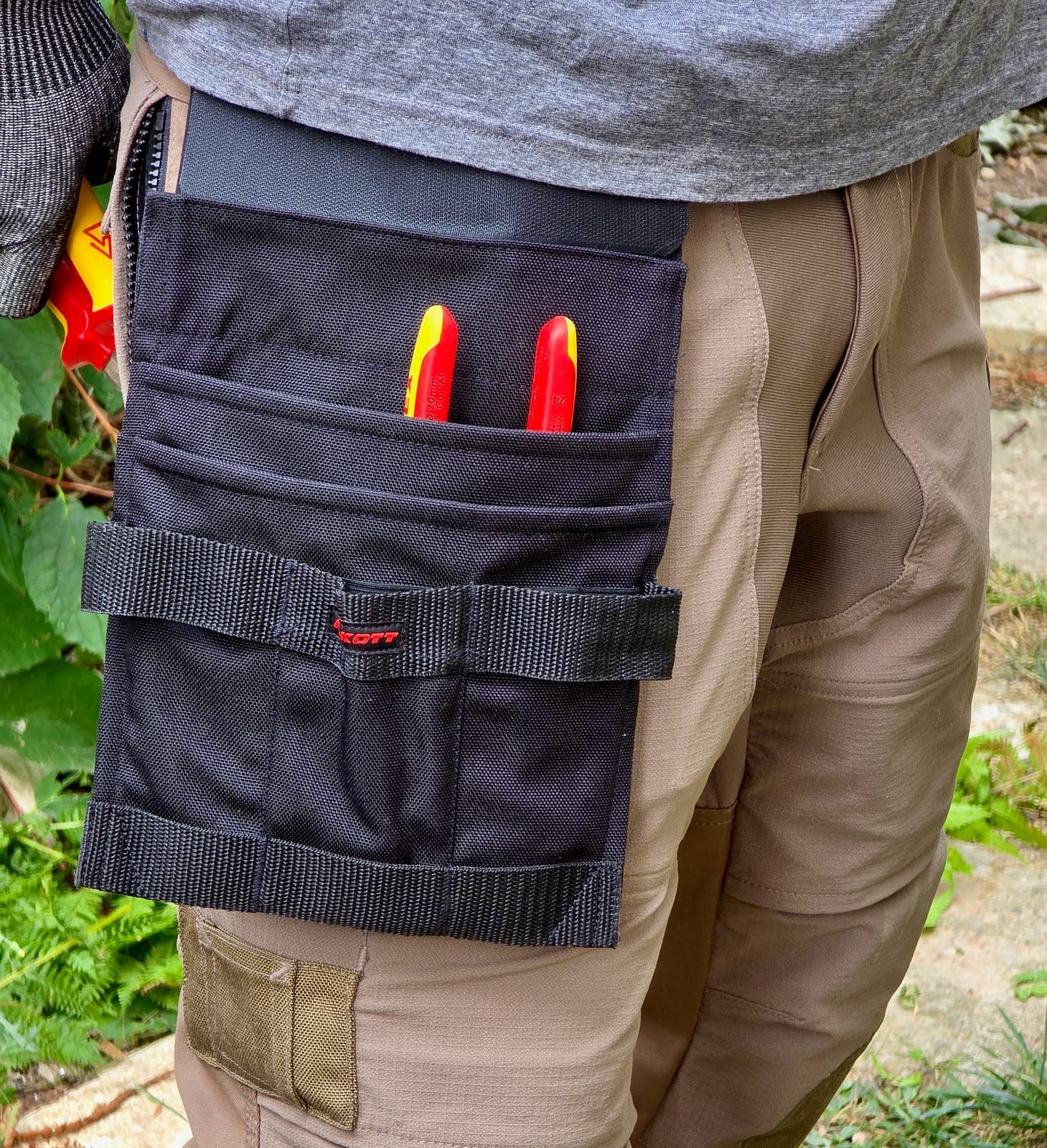
Ilkott AA61 pouch worn on the belt
Worn in real-world conditions: the Ilkott AA61 pouch stays in place on the thigh, loaded for the day.
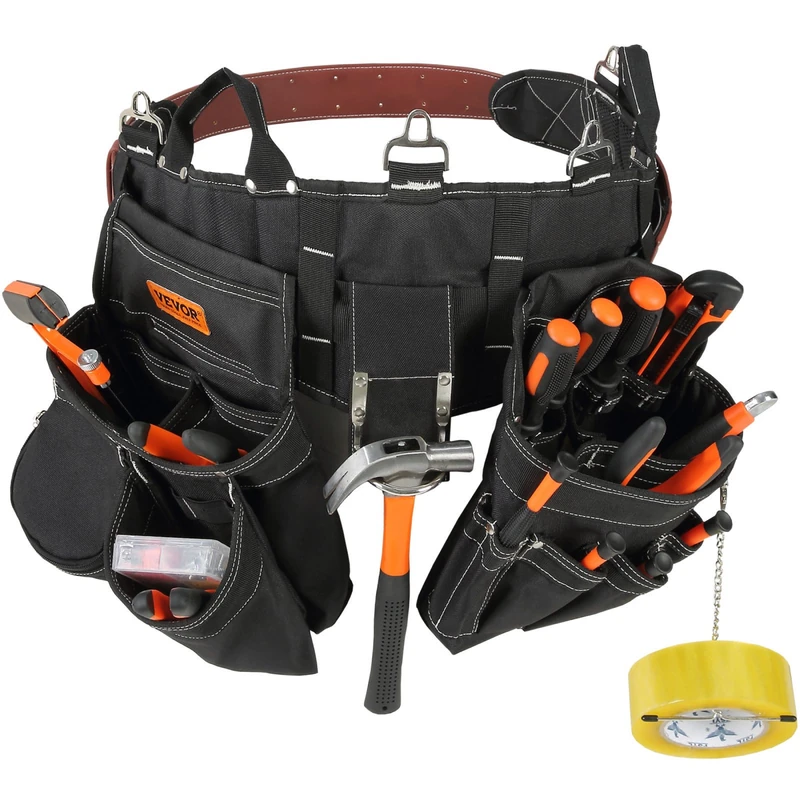 Photo : media.adeo.com
In brief
You choose a belt tool holder based on what you take out of the bag on every job, not on the number of pockets. Overloaded, a belt ends up left behind in the vehicle and the tools go back in your pocket.
Four families cover the need: the pouch worn at the waist, the work trouser pockets, the modular belt system, and upper-body carry, vest or harness, when the load increases.
The Ilkott AA61 pouch, tested on the job, shows what a lightweight belt carries day to day. The rest of the choice comes down to six criteria, including stability when crouching, the point that separates the most models.
AA61
Ilkott pouch tested in the field
45°
tilt of the AA61 pouch that keeps it in place with one knee raised
4 cm
maximum belt width accepted by the Q-Lock clip
16
products in the ToolRig modular range
Each family serves a specific use, and comparing them on price alone tells you nothing. What settles it is the actual work, starting with how often you use your tools.
This family is the most direct: a single pouch attaches to the belt and keeps the essentials within reach, with no hip bag swinging against your legs. The Ilkott AA61 pouch I tested on the job belongs to this family.
Its manufacturer’s spec sheet states a 180° rotation. In practice, the adjustment keeps up with crouching or kneeling positions without the pouch tipping forward; the value I measured during my test is detailed below.
The pouch is listed as one size. That’s no reason to wear it just anywhere: its position depends on the belt width, the belt loops, and the hip crease (where the leg bends at the hip) when I crouch.
On my trousers, the right setting lets the pouch follow the movement without pinching the hip. I check this point with the pouch loaded, because an empty pouch can seem stable while its behavior changes with a pair of pliers and several screwdrivers.
Ilkott AA61 pouch worn on the belt
Worn in real-world conditions: the Ilkott AA61 pouch stays in place on the thigh, loaded for the day.
Over several weeks, it didn’t drop anything while I moved around, and nothing slips when I climb a ladder. The full test, with photos of it being worn, is detailed in my review of the Ilkott trousers.
The same test covers the positions where a tool holder often gets in the way: crouching, one leg raised and torso turned towards a box. The pouch moved with me without tipping forward.
This behaviour interests me more than the number of pockets. A useful pouch has to stay predictable when your posture changes, otherwise I end up taking it off at the exact moment I’d need to keep my hands free.
Before adding an accessory, look at your pockets. A well-cut pair of trousers already carries the small tools, and the cargo pocket stays accessible when crouching as long as the fabric doesn’t pull when your leg lifts.
The weak point is the jumble: screwdrivers get mixed up in there and you end up hunting for them by feel. For a typical electrician’s day, pliers, tester and screwdrivers won’t fit in a pair of trousers alone.
The work trousers comparison details what their pockets can hold, belt included.
On the Ilkott trousers used with the AA61, the cargo pocket with velcro strap stays accessible when crouching. The zipped side vent stays clear and the fabric doesn’t pull when your leg comes up.
This is the right point at which to decide whether an extra pouch is really worth it: if the trousers keep fasteners and small accessories within reach, the belt can stay dedicated to the tools I grab several times an hour.
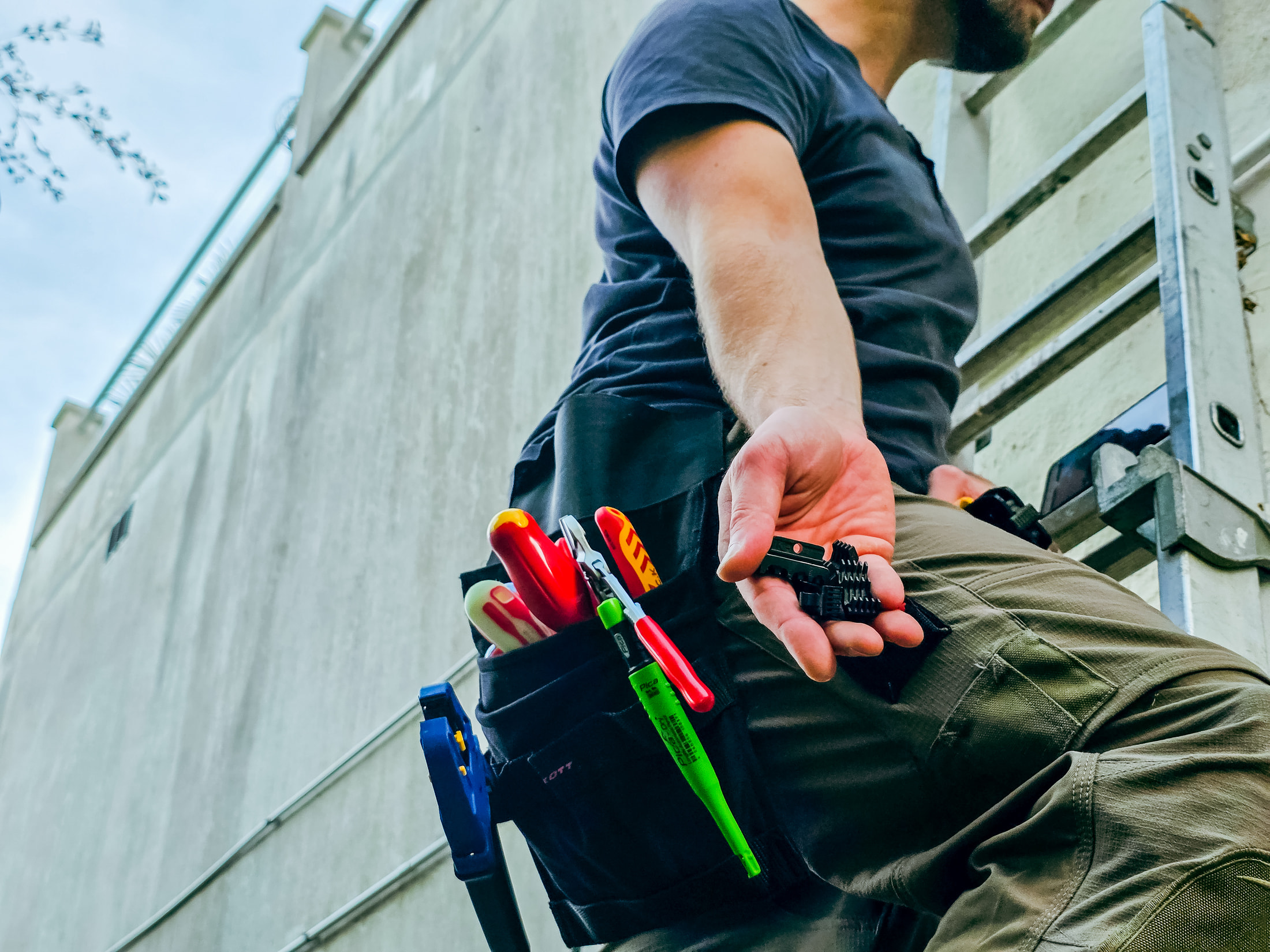
The knee pads also stay in place as you move. To me, that detail matters, because you judge a carrying system with the full pair of trousers on, not with a belt tried on its own while standing.
The third family replaces the single pouch with interchangeable pouches. Snickers’ Q-Lock system fastens each pouch with a magnetic attachment to a clip compatible with a standard belt.
The pouches can be swapped one-handed and adjust in height and position, so you can swap tool sets without emptying the belt on site.
That is the real point of Q-Lock: keeping the same holder and moving the pouch to suit the task, without emptying the belt.
The tool holder base adjusts height and position independently. A dedicated smartphone pouch is also part of the range, which shows the thinking: build the set-up around the job at hand instead of buying one big pouch.
At Blåkläder, the ToolRig range lines up 16 modular products: belt, harness, shoulder straps and specialised pouches, including an electrician’s pouch, with lockable rails.
These rails matter to me more than the number of accessories. A modular system only adds value if every element stays fixed when I walk, crouch or climb.
The fourth family shifts the load onto the torso and shoulders. At Snickers, the XTR Carpenter is CORDURA-reinforced; the electrician version follows the same ergonomic principle and can take adjustable, detachable, padded shoulder straps.
Its leather electrician’s pouch is designed for the job.
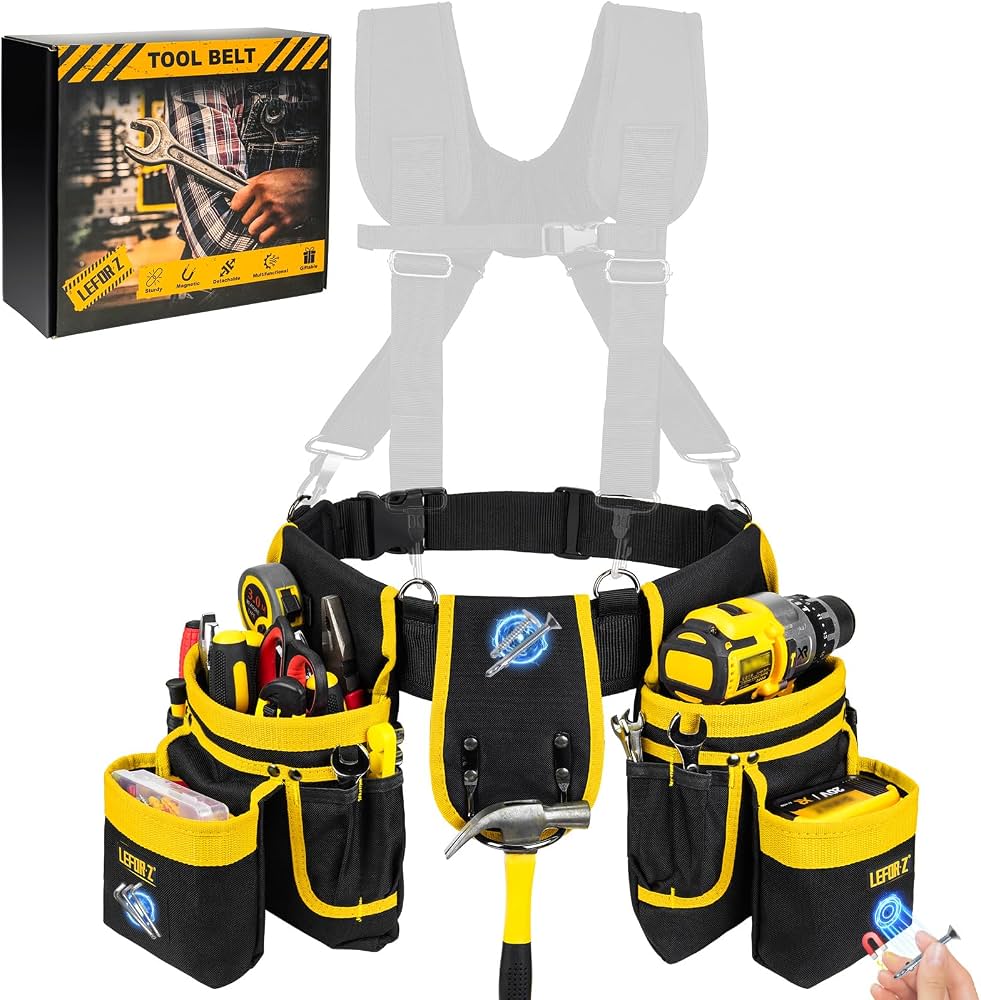
The tool vest belongs to this family: it becomes relevant when the belt alone reaches its limit or when the load carried on the body increases. The ToolRig harness answers the same need with its shoulder straps and rails.
The two XTR belts share an aluminium buckle. The shoulder straps stay removable, so the system can change without forcing upper-body carry on every job.
The setup stays specialized for the electrician. I look at the tools I actually plan to carry, not just how much the pocket appears to hold.
I move to the shoulder straps when the load really pulls on my hips. Before that, I first remove the duplicates and rarely used tools: distributing an overload doesn’t fix a poorly organized belt.
| Family | What goes in it | What it solves | Limit to be aware of |
|---|---|---|---|
| Family Belt pouch | What goes in it Pliers, screwdrivers, small everyday tools | What it solves Tools within reach and stability while crouching (AA61 tested) | Limit to be aware of Limited capacity, no dedicated screwdriver storage on the AA61 pouch |
| Family Trouser pockets | What goes in it Small tools, fasteners, pencil | What it solves No accessory to add | Limit to be aware of Jumbled together, with slower access in a low position |
| Family Modular system | What goes in it Tool set per task, electrician’s pouch | What it solves Interchangeable pouches and height adjustment | Limit to be aware of Costs add up, pouch by pouch |
| Family Upper-body carry | What goes in it Heavier load or longer carry time | What it solves Weight distributed across the torso and shoulders | Limit to be aware of Bulk, and takes getting used to |
The four carry families compared on what they hold, what they solve and what you have to accept.
Six points really do make the difference. I take them in the order they come up on a job, with what the AA61 test settles and what you check in store when you go with another system.
It is the first criterion, because it is the position where a tool carrier either goes unnoticed, or it does not. With your knee above your hip, the pouch has to stay in place without pulling and without the tools digging into your thigh.
The 45° tilt of the AA61 pouch covers exactly this case, and it is the first thing to test on any system before you commit to it.
I run this test with the real load, not with the empty pouch. A pair of pliers, a tester and a screwdriver shift the centre of gravity; a pouch that is stable when empty can pull on your thigh once loaded. I also check that the cargo pocket on your trousers stays accessible while crouching.
These two adjustments determine access: a pouch that rotates 180° stays within reach when you work at an angle, and the tilt keeps the contents from tipping forward when you bend over.
In practice, you judge an adjustment by how quickly it comes back into position after a crouch. Above all, check that you can work it without undoing everything, otherwise you will never adjust it on a job.
Here I separate the manufacturer’s figure from the field: 180° is the rotation Ilkott states; 45° is the tilt I observed during my test. On another model, I especially look for a one-handed adjustment that does not slip out of position once you move.
A tool holder gives way at the wrong moment: while walking, climbing, or riding between job sites. The AA61 test documents the opposite, with no tool lost over several weeks, including on a scooter on the motorway, and nothing slipping at the top of a ladder.
Before work at height, I inspect each pouch closure and how each tool is secured while still on the ground. A shake test is not proof of tool retention: where falling objects are a risk, follow the work-at-height assessment and use properly secured tools.
I also walk and crouch to assess comfort. Anything loose, swinging or able to escape is removed or resecured before work starts; climbing a ladder is not the test for falling-object protection.
Count the tools to keep at your waist, then check exactly where each one goes. The XTR electrician’s pouch lists screwdrivers, pliers, knife, multimeter and hammer; the ToolRig electrician’s pocket does the same job in a modular version.
Capacity is judged loaded, not empty: a pouch that looks roomy when empty soon fills up with insulated screwdrivers and pliers.
I also look at access time, not just what fits inside. If two screwdrivers get mixed together at the bottom, the extra capacity doesn’t help me. That’s the only gripe noted on the AA61: the pliers are found straight away, the small screwdrivers take longer to find.
It all hangs on a belt: check the width the clip accepts, 4 cm maximum for Q-Lock, and the condition of the belt loops on your trousers before buying. The Q-Lock clip doesn’t require any special trousers: it fastens onto the belt of a standard pair of work trousers.
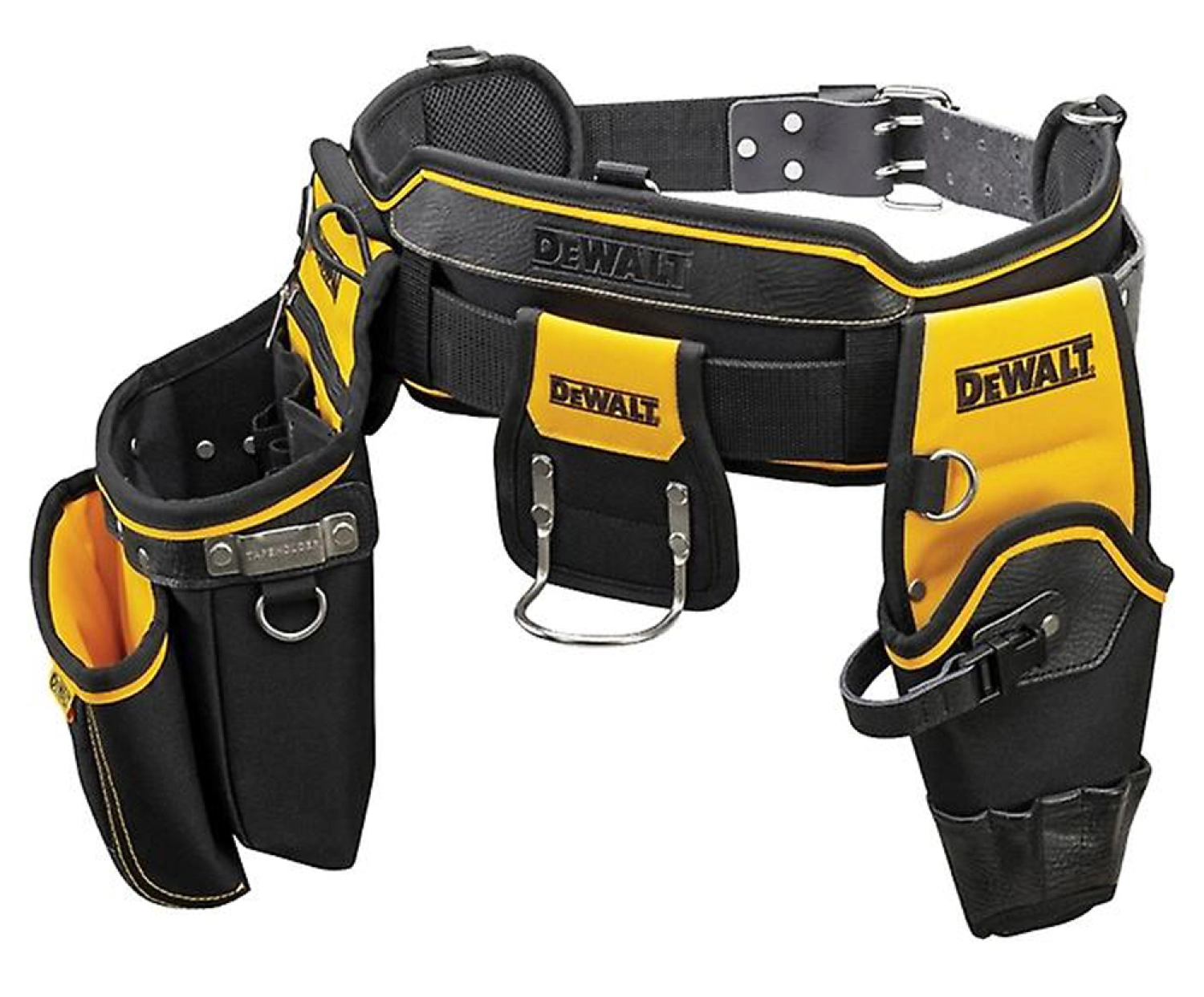
On a system sold with its own belt, check the buckle and how it moves from one pair of trousers to another over the seasons.
The pants are part of the test. On the Ilkott worn with the AA61, the Velcro cargo pocket stays accessible when crouching and the zipped side vent stays clear. If a pouch hides a useful pocket or presses on a vent area, I move it before changing gear.
Beyond a few tools, the belt alone pulls on your hips. The XTR suspenders, padded and removable, carry part of the load up to your shoulders, and the ToolRig harness works the same way.
The giveaway fits in one sentence: if you take the weight off the belt with your hand at the end of the day, either the suspenders are missing or there are too many tools.
I always start by removing whatever didn’t get used. If the remaining load really is used every day, the XTR suspenders, adjustable and removable, become worthwhile. They distribute the load; they don’t turn an overloaded belt into good organization.
The rule is how often you use it. Whatever you pick up several times an hour, like pliers, side cutters or the tester, earns its place at your waist. Whatever comes out once a day has no business on your hips all day long.
I work in three tiers: at my waist for repeated actions, in the tool bag for the day’s tools, in the vehicle for the rest. That split keeps me from carrying the whole box on my hips while keeping routine troubleshooting close at hand.
The 1000 V insulated models are sorted the same way: two or three screwdrivers on the belt, and the rest of the VDE kit in the bag.
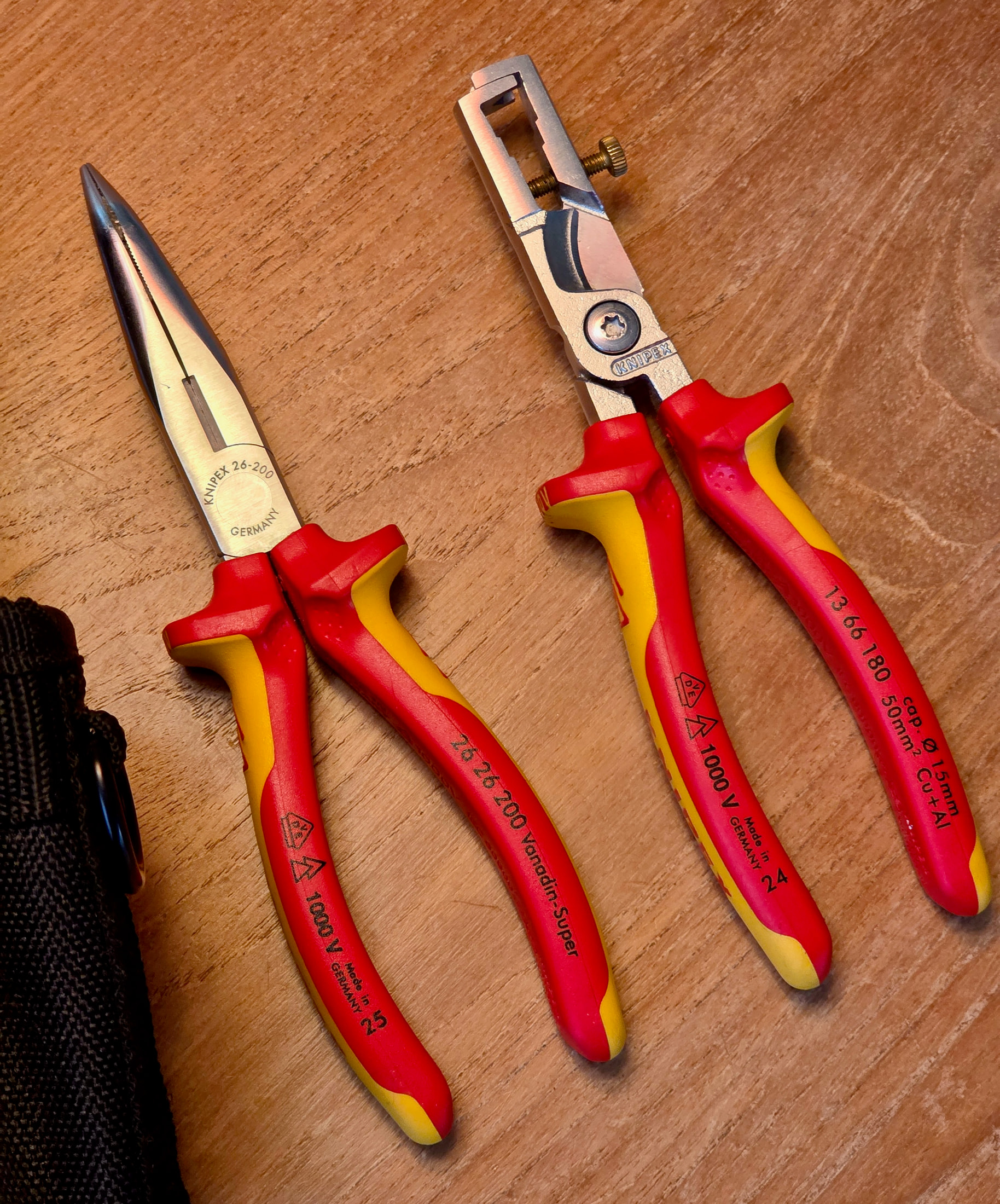
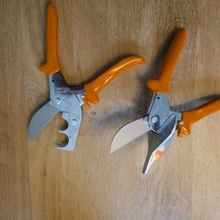
Insulated Knipex pliers
Two pliers compared side by side: the shape of their heads tells you what each one is used for during the day.
Retour de chantier
What I keep at my waist: the pliers, a set of short screwdrivers and the tester. The rest stays in the bag, because pulling out ten tools on every job costs more time than it saves.
And speaking of the carry bag: the large electrician’s tool bags carry the bulky items and the day’s tools that don’t have to stay on you.
A site storage system then decides what stays in the vehicle between jobs.
I start with frequency of use, not the number of pockets. A pair of pliers or a tester picked up several times an hour deserves a fixed place; a tool used once a day stays in the bag.
The second rule is one place per movement. If I have to dig around to tell two screwdrivers apart, the belt has lost its point.
For a short job, I keep the operational minimum. The AA61 fits this approach well: a single pouch, close at hand, that copes with posture changes.
I first check stability while crouching: the knee comes up, and the pouch has to follow without shifting the tools.
Next I check walking and ladder access. My unit hasn’t lost anything over several weeks of moving around.
This result doesn’t turn the pouch into a universal tool chest. It only shows that a light, organised load can stay reliable when it’s carried rather than set down.
When the tool set changes several times, modularity becomes more useful than a large pocket. The Q-Lock principle addresses this exact case: moving a pouch without emptying the belt.
I check the accepted width before buying, then the position of the clip relative to the belt loops on the pants.
The magnetic attachment and one-handed movement are only worthwhile if the pouch stays locked once it is back in place. That is the point to test while walking and squatting.
At ToolRig, lockable slides meet the same need with a different architecture. The common criterion remains that the item is secure once the position is chosen.
If the belt pulls on my hips, I start by taking out what I have not used. It is the cheapest sorting step, and often the most effective.
If the remaining load is genuinely necessary, padded shoulder straps or the harness shift part of the strain to the shoulders. The XTR lets me remove them when that support is no longer useful.
I also look at the buckle and how the belt adjusts. A load that is better distributed but badly placed still gets in the way when I bend down or turn my torso.
A tool carrier never works alone. The belt loops, pockets and ventilation zones on the pants can make a good pouch a nuisance if everything overlaps in the same spot.
On the Ilkott trousers used during the test, the cargo pocket stays accessible when squatting and the side ventilation stays clear. That is what I look for: each feature keeps its access.
So I put the pouch on after filling my trouser pockets. If two storage options are fighting for the same hip space, I move the pouch or remove one item.
I never sign off a tool holder empty: the final test is done fully loaded. I put in the pliers, the screwdrivers and the tester I actually intend to carry, then I walk, crouch and lift my leg.
I finish the ground-level check by moving and crouching with the loaded pouch. It does not replace tool tethering or other falling-object controls where needed for work at height.
If the belt comes through these moves without me having to put it back in place by hand, the adjustment is right. If not, I adjust the position or take some of the load off before I start work.
A tool holder is judged over a real day’s work, not a try-on in a shop. These five checks are enough to sort what will hold up from what will go back in the cupboard.
Load it with the real tools
Take the pliers, the screwdrivers and the tester out of your bag, and put on your belt only what will still be there tomorrow.
Check the belt and belt loops
Check the belt width that the clip, the buckle and the belt loops on your work trousers will take.
Get into a crouch
Knee above hip level: the pouch must stay in place, without pressing into your thigh or coming open.
Check tool retention
Inspect the loaded pouch on the ground. A shake check cannot certify retention at height; secure tools against falling for the task.
Adjust the load at the end of the day
Take off what you did not use, adjust the height, and add shoulder straps or a harness if your hips felt the pull.
The entry-level option is one pouch, such as the AA61 tested here. A modular system adds items piece by piece; compare current UK supplier quotations, including VAT and delivery, before deciding.
The modular range includes a belt, braces and a harness. Those are different components with different functions; prices and UK availability need to be checked with the seller.
The useful calculation isn’t the total: start with the pouch that will carry your most frequently used tools, then add a piece only when you notice something missing. For a beginner’s setup, it’s the tools you carry every day that dictate the first purchase, not the full range.
Troubleshooting and short call-outs: a lightweight pouch worn at the waist is enough, with two or three insulated tools and pliers. This is where the tested AA61 pouch comes in as a compact option; check its price and availability from a UK supplier.
Long jobs and shifting workstations: the modular system takes over. One electrician’s pouch replaces several small pouches, and the lockable slides keep each item secure when the kit is reconfigured.
A heavier load or all-day wear: shoulder straps or a harness, start by lightening the belt, tool by tool. A tool vest makes sense at the same stage, once the waist is no longer the right support point.
Start with how often you use them: pliers, wire cutters and two or three insulated screwdrivers justify a pouch worn on the belt. If you switch tool sets depending on the job, a modular system is a better fit. The Ilkott AA61 bag is the item tested here, with the details of how it is carried in my review of the Ilkott trousers.
Yes: in the documented test, the bag stays in place with one knee raised and in a crouched position, without reducing mobility or letting tools fall while moving.
Not for every system: the Q-Lock clip attaches without special trousers. Check the compatible width, the clip position and the condition of the belt loops before buying.
Start by checking the current UK price and delivery of the AA61 or an equivalent single pouch; modular belts, harnesses and additional pouches are priced separately.
What you don't use on every job: bulky tools, consumables and duplicates. The simple rule: a belt for the current task, a bag for the day.
Disclosure Ilkott : AA61 pouch.

Théo Desrousseaux
Electrician and editor
I work in the field and edit this magazine. Every guide is reviewed for its target country before publication.
Author → Credentials → Editorial method → Report a factual correction →
Email address and prefilled context:
theo@sparx-elec.fr
Article: https://www.sparx-elec.com/gb/electrician-tool-belt-pouch/
Edition: GB — English
Factual issue: [describe the factual issue]
Passage: [quote or identify the passage]
Source: [optional source URL]
Practical electrical installation guides, diagnostic methods and tool recommendations compared against the technical wiring standards of this national edition.
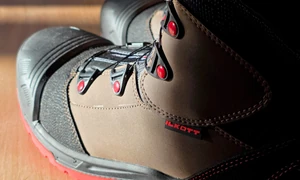
Ilkott Mid model G safety shoes tested on electrical jobs: dial lacing, comfort, breathability and the S3S FO SR markings explained.
Read the guide