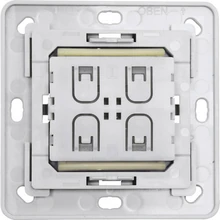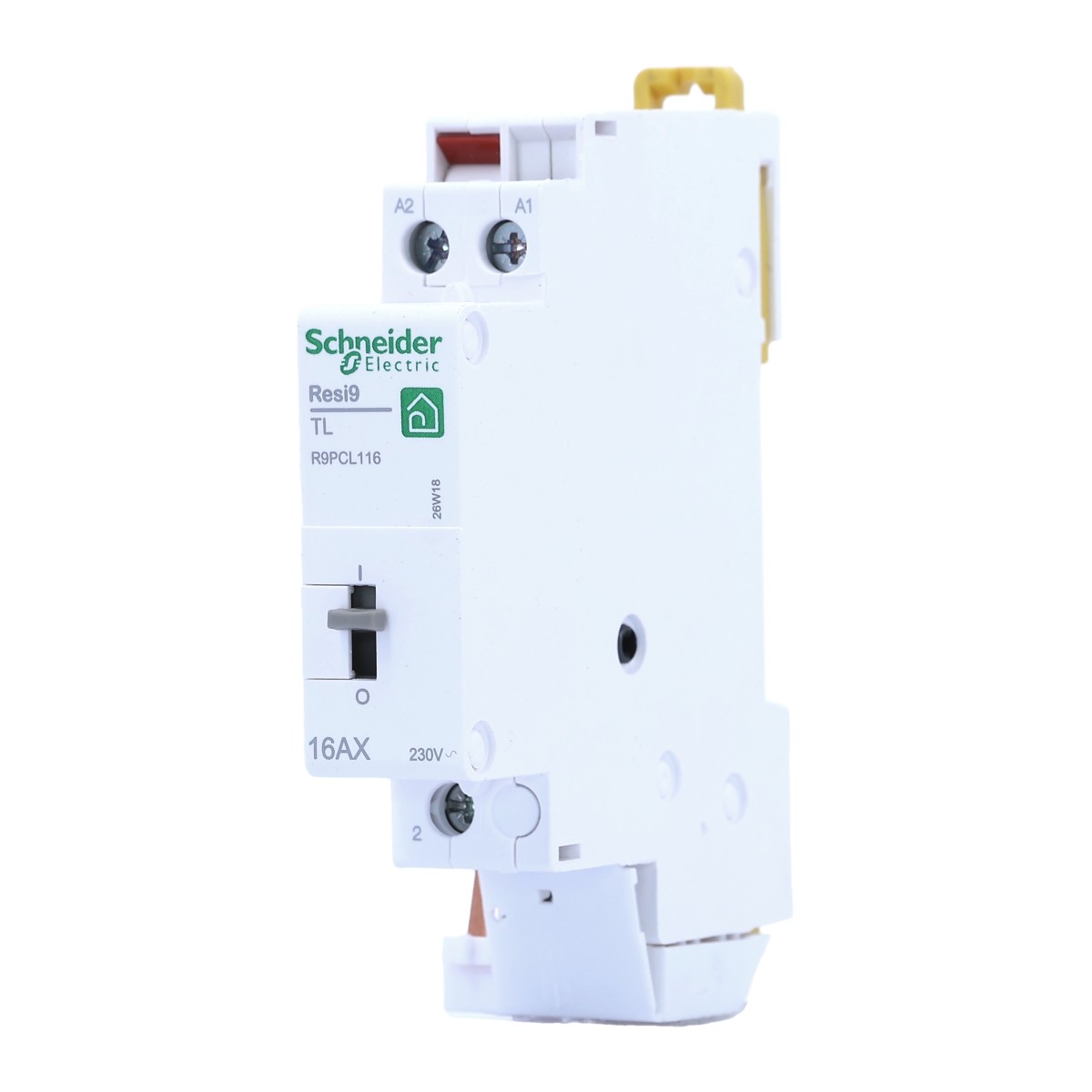
DIN rail impulse relay
Spot the control lever on the front face to identify a modular impulse relay mounted on a DIN rail.
123elecPublished 9 August 2026
In brief
Eltako is a German manufacturer founded in 1949, a specialist in relays, impulse relays and actuators, which targets the professional market rather than the consumer one.
Its two technical signatures are bistable relays and battery-free EnOcean radio, complemented since 2023 by the flush-mounted relay series 62-IP with WiFi.
The official documentation and the independent German test point to serious engineering and a credible installer positioning. The built for Matter wording must still be distinguished from actual Matter certification.
1949
year of foundation, Stuttgart region
1 000+
products listed by the brand
0,7 W
stated standby loss for the ESR62PF-IP
49,20 €
German RRP 2023 for the ESR62PF-IP
Eltako was founded in 1949 in the Stuttgart region, in Germany. The first product is an S6w impulse relay intended for a 70 mm flush-mounted box.
The brand was therefore not born in connected devices: it comes from classic lighting control, which explains its credibility among electricians — the impulse relay remains a troubleshooting classic, as I detail in noisy impulse relay: the tips.
To understand what this starting point implies, a reminder of how it works: an impulse relay makes it possible to control the same lighting from several points without complex wiring.
Each press of a pushbutton toggles the circuit state — on, off, on — which makes it the historic solution for hallways, staircases and large rooms, long before dimmers and connected modules.
The 70 mm format of the 1949 enclosure is telling as well: the brand integrated the flush-mounting constraint from the outset.
That same logic is found today in the 62-IP series, designed to be fitted in a flush-mounted box.
The brand’s official milestones, as listed on its History page, are:
The founder Horst Ziegler, an engineer, is mentioned by distributors such as Serelec.be or my-domotique.com, but not on the official History page.
DIN rail impulse relay
Spot the control lever on the front face to identify a modular impulse relay mounted on a DIN rail.
123elecThe official homepage announces more than 1 000 products: relays, impulse relays, dimmers, actuators, timers, meters and sensors.
The brand distinguishes two ranges: “Professional Standard” for classic wired products, and “Professional Smart Home” for connected products.
This reading matters for anyone comparing with Shelly, Legrand or Hager: Eltako does not primarily sell to consumers off the shelf, but to installation by a professional.
The deliberate positioning is one of installer credibility, a term that recurs in the reviews of the electricians interviewed by the German independent test.
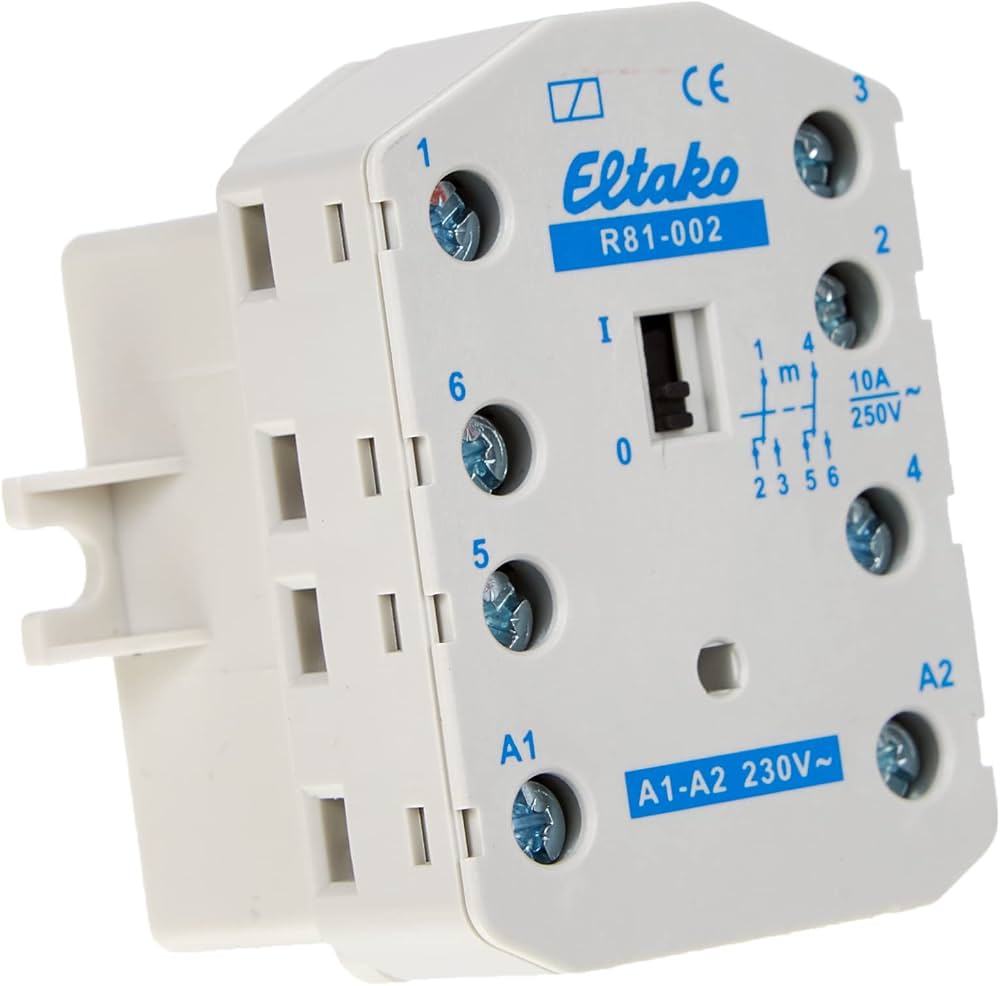
Module R81-002
Spot the connection terminals on the front to identify the flush-mounted format of Eltako's wired relays.
m.media-amazon.comThe point to know before any purchase: eltako.fr redirects to the official French Eltako site, which offers a French version of the site and the documentation.
French-language support exists: the official contact page lists technical support for France (+33 6 75 32 23 26, info.fr@eltako.com) and entrusts Belgium and Luxembourg to Serelec (Serelec n.v., Ghent, +32 9 223 24 29).
A French registration for ELTAKO GMBH appears in the official registers (SIREN 106 823 883, registered office in Fellbach, Germany): it is a branch, not a dedicated French company.
In plain terms, a private individual who buys an Eltako has technical support in French they can reach directly, and after-sales service goes through that support or through their installer.
For a French user, the practical point is simple: official documentation and French-language technical support are available directly.
Eltako relays are bistable: they only consume power at the moment of switching, not while they hold their state.
The German version of the site also states that 98 % of the devices manufactured have minimized standby loss.
The principle deserves an explanation, because it changes the game in the long run.
A classic monostable relay, such as a contactor, must keep its coil powered to hold the contact closed: as long as it stays active, it draws power and dissipates heat in the panel.
The bistable relay, by contrast, only receives a brief pulse on each change of state, then stays in position with no current at all.
On the 62-IP series, this translates into the stated standby loss of 0,7 W for the ESR62PF-IP: in continuous operation, that is around 6 kWh per year, a ballpark figure worth comparing with the numbers announced by the other manufacturers before buying.
Zero-crossing switching (“Zero Passage Switching”, patented Eltako Duplex DX technology) completes the picture: the brand claims an extended service life by switching the load at the moment the voltage crosses zero, which limits wear on the contacts.
Another common technical argument for the wired range: a universal control voltage of 12 to 230 V AC/DC on a single device, which simplifies installation logistics.
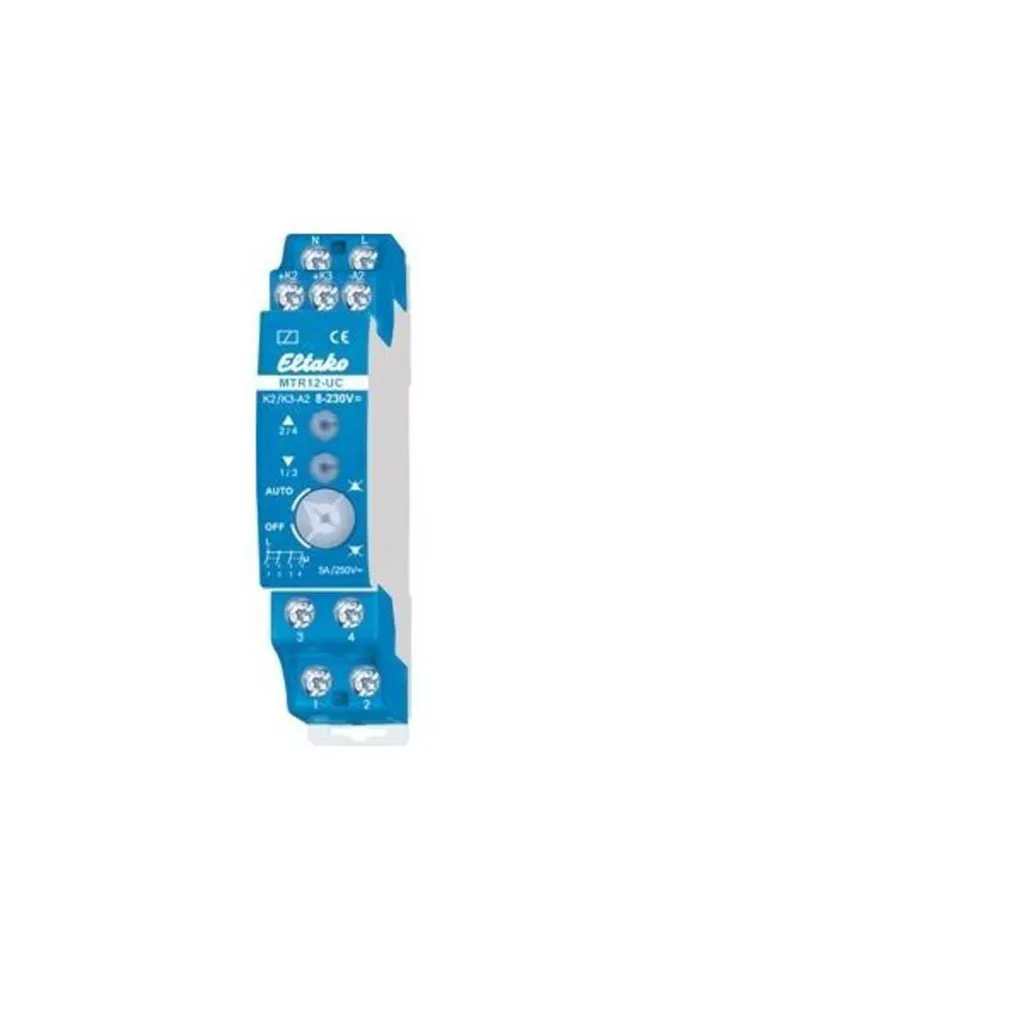
The Eltako radio relies on EnOcean, a wireless technology whose sensors run without a battery or cell: the energy from pressing a button or from a light change is enough to transmit.
This is a strong differentiator: Eltako has no proprietary radio protocol for its sensors, unlike most of its home automation competitors.
The benefit shows over time: a battery-free sensor requires neither battery replacement nor opening the casing, which reduces maintenance on installations that combine several control points.
It is also a design constraint — every transmission has to be energy-efficient.
For the installer, the difference from a WiFi module comes down to this: EnOcean radio lives without local power, where the 62-IP series depends on the client’s network.
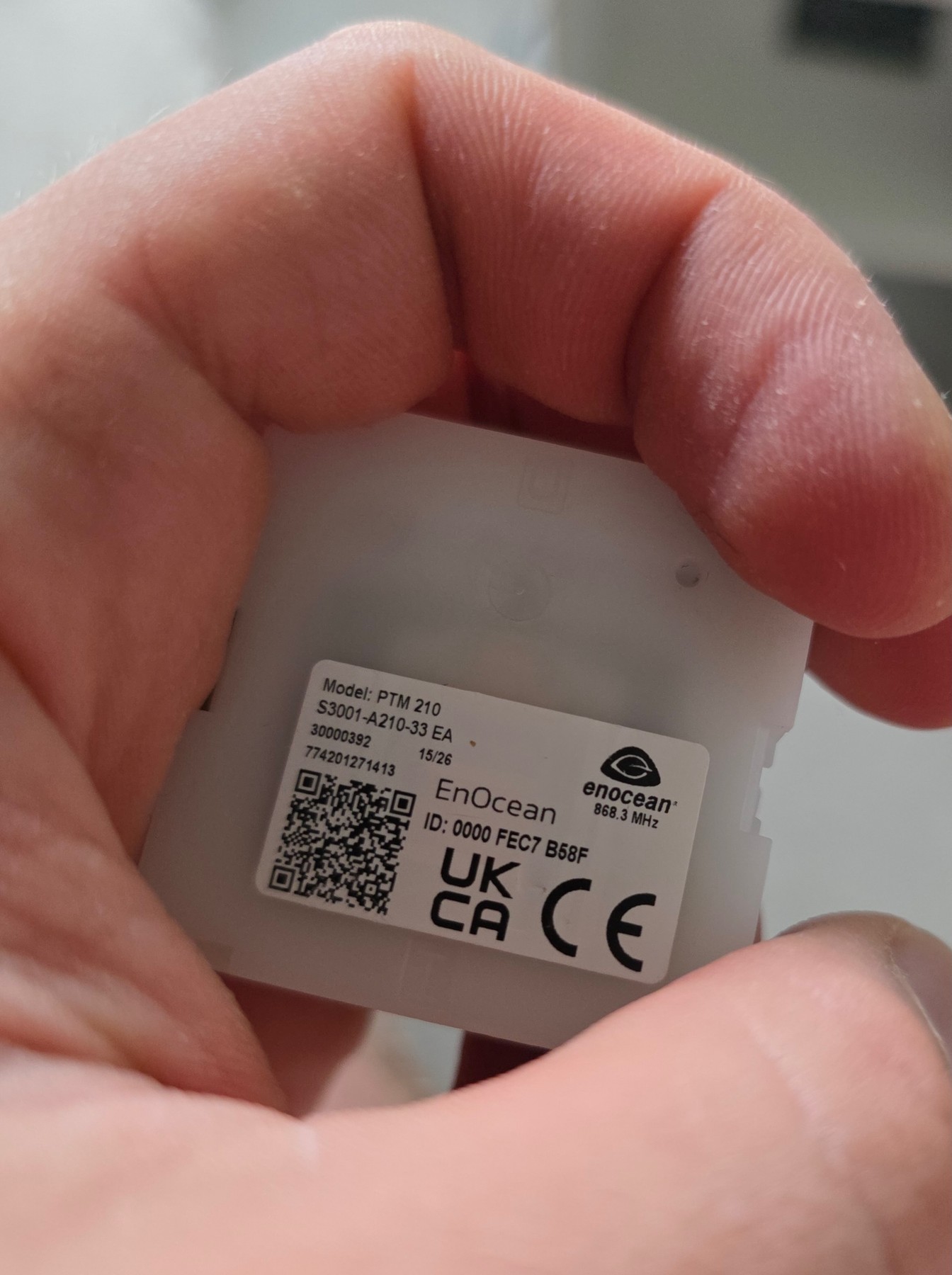
Around this radio, the brand organizes a proprietary RS485 bus that links the radio modules (FAM14, FEM, FTS14EM) and the actuators installed in the panel.
The protocols are then covered by gateways: EnOcean, KNX, DALI, M-Bus, MQTT, Powerline, ZigBee and WLAN, with the in-house controllers MiniSafe2 and wibutler.
Info
The choice of Enocean comes with a trade-off: the ecosystem is less mainstream than the Zigbee of a standard hub. See the comparison Zigbee in home automation to gauge the difference in philosophy between the two worlds.
The first family, the historic one, brings together impulse relays, bistable relays, shutter actuators and dimmers, in DIN rail format (central, in the panel) or flush-mounted (decentralized).
These modules are controlled by wired pushbuttons or EnOcean radio sensors. Official datasheets in French exist, for example for the FSR61VA, a radio impulse relay actuator with current measurement.

The detailed specifications of this range rely on the official product descriptions cited in this article.
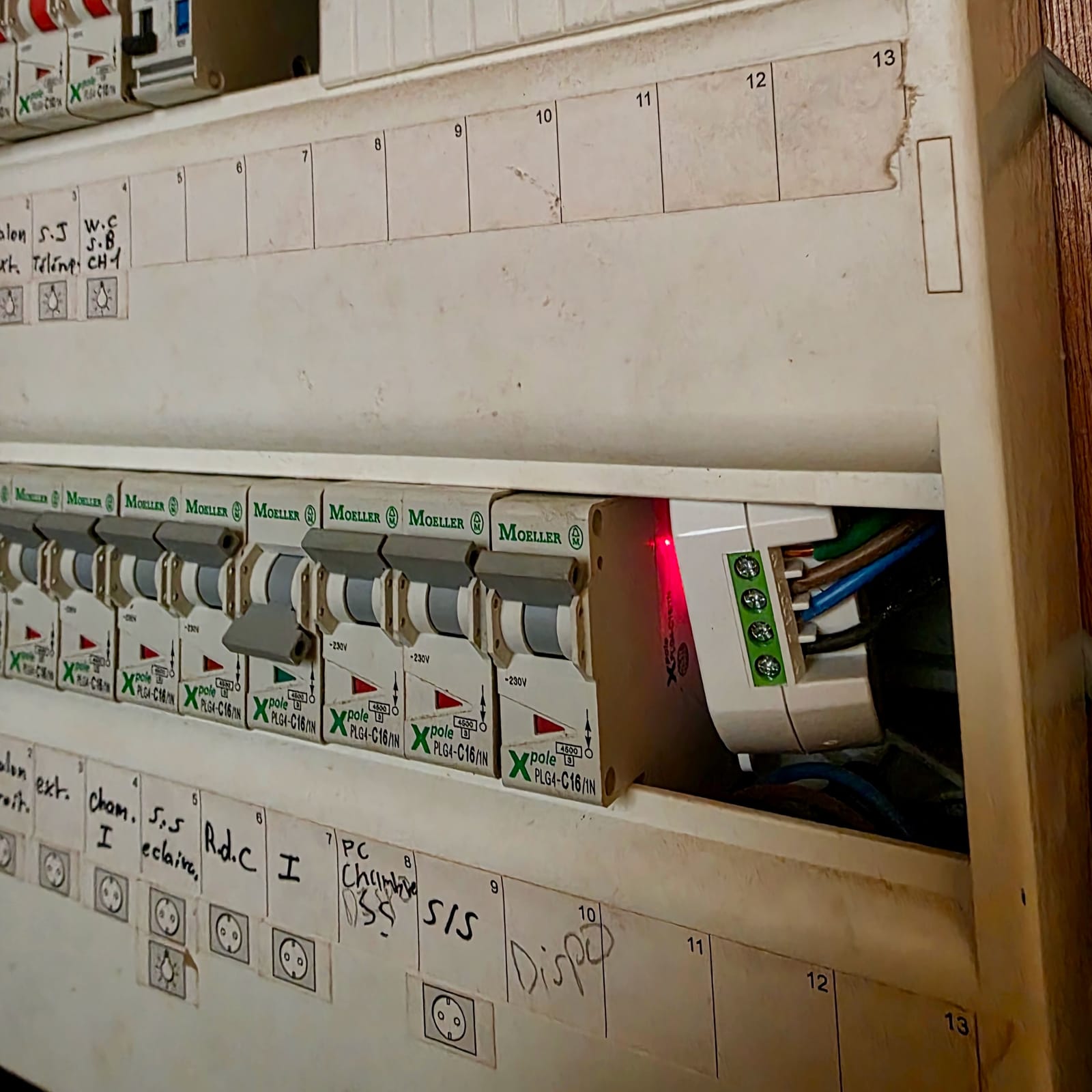
Radio module in the panel
Locate the module’s wiring connection to check that the installation stays tidy and documented.
The second, more recent family is the 62-IP series: flush-mounted WiFi relays, commercially launched in early 2023 after a presentation at Light + Building in Frankfurt. Four models structure the range:
| Model | Function | Key point |
|---|---|---|
| Model ESR62PF-IP | Function WiFi impulse relay | Key point NO 16 A volt-free contact |
| Model ESR62NP-IP | Function WiFi impulse relay | Key point Non volt-free output |
| Model ESB62NP-IP | Function Roller shutter actuator | Key point 1+1 NO 4 A |
| Model EUD62NPN-IP | Function Dimmer | Key point Load control via WiFi |
The four models in the 62-IP series: impulse relays, shutter actuator and dimmer.
This is the series that best matches searches such as “WiFi-connected relay”: it offers lighting or shutter control without a pilot wire, directly from the app, which brings it close to the uses I describe in the guide on the connected electrical panel.
Before taking a closer look, a vocabulary clarification that is useful for wiring.
The two impulse relays in the range are distinguished by their output: the ESR62PF-IP offers a volt-free contact, that is, a dry contact that switches an external circuit unrelated to its own power supply; the ESR62NP-IP has a non volt-free output, where the load is connected to the module’s voltage.
This detail determines the conductors to plan for at the mounting point: I check it systematically on the data sheet before quoting a job.
An existing switch and a new circuit are not wired the same way.
The most documented model is the ESR62PF-IP, whose specifications are taken from the 1home.io product page:
| Published characteristic | 62-IP series |
|---|---|
| Published characteristic Contact | 62-IP series NO 16 A / 250 V AC |
| Published characteristic LED load | 62-IP series Up to 200 W at 230 V |
| Published characteristic Incandescent / halogen | 62-IP series Up to 2 000 W at 230 V |
| Published characteristic Standby loss | 62-IP series 0.7 W advertised |
| Published characteristic Spring terminals | 62-IP series 0.2–2.5 mm² |
| Published characteristic Dimensions | 62-IP series 49 × 51 × 25 mm |
| Published characteristic Supply | 62-IP series 110–240 V |
Published electrical and mechanical characteristics of the 62-IP series.
The connectivity of the 62-IP series is designed for a mainstream Apple audience: WiFi 2,4 GHz, Apple Home certification usable out of the box in the Apple Home app and with Siri, without any additional gateway.
Initial setup, for its part, goes through the Eltako Connect app (Android and iOS).
This division of roles is worth knowing before buying: Eltako Connect is used for commissioning (WiFi pairing, settings, updates).
The Apple Home app takes over for everyday use for control and Siri voice commands.
Customers therefore do not need to keep the brand’s app open at all times: they use the interface they already know.
It is a genuine simplicity argument, provided the WiFi is stable at the module’s location, as I point out in the section for electricians.
On the technical side, the official Eltako/series62ip GitHub repository documents a REST API (development version, not finalized).
The repository also mentions OTA updates with automatic verification every 12 hours and pre-loaded certificates.

The 62-IP series is documented for Apple Home and works without a proprietary gateway in that ecosystem. Eltako’s documentation also used the wording built for Matter for the 62-IP generation.
For a project where Matter certification itself is required, I look at the exact reference rather than the family name: the ESB64NP-IPM from the 64 series is the factory-certified Matter model cited by Eltako.
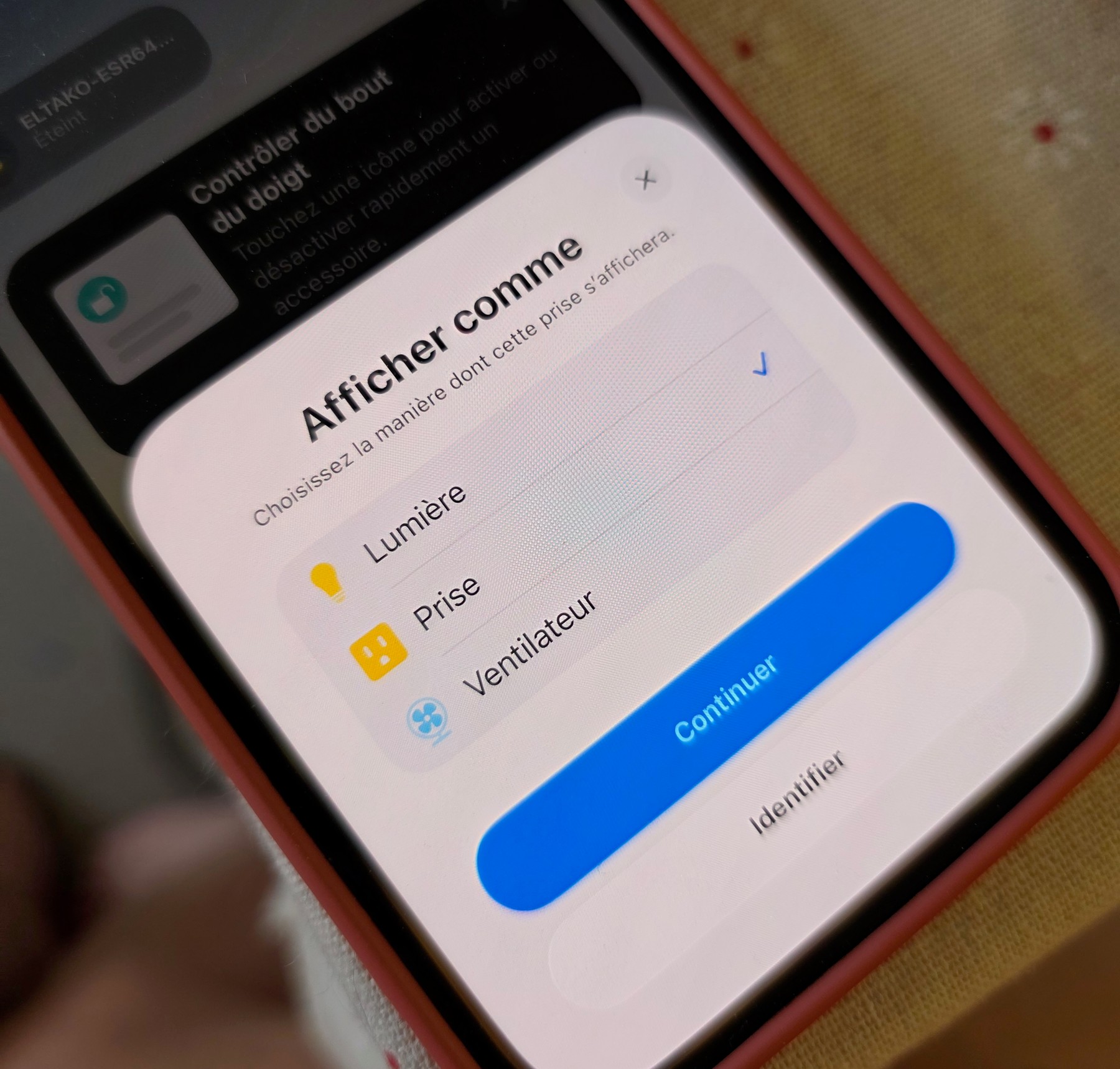
The independent German teardown from February 2023 also identifies the Hongfa HF7520 012-HSTP relay and an ESP32-WROVER-E in the 62-IP module. That is useful component information, but it does not by itself rank Eltako against another brand.
For selection, the useful facts are the 49 × 51 × 25 mm dimensions, spring terminals up to 2,5 mm², the announced 0,7 W standby loss, 2,4 GHz WiFi, OTA updates and the exact output type of the chosen reference.
The following prices are German recommended retail prices (UVP) recorded in February 2023 by the independent test. They are dated:
| Model | German UVP (February 2023) |
|---|---|
| Model ESR62PF-IP | German UVP (February 2023) 49,20 € |
| Model ESR62NP-IP | German UVP (February 2023) 49,20 € |
| Model ESB62NP-IP | German UVP (February 2023) 64,40 € |
| Model EUD62NPN-IP | German UVP (February 2023) 72,80 € |
German RRPs from February 2023: historical manufacturer prices, not current retail prices.
Two other figures from manufacturer documents: an official flyer lists the ESB62NP-IP at 68,60 €, and a datasheet the ESR62PF-IP at 58,20 € (ref. 30062004), to be taken as order-of-magnitude indicators.
These historical German manufacturer prices are useful only for comparing models within the range. They are not a current retail benchmark; for a purchase decision, use a dated quote for the exact reference.
The 62-IP is flush-mounted, with spring terminals up to 2,5 mm² that accept the conductors commonly found in French installations.
Configuration is done via the app, without a PC, and no gateway is required for the Apple Home ecosystem.
The point to check on site is the depth of the box: with 25 mm of thickness and conductors to fit inside, an older flush-mounted box can be too tight.
I flag it as the first checkpoint before quoting.
Unlike the EnOcean radio modules of the legacy range, the 62-IP depends on the customer’s WiFi network: router, password, coverage at the module’s location.
It is a deliberate architectural choice (Apple simplicity), but it implies possible customer support on the local network — a point I also cover in the guide on the no-neutral smart switch.
Retour de chantier
My on-site finding: smart home WiFi should always be discussed with the customer before installation.
Router in a metal cabinet, guest network, provider outages: anything related to WiFi becomes a customer-relationship topic from the very first module installed.
The first sort is done on the output, before looking at the price: the ESR62PF-IP offers a potential-free contact, the ESR62NP-IP an output that is not potential-free.
My on-site rule of thumb: when the controlled circuit has its own power supply, unrelated to the module’s, I go for the dry contact of the ESR62PF-IP.
When the load is connected to the module’s voltage, the variant that is not potential-free is the one to look at.
This choice is settled before pricing, because it determines the conductors to plan for at the installation point.
For a roller shutter, the range leaves no room for choice: the ESB62NP-IP is the intended model, with its 1+1 NO 4 A output.
For dimming, it is the EUD62NPN-IP, which drives the load over WiFi. For all-or-nothing lighting, one of the two impulse relays is enough.
Before locking in a reference, I compare the actual use against the stated need. Installing a dimmer for a simple all-or-nothing remains a wasted expense.
I start by locating the circuit at the panel and by switching off its breaker. Removing the existing device comes after, never before.
Identifying the conductors is done at that point: I identify the supply, the neutral and the outgoing line to the load, because the box will be closed again the same day.
The depth of the box is checked before ordering, not on the day of installation: with a module 25 mm thick, an old recess can be too tight.
If space is tight, I point it out to the client before finalizing the quote. It is easier to explain than a module that will not close back up.
The wiring is done with the power off, after a check for absence of voltage at the mounting point. I do not touch the conductors before this check.
On the spring terminals, 0.2 to 2.5 mm², I strip the conductor, insert it, then pull gently on it: a poorly held wire is immediately obvious.
I switch the power back on and test the control from the app, then the lighting returning to the expected state, before closing up.
I then leave a note on site with the commissioning app and the exact reference of the module installed. The next technician will not start from scratch.
The two families are not suited to the same jobs. I base my decision on three criteria, without getting hung up on the length of the datasheet.
First criterion, the wiring in place. The radio range relies on wired push buttons or EnOcean sensors, and can be installed in a panel as well as flush-mounted. The 62-IP is wired in a flush-mounted box, with the installation’s standard conductors.
Second criterion, the client’s ecosystem. In an Apple home, the 62-IP integrates without a gateway, with Siri and the Home app. On a project involving several protocols, the gateways of the radio range take over.
Third criterion, the dependency on the network. An EnOcean sensor transmits without a battery or local power supply; the 62-IP, on the other hand, depends on the router and the WiFi coverage at its location.
When doubt remains, I suggest the solution that depends least on the client’s network. That is the criterion that limits visits after installation the most.
Retour de chantier
On a given job site, I keep to a single family of modules. Mixing radio and WiFi makes troubleshooting harder, even when each choice can be justified on its own.
A bistable relay only draws power when switching: nothing heats up in the panel between two operations, unlike a relay that keeps its coil powered.
Wear therefore concentrates on the contacts and on the switched load, not on a permanent standby. This is where zero-cross switching plays its role.
Before ordering, I check the exact reference, the output type, the 49 × 51 × 25 mm space available in the box and the WiFi quality at the installation point.
Last reflex before leaving the site: I have the client try the control with the app open, and I note what was tested.
If I had to sum up Eltako in one sentence: a serious installer brand, built on decades of impulse relays and relays, that bet on EnOcean, then on Apple Home WiFi with the 62-IP series.
Eltako reminds me of well-designed German professional tooling: it inspires confidence and installs cleanly. I choose the reference from the circuit and the ecosystem, not from a generic brand ranking.
The 62-IP has a real audience: the Apple customer who wants to control lighting and shutters without a gateway, with installation by an electrician and brand support.
The ESB64NP-IPM from the 64 series is the one to look at if Matter certification is a prerequisite.
For everyone else, a simple radio module or a classic impulse relay remains more direct: the guide wiring a roller shutter motor without a switch shows that a simple radio module is often enough.
And the home automation budget must factor in the price difference from the start.
Before choosing, I always advise starting from the distribution board diagram: a WiFi relay fits into an existing circuit logic, not as a replacement for a protection device.
Thinking circuit by circuit comes before the module brand.
3 questions
InteractiveEltako brand review
3 questions to check the essential reference points
Choose an answer
For professionally installed use, the independent test from February 2023 judges it “very well made” and its positioning is that of an installer brand. In France, Eltako provides official French documentation and direct French-language technical support.
For a project that requires Matter certification, use the exact certified reference: Eltako cites the ESB64NP-IPM from the 64 series with Matter as standard. The 62-IP is documented for Apple Home and was also presented as built for Matter in the earlier generation.
The 62-IP series does, without a gateway: Apple Home certification from the factory, control in the Home app and via Siri, configuration through the Eltako Connect app. As with any connected module, check for a neutral wire at the installation point before buying — the topic is detailed in the smart switch without a neutral wire guide. The EnOcean radio range, on the other hand, connects via gateways (RS485 bus, MiniSafe2 or wibutler controllers) to join a connected ecosystem.
The documented reference is the 2023 German RRP of 49,20 € for the ESR62PF-IP. It is a dated manufacturer price, not a current retail benchmark; for a purchase, use a dated quote for the exact reference.
It is a 230 V module to be fitted into a flush-mounted box: installation is a job for an electrician if you’re not comfortable. First check the depth of the box (the module is 25 mm thick) and the WiFi quality at the planned location, which determine the installation.

Théo Desrousseaux
Electrician and editor
I work in the field and edit this magazine. Every guide is reviewed for its target country before publication.
Sources and references
Practical electrical installation guides, diagnostic methods and tool recommendations compared against the technical wiring standards of this national edition.
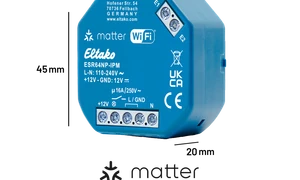
Electrician’s review of the Eltako ESR64NP-IPM: 16 A relay, cage terminals, Matter over Wi-Fi, Eltako Connect app, installation tested under a pendant canopy.
Read the guide